Key takeaways
- Structured data and schema markup have become a direct signal for AI search citation, not just a Google rich-snippet tactic
- Most traditional SEO platforms offer schema tools, but few connect schema implementation to actual AI visibility outcomes
- WordPress plugins like Rank Math and Yoast SEO handle schema generation well; enterprise crawlers like Screaming Frog and Sitebulb audit it thoroughly
- For closing the loop between schema, content, and AI citations, you need a platform that tracks what AI engines actually cite -- not just what's technically valid
- Tools like Promptwatch go further by connecting content gaps and citation data to what AI models are actually reading and recommending
Structured data used to be a Google thing. You added schema markup, got a rich snippet, maybe a featured snippet, and called it a day. In 2026, that framing is outdated.
AI search engines -- ChatGPT, Perplexity, Google AI Overviews, Claude, Gemini -- are now answering millions of queries per day. They decide which sources to cite, which brands to recommend, and which content is authoritative enough to surface. And structured data plays a real role in that decision-making process.
The question isn't just "does my schema validate?" anymore. It's "does my schema help AI engines understand what my content is about, who it's for, and why it should be cited?" Those are different questions, and they require different tools.
This guide breaks down which SEO platforms have the strongest structured data and schema tools in 2026, and -- more importantly -- which ones actually help you connect schema implementation to AI search visibility.
Why structured data matters for AI citation in 2026
AI search engines don't crawl the web the same way Googlebot does. They use a combination of training data, real-time retrieval, and crawling to build their responses. Structured data helps in a few specific ways:
Schema markup makes your content machine-readable in a way that's unambiguous. When you mark up a product with Product schema, or an article with Article schema including author, datePublished, and publisher fields, you're giving AI models explicit signals about what the content is and who produced it. That matters for trustworthiness signals.
FAQPage and HowTo schema are particularly relevant for AI citation. These schema types map directly to the question-and-answer format that AI engines use to construct responses. If your FAQ schema answers a question that matches a user's prompt, there's a meaningful chance an AI engine will pull from that content.
Organization and LocalBusiness schema help AI engines understand entity relationships -- who you are, what you do, where you operate. This feeds into how AI models build their internal representations of brands and businesses.
None of this is magic. Schema doesn't guarantee citation. But it removes friction. It makes your content easier to parse, easier to attribute, and easier to trust. In a world where AI engines are making split-second decisions about what to surface, removing friction matters.
The schema tool landscape in 2026
Here's how the main categories of tools break down:
| Tool type | Schema capabilities | AI visibility connection |
|---|---|---|
| WordPress SEO plugins (Rank Math, Yoast) | Automated schema generation, custom types | None -- no AI tracking |
| Technical crawlers (Screaming Frog, Sitebulb) | Schema auditing, validation, error detection | None -- audit only |
| All-in-one SEO platforms (Semrush, Ahrefs) | Basic schema auditing within site audit | Limited -- some AI tracking |
| Specialized AI visibility platforms (Promptwatch) | Content gap analysis tied to citation data | Full loop -- from schema to citation |
| Structured data specialists (WordLift) | Entity-based schema, knowledge graph integration | Partial -- entity focus |
No single tool does everything perfectly. The practical answer for most teams is a combination: a WordPress plugin or CMS integration for implementation, a crawler for auditing, and an AI visibility platform for understanding whether any of it is actually working.
WordPress schema tools: the implementation layer
For most websites, schema markup starts at the CMS level. WordPress plugins have gotten genuinely good at this.
Rank Math
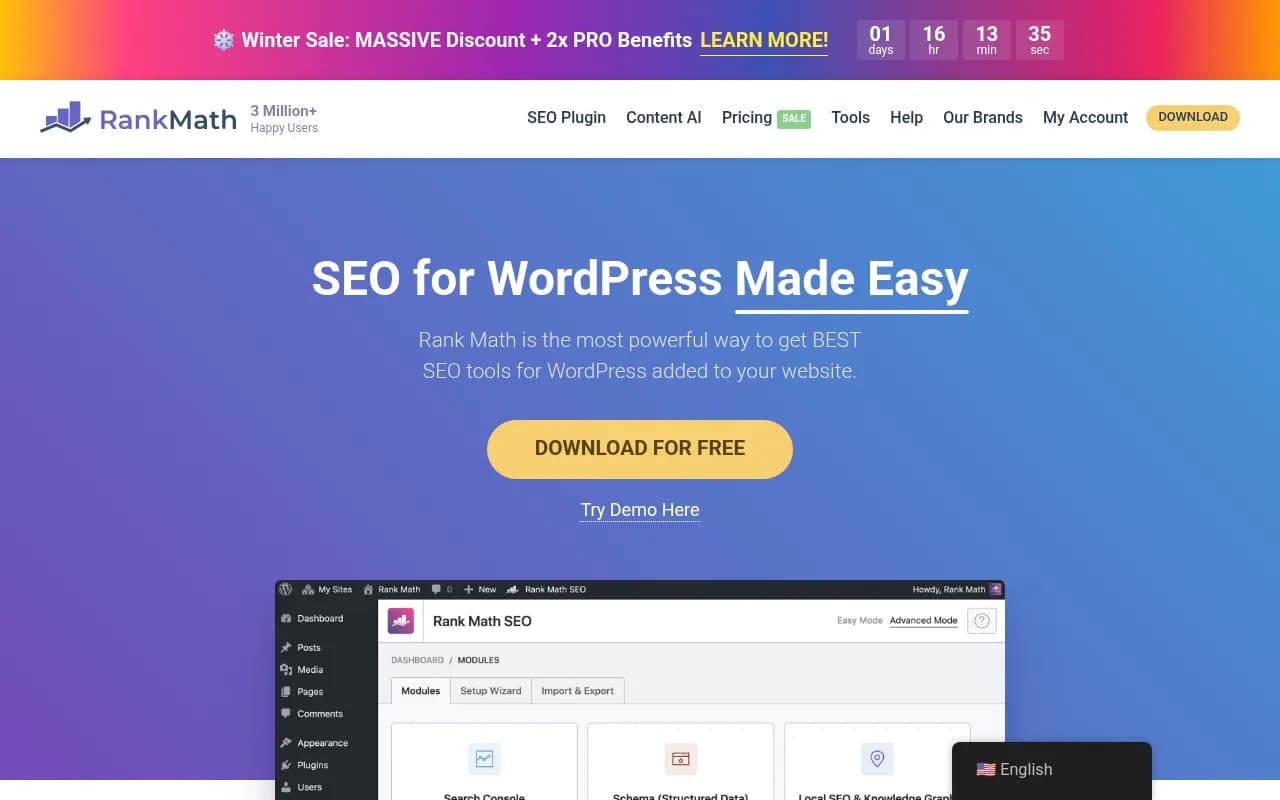
Rank Math is probably the most schema-capable WordPress SEO plugin available right now. It supports over 20 schema types out of the box -- Article, FAQ, HowTo, Product, Review, Event, Recipe, and more -- and lets you add custom schema via a JSON-LD editor if you need something it doesn't cover natively.
The FAQ schema builder is worth calling out specifically. You can add FAQ blocks directly in the post editor, and Rank Math generates the correct JSON-LD automatically. For AI citation purposes, this is valuable: FAQ schema is one of the cleaner ways to signal question-answer pairs to AI engines.
Yoast SEO
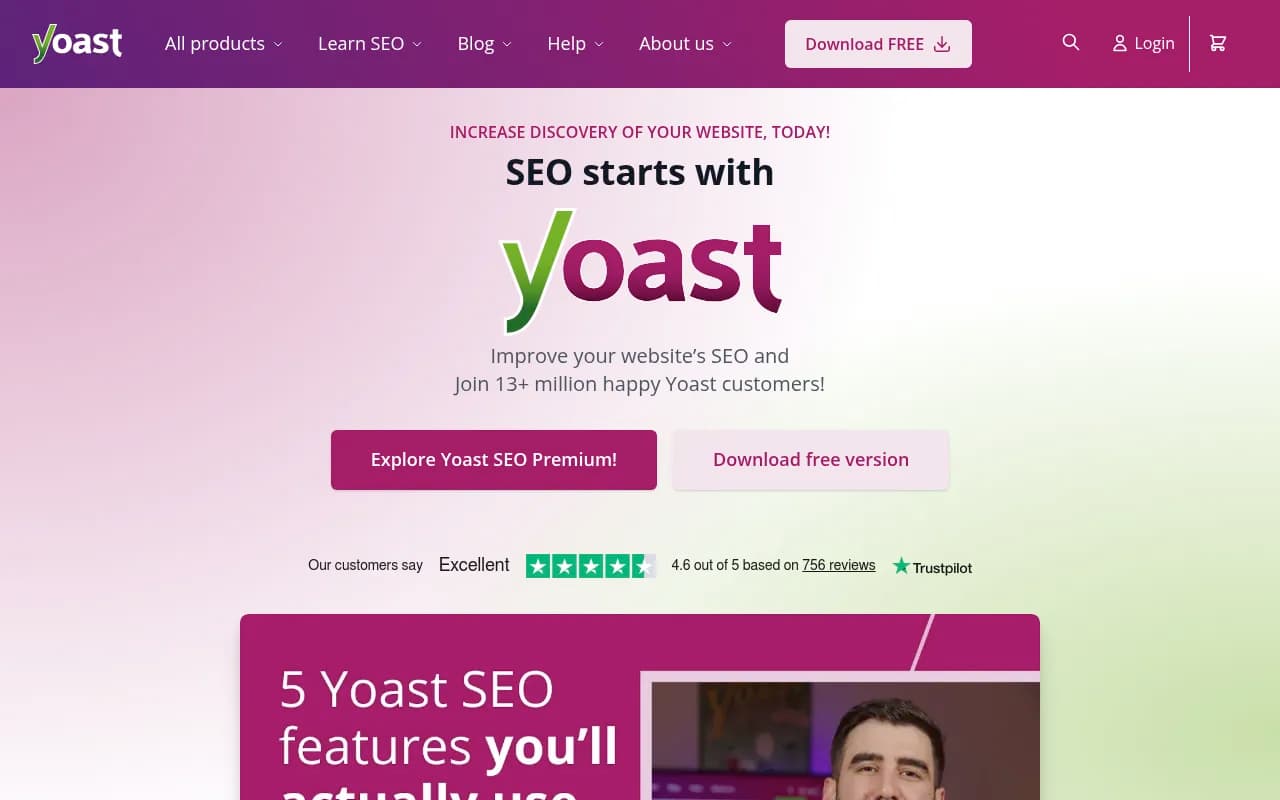
Yoast takes a more opinionated approach. It automatically generates schema based on your site settings -- Organization or Person for the homepage, Article or WebPage for posts, breadcrumbs throughout. The schema graph it generates is interconnected, which is actually a good thing: it helps AI engines understand the relationships between entities on your site.
The downside is less flexibility. Custom schema types require the premium version or additional plugins. For most content sites, though, Yoast's automated schema is solid and requires minimal setup.
SEOPress
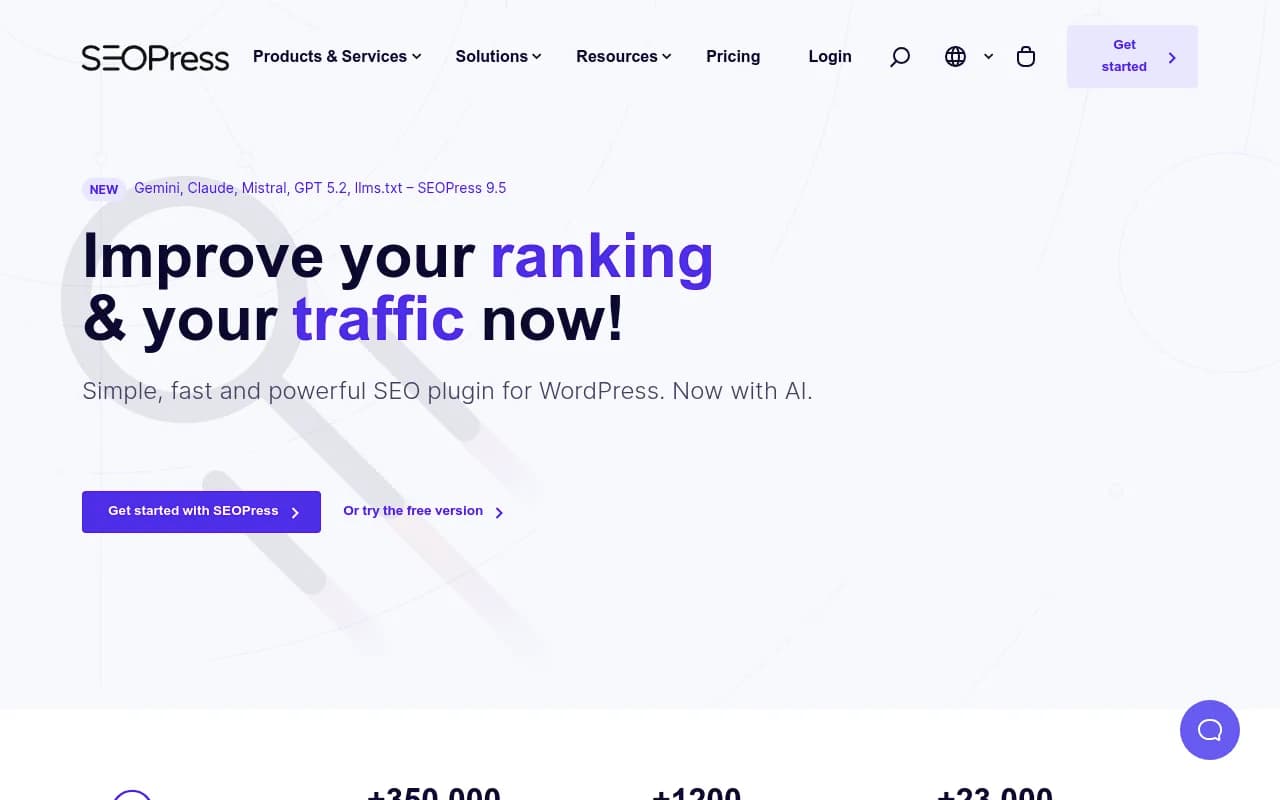
SEOPress is worth mentioning as a white-label alternative. It supports the main schema types, has a JSON-LD editor for custom markup, and is notably lighter on server resources than Rank Math or Yoast. If you're running a high-traffic site where plugin overhead matters, it's a reasonable choice.
Technical crawlers: the auditing layer
Generating schema is one thing. Knowing whether it's actually rendering correctly, validating properly, and covering the right pages is another. This is where crawlers earn their place.
Screaming Frog SEO Spider
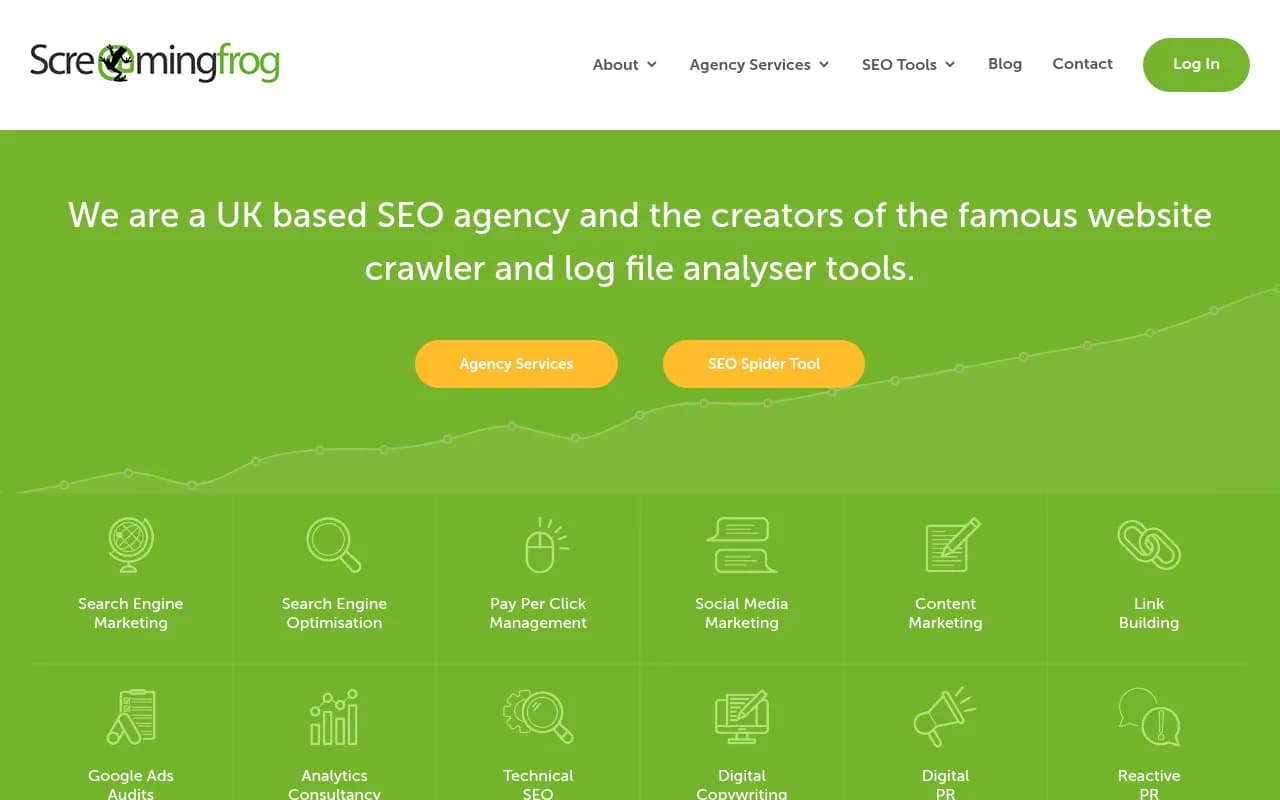
Screaming Frog remains the standard for technical schema auditing. It extracts structured data from every page it crawls, validates it against schema.org specifications, and flags errors. You can filter by schema type, see which pages are missing schema, and export everything for analysis.
The structured data tab in Screaming Frog shows you exactly what JSON-LD, Microdata, or RDFa is present on each URL. If you're doing a schema audit before an AI visibility push, this is the tool you want for the crawl phase.
Sitebulb
Sitebulb takes a more visual approach to technical audits, including structured data. Its schema auditing surfaces issues with a priority score, so you're not wading through hundreds of warnings trying to figure out what actually matters. It also gives you a clear breakdown of which schema types are present across your site and where coverage is thin.
For teams that find Screaming Frog's interface overwhelming, Sitebulb is a genuinely better experience without sacrificing depth.

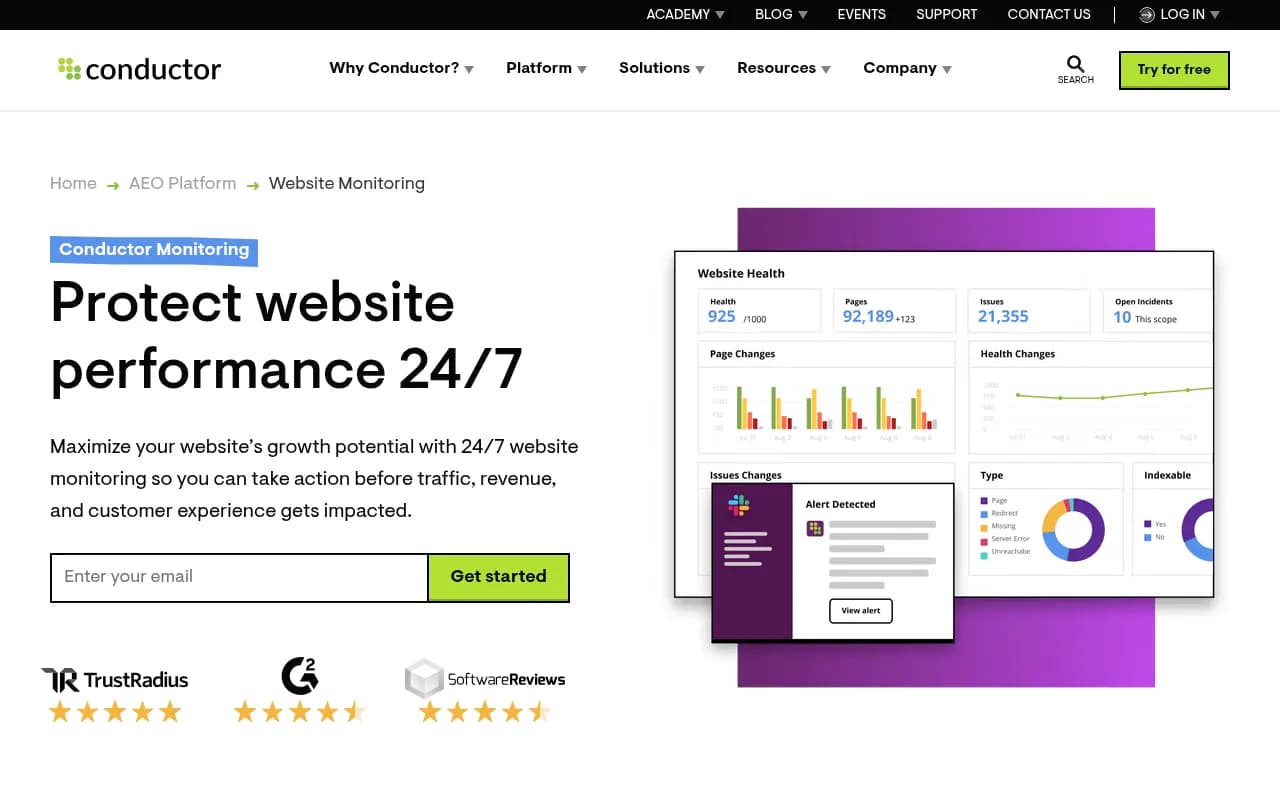
ContentKing
ContentKing monitors your site continuously rather than running periodic crawls. For structured data, this means you get alerts when schema breaks -- when a deployment removes JSON-LD from a template, or when a CMS update corrupts markup across hundreds of pages. That real-time monitoring is something Screaming Frog and Sitebulb can't match.
All-in-one SEO platforms: schema within a broader toolkit
Semrush
Semrush's Site Audit includes structured data checks as part of its technical audit module. It flags missing schema, invalid markup, and pages where schema types could be added. It's not as deep as Screaming Frog for pure schema auditing, but it's integrated with everything else -- keyword data, content tools, rank tracking -- which makes it useful for teams that want one platform.
Semrush has also been building out AI search tracking features, though its approach to AI visibility is more limited than dedicated GEO platforms.
Ahrefs
Ahrefs' Site Audit similarly covers structured data as part of its technical health checks. The interface is clean and the recommendations are actionable. Like Semrush, it's not a schema specialist, but it's good enough for teams that don't need deep schema auditing as a standalone workflow.
SE Ranking
SE Ranking has been expanding its feature set aggressively. Its site audit covers structured data, and it has added some AI search visibility tracking. For teams that want traditional SEO plus some AI monitoring in one platform at a lower price point than Semrush or Ahrefs, it's worth evaluating.
The structured data specialist: WordLift
WordLift deserves its own section because it approaches schema from a fundamentally different angle. Rather than treating schema as a technical checkbox, WordLift builds a knowledge graph for your site -- identifying entities, connecting them to Wikidata and other linked data sources, and generating schema that reflects those entity relationships.
This matters for AI citation because AI engines are increasingly entity-aware. They don't just match keywords; they understand that "Apple" the company and "apple" the fruit are different entities, and they build responses around entity relationships. WordLift's approach aligns with how AI models actually process information.
For content-heavy sites -- publishers, e-commerce catalogs, knowledge bases -- WordLift's entity-based schema can meaningfully improve how AI engines interpret and cite your content.
Connecting schema to AI citation: the missing piece
Here's the problem with most schema tools: they tell you whether your markup is valid, but they don't tell you whether it's working. You can have perfect schema on every page and still be invisible in AI search. You can have schema errors and still get cited regularly. The technical layer matters, but it's not the whole story.
What's missing from most platforms is the connection between schema implementation and actual AI citation outcomes. Which pages are AI engines citing? Which schema types appear on those pages? Which prompts are driving citations to your content versus your competitors?
This is where dedicated AI visibility platforms come in. Promptwatch tracks citations across 10 AI models -- ChatGPT, Perplexity, Google AI Overviews, Claude, Gemini, and more -- and shows you exactly which pages are being cited, how often, and in response to which prompts. Its Answer Gap Analysis surfaces the specific prompts where competitors get cited but you don't, which often points directly to content and schema gaps you can fix.

The practical workflow looks like this: use a crawler to audit your schema, use a WordPress plugin to implement fixes, then use an AI visibility platform to track whether those changes translate into actual citations. Without that third step, you're optimizing in the dark.
Comparison: schema tools by use case
| Tool | Schema generation | Schema auditing | AI citation tracking | Best for |
|---|---|---|---|---|
| Rank Math | Excellent | Basic | None | WordPress sites needing automated schema |
| Yoast SEO | Good | Basic | None | WordPress sites wanting simple setup |
| SEOPress | Good | Basic | None | WordPress sites needing lightweight plugin |
| Screaming Frog | None | Excellent | None | Deep technical schema audits |
| Sitebulb | None | Very good | None | Visual schema auditing with prioritization |
| ContentKing | None | Good (real-time) | None | Continuous schema monitoring |
| Semrush | None | Good | Limited | All-in-one SEO with schema checks |
| Ahrefs | None | Good | Limited | All-in-one SEO with schema checks |
| WordLift | Excellent (entity-based) | Good | None | Entity-rich content and knowledge graphs |
| Promptwatch | None | None | Excellent | Connecting schema to AI citation outcomes |
What schema types matter most for AI citation
Based on how AI search engines construct their responses, a few schema types consistently show up in cited content:
FAQPage is probably the highest-value schema for AI citation right now. AI engines love question-answer pairs because they map directly to how users prompt. If you have FAQ sections on your pages, mark them up.
Article with complete metadata -- author, datePublished, dateModified, publisher -- signals freshness and authorship. AI engines weight recency and authority, and this schema makes both explicit.
HowTo schema works similarly to FAQ for instructional content. Step-by-step content with proper HowTo markup is easy for AI engines to parse and cite.
Product and Review schema matter for e-commerce and comparison content. ChatGPT's shopping features specifically pull from structured product data.
Organization and Person schema help establish entity identity. If AI engines can't clearly identify who you are and what you do, they're less likely to cite you as an authoritative source.
Practical recommendations
If you're running a WordPress site, start with Rank Math for schema generation -- it's the most capable plugin for this purpose and the FAQ schema builder alone is worth the setup time.
Pair it with a Screaming Frog crawl to audit what's actually rendering. Schema generation and schema rendering are different things; JavaScript rendering issues, caching problems, and template bugs can all cause schema to disappear between the CMS and the live page.
If you're in e-commerce or publishing with a large content catalog, WordLift's entity-based approach is worth the investment. The knowledge graph it builds is genuinely different from what standard schema plugins produce.
For tracking whether any of this is actually improving your AI search visibility, you need a dedicated platform. Promptwatch's page-level citation tracking and Answer Gap Analysis give you the feedback loop that schema tools alone can't provide. Without knowing which pages AI engines are actually reading and citing, you're guessing about what to fix.
The teams getting the most out of structured data in 2026 aren't just implementing schema correctly -- they're using citation data to understand which schema types and content formats AI engines actually respond to, then optimizing accordingly. That's a fundamentally different workflow from the old "validate and forget" approach to structured data.
Schema is the foundation. Citation tracking is how you know if the foundation is working.