Key takeaways
- ChatGPT sees your brand as an entity, not a collection of pages. Inconsistent naming, category confusion, and missing structured data all hurt how confidently it describes you.
- Most brands fail on the basics: no schema markup, no canonical brand definition, no content written around the prompts their buyers actually use.
- Off-site signals matter as much as your own website. Reddit threads, third-party listicles, and review platforms all feed LLM training and retrieval.
- Monitoring isn't optional. AI models update constantly, and your visibility can shift without any change on your end.
- The checklist below covers five areas: entity clarity, technical foundations, content architecture, off-site citation signals, and tracking. Score yourself honestly.
Most marketing teams find out they're invisible in ChatGPT the same way: a customer mentions they asked ChatGPT for a recommendation in your category, and your brand wasn't mentioned. Not ranked lower -- just absent.
That's the problem with AI search. There's no page two. You're either in the answer or you're not.
The good news is that invisibility is usually fixable. ChatGPT's recommendations aren't random -- they follow patterns. Brands that show up consistently have done specific things. Brands that don't show up have specific gaps. This checklist maps those gaps into 20 actionable fixes across five areas.
Score each item: 1 point if it's done, 0 if it's missing or you're not sure. At the end, compare your total to the scoring guide.
Area 1: Entity clarity
LLMs don't crawl your site the way Google does. They build a model of what your brand is -- its category, its positioning, its key claims -- from everything they've seen across the web. If those signals are inconsistent, the model gets confused. Confused models either describe you vaguely or skip you entirely.
1. Your brand name is consistent everywhere
Check your website, LinkedIn, Crunchbase, G2, Capterra, press releases, and any directory listings. Is the capitalization identical? Are abbreviations handled the same way? One company using "HubSpot," "Hubspot," and "hubspot" interchangeably across the web creates real ambiguity for an LLM trying to build a coherent entity representation.
Fix: Pick a canonical form and audit every profile you control.
2. Your category is defined consistently
Your homepage, About page, LinkedIn bio, and third-party listings should all describe your category the same way. "AI SEO platform," "content optimization tool," and "digital marketing software" are not the same thing to a language model. Pick one primary category and use it everywhere.
3. You have a clear, quotable one-liner
ChatGPT often lifts short descriptive phrases directly from source material. If your site doesn't have a crisp, accurate sentence describing what you do, the model has to construct one -- and it may get it wrong. Write a one-liner that's factually accurate, specific, and appears prominently on your homepage and About page.
4. Your Wikipedia or Wikidata presence is accurate (if applicable)
For brands of any scale, Wikipedia and Wikidata are high-trust sources that LLMs weight heavily. If you have a Wikipedia page, check it for accuracy. If you don't, consider whether you meet notability criteria. Wikidata entries are easier to create and still carry signal.
Area 2: Technical foundations
Before worrying about content, make sure AI crawlers can actually read your site. Several common technical issues block or degrade how LLMs process your pages.
5. Your robots.txt isn't blocking AI crawlers
Some brands accidentally block GPTBot (OpenAI's crawler), ClaudeBot, or PerplexityBot in their robots.txt. Check your file at yourdomain.com/robots.txt. If you're blocking these agents, you're opting out of being cited.
# Check for these disallow rules and remove them if present:
User-agent: GPTBot
Disallow: /

User-agent: ClaudeBot
Disallow: /

User-agent: PerplexityBot
Disallow: /
6. Your key pages render properly for bots
JavaScript-heavy sites can appear blank to crawlers. If your homepage or key product pages rely on client-side rendering, use server-side rendering or a prerendering service so bots see actual content, not an empty shell.
Tools like Screaming Frog SEO Spider can simulate how a bot sees your pages.
7. You have schema markup on key pages
Structured data (JSON-LD) helps LLMs understand what a page is about with much less ambiguity. At minimum, implement:
Organizationschema on your homepage (with name, URL, description, logo, sameAs links)ProductorServiceschema on product pagesFAQPageschema on pages that answer common questionsArticleschema on blog posts
WordLift is worth looking at if you want to automate structured data at scale.
8. Your page speed doesn't cause crawl timeouts
Slow pages get crawled less frequently and less completely. Run your key pages through Google PageSpeed Insights and fix anything that causes a timeout or a Core Web Vitals failure. This matters more for AI crawler frequency than most people realize.
Area 3: Content architecture
This is where most brands have the biggest gaps. ChatGPT recommends brands that have published content directly answering the prompts buyers use. If that content doesn't exist on your site, you're invisible for those prompts -- regardless of how good your product is.
9. You've mapped the prompts your buyers actually use
Before you can create content that ranks in AI, you need to know which prompts your buyers are typing. These aren't traditional keywords -- they're full questions like "What's the best CRM for a 10-person sales team?" or "Which email marketing platform is easiest to migrate to?"
Write out 20-30 prompts from your buyer's perspective. Then test them in ChatGPT, Perplexity, and Gemini. See who shows up. If it's not you, that's your content gap list.
Promptwatch has a prompt intelligence feature that shows volume estimates and difficulty scores for these prompts, which helps you prioritize which gaps to close first.

10. You have content that directly answers comparison prompts
"[Your category] vs [competitor]" and "best [your category] for [use case]" prompts are among the highest-intent queries in AI search. If you don't have pages that directly address these comparisons, competitors who do will get cited instead of you.
Write honest, detailed comparison pages. Don't just say you're better -- explain the specific tradeoffs. LLMs favor nuanced, balanced content over pure promotional copy.
11. Your content uses question-and-answer structure
LLMs are trained to answer questions. Content structured as Q&A -- with explicit questions as headings and direct answers immediately following -- gets reused far more often than dense prose. Use H2 or H3 headings that mirror how buyers phrase their questions.
12. You have content covering your category's "best of" prompts
When someone asks "What are the best [tools/services] for [use case]?", ChatGPT pulls from sources that have already answered that question. If you've published a well-researched "best of" list in your category (including competitors where appropriate), you become a source -- and your brand appears in the context of that answer.
This feels counterintuitive. Publishing content that mentions competitors can actually increase your own visibility.
13. Your content covers the full buyer journey, not just top-of-funnel
Most brand blogs focus on awareness content. But AI search is heavily used for mid-funnel and bottom-funnel research: "Is [brand] worth it?", "What are the limitations of [brand]?", "How does [brand] handle [specific use case]?". If you don't answer these questions on your own site, someone else will -- and their answer may not be flattering.
Publish honest, detailed content about your product's strengths, limitations, and ideal use cases. Transparency builds trust with both buyers and LLMs.
14. You publish content regularly enough to stay in training data
LLMs are retrained and updated. Perplexity and ChatGPT with web search pull from live sources. A site that hasn't published new content in six months sends a signal that it may not be the most current source. Consistent publishing -- even monthly -- keeps you in the conversation.
Area 4: Off-site citation signals
Your own website is only part of the picture. LLMs pull from a wide range of sources: review platforms, Reddit, industry publications, YouTube, and third-party listicles. Brands with strong off-site presence get cited even when their own site content is thin.
15. You appear in third-party "best of" lists
When ChatGPT answers "What are the best tools for X?", it frequently cites listicles from G2, Capterra, TechRadar, Forbes Advisor, and similar publications. Check whether your brand appears in the top 10-15 results for these queries. If not, prioritize getting listed or improving your position.
This means actively managing your G2 and Capterra profiles, reaching out to publications for inclusion, and generating reviews that push your ratings higher.
16. You have a meaningful presence on Reddit
Reddit is one of the most-cited sources in ChatGPT responses, especially for product recommendations. Search Reddit for your category and see what's being said. Are you mentioned? Are the mentions positive? Are there threads where you should be mentioned but aren't?
Participate genuinely in relevant subreddits. Answer questions. Share useful content. Don't spam -- Reddit communities detect and reject promotional behavior quickly, and that negative signal reaches LLMs too.
17. You have reviews on major platforms
G2, Capterra, Trustpilot, and Google Business Profile reviews all feed into LLM training data and retrieval. A brand with 200 detailed reviews on G2 has a much stronger entity signal than one with 12. Make review generation a systematic part of your customer success process.
Trustpilot is worth prioritizing -- it's heavily cited across AI responses.
18. You have earned media coverage with your brand name in the headline
Press coverage from credible publications (not just press releases on wire services) builds domain authority and entity recognition. An article in TechCrunch or VentureBeat that names your brand in the headline creates a strong, high-trust citation signal. Even regional or niche industry publications matter.
If you don't have a PR strategy, start small: contribute expert quotes to journalists covering your space, write guest posts for industry publications, and respond to HARO or similar journalist query services.
Area 5: Monitoring and iteration
Getting into ChatGPT's answers isn't a one-time achievement. Models update. Competitors publish new content. Your visibility can improve or deteriorate without any action on your end. Monitoring is what turns a one-time audit into an ongoing advantage.
19. You're tracking your mention rate across key prompts
Pick 20-30 prompts that matter to your business and check them weekly. Track whether your brand is mentioned, where in the response it appears, and what language is used to describe you. This is the baseline metric for AI visibility.
Several tools make this easier at scale:
| Tool | Key strength | Best for |
|---|---|---|
| Promptwatch | Full action loop: track gaps, generate content, monitor results | Teams that want to fix visibility, not just measure it |
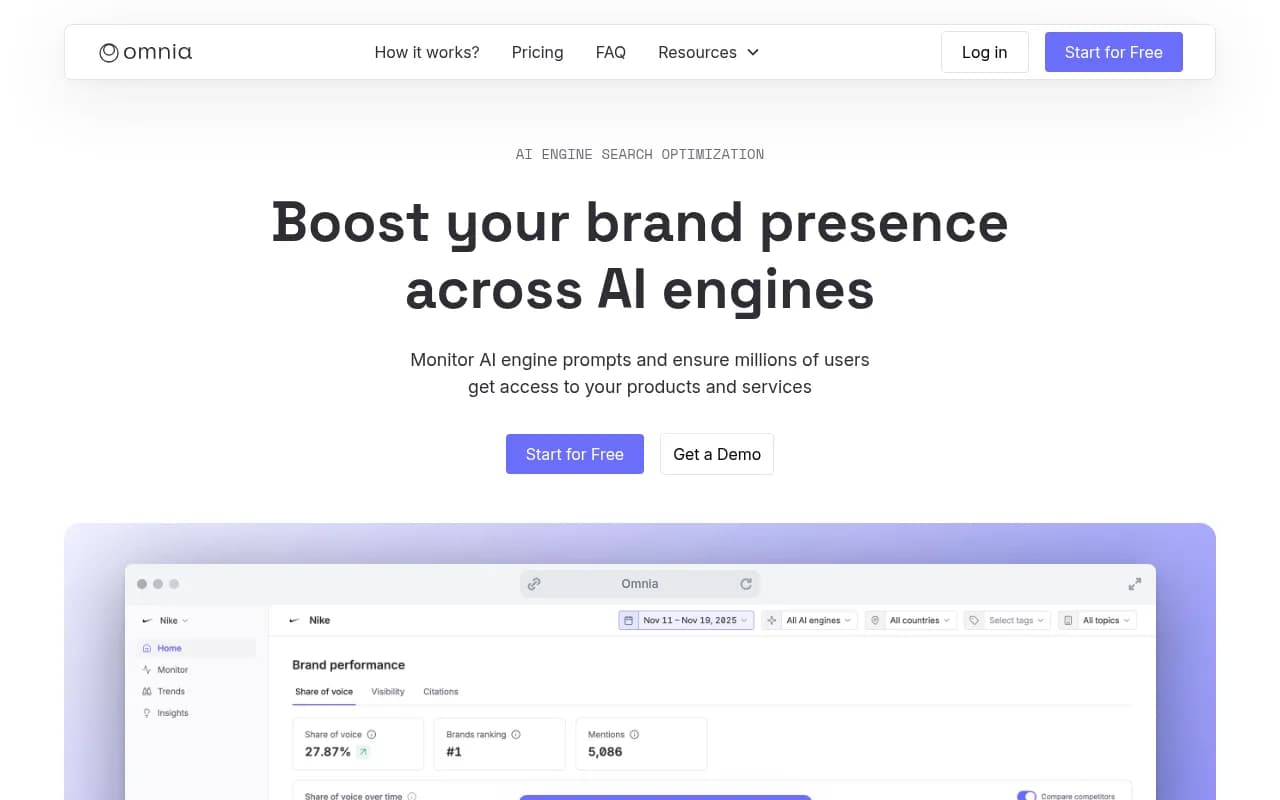
| Omnia | Mention rate tracking across AI models | Brands focused on measurement |
| Rankshift | Multi-model brand tracking | SMBs wanting simple dashboards |
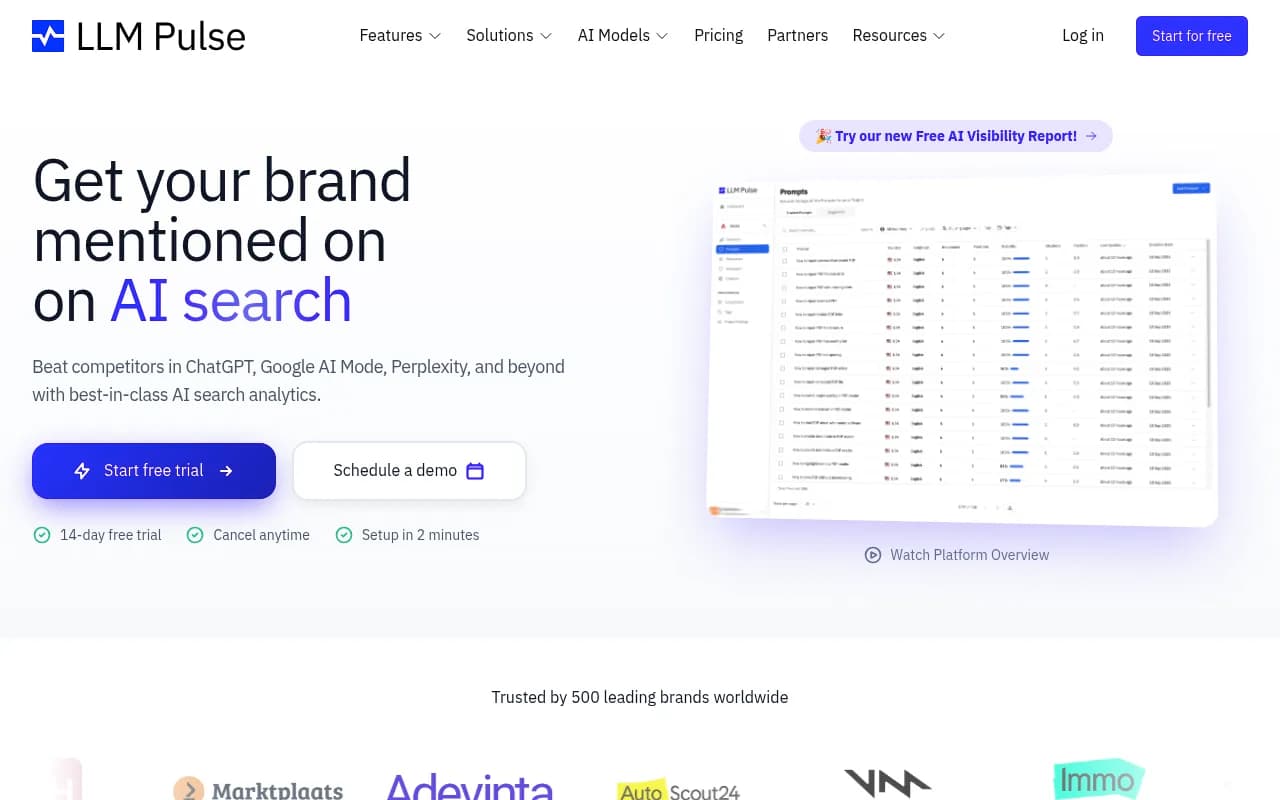
| LLM Pulse | Prompt-level visibility tracking | Teams needing prompt-by-prompt data |
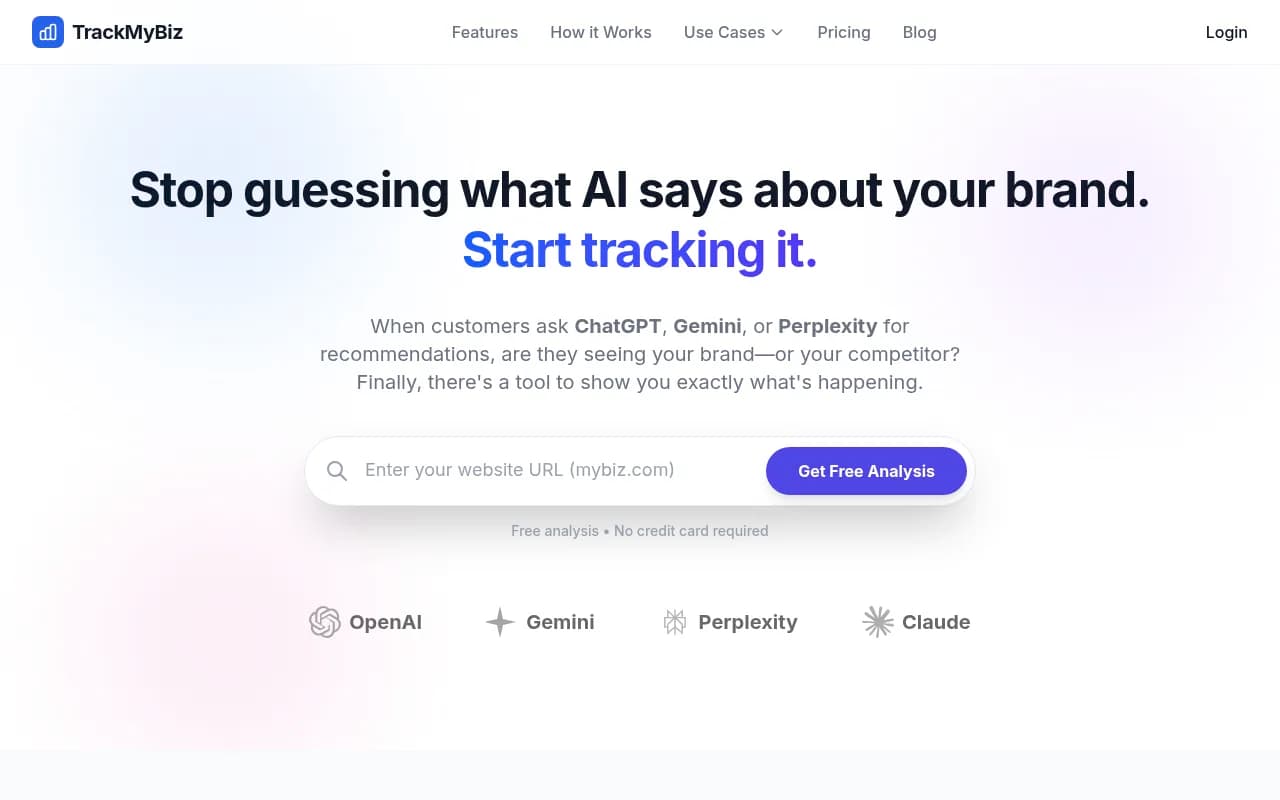
| TrackMyBusiness | ChatGPT, Gemini, Perplexity monitoring | Small businesses |

20. You have a process for closing the gaps you find
Monitoring without action is just watching yourself lose. The most important thing you can do after setting up tracking is create a workflow: when you identify a prompt where a competitor is cited and you're not, what happens next?
The answer should be: someone creates or updates content to answer that prompt better. Then you track whether your visibility improves after the content is published and indexed.
Promptwatch's Answer Gap Analysis is built specifically for this -- it shows you the exact prompts where competitors appear and you don't, then lets you generate content to close those gaps. Most monitoring tools stop at the data. The action loop is what actually moves the needle.
Scoring guide
Add up your points (1 per completed item, 0 per gap or uncertainty):
| Score | What it means |
|---|---|
| 16-20 | Strong foundation. Focus on content depth and off-site citations. |
| 10-15 | Moderate visibility. Several structural gaps to close. |
| 5-9 | Significant gaps. Prioritize entity clarity and technical fixes first. |
| 0-4 | Urgent attention needed across all five areas. |
Most brands score between 6 and 12 on their first honest audit. That's not a failure -- it's a roadmap.
Where to start
If you scored below 10, don't try to fix everything at once. Work through the areas in order:
- Entity clarity first -- it's the foundation everything else builds on.
- Technical fixes next -- make sure AI crawlers can actually read your site.
- Then content -- start with the 5 highest-intent prompts in your category.
- Off-site signals take longer but compound over time. Start building reviews and Reddit presence now.
- Set up monitoring before you do anything else, actually -- you need a baseline to measure progress against.
The brands that win in AI search in 2026 aren't necessarily the ones with the biggest budgets or the most content. They're the ones that understand how LLMs make decisions and systematically give those models better signals to work with. This checklist is how you start doing that.