Key takeaways
- Traditional SEO tools (Semrush, Ahrefs, Screaming Frog) still handle Google rankings well, but most don't track AI search visibility at all
- AI search requires a separate layer of tools focused on brand mentions, citation analysis, and prompt tracking across ChatGPT, Perplexity, Gemini, and others
- When an AI Overview appears in Google results, the top organic result loses roughly 58% of its clicks -- which means ignoring AI search is now a real revenue problem
- A handful of tools overlap both worlds, but most teams will need at least two distinct categories in their stack
- The most effective stacks in 2026 combine a core SEO platform, a technical crawler, a content optimizer, and a dedicated AI visibility tool
Search in 2026 is genuinely two different games running on the same field. Google still drives enormous traffic, and traditional SEO -- keywords, backlinks, technical health -- still works. But AI Overviews now appear on a huge percentage of informational queries, and tools like ChatGPT, Perplexity, and Gemini are handling millions of searches that never touch a SERP at all.
The problem is that most SEO tools were built for one game. Ahrefs is exceptional at backlink analysis. Screaming Frog is the gold standard for technical crawls. But neither tells you whether ChatGPT is recommending your competitor when someone asks about your product category.
This guide breaks down what you actually need in 2026: the Google stack, the AI search stack, and the tools that genuinely cover both.
The Google SEO stack: what still works
Traditional SEO is not dead. Organic clicks are still flowing -- just increasingly toward action-oriented queries. Ahrefs' own data shows that when an AI Overview appears, the top result loses around 58% of its clicks. But for transactional queries (calculators, checkers, service pages, booking flows), AI can't complete the task. Those clicks still go to websites.
So the Google stack matters. Here's what a solid one looks like.
Core research and tracking
For most teams, one all-in-one platform handles the bulk of keyword research, rank tracking, and competitive analysis. The two dominant options are Semrush and Ahrefs, and honestly, either works -- they're both mature platforms with massive databases.
Semrush edges ahead for teams that want everything in one place: keyword research, site audits, content tools, and position tracking. Ahrefs is stronger for backlink analysis and has a cleaner interface for link-building workflows.
SE Ranking is worth a look if you want something more affordable that still covers traditional SEO plus some AI search monitoring.
Google Search Console remains non-negotiable regardless of what else you use. It's the only tool with real Google data -- everything else is an estimate. Free, and genuinely irreplaceable.
Technical crawling
Screaming Frog is still the best desktop crawler for technical audits. Redirect chains, structured data, duplicate content, canonicalization issues -- it handles all of it faster than any cloud-based alternative. The free version covers 500 URLs, which is enough for smaller sites.
For enterprise sites with millions of pages, Sitebulb turns crawl data into visual reports that are much easier to act on.

Content optimization
Surfer SEO remains the go-to for NLP-driven content scoring. You paste in a draft, it shows you which terms and topics you're missing compared to top-ranking pages, and you optimize in real time.
Frase is useful for the research phase -- it generates content briefs from SERP analysis in minutes, which saves a lot of manual work.
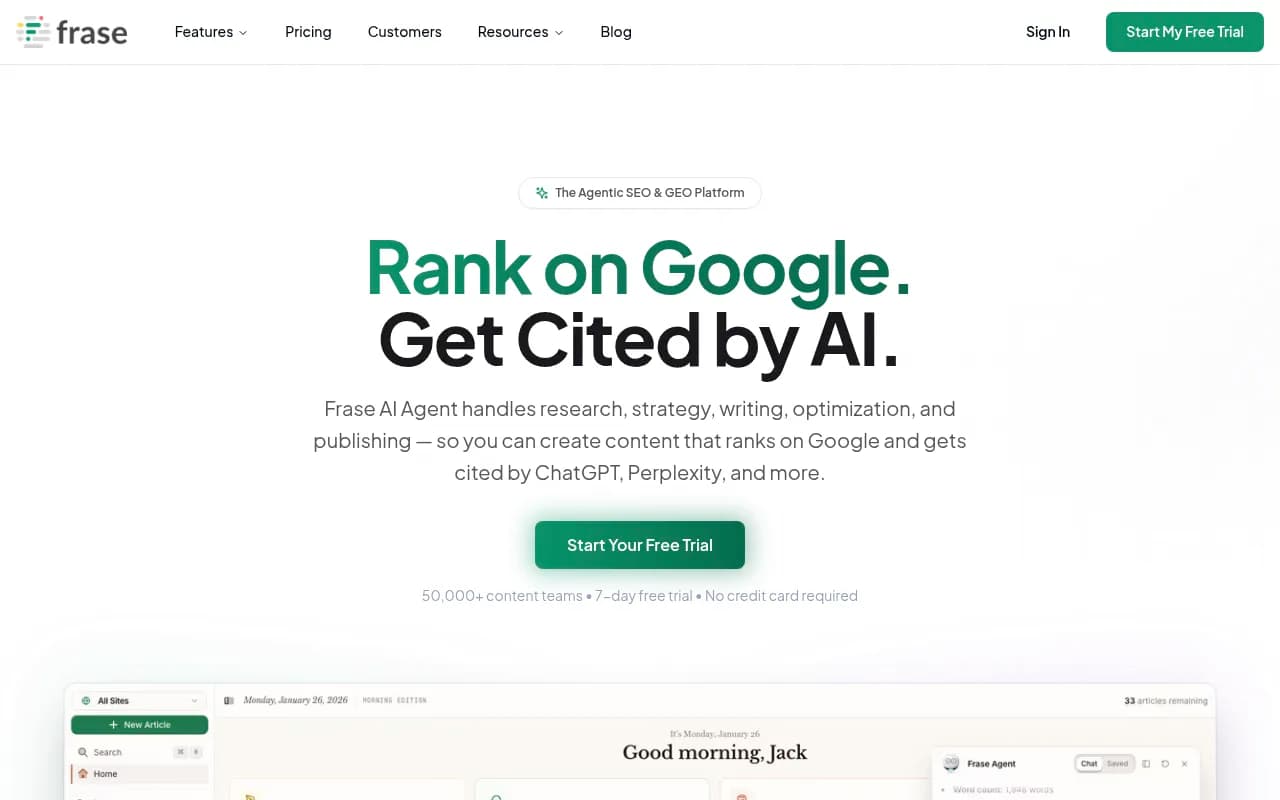
Clearscope is another strong option, particularly for teams that want cleaner reporting and tighter integration with editorial workflows.

WordPress-specific
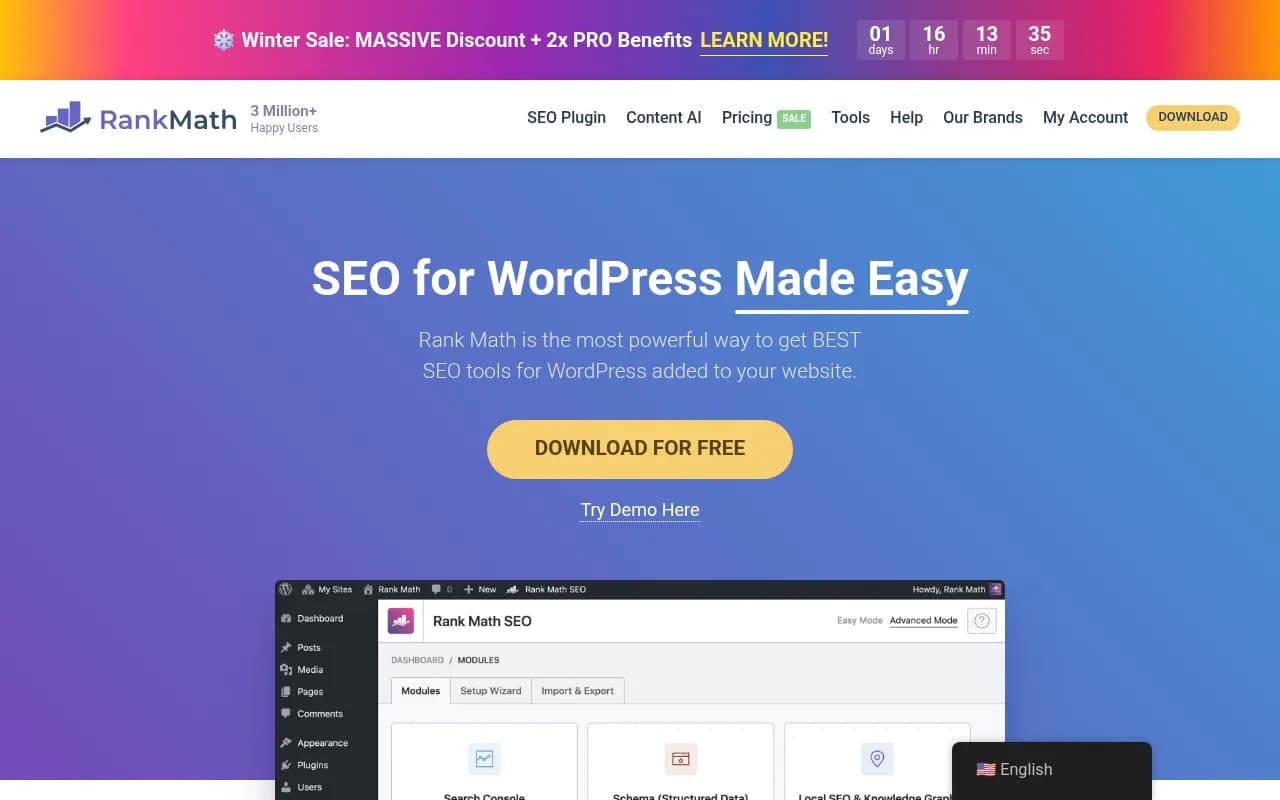
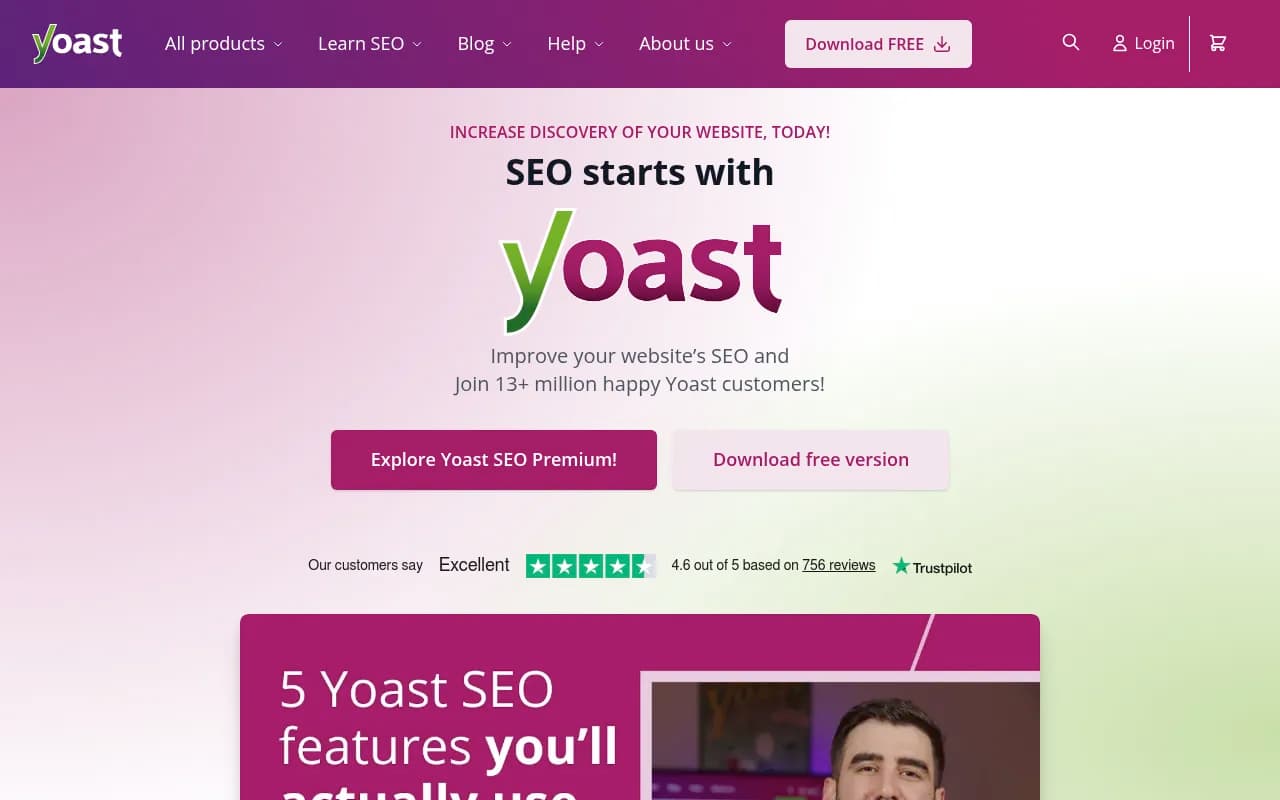
If your site runs on WordPress, Rank Math or Yoast handle schema markup, XML sitemaps, and on-page checks at the plugin level. Both have free tiers that cover most needs.
The AI search stack: what you actually need
This is where most teams are behind. AI search visibility is a different problem from Google rankings, and it requires different tools.
When someone asks ChatGPT "what's the best project management tool for remote teams," the answer doesn't come from a keyword-optimized page ranking #1. It comes from whatever sources the model was trained on, what it finds when it browses the web, and which brands appear consistently across forums, review sites, comparison pages, and editorial content.
Tracking this requires tools that can:
- Send real prompts to AI engines and capture the responses
- Identify which brands and pages get cited
- Show you where competitors appear that you don't
- Help you understand what content to create to close those gaps
Dedicated AI visibility platforms
Promptwatch is the most complete platform in this category. It tracks your brand's visibility across 10 AI models (ChatGPT, Perplexity, Gemini, Claude, Grok, DeepSeek, Copilot, Meta AI, Mistral, and Google AI Overviews), but the key difference from most competitors is that it doesn't stop at monitoring. It includes answer gap analysis that shows exactly which prompts competitors rank for that you don't, content agents that generate articles designed to close those gaps, and AI crawler logs that show you which pages AI bots are actually reading on your site. For teams that want to do something with their data rather than just look at it, that's a meaningful distinction.

Otterly.AI is a solid monitoring-only option if you just want to track brand mentions across ChatGPT, Perplexity, and AI Overviews without the content generation layer.
Otterly.AI

Profound covers enterprise use cases with strong multi-model tracking and sentiment analysis.
Profound

Peec AI is a lighter option for smaller teams getting started with AI visibility tracking.

What to look for in an AI visibility tool
Not all of these tools are equal. Before committing to one, check whether it:
- Tracks responses from actual user-facing interfaces (not just API calls, which can differ)
- Shows you page-level citation data, not just brand-level mentions
- Includes competitor visibility so you can benchmark
- Gives you prompt volume data so you can prioritize which queries actually matter
- Has some path to action -- content briefs, gap analysis, or optimization recommendations
Most monitoring-only tools stop at showing you a dashboard. That's useful, but it doesn't tell you what to do next.
Where the two worlds overlap
Some tools are genuinely trying to bridge traditional SEO and AI search. A few are doing it well.
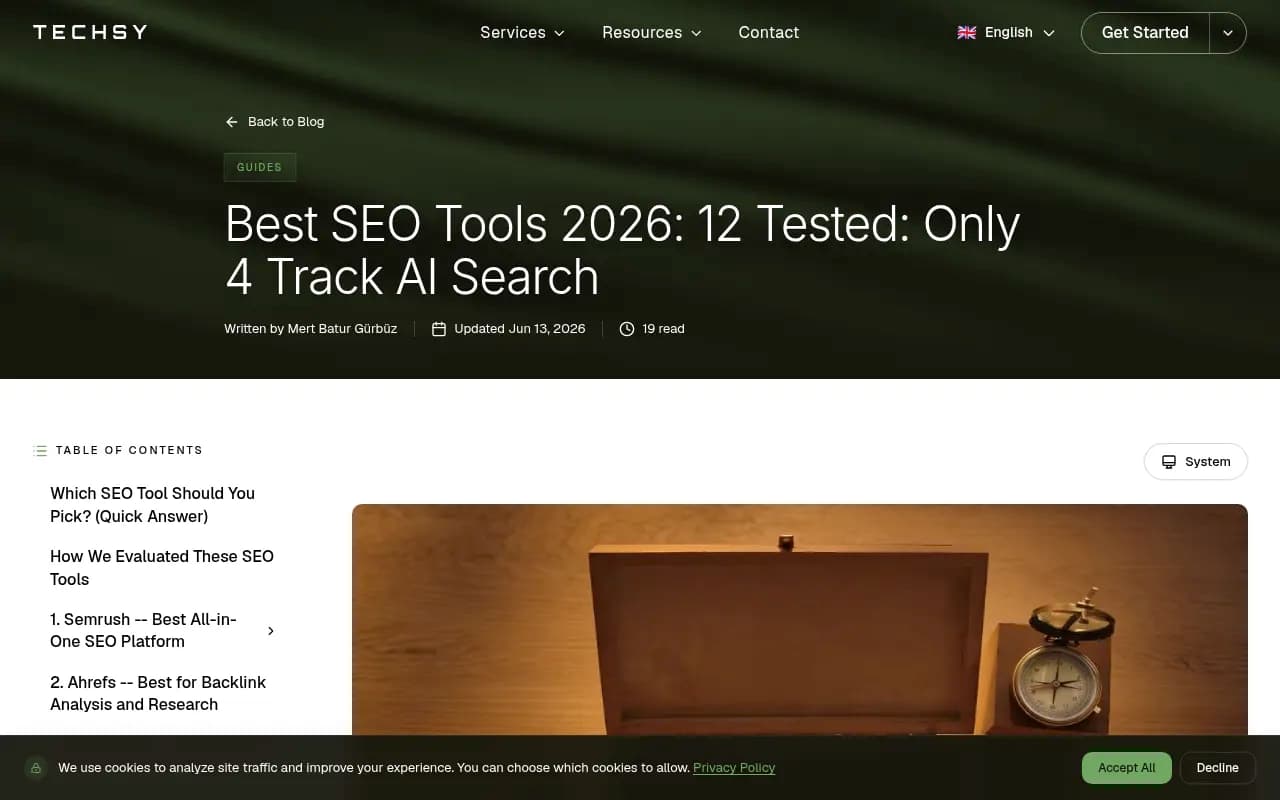
TECHSY tested 12 SEO tools in 2026 and found only 4 that actually track AI search -- a sign of how far behind most traditional platforms still are.
Semrush
Semrush has been adding AI search features, including some AI Overview tracking. It's not as deep as a dedicated GEO platform, but if you're already paying for Semrush and want basic AI visibility data without adding another tool, it's worth checking what's available in your plan.
Ahrefs Brand Radar
Ahrefs added a Cited Domains report that shows which websites AI assistants cite in their responses. It's genuinely useful for understanding where AI models pull from in your niche -- you can see which domains are being cited and reverse-engineer where you need to publish or get mentioned. The caveat is that it's more of a research feature than a full monitoring system.
SE Ranking
SE Ranking has been building out LLM result tracking alongside its traditional rank tracking. For teams that want one platform covering both without jumping to enterprise pricing, it's one of the more practical options.
Rank Math
Rank Math Pro has added some AI-focused schema and structured data features that help your content get parsed correctly by AI crawlers. It's not AI visibility tracking, but it's relevant to how AI models read and interpret your pages.
The full comparison
Here's how the major tools stack up across the key dimensions:
| Tool | Google SEO | AI search tracking | Content optimization | Technical audit | Price |
|---|---|---|---|---|---|
| Semrush | Excellent | Basic | Good | Good | $140+/mo |
| Ahrefs | Excellent | Moderate (Brand Radar) | Basic | Good | $129+/mo |
| SE Ranking | Good | Moderate | Good | Good | $129+/mo |
| Screaming Frog | None | None | None | Excellent | $23/mo |
| Surfer SEO | None | None | Excellent | None | $89+/mo |
| Frase | None | None | Good | None | $15+/mo |
| Clearscope | None | None | Excellent | None | $170+/mo |
| Promptwatch | None | Excellent | Excellent (AI content agents) | Crawler logs | $99+/mo |
| Otterly.AI | None | Good | None | None | $50+/mo |
| Profound | None | Excellent | Moderate | None | Custom |
| Google Search Console | Good | None | None | Basic | Free |
How to build your stack without overspending
The mistake most teams make is trying to find one tool that does everything. That tool doesn't exist yet. The better approach is to pick one strong platform for each job and connect them.
A practical stack for most marketing teams in 2026:
Tier 1 (essential):
- Google Search Console -- free, non-negotiable
- One all-in-one SEO platform (Semrush or Ahrefs) -- covers keyword research, rank tracking, backlinks
- Screaming Frog -- technical audits
Tier 2 (content):
- Surfer SEO or Clearscope -- content optimization
- Frase -- content briefs and research
Tier 3 (AI search):
- A dedicated AI visibility platform -- Promptwatch if you want to act on the data, Otterly.AI or Peec AI if you just want monitoring
The total cost for a mid-sized team running this stack lands somewhere between $400-700/month depending on plan tiers. That's not cheap, but it covers both search channels properly.
If budget is tight, prioritize Google Search Console (free), one SEO platform, and one AI visibility tool. You can add the content optimization layer later.
The query fan-out problem: why brand matters more than ever
One thing worth understanding before you build your stack: AI search doesn't work like keyword ranking. When someone types "best CRM for small business" into ChatGPT, the model doesn't just look for pages that rank for that exact phrase. It fans out into dozens of sub-queries -- comparisons, reviews, alternatives, "vs" searches -- and stitches an answer from whatever it finds across all of them.
Ahrefs' research shows that branded mentions correlate with AI Overview visibility more than backlinks or domain rating. If your brand appears consistently across review sites, comparison pages, Reddit threads, and editorial content, your odds of being cited go up significantly.
This means your AI search strategy isn't just about your own website. It's about your presence across the web -- which third-party pages mention you, which Reddit discussions include you, which YouTube videos review your product. Tools that track offsite citations (not just your own pages) give you a much more complete picture.
Promptwatch includes offsite citation analysis for this reason -- tracking which external mentions, listicles, and forum discussions are driving AI visibility beyond your own domain. Most monitoring-only tools don't go that deep.
What to do right now
If you're starting from scratch or auditing your current stack, here's a practical order of operations:
- Make sure Google Search Console is set up and you're actually reading the data weekly
- Pick one all-in-one SEO platform and commit to it -- don't split your budget between Semrush and Ahrefs
- Run a technical audit with Screaming Frog and fix the issues it surfaces
- Add a content optimization tool to your editorial workflow
- Set up AI visibility tracking and run a baseline audit -- find out where you appear (and don't appear) across ChatGPT, Perplexity, and Google AI Overviews
- Use the gap data to prioritize content creation
The last step is where most teams stop. They set up monitoring, see the gaps, and don't know what to do next. The platforms that help you close those gaps -- not just identify them -- are where the real value is in 2026.
Search has split into two channels. The teams that build stacks covering both are the ones that won't be surprised when their organic traffic shifts.