Key takeaways
- AI-generated answers now appear in roughly 48% of all Google searches as of early 2026, up from 34.5% just three months prior — the shift is happening faster than most teams anticipated
- Traditional rank trackers and keyword tools were built for a world of 10 blue links; most are now scrambling to bolt on AI monitoring features with mixed results
- A new category of purpose-built GEO (Generative Engine Optimization) platforms has emerged to fill the gap, but quality varies enormously
- The tools that are winning in 2026 go beyond monitoring — they help teams find content gaps, create content that gets cited, and track results across multiple AI engines
- Knowing where you rank in Google still matters, but knowing whether ChatGPT, Perplexity, or Gemini mentions your brand when someone asks a relevant question is now equally important
The numbers that changed everything
Search behavior shifted faster in 2025 than most marketing teams had planned for. Google AI Overviews went from a curiosity to a fixture, appearing in over 13% of searches by mid-2025 and pushing toward 25% by year-end. Then in 2026, the pace accelerated again.
By March 2026, AI-generated answers appeared in approximately 48% of all search queries, according to data from Digital Applied. That's nearly half of all searches returning an answer before a user ever clicks a link. Google's I/O 2026 announcements made the direction even clearer: AI agents are now built directly into Search, and the search box itself just received its biggest redesign in 25 years.
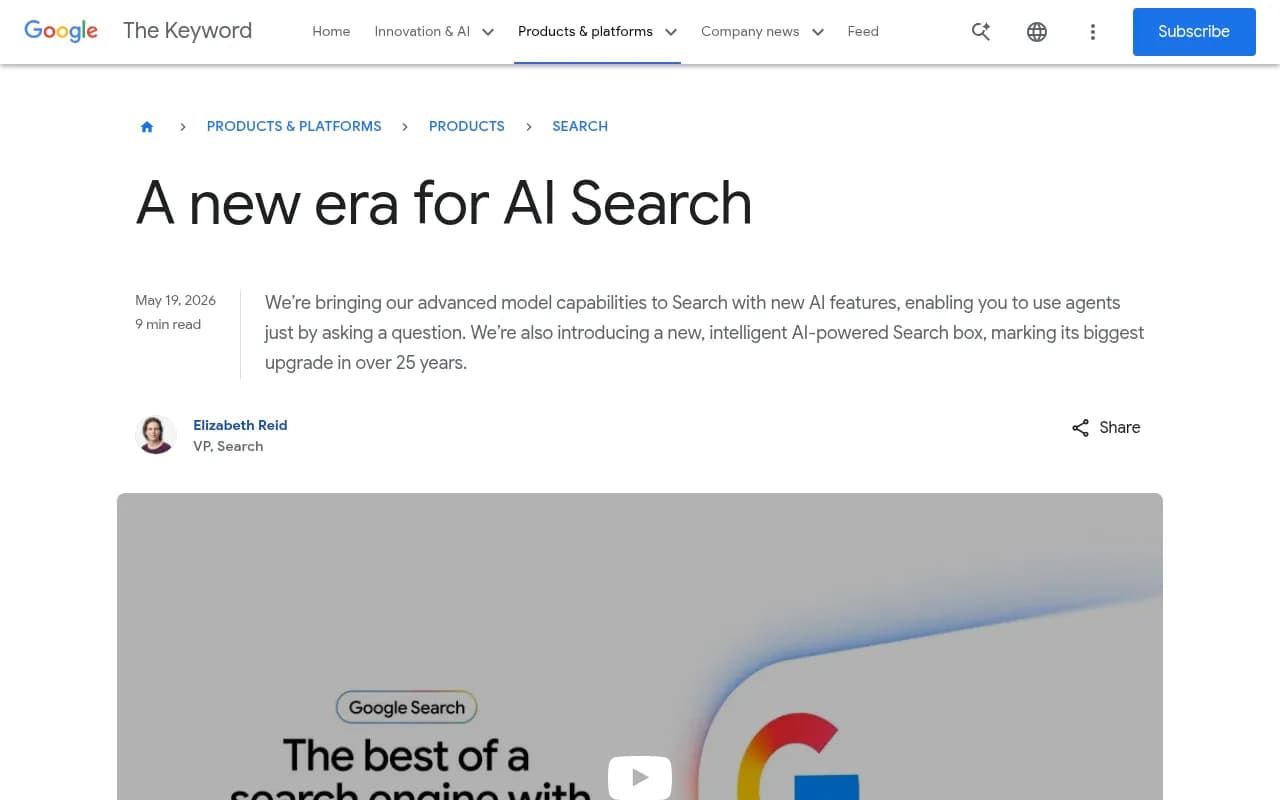
Meanwhile, AI Mode queries are running three times longer than traditional Google searches, and follow-up queries are up 40% month over month. Users aren't just searching differently — they're having conversations with search engines. The keyword-centric model that SEO tools were built around is under real pressure.
The question for every marketing team in 2026 isn't whether AI search matters. It's whether their tools can actually help them do anything about it.
What traditional SEO tools were built for (and why that's a problem)
The core workflow of traditional SEO tools — find keywords, check rankings, audit technical issues, build links — was designed for a world where Google returned a list of links and users clicked through to websites. Every metric pointed toward that click: organic traffic, click-through rate, position 1-3 share.
That model still has value. Google's traditional results haven't disappeared. But when nearly half of searches now return an AI-generated answer that synthesizes information from multiple sources, the "did we rank #1?" question becomes incomplete. The more urgent question is: "Did our brand get cited in the AI answer at all?"
Tools like Semrush and Ahrefs were built for the former question. They're excellent at it. But they weren't designed to tell you whether Perplexity is recommending a competitor when someone asks which software to use, or whether ChatGPT mentions your brand at all when someone asks about your category.
Both platforms have been adding AI search features — Semrush has an AI Overviews tracker, Ahrefs launched Brand Radar — but both use fixed prompt sets, which limits how much they can tell you about the full range of queries where your brand could (or should) appear. Neither connects AI visibility to actual traffic or revenue in a meaningful way.
The new category: GEO and AI visibility platforms
Into this gap, a new category of tools has emerged. Some are monitoring dashboards that show you where your brand appears in AI answers. Others are trying to be full optimization platforms. The quality difference between them is significant.
Monitoring-only tools
A large number of new tools launched in 2025-2026 that essentially do one thing: send a set of prompts to AI engines and show you whether your brand appeared. Tools like Otterly.AI, Peec AI, and several others fall into this bucket.
Otterly.AI


These tools are useful for getting a baseline — knowing that you appear in 12% of relevant ChatGPT responses is better than not knowing at all. But monitoring without action is just a more expensive way to feel anxious. If you can see that a competitor is getting cited and you're not, what do you do next? Most monitoring-only tools don't have an answer.
Platforms that try to close the loop
A smaller group of platforms is trying to go further — not just showing you the data but helping you act on it. This is where Promptwatch sits.

The core difference is what happens after you see the gap. Promptwatch's Answer Gap Analysis shows exactly which prompts competitors are visible for that you're not — and then Content Agents help you create the specific content needed to close those gaps. The cycle is: find the gap, create the content, track whether AI models start citing it. Most competitors stop at step one.
Promptwatch also tracks AI crawler logs in real time — which pages ChatGPT, Claude, and Perplexity are actually reading on your site, what errors they're hitting, and how long it takes from crawl to citation. That kind of infrastructure-level visibility is rare. Most tools have no crawler data at all.
Enterprise-focused players
At the enterprise end, platforms like Profound and Scrunch AI offer strong feature sets with deep analytics. They're well-suited to large brands with dedicated SEO teams and budget to match.
Profound

AthenaHQ takes a similar enterprise-monitoring approach, with solid tracking across multiple AI engines but less emphasis on content optimization.

How the traditional platforms are adapting
Semrush
Semrush has moved faster than most legacy platforms. Their AI Overviews tracking is functional, and they've added content tools that help writers optimize for AI-friendly formats. The limitation is that their AI monitoring uses fixed prompts — you can't fully customize the query set to match how your actual customers search. And there's no traffic attribution connecting AI visibility to revenue.
Ahrefs
Ahrefs launched Brand Radar as their answer to AI visibility tracking. It covers several major AI engines and integrates with their existing keyword and backlink data, which is genuinely useful context. Same constraint as Semrush: fixed prompts, no AI traffic attribution.
Moz
Moz has been slower to adapt. Their core rank tracking and link intelligence remain solid, but AI search monitoring is still relatively thin. For teams that rely heavily on Moz for traditional SEO, they'll likely need a separate tool for AI visibility.
SE Ranking
SE Ranking has been adding AI features at a reasonable pace and remains one of the better value options for teams that need both traditional SEO and some AI monitoring in a single platform.
The content side: who's helping you create AI-friendly content?
Knowing you have a visibility gap is one thing. Creating content that actually gets cited by AI engines is another problem entirely.
Traditional content optimization tools like Clearscope, MarketMuse, and Surfer SEO were built to help content rank in Google. They analyze top-ranking pages, suggest semantic terms, and score your content against competitors. That's still useful, but it doesn't directly address what makes content get cited in an AI answer.

AI engines tend to cite content that is specific, authoritative, structured clearly, and directly answers a question. They also favor content that appears across multiple credible sources — a single well-optimized page matters less than consistent, authoritative coverage of a topic across your site and third-party sources.
Some newer platforms are trying to bridge this gap. AirOps, for example, focuses on content engineering specifically for AI search visibility, helping teams build content that's designed to be cited rather than just ranked.
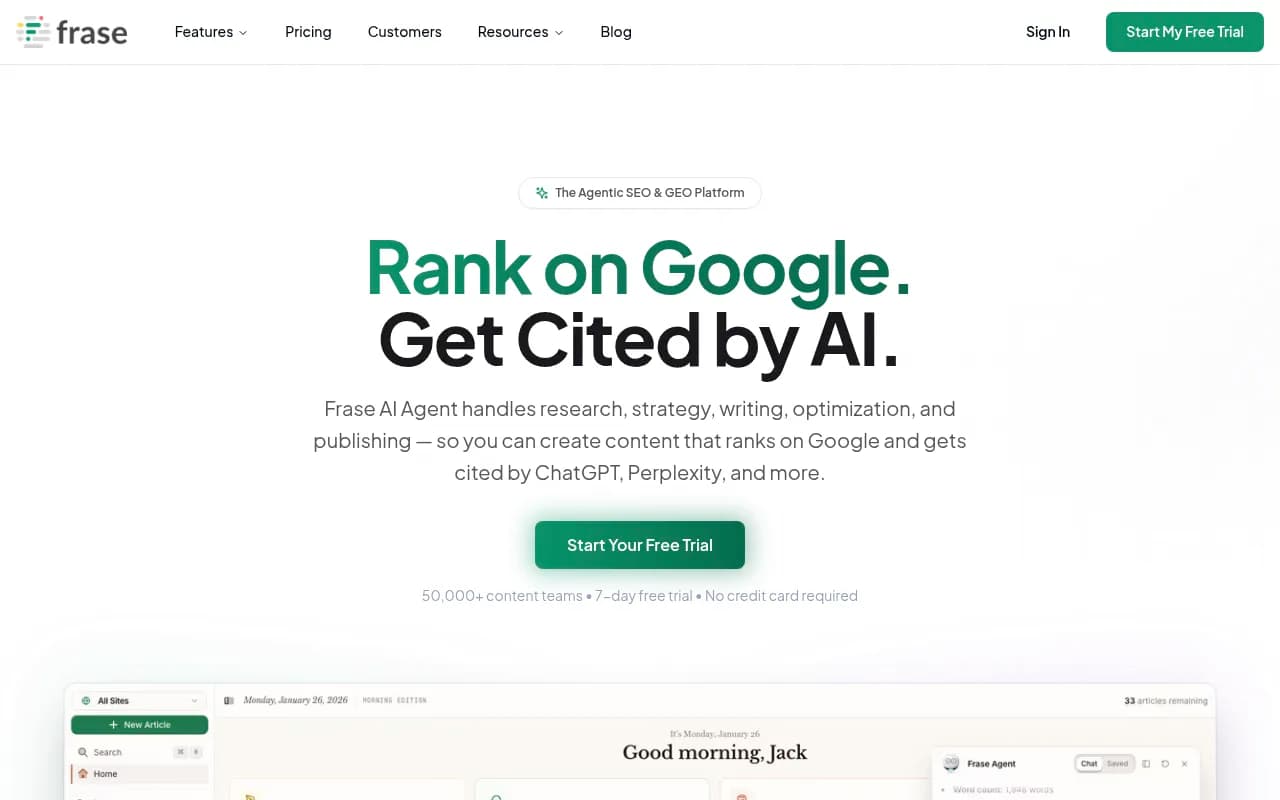
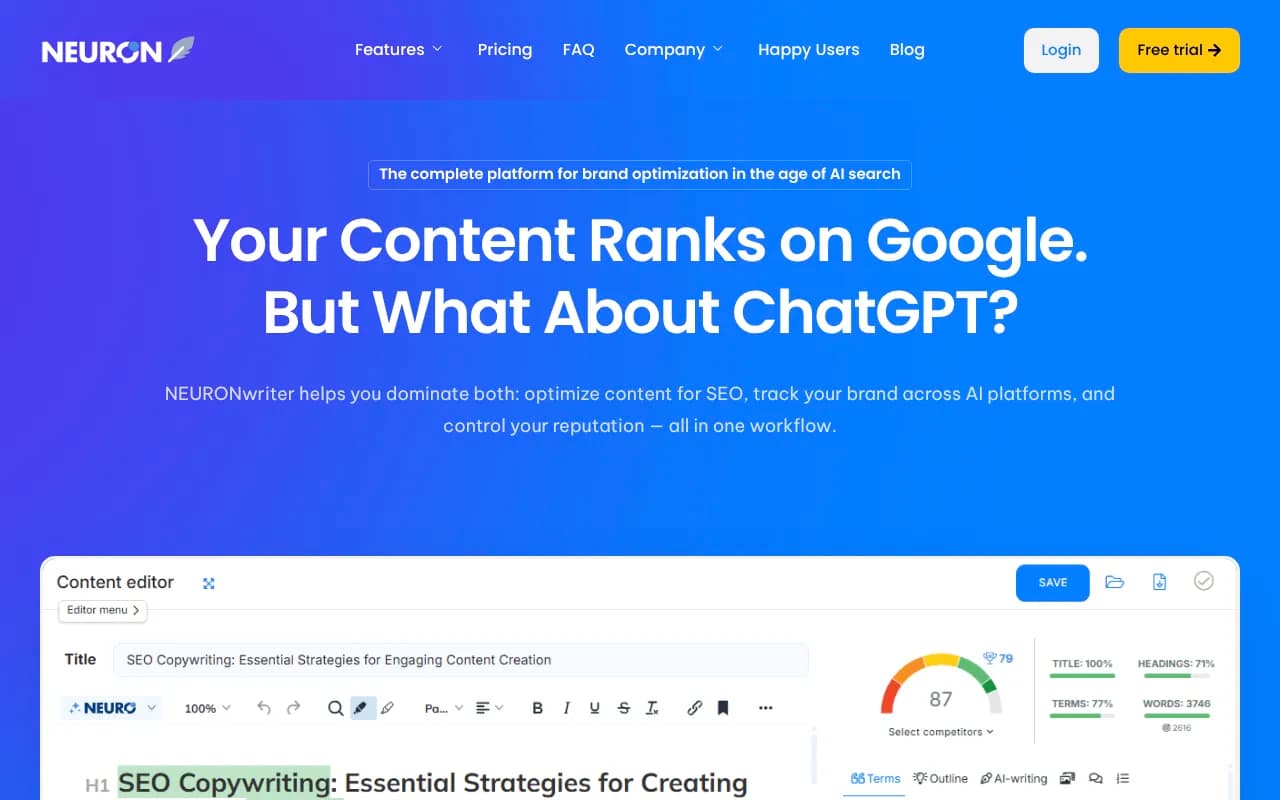
Frase remains useful for research-heavy content briefs, and tools like NeuronWriter help with entity optimization — making sure your content is structured in a way that AI models can parse and attribute correctly.
What the tool landscape actually looks like in 2026
Here's a practical comparison of where the major platforms stand:
| Tool | Traditional SEO | AI monitoring | Content generation | Crawler logs | AI traffic attribution | Best for |
|---|---|---|---|---|---|---|
| Promptwatch | No | Yes (10 engines) | Yes | Yes | Yes | Teams that want to find gaps and fix them |
| Semrush | Yes | Partial | Yes | No | No | Full-suite traditional SEO + basic AI |
| Ahrefs | Yes | Partial | No | No | No | Backlinks, keywords, traditional SEO |
| Profound | No | Yes | No | No | No | Enterprise AI monitoring |
| Otterly.AI | No | Yes | No | No | No | Basic AI brand monitoring |
| SE Ranking | Yes | Partial | Partial | No | No | Mid-market all-in-one SEO |
| AthenaHQ | No | Yes | No | No | No | Enterprise AI visibility tracking |
| AirOps | No | No | Yes | No | No | Content engineering for AI search |
| Moz | Yes | Minimal | No | No | No | Traditional SEO fundamentals |
| Scrunch AI | No | Yes | No | No | No | Enterprise AI monitoring |
The signals that actually matter in 2026
One thing that's become clearer as AI search has matured: the signals that influence AI citations are different from the signals that influence Google rankings. Links still matter, but they're not the whole story.
AI models are heavily influenced by:
- What's being said about your brand on Reddit, Quora, and review sites — these sources are cited directly in AI answers more often than most brands realize
- Whether your content directly and specifically answers the questions users are asking, not just whether it contains the right keywords
- How consistently your brand appears across multiple credible sources — a brand that shows up in 15 different authoritative contexts is more likely to be cited than one with a single well-optimized page
- Entity associations — whether AI models "know" what your brand is, what category it belongs to, and what problems it solves
This is why tools that track Reddit and YouTube discussions alongside traditional citation data are more useful than those that only look at your own website's performance. The conversation about your brand is happening in places you don't control, and AI engines are reading all of it.
What teams should actually do with their tool stack
Most marketing teams in 2026 are running a hybrid stack: traditional SEO tools for keyword research, rank tracking, and technical audits, plus one or more AI visibility tools layered on top. That's reasonable, but it creates a data fragmentation problem — you're looking at two different dashboards that don't talk to each other.
The cleaner approach is to find tools that can handle both, or at minimum, tools that connect AI visibility data to the same business outcomes you're already tracking. If your AI visibility goes up but you can't connect it to traffic or leads, you're optimizing a vanity metric.
A few practical recommendations:
If you're just starting to think about AI visibility, start with a monitoring tool to get a baseline. Even a simple tool that shows you whether your brand appears in ChatGPT and Perplexity responses for your key queries is better than flying blind.
If you've already got baseline data and you know you have gaps, you need a platform that helps you close them — not just more monitoring. That means content gap analysis, content creation tools grounded in real prompt data, and tracking that shows you whether your new content is actually getting crawled and cited.
If you're an agency managing multiple clients, look for platforms with multi-site support, white-label reporting, and the ability to track different personas and regions. The AI search experience varies significantly by location and query type.
For traditional SEO fundamentals — keyword research, backlink analysis, technical audits — the established platforms still do this better than most newcomers. Don't abandon Semrush or Ahrefs for your core SEO work. Add AI visibility tools on top.
The honest reality
Most SEO tools in 2026 are somewhere in the middle of a difficult transition. The platforms that were built for traditional search are adding AI features as fast as they can, but they're working against the grain of their original architecture. The platforms that were built specifically for AI search are often missing the depth and reliability that comes from years of development.
The tools that are genuinely ahead are the ones that treat AI visibility as an optimization problem, not just a monitoring problem. Knowing that a competitor is getting cited more than you is useful. Having a clear path to fix it is what actually moves the needle.
The SEO tool landscape will look different again in 12 months. But the teams that are building the right habits now — tracking AI visibility, understanding what drives citations, creating content that AI engines want to reference — will have a meaningful head start.