Key takeaways
- The most consistent complaint about Gauge is price: Growth is $599/month, with no cheaper tier, no free plan, and no trial according to comparison pages.
- The plan is a fixed bundle (600 daily prompts across 3 platforms plus 18 articles a month), which is a poor fit if you only want monitoring.
- I found no independent evidence of a mass exodus. Nearly every "Gauge alternatives" page is written by a competitor, so treat the "why teams leave" story as informed inference, not hard data.
- Before you switch, check engine coverage, how a tool handles prioritising actions, and whether it connects visibility to real traffic.
- Alternatives split into cheap monitors, mid-priced trackers, and end-to-end platforms that also fix problems. Which one you want depends on whether you need a dashboard or a workflow.
A note on the evidence
Let me be upfront. I went looking for first-hand accounts of teams leaving Gauge and found none. No Reddit threads, no independent reviews, no churn data. What exists is a stack of comparison pages, and most of them are published by Gauge's competitors or by Gauge itself. Dageno, AI Growth Agent, and Gauge's own resource pages all have a stake in how this story gets told.
So this guide does something narrower. It lays out what Gauge sells, where the published criticism clusters, and how to decide whether those gaps matter for your team. Some of the "gaps" are really just trade-offs. Gauge is a decent product with a particular shape, and that shape does not fit everyone.
What Gauge actually is
Gauge tracks brand mentions across AI engines and pairs that with content production. It describes itself as an AI marketing agent built around a Track, Understand, Act framework, with a chat interface called Ask Gauge that is grounded in GA4, Search Console, DataForSEO, ad data, and prompt-answer data.
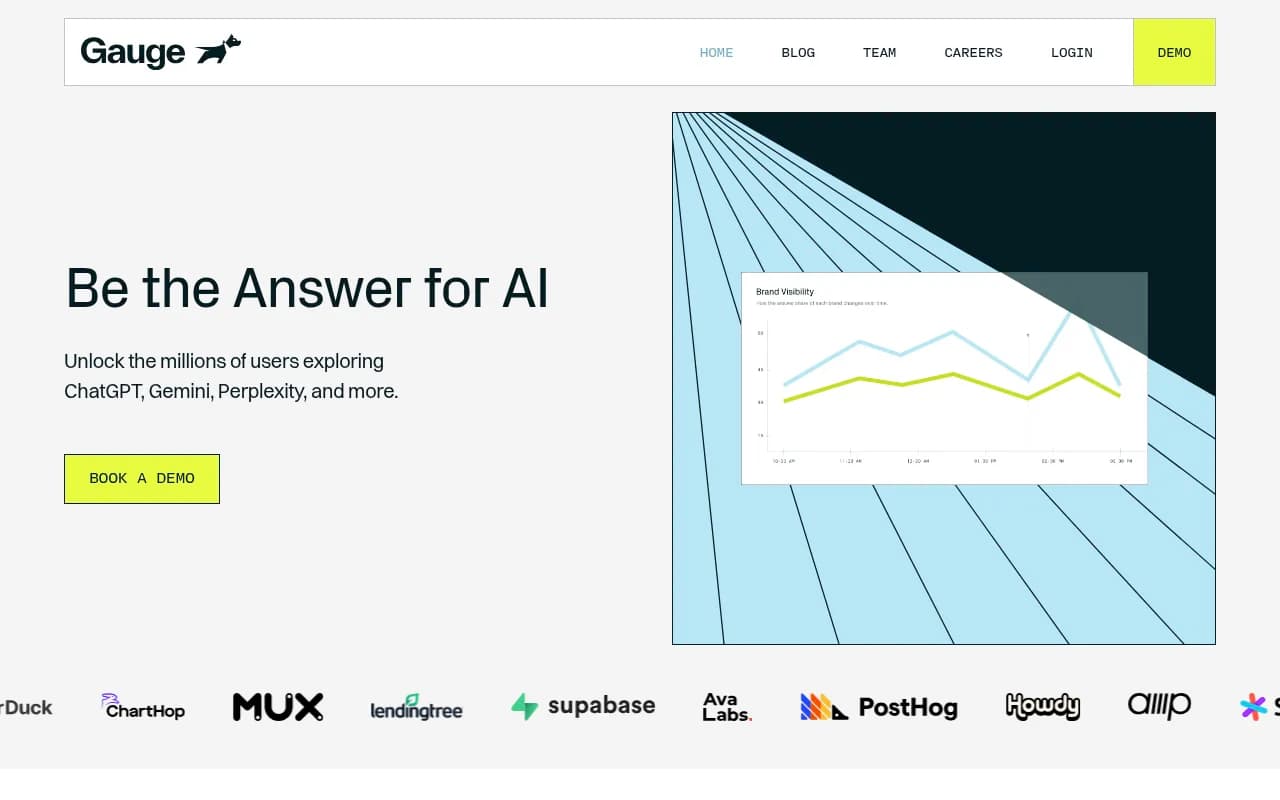
The pieces worth knowing:
- Platforms named on the homepage include ChatGPT, Claude, Gemini, Perplexity, Copilot, Google AI Mode, and AI Overviews. A separate Ask Gauge update mentions Grok.
- An Action Center surfaces prioritised work.
- Content moves through a brief, research, outline, draft, review pipeline, then publishes to Webflow, Framer, or Sanity, or opens a GitHub PR for code-based blogs.
- When it detects the newly cited page, it closes the action automatically.
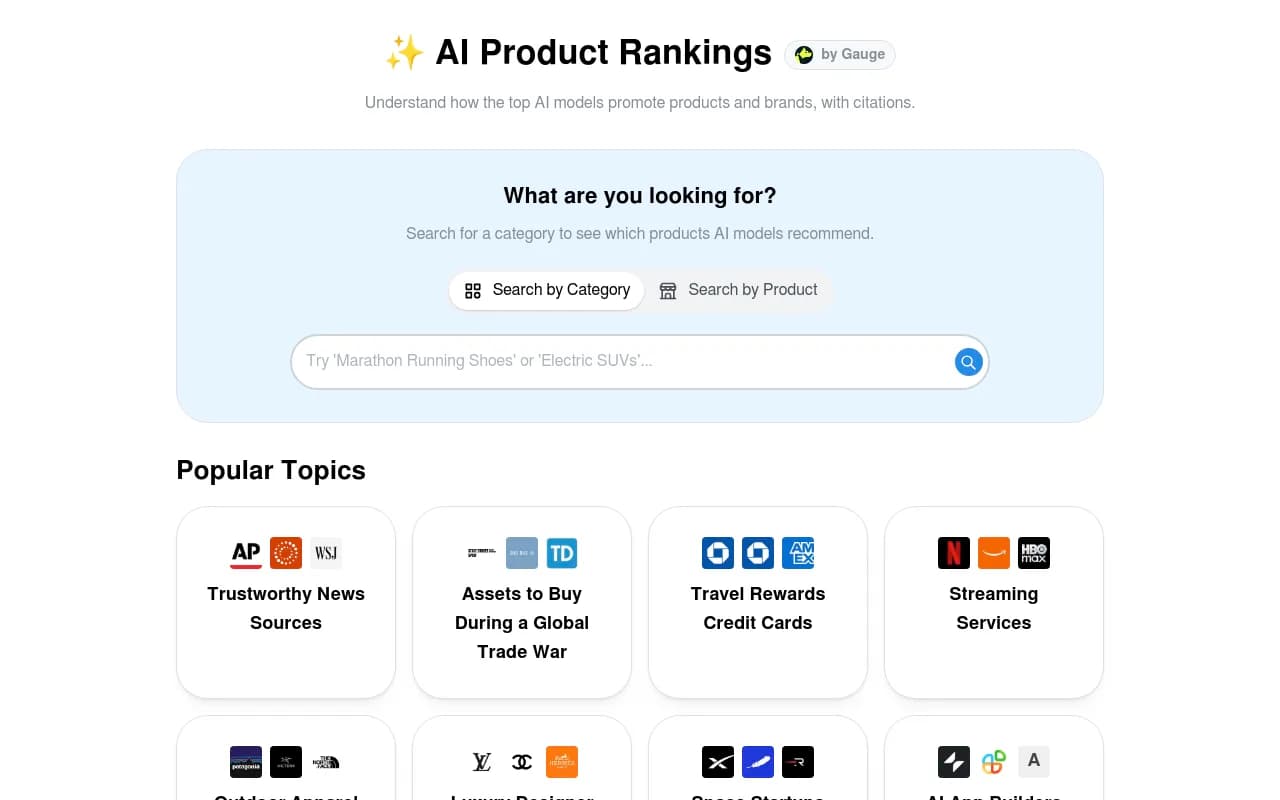
- There are two products: Gauge Chat for brand visibility, and Gauge Agents for developer tools picked by coding agents like Claude Code and Codex. It also offers the free ProductRank.ai.
The vendor pitch is "a teammate, not a workflow builder," aimed squarely at canvas-style automation tools like n8n. That is a reasonable position. The question is whether you want to pay for it.
The common gaps teams cite
1. Price and no on-ramp
Growth costs $599/month. Third-party comparisons say there is no cheaper tier, no free plan, and no trial. This is the one complaint that shows up everywhere, including on pages that are otherwise generous to Gauge.
Gauge frames it as roughly a penny per answer: 600 prompts run daily across 3 platforms works out to about 54,000 AI answers a month. Even Dageno, a direct competitor, concedes that $599 can be economical at volume. The catch is that you need the volume. A team tracking 40 prompts is paying for capacity it will never use.
2. A fixed bundle
The Growth plan packs in 600 prompts and 18 articles a month. If your content team already has a pipeline, or you only need monitoring, the content engine is a cost you are carrying. Some teams like the bundle. Others want to buy the two halves separately.
3. Three platforms on Growth
Growth covers 3 AI platforms. The homepage lists seven or more engines, and Dageno's comparison tells buyers to verify plan-level coverage. If you need Perplexity, ChatGPT, AI Overviews, and Copilot all tracked at once, get the exact engine list in writing before you sign.
This matters because engines behave very differently. Promptwatch Data's average sources per response report shows ChatGPT citing about 5 sources per web-search answer, while Google AI Overviews and Perplexity both sit near 10. Microsoft Copilot swung from under 2 to nearly 17 sources within a few weeks before settling at the low end. A tracker that lumps these together will mislead you, so per-engine breakdowns are not optional.
4. Too many actions, not enough prioritisation
Dageno's sharpest argument is that the hard buying question is not whether a platform produces actions. Everything does now. It is how you decide which of the dozens of suggested actions to do first. That is a fair criticism of the whole category, not just Gauge, but it is worth testing in any trial: ask the tool to rank its own recommendations and see whether the reasoning holds up.
5. Measurement limits Gauge admits to
Gauge is candid here, which I respect. Results depend on the prompts you configure. Referral traffic is a tiny fraction of true visibility, and the vendor estimates up to 100x more sessions where a brand is referenced than clickthroughs. That is honest, but it also means you cannot prove ROI from clicks alone. Its "3x-5x uplift in AI visibility within the first month" claim is conditional on executing the recommendations and is unverified.
6. Hidden costs across the category
AI Growth Agent flags overage charges and prompt limits as a general problem with monitoring tools in 2026. I only saw a snippet of that page, so I will not pin it on Gauge specifically. Still, ask any vendor what happens when you exceed your prompt count.
What to check before you switch
Switching has its own cost. Run through this list first:
- How many prompts do you realistically need? Count them before you compare plans.
- Which engines matter to your buyers? Get coverage per plan, not per homepage.
- Do you need content generation, or do you have a writing team?
- Can the tool show real AI-referred traffic and crawler activity, not just mentions?
- Does it export data you can take with you?
- How are costs handled past your prompt limit?
Where teams go next
Pricing below comes from Dageno's comparison, a competitor source, so confirm every number on the vendor's own page.
| Tool | Entry plan | Prompts | Notes |
|---|---|---|---|
| Gauge Growth | $599/mo | 600 | 18 articles a month |
| Dageno Starter | $79/mo | 50 | Agent credits, 3 selected platforms |
| Profound Starter | $99/mo (annual) | 50 | Enterprise AEO focus |
| Trakkr Growth | $100/mo | 50 | 25 articles plus actions |
| Peec AI Starter | $95/mo | 50 | Focused analytics |
| OtterlyAI Lite | $29/mo | 15 | Monitoring plus audits |
| Searchable | From $50/mo | Varies | White-label reporting at Scale tier |
Cheap monitoring
If price is your only problem, start here. OtterlyAI Lite is the cheapest entry in the comparison at $29/month for 15 prompts, which is enough to see whether you show up at all.
Otterly.AI

Peec AI is a focused analytics product at $95/month for 50 prompts.

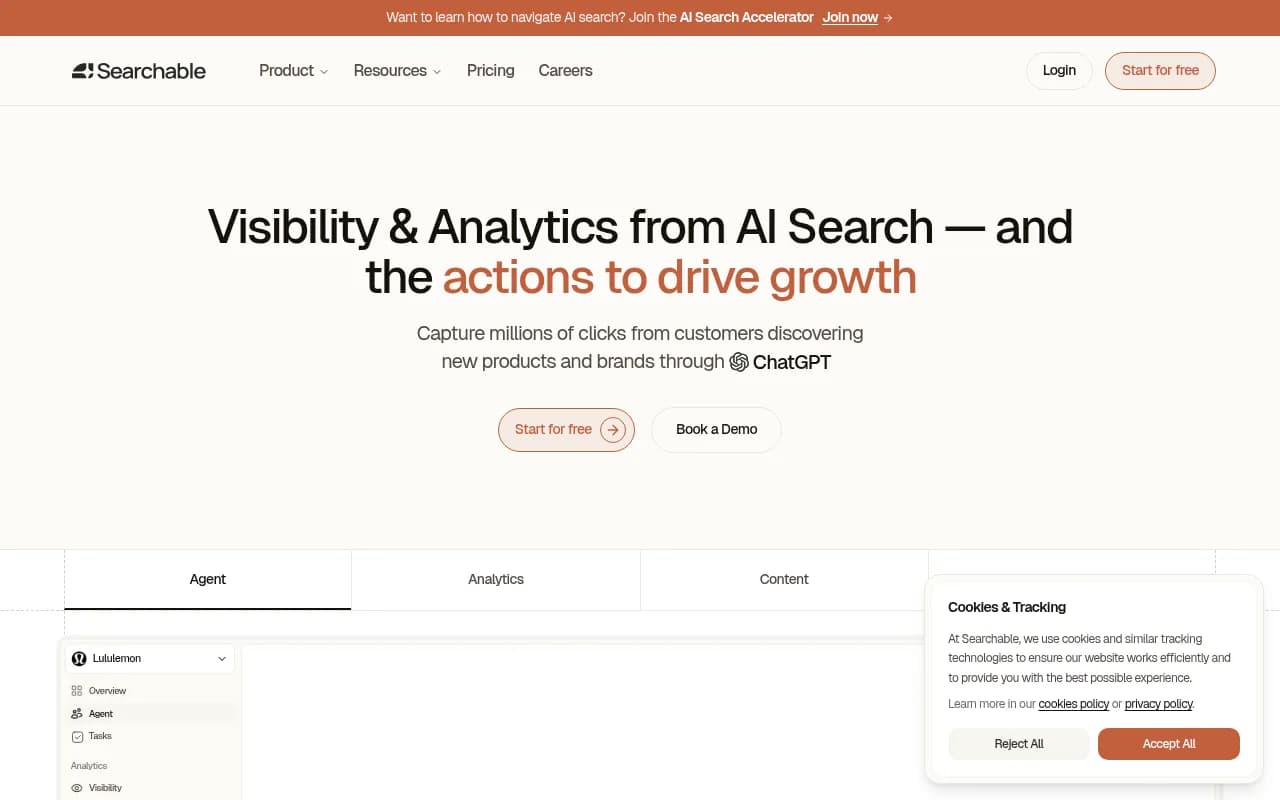
Searchable starts at $50/month and claims 12,000+ users.
Mid-priced trackers with some execution
Dageno pitches autonomous agent execution from $79/month, though the Starter plan covers only 3 selected platforms.

Profound targets enterprise answer engine optimization, with a Starter plan at $99/month on annual billing.
Profound

Gumshoe AI is usage-based, which can be fine for light use but less predictable if you run heavy volumes.

End-to-end platforms
If the real reason you are leaving Gauge is that you want more than a dashboard, look at platforms that connect visibility data to crawler activity, traffic, and publishing. Promptwatch is the one I would put in front of a team in that position. It tracks real user interfaces across ChatGPT, Google AI Overviews, AI Mode, Gemini, Perplexity, Copilot, and others, then adds IP-verified AI crawler logs and visitor analytics so you can see whether citations turn into visits. Its Content Agent plans, writes, and publishes against your gaps, and the Action Board gives you a prioritised to-do list, which speaks directly to the prioritisation problem above.

Pricing is worth comparing honestly. Essential is $95/month for 50 prompts and all models, Professional is $245/month for 150 prompts, and Business is $579/month for 350 prompts with the automated Content Agent. Confirm current numbers at promptwatch.com/pricing. Compared with Gauge's $599 for 600 prompts, Gauge gives you more prompts at that price point, while Promptwatch gives you a ladder to start lower and the crawler and traffic data that Gauge's own measurement caveat says you are missing.
A few other options worth a look if you want different trade-offs:
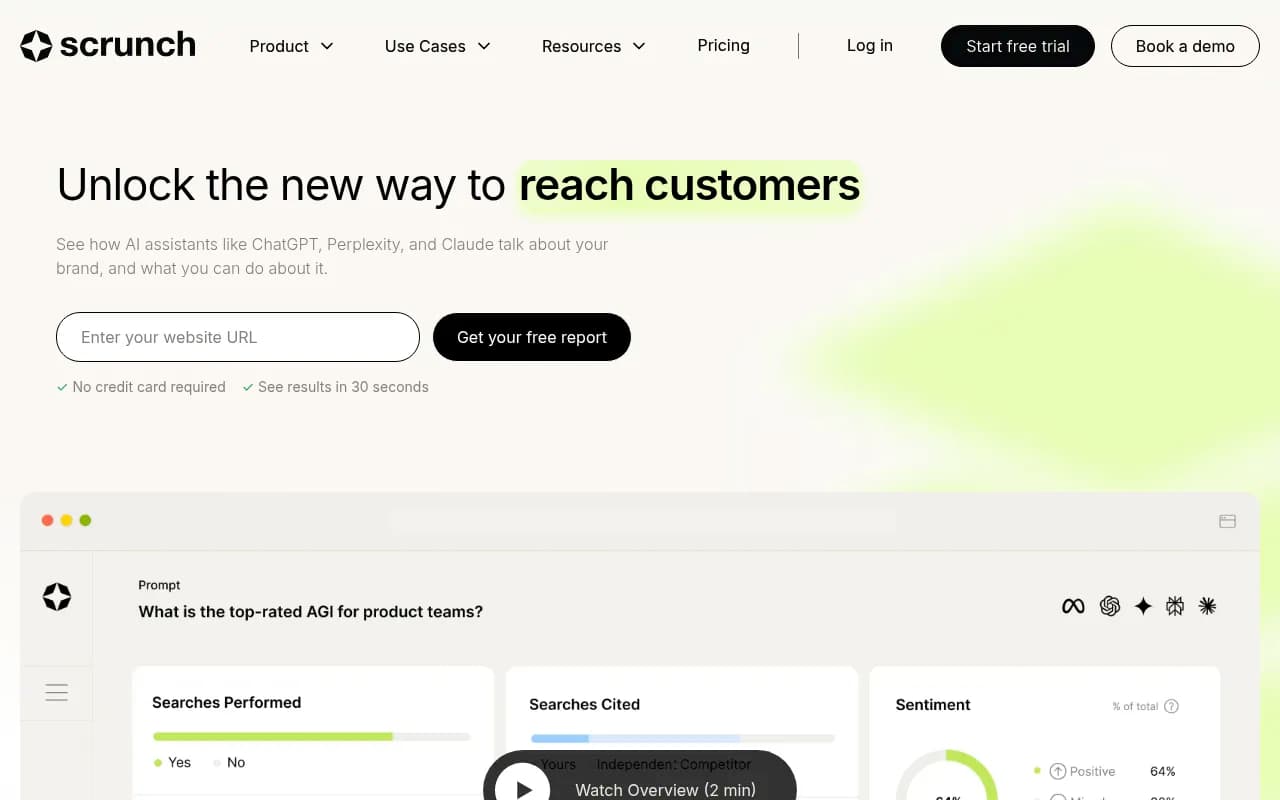
- Scrunch AI and AthenaHQ for monitoring-heavy setups.
- Semrush and Ahrefs Brand Radar if you already live in a traditional SEO suite.
- AirOps if content engineering is the bottleneck.



For a wider survey, the GEO software directory at bestgeosoftware.com lists far more options than fit here.
Which direction fits which team
| Your situation | Likely best move |
|---|---|
| Under 50 prompts, just want to see if you appear | OtterlyAI, Peec AI, or Searchable |
| Need monitoring plus drafts, tight budget | Dageno or Trakkr |
| Enterprise, compliance, many stakeholders | Profound or an end-to-end platform |
| Want citations tied to crawlers and real traffic | Promptwatch |
| High prompt volume and need content at scale | Staying on Gauge may be the right call |
That last row is not a throwaway. At 600 prompts and 18 articles, Gauge's math can work. If your team uses the whole bundle, the price complaint mostly evaporates.
Why not just stay?
Sometimes staying is correct. Ask yourself whether you are actually unhappy with results or just surprised by the invoice. If your visibility is growing and your team uses the content pipeline, a cheaper tool means rebuilding workflows to save money. Run the comparison on cost per action your team really completes, not cost per prompt.
If you do switch, run both tools in parallel for a month on the same prompt set. Compare which engines each one catches, how stable the numbers are day to day, and whether the recommendations differ.
Bottom line
The published case against Gauge is mostly about price and packaging, plus a few category-wide problems that apply to every tool. There is no evidence of a mass migration, and the loudest critics sell competing products. Pick based on your prompt count, the engines you need covered, and whether you want to monitor or to fix. Then test with real data before you commit.