Key takeaways
- Best free alternative: MailerLite gives you 1,000 subscribers and 12,000 emails/month free -- more generous than GetResponse's 500-contact free tier
- Best for eCommerce: Omnisend is purpose-built for Shopify, WooCommerce, and BigCommerce stores, with pre-built flows that GetResponse can't match out of the box
- Best for creators and newsletters: Kit (formerly ConvertKit) is the go-to if you're a blogger, author, or course creator who doesn't need CRM features
- Best for serious automation: ActiveCampaign has deeper automation logic and CRM integration than GetResponse, though you'll pay for it
- Best HubSpot alternative on a budget: EngageBay packs CRM, helpdesk, and marketing automation into a free plan that covers up to 15 users
- Best all-in-one at GetResponse's price point: Brevo covers email, SMS, WhatsApp, and CRM -- often cheaper than GetResponse at scale because pricing is based on email volume, not contact count
GetResponse has been around since 1998 and has genuinely earned its reputation as a solid mid-market email marketing platform. The free plan, landing page builder, webinar hosting, and marketing automation in one subscription make it appealing for teams that want to avoid stitching together multiple tools.
But there are real reasons people look elsewhere. The free plan caps at just 500 contacts, which runs out fast. The automation builder, while capable, can feel clunky compared to newer tools. Pricing scales steeply as your list grows. And if you're an eCommerce brand, a creator, or a company that needs a proper CRM baked in, GetResponse can feel like it's trying to be everything without fully nailing any one thing.
Here are the strongest alternatives worth considering in 2026.
HubSpot Marketing Hub
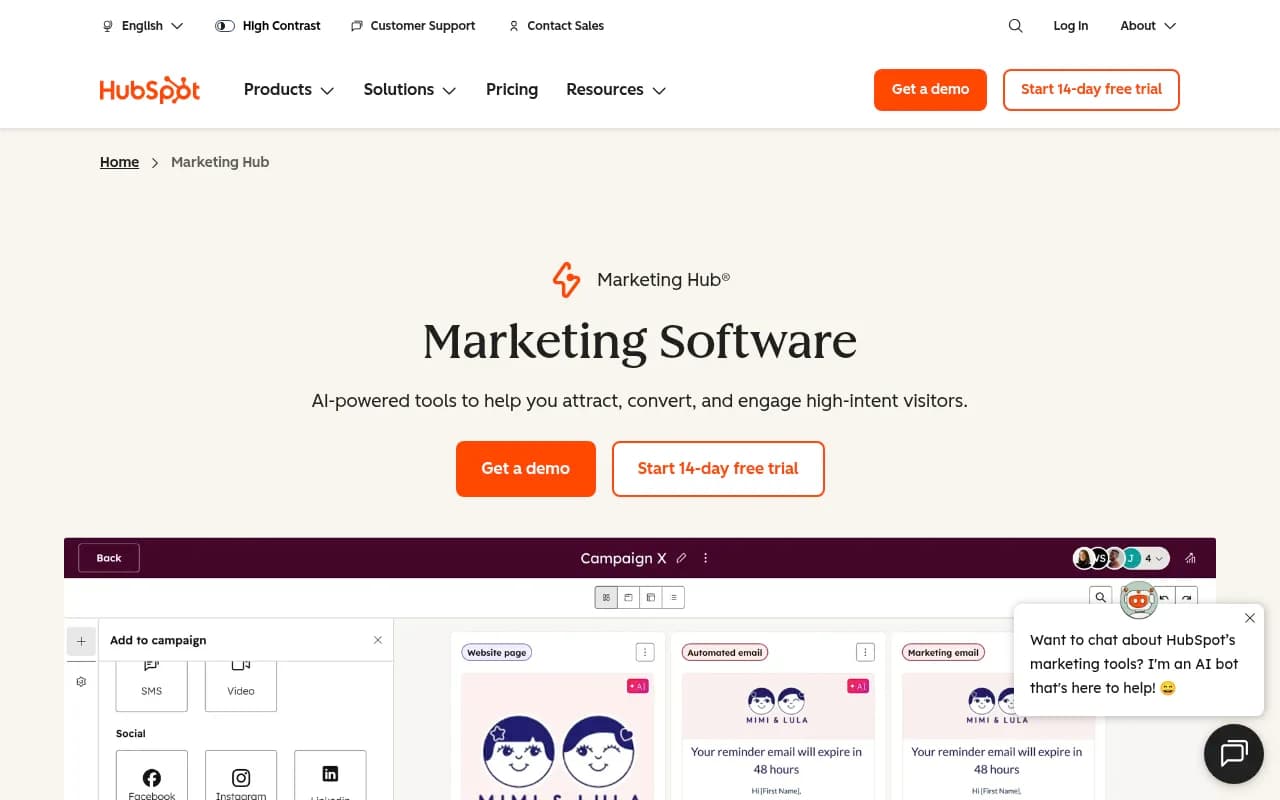
HubSpot is the obvious comparison when someone outgrows GetResponse. Where GetResponse is primarily an email tool with extras bolted on, HubSpot is a full marketing platform with email, social media management, landing pages, forms, ad management, and a CRM that actually works across your whole company.
The free tier is genuinely useful -- you get email marketing, forms, landing pages, and the CRM at no cost. That's a better starting point than GetResponse's 500-contact limit. The catch is that HubSpot's pricing jumps hard once you need serious automation or reporting. The Professional plan starts at $890/month (for 3 seats), which is a completely different budget category than GetResponse's $13.30/month entry point.
Where HubSpot wins: the CRM integration is native, not an add-on. Every email, form submission, and page visit is tied to a contact record automatically. If your sales team needs to see marketing activity, HubSpot makes that seamless. GetResponse has some CRM-like features but nothing close to this depth.
Where HubSpot loses: the cost. For small businesses and solo marketers, the Professional tier is out of reach. You'll also spend real time learning the platform -- it's not something you can set up in an afternoon.
Pricing: Free tier available. Starter from $15/month per seat. Professional from $890/month (3 seats). Enterprise from $3,600/month.
Best for: Growing companies that want marketing and sales on the same platform, and have the budget to match.
Mailchimp
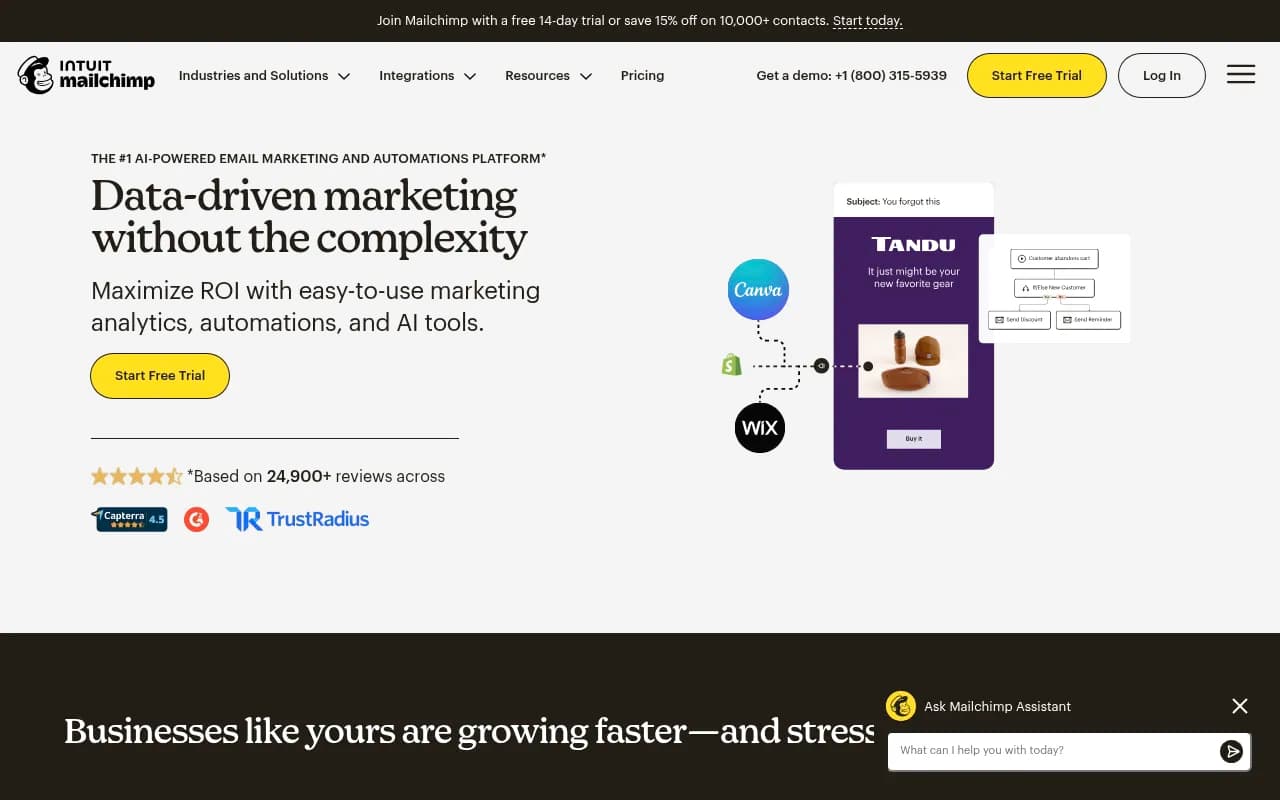
Mailchimp is the name most people think of first, and for good reason -- it's been the default email marketing tool for small businesses for over a decade. Now owned by Intuit, it's leaned into AI features for send time optimization, content suggestions, and predictive segmentation.
Compared to GetResponse, Mailchimp has a stronger brand recognition and a slightly more polished interface for beginners. The free plan covers 500 contacts (same as GetResponse), but Mailchimp's free tier is more limited on automation -- you only get single-step automations unless you upgrade.
The pricing comparison gets interesting at scale. Mailchimp's Standard plan at $20/month includes multi-step automations and better segmentation. GetResponse's equivalent is similarly priced. But Mailchimp's Premium plan jumps to $350/month, which is steep for what you get. Many users report that Mailchimp becomes expensive quickly as their list grows, and the value-per-dollar starts to slip.
One honest note: Mailchimp has faced criticism for deliverability issues and customer support quality since the Intuit acquisition. It's still a solid tool, but it's no longer the clear leader it once was.
Pricing: Free for 500 contacts. Essentials from $13/month. Standard from $20/month. Premium from $350/month.
Best for: Small businesses and beginners who want a familiar, well-documented platform with a large ecosystem of integrations and tutorials.
Brevo
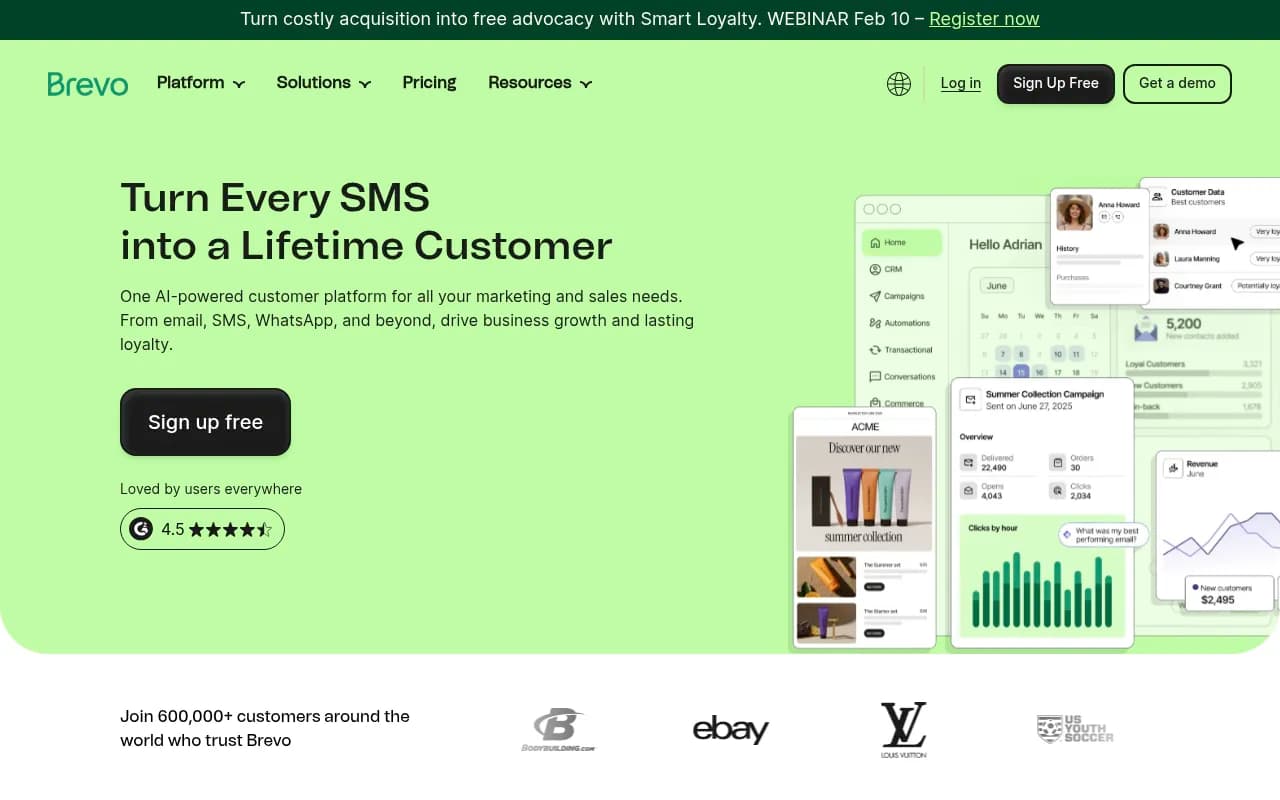
Brevo (formerly Sendinblue) takes a fundamentally different pricing approach that makes it worth a serious look if your list is large but you don't send emails constantly. Instead of charging by contact count, Brevo charges by email volume. You can store unlimited contacts and pay based on how many emails you actually send.
This is a big deal. If you have 50,000 contacts but only email them once a month, you're paying for 50,000 sends -- not 50,000 stored contacts. GetResponse would charge you based on list size regardless of send frequency. For businesses with large but infrequently-mailed lists, Brevo can be dramatically cheaper.
Beyond pricing, Brevo covers more channels than GetResponse: email, SMS, WhatsApp, live chat, and a built-in CRM. The automation builder is solid and the transactional email capabilities (for things like order confirmations and password resets) are genuinely strong -- something GetResponse doesn't prioritize.
The downside: Brevo's landing page builder and webinar features don't exist. If those are things you rely on in GetResponse, you'd need to find alternatives. The interface is also less polished than some competitors, though it's improved significantly in recent years.
Pricing: Free plan available (300 emails/day). Paid plans scale by email volume -- check Brevo's site for current tiers as they update frequently.
Best for: Businesses with large contact lists who send infrequently, or anyone who needs email + SMS + CRM without paying for three separate tools.
Omnisend
If you run an eCommerce store, Omnisend deserves serious consideration over GetResponse. It's built specifically for online retail, with pre-built automation workflows for abandoned cart recovery, welcome series, post-purchase follow-ups, and win-back campaigns -- all connected to your product catalog.
The Shopify integration in particular is tight. Product recommendations in emails pull from your actual store data, and revenue attribution shows you exactly which emails drove sales. GetResponse has eCommerce features, but they feel like additions to an email tool rather than the core product.
Omnisend also includes SMS and web push notifications in the same platform, and the omnichannel automation builder lets you mix channels in a single workflow. Send an email, wait 24 hours, then send an SMS if they didn't open -- that kind of logic is straightforward to set up.
The free plan is usable: 500 contacts, 500 emails/month, and 60 SMS credits. It's enough to test the platform properly. Paid plans scale based on contact count.
Pricing: Free plan available. Paid plans scale by contact count -- Standard starts around $16/month for 500 contacts.
Best for: Shopify, WooCommerce, and BigCommerce store owners who want email and SMS automation built around their product catalog.
ActiveCampaign

ActiveCampaign is where you go when you've outgrown basic automation and need something with real depth. The automation builder is genuinely powerful -- conditional logic, lead scoring, site tracking, and CRM pipeline management all work together in ways that GetResponse can't match.
The "Active Intelligence" positioning they've leaned into recently means AI can suggest automation workflows, segment your audience, and help build campaigns based on your goals. Whether that's genuinely useful or marketing fluff depends on your use case, but the underlying automation engine has been best-in-class for years.
The trade-off is complexity and cost. ActiveCampaign is not a beginner tool. The interface has improved but it still takes time to learn. And pricing is higher than GetResponse -- realistic plans for growing businesses run $49-$259/month depending on contacts and features. The $15/month Starter plan exists but is quite limited.
There's no free plan, just a 14-day trial. If you're coming from GetResponse's free tier, that's a meaningful difference.
Pricing: Starter from $15/month. Realistic plans $49-$259/month based on contacts. 14-day free trial.
Best for: B2B companies and established businesses that need sophisticated automation, CRM integration, and are willing to invest time in setup.
MailerLite
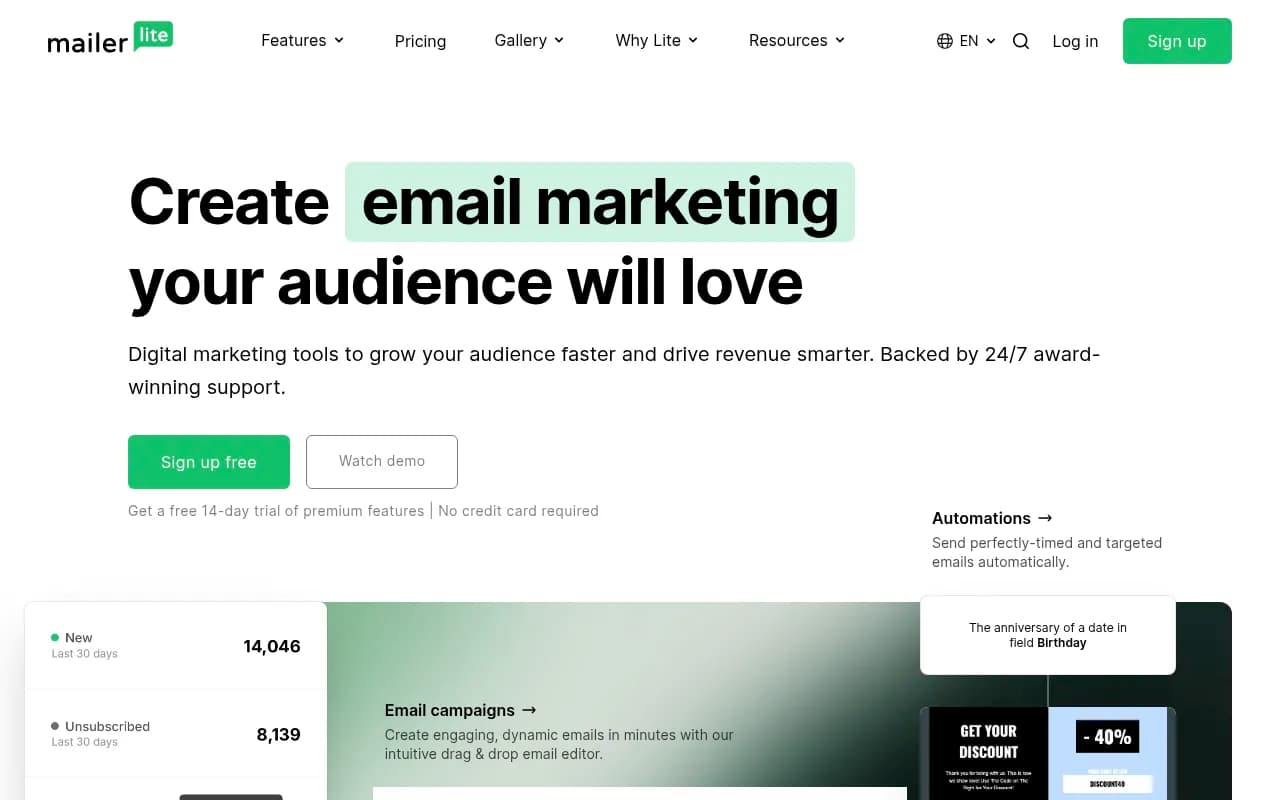
MailerLite is probably the strongest direct competitor to GetResponse at the budget end of the market. The free plan is more generous -- 1,000 subscribers and 12,000 emails/month versus GetResponse's 500 contacts -- and the paid plans are cheaper at most contact tiers.
What makes MailerLite stand out is the interface. It's genuinely clean and intuitive in a way that GetResponse isn't always. The drag-and-drop email editor, landing page builder, and automation workflows all feel well-designed rather than feature-stuffed. The 24/7 support with a 97% satisfaction rate and 5-minute average response time on live chat is also notably better than what most competitors offer.
MailerLite includes landing pages, website builder, automation, pop-ups, and even paid newsletter subscriptions -- the last one being something GetResponse doesn't offer at all. If you're a creator or publisher who wants to monetize a newsletter directly, that's a meaningful differentiator.
What it lacks compared to GetResponse: no webinar hosting, and the automation is solid but not as deep as ActiveCampaign or even GetResponse's more advanced flows.
Pricing: Free up to 1,000 subscribers (12,000 emails/month). Paid from $9/month for 1,000 subscribers.
Best for: Small businesses, bloggers, and creators who want a clean, affordable platform with a genuinely good free tier.
EngageBay
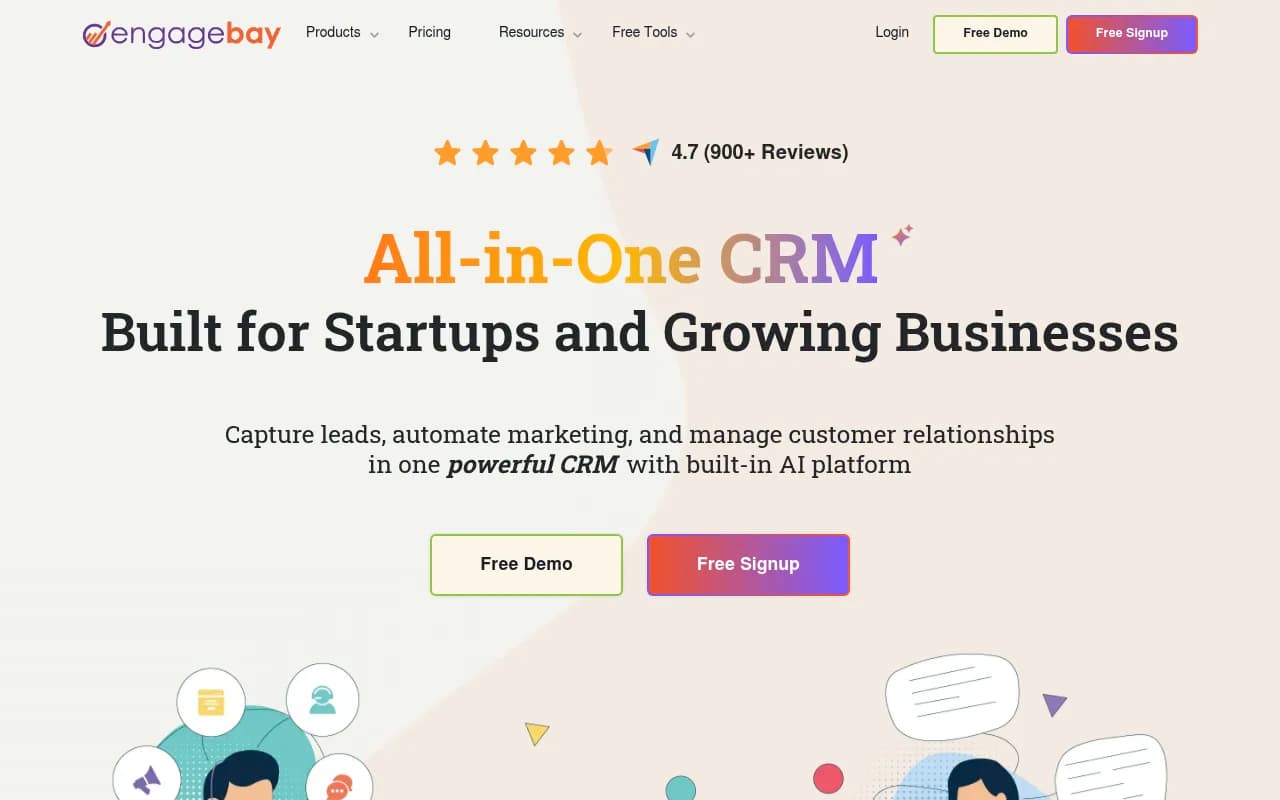
EngageBay positions itself as "HubSpot power at a fraction of the cost," and that's a fair description. It combines marketing automation, sales CRM, helpdesk, and live chat in one platform -- all available on a free plan that supports up to 15 users.
Compared to GetResponse, EngageBay goes much deeper on the CRM and sales side. If your team needs to track deals, manage a sales pipeline, and handle customer support tickets alongside email marketing, EngageBay does all of that without requiring separate subscriptions. GetResponse has no real CRM or helpdesk functionality.
The email marketing features are solid but not exceptional. The automation builder works well for standard use cases. Where EngageBay really wins is the breadth of what you get for free -- 15 users, 250 contacts, email marketing, CRM, and helpdesk access is a genuinely useful starting point for small teams.
The platform has improved significantly in recent years, though the interface still feels less polished than HubSpot or MailerLite. Some users report that advanced features require more configuration than expected.
Pricing: Free for up to 15 users (250 contacts). Paid plans from $12.74/user/month.
Best for: Small businesses and startups that need CRM + marketing + support in one tool without paying HubSpot prices.
AWeber
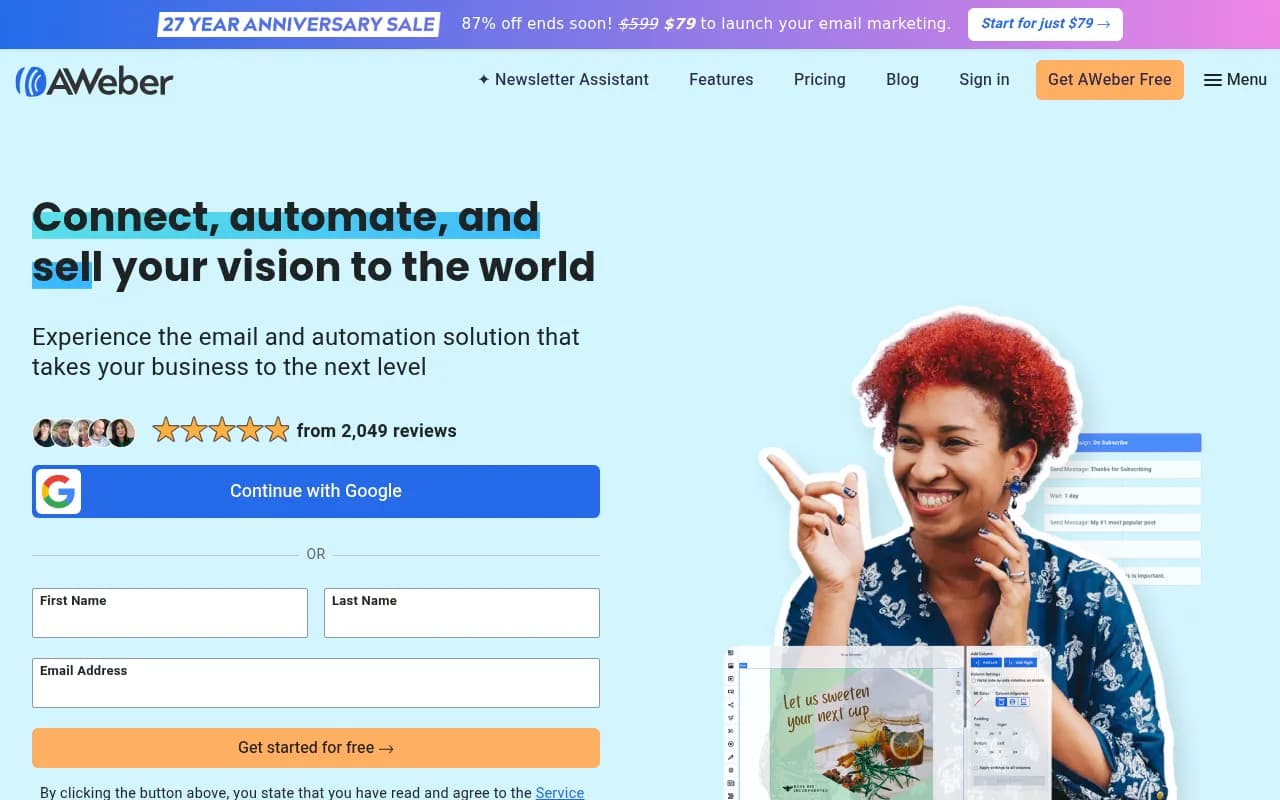
AWeber has been around since 1998 -- longer than most competitors -- and it shows in both good and bad ways. The platform is stable, reliable, and has excellent deliverability. The AI-powered email writing feature is genuinely useful for small business owners who don't want to write copy from scratch. And 750+ integrations cover most tools you'd want to connect.
Compared to GetResponse, AWeber is simpler. That's a feature for some people and a limitation for others. If you want straightforward email marketing with good deliverability and don't need complex automation or webinar hosting, AWeber does the job without overwhelming you.
The free plan covers 500 subscribers -- same as GetResponse -- but AWeber's paid plans start at $15/month for the Lite tier, which is slightly more expensive than GetResponse's $13.30 entry point. The Plus plan at $30/month (or $20/month annually) includes unlimited subscribers, which is a genuinely good deal if your list is large.
What AWeber lacks: the automation depth of ActiveCampaign, the eCommerce focus of Omnisend, and the all-in-one breadth of GetResponse. It's a focused email tool, not a marketing suite.
Pricing: Free up to 500 subscribers. Lite from $15/month. Plus from $30/month (annual from $20/month).
Best for: Small business owners and solopreneurs who want reliable email marketing without complexity, and value deliverability and long-term platform stability.
Campaign Monitor
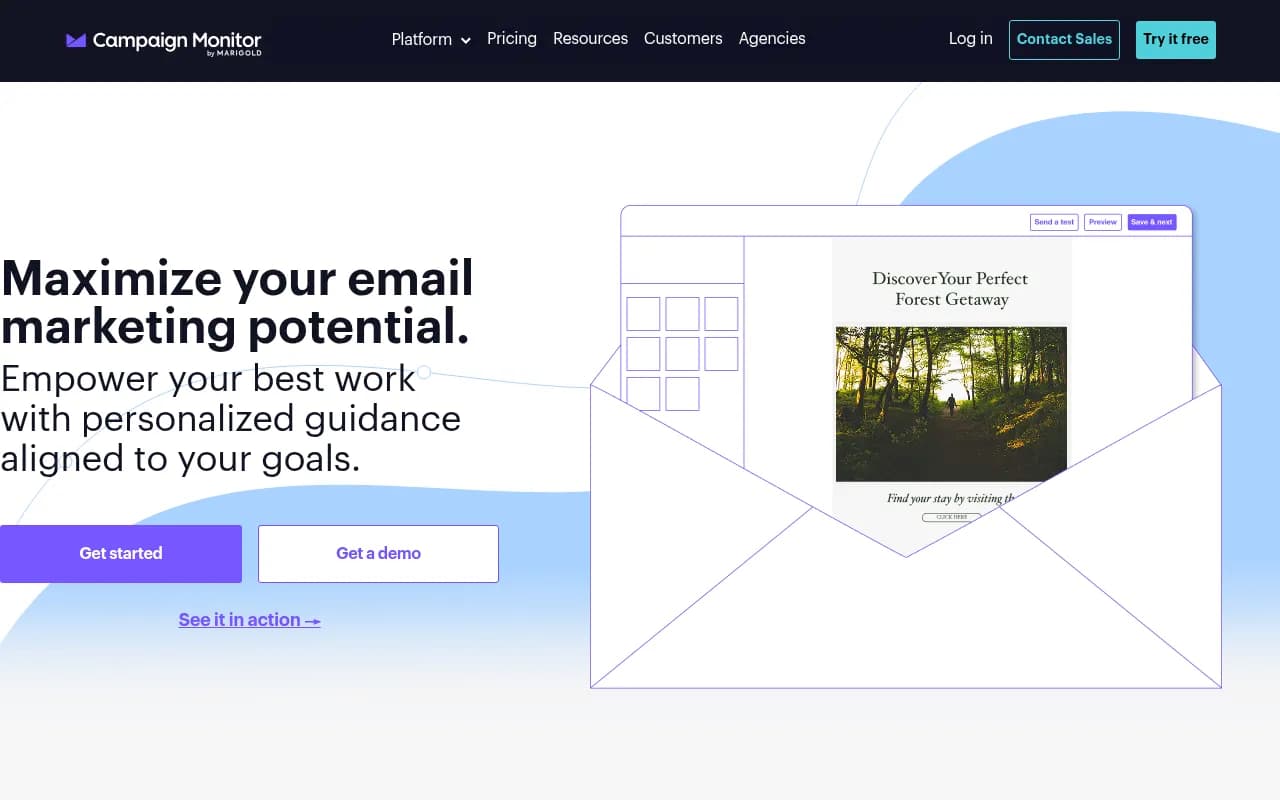
Campaign Monitor has always been the platform for marketers who care about design. The email templates are genuinely beautiful, the drag-and-drop builder gives you precise control over every element, and the template locking feature -- where designers can lock sections so team members only edit what they should -- is something most competitors don't offer.
Compared to GetResponse, Campaign Monitor is more focused. It does email marketing, automation, and audience segmentation very well. The recently added website builder and AI Email Booster (for subject line and content optimization) round out the feature set. But it doesn't have webinar hosting, and the automation is less complex than ActiveCampaign or even GetResponse's advanced flows.
The pricing structure is a bit unusual -- there's a Lite plan, Essentials, and Premier tier, plus a Pay As You Go option for infrequent senders. The Premier plan at ~$149/month is expensive for what's essentially still an email-focused tool.
Pricing: Paid plans from ~$11/month (Lite). Essentials ~$19/month. Premier ~$149/month. Pay As You Go available.
Best for: Design-conscious marketing teams, media companies, and agencies that send beautiful branded emails and need template management for multiple team members.
Kit (formerly ConvertKit)

Kit is the email platform built specifically for creators -- bloggers, authors, course creators, podcasters, and anyone building an audience around their own content. James Clear, Ali Abdaal, and Matthew McConaughey use it, which tells you something about the audience it's designed for.
The core difference from GetResponse is philosophy. GetResponse is built for businesses running marketing campaigns. Kit is built for creators building relationships with an audience. The automation is visual and intuitive, the subscriber tagging system is flexible, and the built-in commerce tools let you sell digital products and paid newsletter subscriptions directly through the platform.
The free plan covers up to 1,000 subscribers, which is more generous than GetResponse's 500-contact limit. The Creator plan at $39/month is where most serious users land -- it includes automations, integrations, and the full feature set.
What Kit doesn't do well: it's not an eCommerce tool, it has no CRM, and it's not designed for traditional business marketing campaigns. If you're sending promotional emails to a customer database, GetResponse or Mailchimp will feel more natural.
Pricing: Free up to 1,000 subscribers. Creator from $39/month. Creator Pro from $79/month.
Best for: Bloggers, authors, course creators, podcasters, and anyone building a personal brand or creator business around email.
Which alternative should you pick?
The right choice depends almost entirely on what you're actually trying to do:
You want the cheapest option with a good free tier: MailerLite. More generous free plan than GetResponse, lower paid pricing, and a cleaner interface.
You run an eCommerce store: Omnisend if you're on Shopify or WooCommerce. The pre-built flows and product catalog integration are purpose-built for retail in a way GetResponse isn't.
You need CRM + marketing in one place without HubSpot prices: EngageBay for small teams on a budget, or ActiveCampaign if you have more to spend and need deeper automation.
You're a creator, blogger, or newsletter writer: Kit. It's designed for exactly this use case and the commerce tools are a genuine differentiator.
You have a large list but send infrequently: Brevo's volume-based pricing will almost certainly save you money compared to GetResponse's contact-based model.
You need enterprise-level marketing with a real CRM: HubSpot. Expensive, but the integration between marketing and sales is genuinely best-in-class.
You care about email design quality: Campaign Monitor. The template tools and locking features are ahead of most competitors.
You want something simple and reliable with good deliverability: AWeber. Not flashy, but it works and has 27 years of deliverability track record behind it.
GetResponse is a reasonable choice if you genuinely use the webinar hosting and want everything in one subscription at a mid-market price. But for most specific use cases, one of these alternatives will serve you better.