Key takeaways
- Most "best Dutch SEO" lists you will find are agency self-rankings, not tool comparisons. Treat them with suspicion.
- Google has about 96% of Dutch search, so a Google-first toolset with solid Dutch keyword data matters more than exotic features.
- European-built options like Sistrix, Ryte, Searchmetrics and Morningscore are worth testing next to Semrush and Ahrefs. Briljant is a Dutch-built GEO platform.
- AI search is now a separate job. ChatGPT leans heavily on product pages, landing pages and listicles, so what you publish and where you get listed both matter.
- I could not verify current pricing for most Dutch-built tools. Check vendor pages before you budget.
What "Dutch SEO platform" actually means
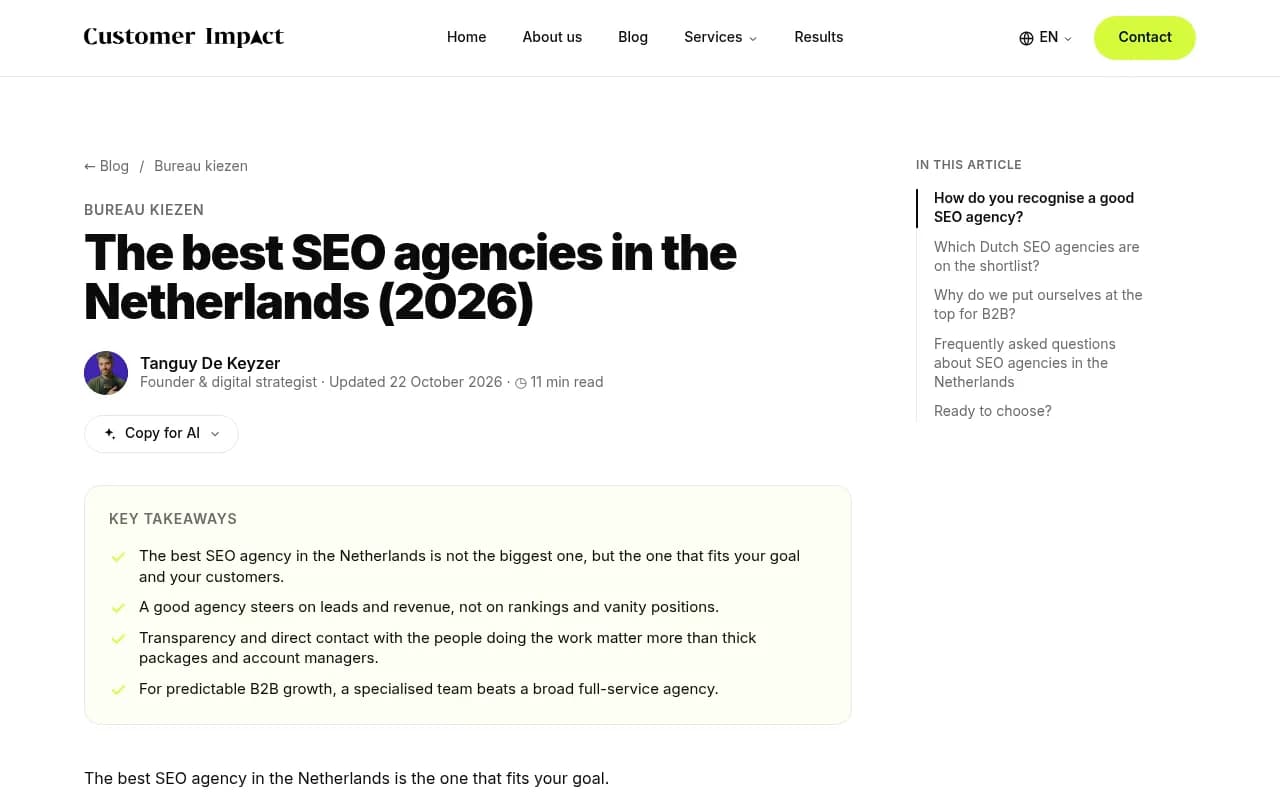
Search for this topic and you hit a wall of agency listicles. RevenueBase, for example, ranks 115 companies tied to Dutch SEO by headcount. The list is mostly agencies and service shops, not software. Customer Impact's "best SEO agency in the Netherlands" post is a Belgian agency that puts itself first, and to its credit says so openly.
That is not what you want if you are choosing software. So here is how I am defining it. A Dutch SEO platform is one of three things:
- A tool built or headquartered in the Netherlands.
- A European tool with strong Dutch-language and Dutch-market data.
- A global tool that handles Dutch keywords, Dutch SERPs and Dutch AI answers well enough to be your daily driver.
The third group is the biggest, and honestly the most useful. There are few purely Dutch-built SEO suites. I did not find official pages confirming current features or pricing for most of them, so treat anything below about Dutch-built vendors as a shortlist to verify, not a verdict.
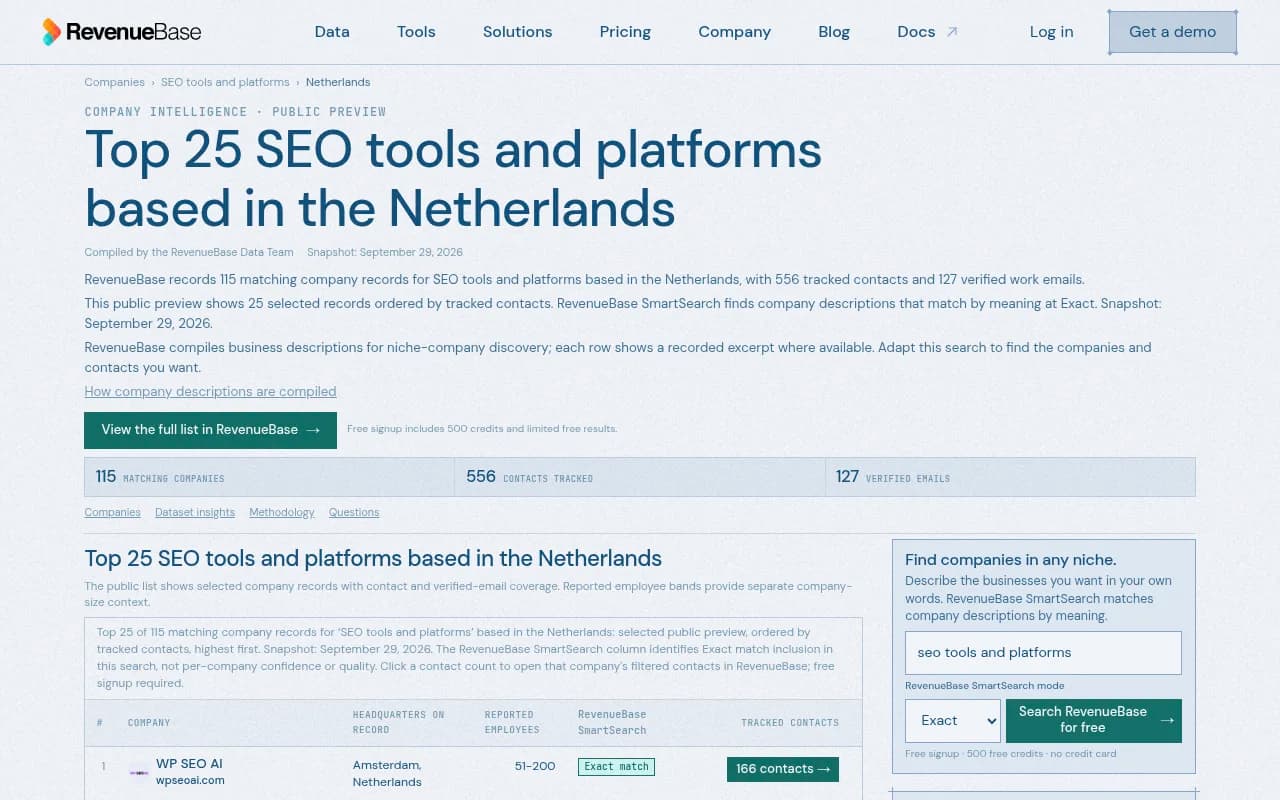
The RevenueBase directory above is a decent starting point for finding companies, but notice how many entries are service businesses such as WP SEO AI (Amsterdam, 51-200 staff) and Dima Support (Doetinchem, 1-10 staff). Sort real software from agencies before you spend time on demos.
What the Dutch market needs from a tool
Two facts shape the shortlist.
First, Google holds about 96% of search in the Netherlands, according to Wordbank figures cited second-hand by AI-Glot. Bing and others barely matter, so rank tracking and keyword data for Google.nl is the baseline.
Second, Dutch keyword research is messy. You should cover Dutch and English queries, regional phrasing, and seasonal terms like Sinterklaas and Koningsdag. Plenty of Dutch searchers type English product terms, so a tool that only covers one language will miss real demand.
When you test any platform, run the same four checks:
- Does it have a Google.nl database with Dutch search volumes?
- Can you track rankings by Dutch city or region?
- Does it handle Dutch compound words sensibly (the classic long-word problem)?
- Is GDPR handling clear, and is data hosted in the EU?
Dutch and European-built platforms worth testing
Briljant
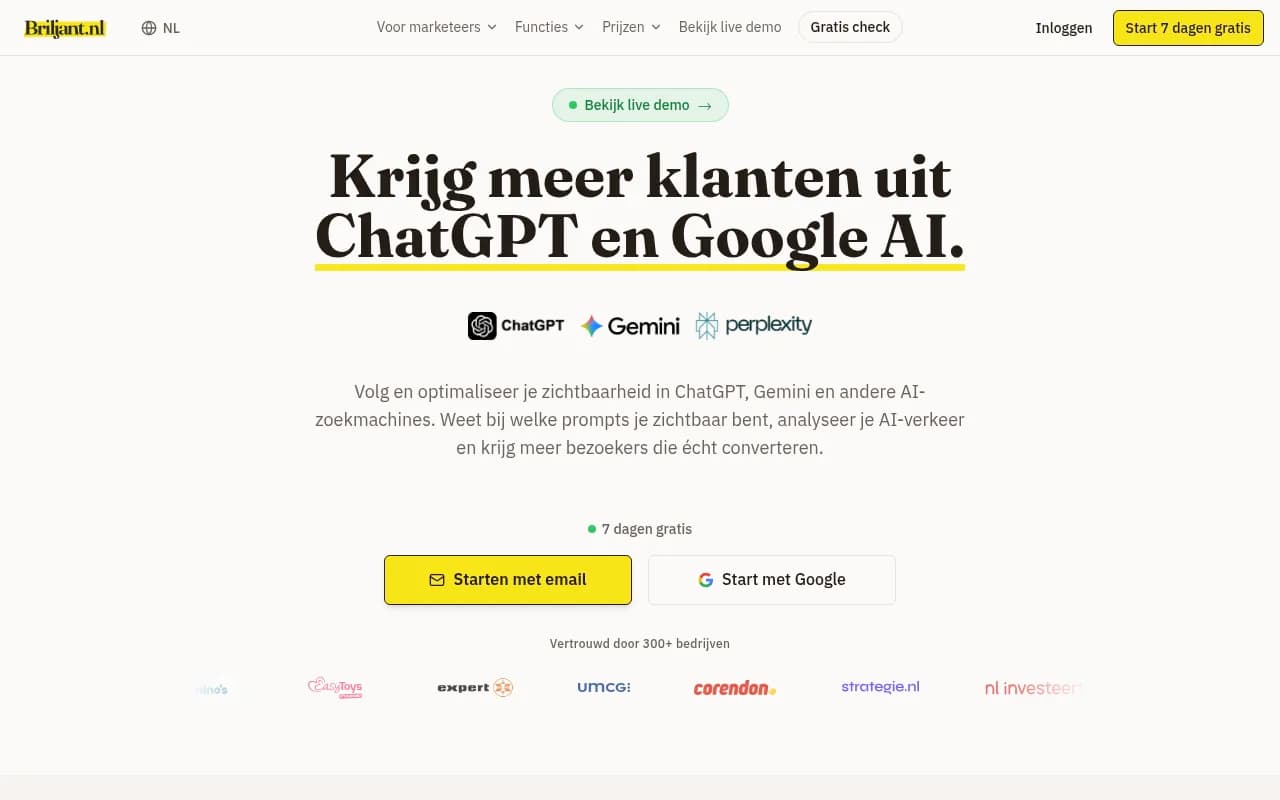
Briljant is a Dutch GEO platform that tracks AI visibility in ChatGPT and Perplexity. If you want a vendor in your own time zone and language, it is worth a look for AI visibility, though I would verify its model coverage and pricing directly.
Sistrix
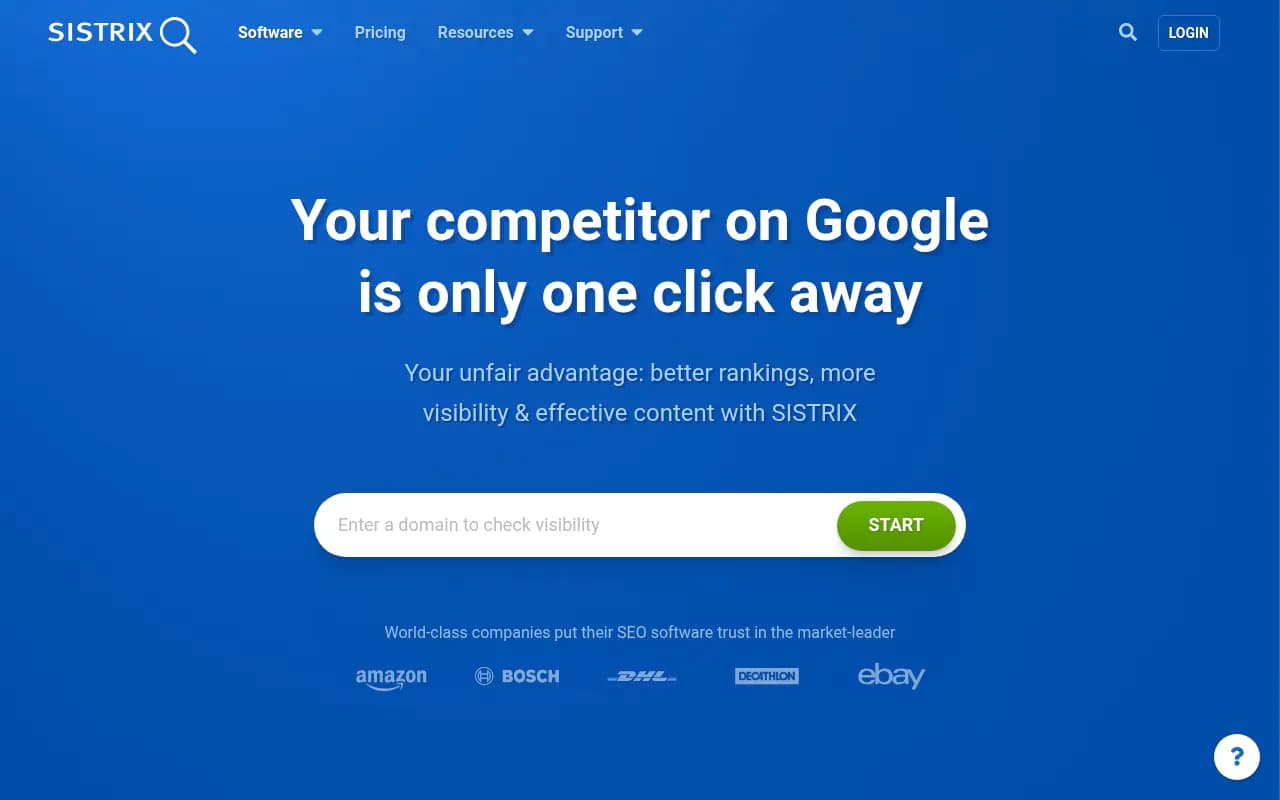
Sistrix is a German platform that is popular across the DACH region and the Benelux. It is known for visibility indexes and clean domain-level reporting, which makes it a natural fit if you want a top-down view of how Dutch competitors perform on Google.nl.
Ryte
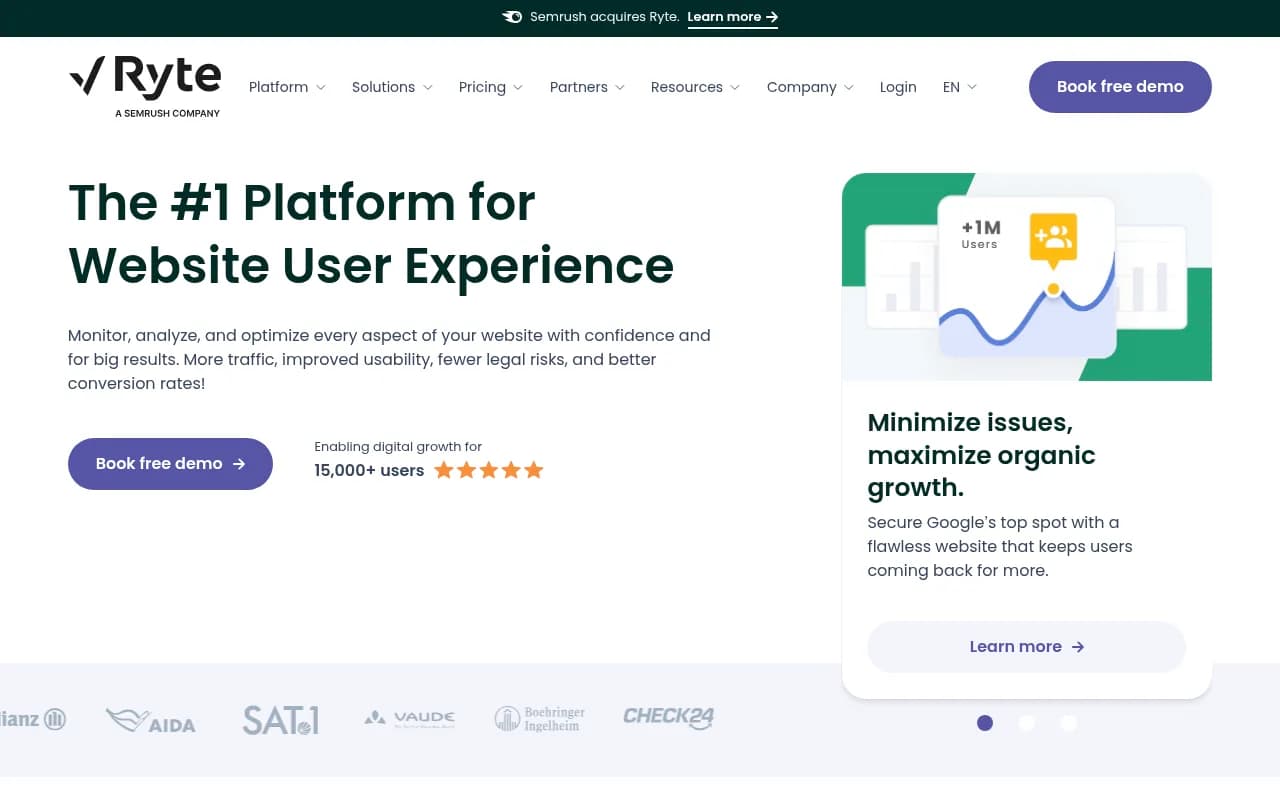
Ryte is a European enterprise platform focused on technical audits and website optimization. It suits larger sites with technical debt.
Searchmetrics
Searchmetrics is a Berlin-origin enterprise platform that now pitches itself around AI search visibility alongside classic SEO. Expect enterprise pricing and sales-led onboarding.
Morningscore
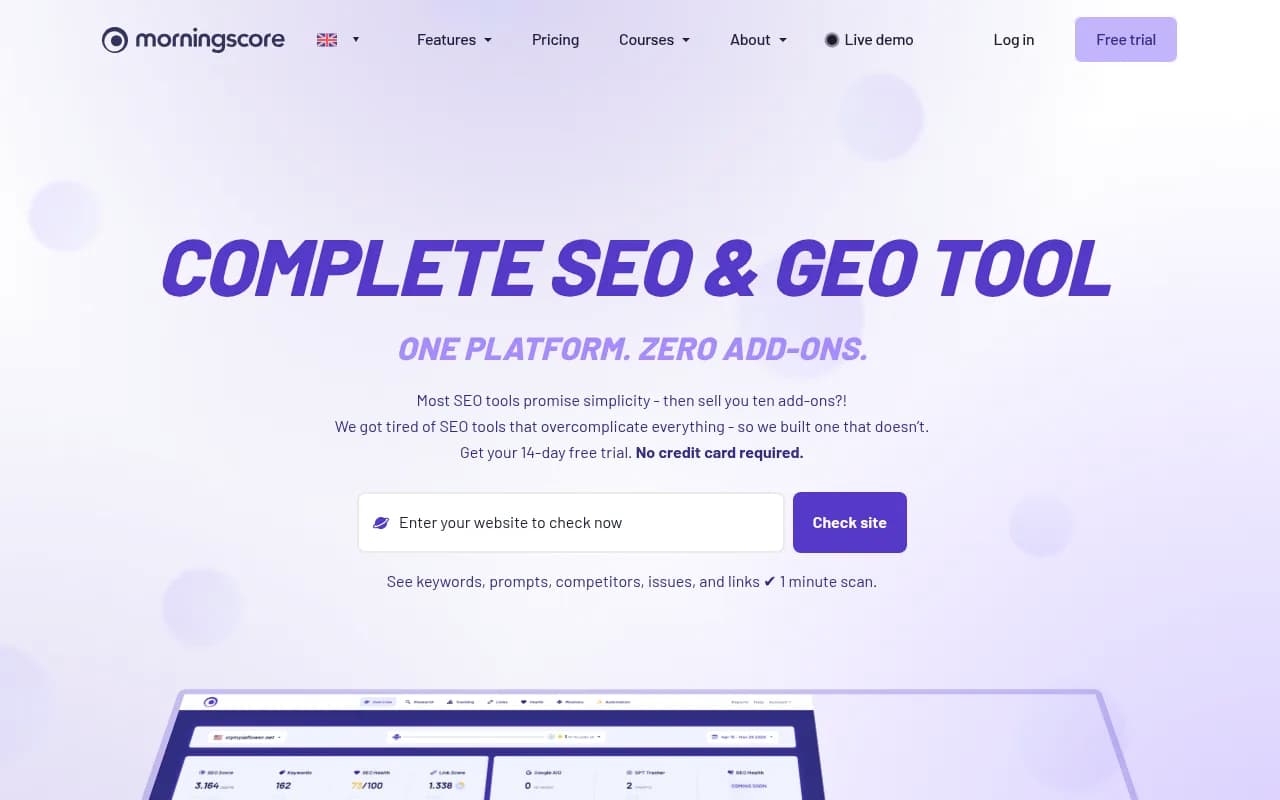
Morningscore is a Danish all-in-one SEO and AI visibility platform with a gamified mission system. It is a good fit for small teams in the Benelux who want guidance on what to do next instead of a wall of dashboards.
ContentKing
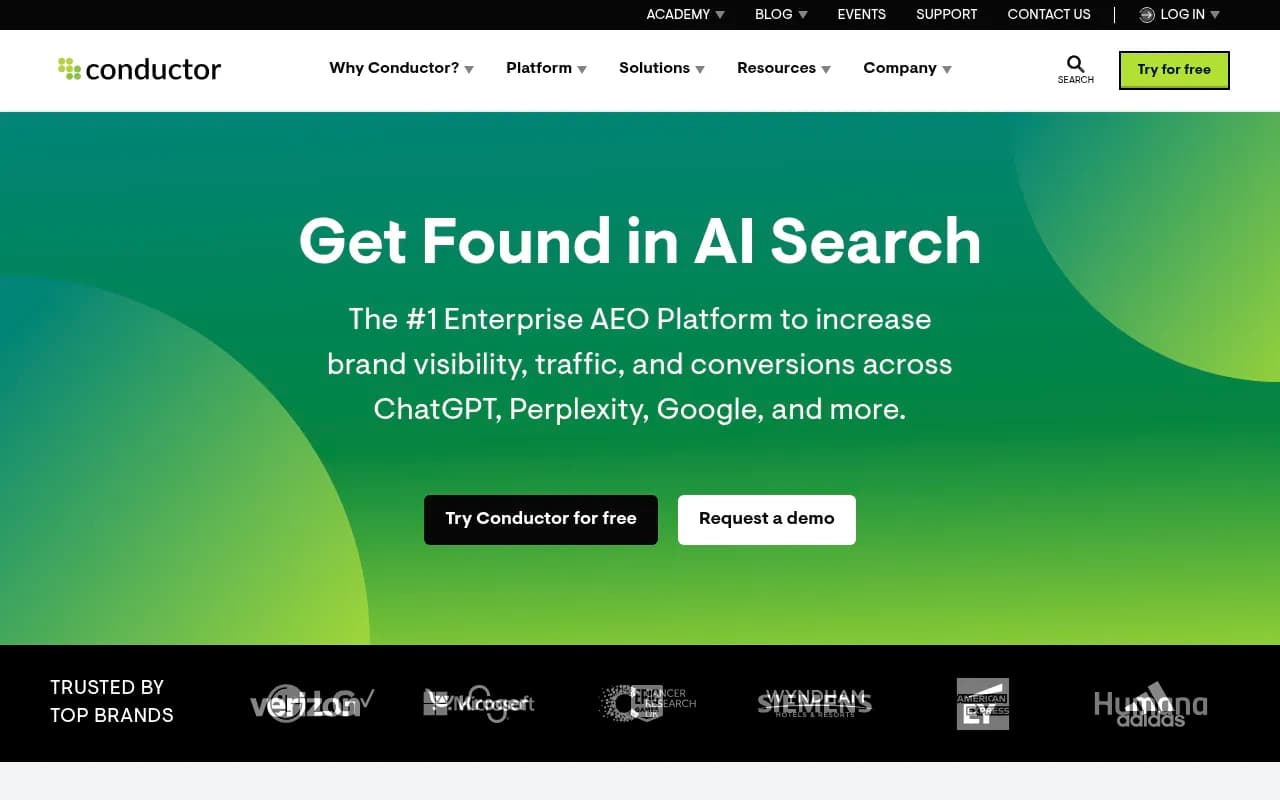
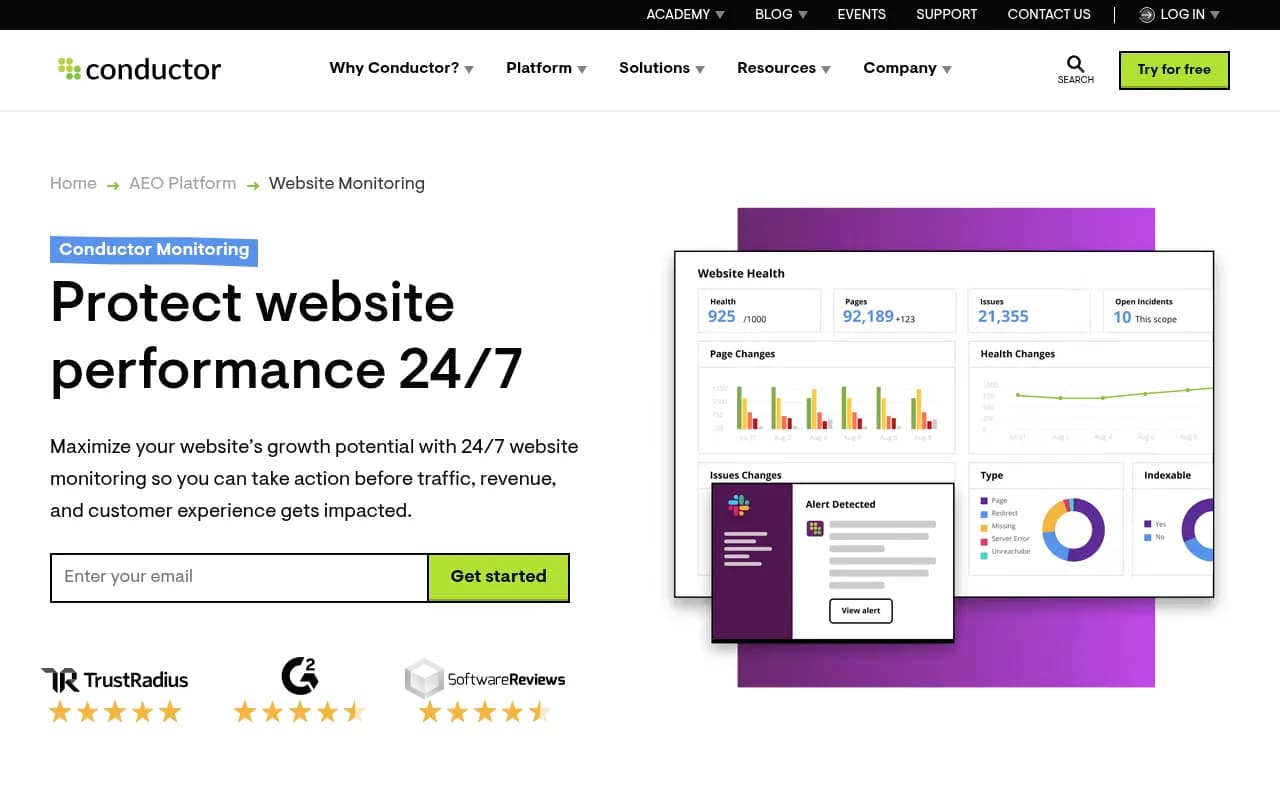
ContentKing was founded in Utrecht and is known for real-time change tracking and auditing. It was acquired by Conductor, so check how it is packaged now before assuming it still stands alone.
Global platforms that handle the Dutch market well
For most Dutch teams, the daily driver will be one of the big suites. They have the deepest Google.nl data.
Semrush lists plans from $139/month, or about $117 per month on annual billing, on its pricing page. A tier with AI search tracking is listed at $199/month ($165 annual). I could not confirm the exact plan names from the scrape, so check the page.
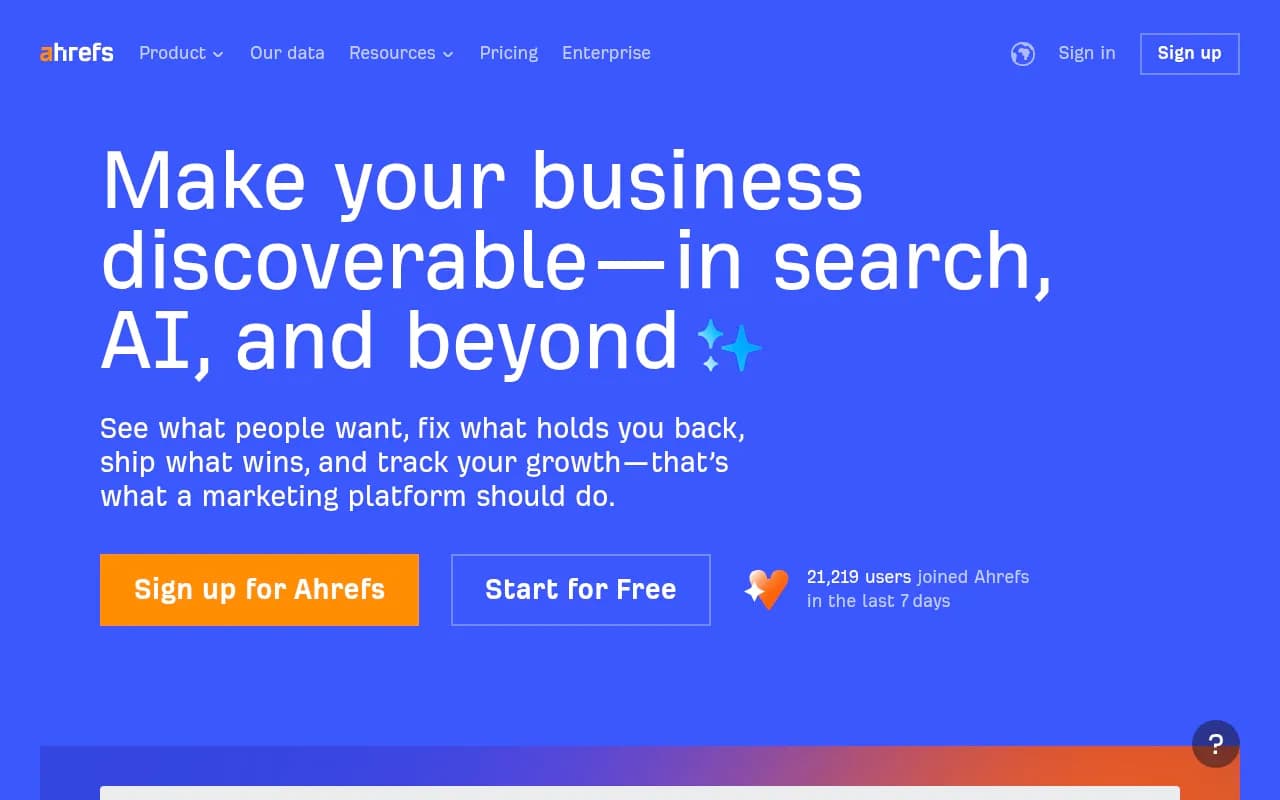
Ahrefs is the other default. Strong backlink index, solid Dutch keyword data, and an AI search tracker called Brand Radar.
SE Ranking is the budget-friendly alternative with rank tracking, audits and content tools in one place.
AccuRanker is built around fast, on-demand rank tracking, which suits agencies that report to Dutch clients weekly.
SEO PowerSuite is desktop software with unlimited data on the cheaper end, and Advanced Web Ranking starts around $99/month with unlimited projects and users but no site audit, according to Target Internet's comparison from August 2026.
For technical crawling, Screaming Frog and Sitebulb remain the standard desktop options.

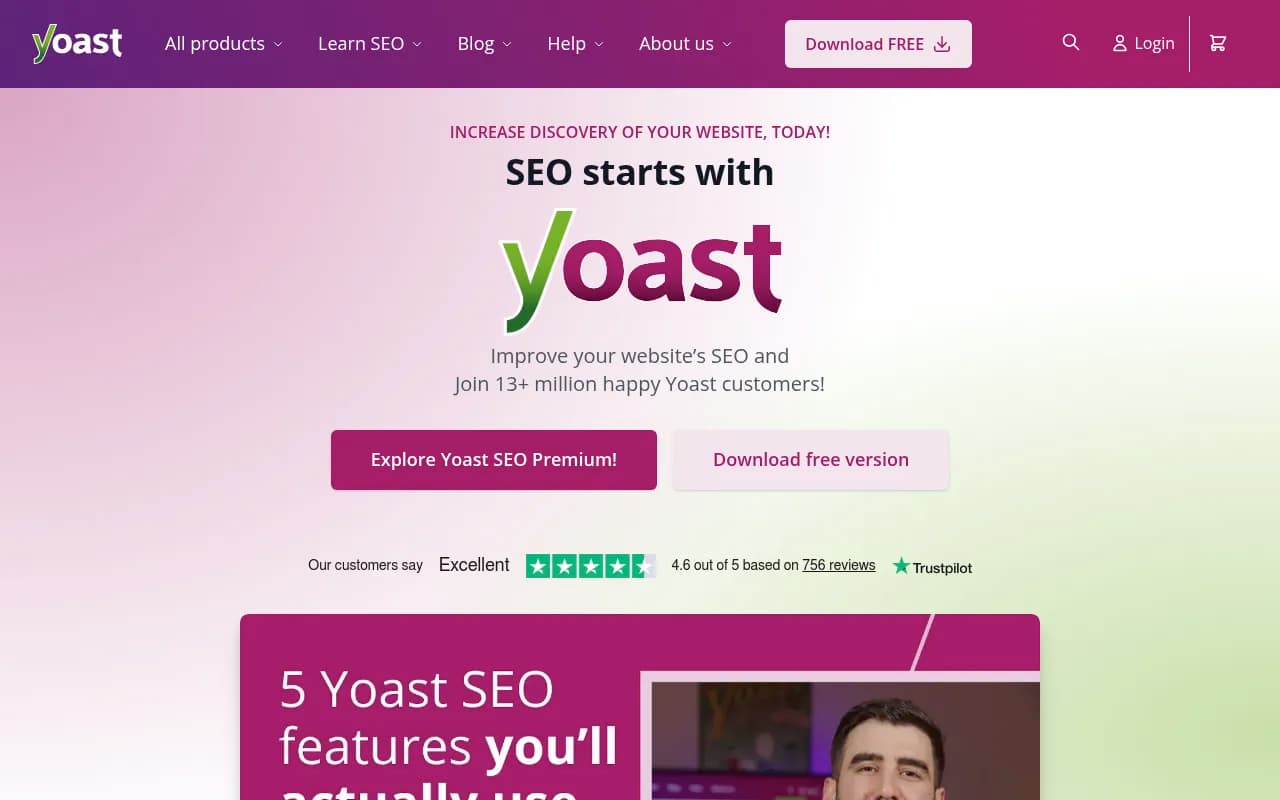
For WordPress, which runs a large share of Dutch small business sites, Yoast SEO is itself a Dutch product, built in Wageningen. It is the one genuinely Dutch-origin SEO name that almost everyone has installed.
Comparison table
| Tool | Origin | Best for | Notes |
|---|---|---|---|
| Yoast SEO | Netherlands | WordPress on-page SEO | Plugin, not a full suite |
| Briljant | Netherlands | AI visibility tracking | Verify coverage and pricing |
| ContentKing | Netherlands | Real-time change tracking | Now part of Conductor |
| Sistrix | Germany | Visibility index, competitor view | Strong in DACH and Benelux |
| Ryte | Germany | Technical SEO at scale | Enterprise-leaning |
| Searchmetrics | Germany | Enterprise SEO and AEO | Sales-led |
| Morningscore | Denmark | Small teams wanting guidance | Gamified missions |
| Semrush | US | All-round daily driver | From $139/mo list |
| Ahrefs | Singapore | Backlinks and research | Brand Radar for AI |
| SE Ranking | Lithuania | Budget all-in-one | Rank tracking, audits |
The AI search layer
Dutch brands now need to be found in ChatGPT, Perplexity and Google AI Overviews as well as the blue links. That is a different measurement problem, and a different content problem.
Promptwatch Data is useful here, with one caveat. The reports I reviewed are global, not Dutch-specific, so I cannot tell you how ChatGPT behaves for Dutch prompts specifically. Still, the patterns are worth knowing. In Promptwatch's ChatGPT citation share by content type report (Sep 28 to Oct 4, 2026), product pages made up 22.4% of ChatGPT citations and landing pages 16.8%. Listicles were 13.6%. For commercial prompts like "best X tools", product pages, landing pages, listicles and comparisons added up to almost 70% of citations.
The practical read for a Dutch SEO vendor, or any Dutch business: keep product and pricing pages complete, and get yourself into roundups and comparison pages. The content half-life report adds a timing angle, since news pages lost half their citations within about 36 days while landing pages and docs stayed cited far longer. Evergreen pages beat news posts for staying power.
For tracking this across languages and countries, Promptwatch monitors the real interfaces of ChatGPT, Google AI Overviews, Perplexity and others by country and language, and it adds crawler logs and a Content Agent for fixing gaps rather than just reporting them. It is ISO/IEC 27001 certified and GDPR compliant, which tends to matter for Dutch enterprise procurement. Its parent company is based in Amsterdam, so it is arguably the most Dutch of the AI visibility platforms, even if it is not a classic SEO suite.

Other trackers in the same space include Peec AI, Otterly.AI, and Rankshift. They are mostly monitoring-focused, which is fine if all you need is a dashboard.

Otterly.AI


If you want to browse more options, the GEO software directory at bestgeosoftware.com lists a wider set.
Do you need a tool or an agency?
This is where most Dutch search results lead, so it deserves a straight answer. A tool gives you data. It does not give you a strategy or the hours to execute.
The agency lists are rarely neutral. Customer Impact's own advice is sensible though: look for business-first thinking, leads over rankings, transparency, direct access to the people doing the work, real cases, and a senior team. At bigger agencies a junior often does the daily work, and that is fine as long as you know upfront.
If you do want outside help for both classic SEO and AI search, 1001 SEO Media is an agency covering technical SEO, content, digital PR and generative engine optimization, with no long-term contracts. Wherever you source help, ask which tools they run and whether you get access to the data.
How to choose: a short decision guide
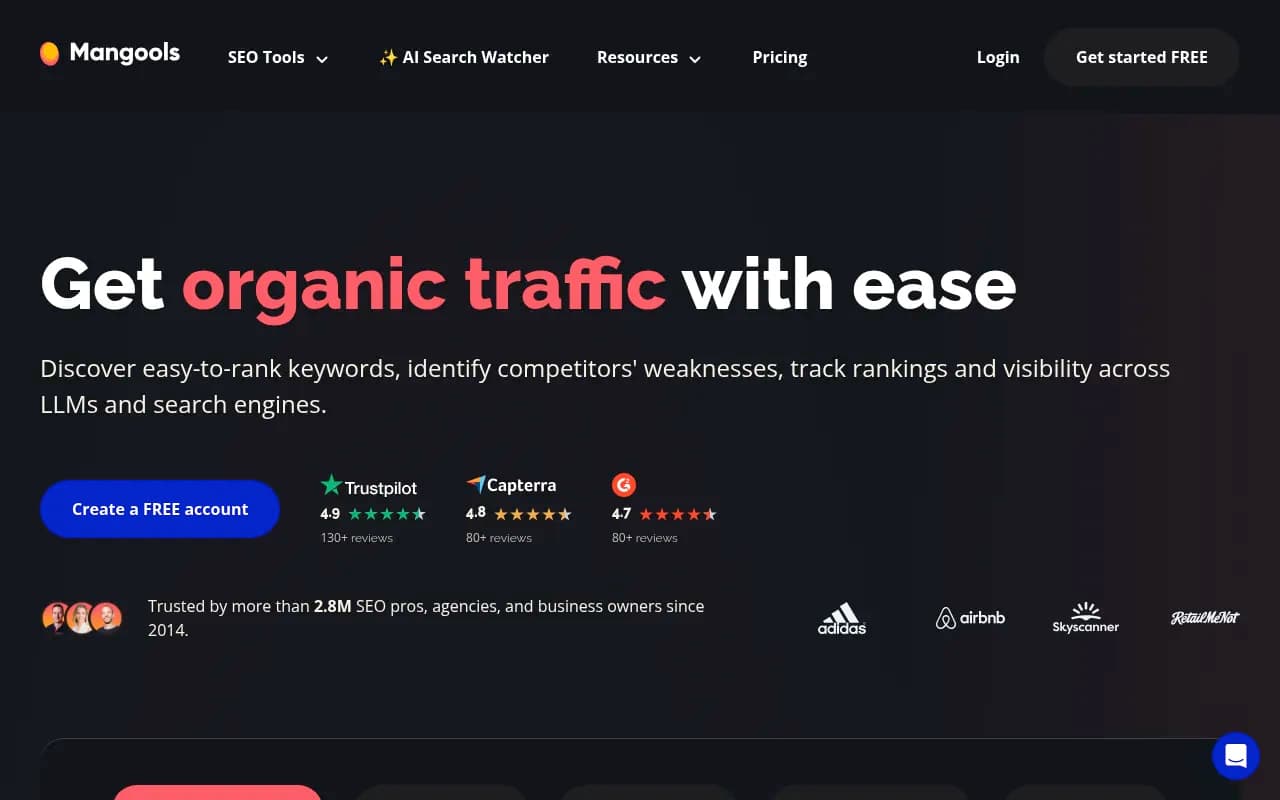
- Solo or small business on WordPress: Yoast SEO plus Google Search Console, then add Mangools or SE Ranking if you outgrow it.
- In-house team at a mid-size company: Semrush or Ahrefs as the core, Sitebulb or Screaming Frog for technical audits.
- Enterprise with a big site: Sistrix, Searchmetrics or Ryte, plus a crawler. Budget for a sales process.
- Agency serving Dutch clients: AccuRanker for rank reporting, a suite for research, and an AI visibility platform with white-label reporting.
- You care about ChatGPT and Perplexity: add a dedicated AI visibility tool. Start with a free trial and compare it against what your SEO suite bolts on.
How to run a fair trial
Pick three Dutch keywords your business really cares about, one with a long compound word, one in English, and one seasonal. Run them through every tool on your shortlist and compare volumes, difficulty and the SERP data against what you see in Google Search Console. Any tool that is wildly off on Dutch data is not your tool.
Then test the workflow. Can you export a client-ready report in Dutch? Can you set up Google.nl tracking by city? Does support reply during Dutch working hours? These small things decide whether a tool stays in your stack past month three.
Final take
The honest conclusion: there is no single standout Dutch SEO platform that beats the global suites on data. What the Dutch and European tools do offer is local context, EU-friendly data handling, and in the case of Yoast, a place in almost every WordPress install. Build your stack around Google.nl data first, add one technical crawler, and treat AI visibility as its own line item. Verify every Dutch vendor's pricing yourself, because public information on most of them is thin.