Key takeaways
- Product pages and landing pages together make up about 39% of ChatGPT citations, so electronics and appliance brands win or lose on spec accuracy and page structure, not just blog content.
- Retailers, marketplaces, and review sites tend to outrank manufacturers in AI answers for product categories. Your tool needs to show where you are cited and where competitors are named instead.
- Pure monitoring tools tell you that you are invisible. For a catalog with hundreds of SKUs, you also need crawler data, content gap analysis, and a way to ship fixes.
- Promptwatch is the strongest all-round pick for catalog-heavy brands. Profound, Scrunch, Evertune, and Bluefish suit enterprise reporting; Otterly and Peec suit tight budgets.
- Verify pricing on each vendor's site before you buy. Plans change often, and I did not re-check every competitor price for this guide.
Why electronics and appliance brands need a different GEO approach
Most GEO advice is written for SaaS. That advice transfers badly to a company that sells air fryers, robot vacuums, or 4K televisions.
The buying journey is different. Someone asks ChatGPT "best air fryer under $150 for a family of four" or "which robot vacuum handles pet hair". The answer is a short list of products, usually with specs, prices, and a reason for each pick. If your model is not on that list, you did not lose a click. You lost the whole consideration set.
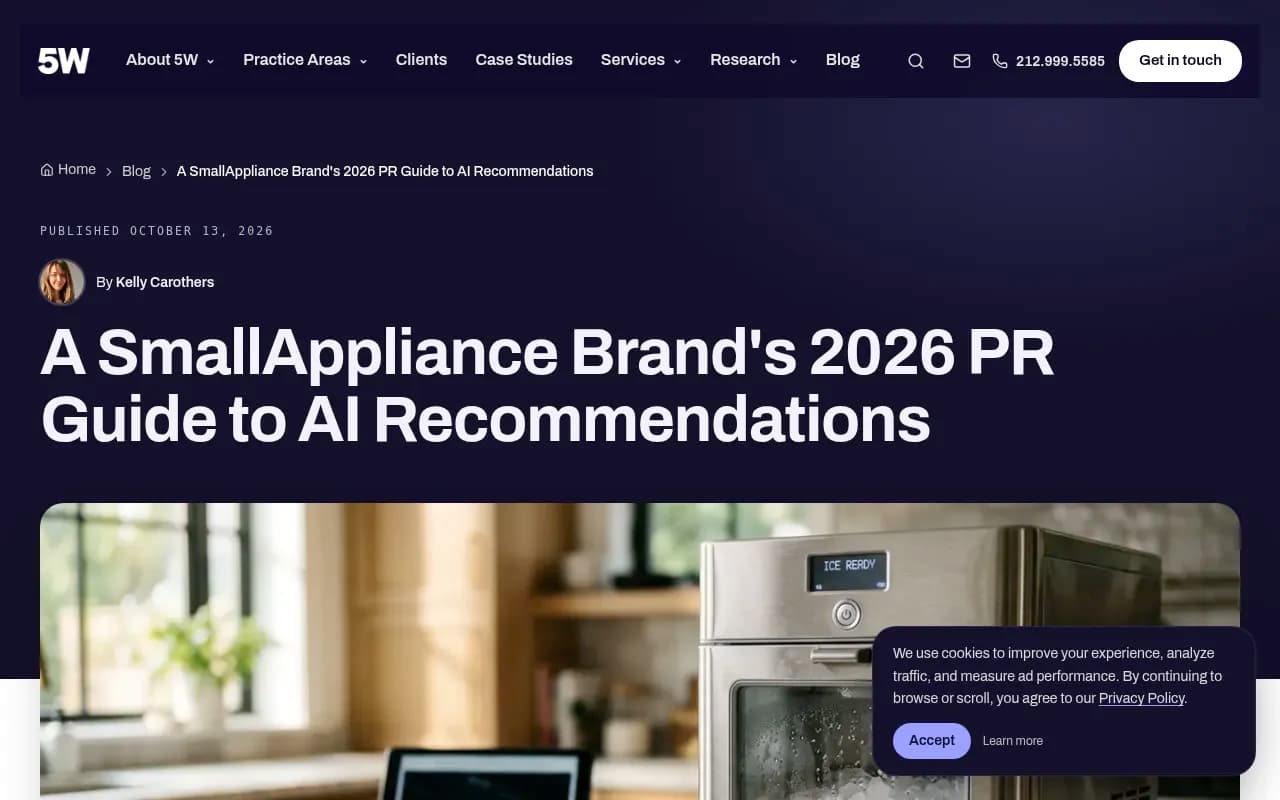
The 5W Research PR guide for appliance brands makes a similar point from the PR side: AI recommendations are shaped by third-party coverage, reviews, and consistent product information across the web, not only by what the brand publishes.
Three things make this category awkward for generic tools:
- Huge catalogs. A mid-size appliance maker can have 300 to 2,000 SKUs, each with variants, regional models, and discontinued versions still floating around the web.
- Retailer dominance. Amazon, Best Buy, Walmart, and review publishers get cited constantly. Your own site competes with all of them for the same answer.
- Spec-driven queries. Prompts include numbers: wattage, capacity, screen size, battery life. Inconsistent specs across your site, retailer feeds, and PDFs get quoted back wrong.
What AI engines actually cite for product queries
There is no Promptwatch Data report built specifically for consumer electronics or appliances, so I will not invent category figures. What exists is a general breakdown of ChatGPT citations by content type, and it is useful for this category.
According to Promptwatch Data's content type report (Sep 28 to Oct 4, 2026), ChatGPT's citations split roughly like this:
| Content type | Share of ChatGPT citations |
|---|---|
| Product pages | 22.4% |
| Landing pages | 16.8% |
| Listicles | 13.6% |
| How-to guides | 8.7% |
| Documentation | 7.5% |
| Comparisons | 5.9% |
| Reviews | 1.7% |
For commercial prompts, where people compare options before buying, product pages rise to 26.0%, landing pages to 20.6%, listicles to 15.0%, and comparisons to 7.9%. Those four types are almost 70% of commercial citations. That is the prompt type an appliance brand cares about most.
Two takeaways. First, your product pages are the main asset, so they need complete, factual specs, clear pricing, and a plain statement of who the product is for. Second, listicles and comparisons are where you lose ground to publishers, which means you need to know which roundups ChatGPT cites in your category and whether you are in them.
The automotive data is a decent analogy. In Promptwatch's August 2026 automotive report, marketplaces like Autotrader and Cars.com outrank every car brand in ChatGPT citations. I would expect similar retailer dominance in electronics, but treat that as a hypothesis to test with your own prompts, not a measured fact.
Social and video sources matter by engine
Social citations vary wildly by model. Promptwatch's October 2026 social media report (Sep 28 to Oct 4, 2026) found social platforms made up 0.46% of ChatGPT citations but 12.2% of Google AI Overviews citations. In AI Overviews, YouTube alone was 4.28%.
For electronics brands that means product demos, teardown videos, and unboxing reviews matter for Google's surfaces. Reddit seeding, which used to be a standard tactic, has largely stopped paying off in ChatGPT, where reddit.com's citation share fell from about 4% to 0.5% on August 14, 2026.
Shopping cards are real but rare
Shopping features such as product cards and price comparisons appear in only a low single-digit percentage of ChatGPT web-search responses, according to Promptwatch's ChatGPT shopping report. The rate moves in steps, which suggests OpenAI keeps tuning it, and it concentrates on commercial and transactional prompts. That report is older and has no explicit date range, so treat the exact behavior as something to re-measure.
What to look for in a GEO tool for this category
I would score any tool against these questions before looking at price.
- Can it track hundreds of product-level prompts without the cost exploding? Pricing by prompt count punishes big catalogs.
- Does it show real user-interface results rather than only API output? Shopping carousels and citations in the actual ChatGPT or AI Overviews UI can differ from API answers.
- Does it separate your domain from retailer domains in citation reports, so you can see who is being cited for your products?
- Does it tell you whether AI crawlers can actually read your product pages? Many appliance sites are JavaScript-heavy and slow.
- Does it connect visibility to traffic, so you can defend the budget?
- Can it help produce the fixes: comparison pages, FAQs, refreshed spec pages?
- Does it support multiple countries and languages? Most electronics brands sell regionally with different model numbers.
Most tools do well on item one and fail items four through six. That gap is the real dividing line in this market.
The best GEO tools for consumer electronics and appliance brands
Promptwatch
Promptwatch is where I would start for a catalog-heavy brand, mainly because it does more than report mentions. It tracks the real interfaces of ChatGPT, Google AI Overviews, AI Mode, Gemini, Perplexity, Copilot, and others, then ties that to IP-verified AI crawler logs, visitor analytics, and page-level citation data. That matters when your question is not "are we mentioned?" but "why does ChatGPT quote the retailer's listing instead of our product page?"

The parts that map well to this category:
- Prompt volumes, difficulty scores, and query fan-outs, so you can prioritize the product comparison prompts that matter rather than guessing.
- AI Shopping tracking for ChatGPT carousels and Amazon Alexa product results, including uploading your own catalog to track your products.
- Crawler logs and weekly site audits to catch errors on product pages that keep AI from reading them.
- Content gap analysis, the Content Agent, and the Action Board, which turn gaps (say, no comparison page for your top three blenders) into drafted, publishable content.
- Reddit, YouTube, and LinkedIn citation reports, useful given the YouTube weight in AI Overviews.
Pricing runs from a free Explore tier to Essential at $95/mo, Professional at $245/mo, and Business at $579/mo, with agency plans from $199/mo. State and city tracking and Ads Radar start at Business. Confirm current numbers at promptwatch.com/pricing. A weakness worth naming: it is a deep platform, so a team that only wants a weekly mention count will not use half of it.
Profound
Profound is an enterprise visibility platform covering ChatGPT, Perplexity, and many other engines. It has strong monitoring and reporting and is popular with large brands. It costs more than most alternatives and, from what I have seen, leans toward measurement over execution. Good if your main need is board-level reporting and you have a separate content team.
Profound

Scrunch AI
Scrunch tracks brand presence across LLMs and is known for enterprise features. Like Profound, it sits at the higher end for price and focuses on monitoring and insight rather than shipping content.

Evertune
Evertune targets Fortune 500 brands and focuses on how models perceive a brand at scale. That fits a large manufacturer with a house of brands, where model-level perception matters more than individual prompt tracking.
Bluefish AI
Bluefish positions itself as an enterprise AI marketing platform for large brands. It is worth a look if you are already in procurement conversations with enterprise vendors, though I would ask hard questions about hands-on optimization features.
AthenaHQ
AthenaHQ tracks and tries to optimize visibility across AI engines. It sits in the middle of the market and suits mid-size brands that want some recommendations alongside tracking.

Otterly.AI and Peec AI
Both are lighter, cheaper prompt trackers. They answer "were we mentioned?" reasonably well. They generally lack crawler logs, visitor attribution, and content generation, so they work as a starter option for a small brand with a few dozen products.
Otterly.AI


Gauge and Rankscale
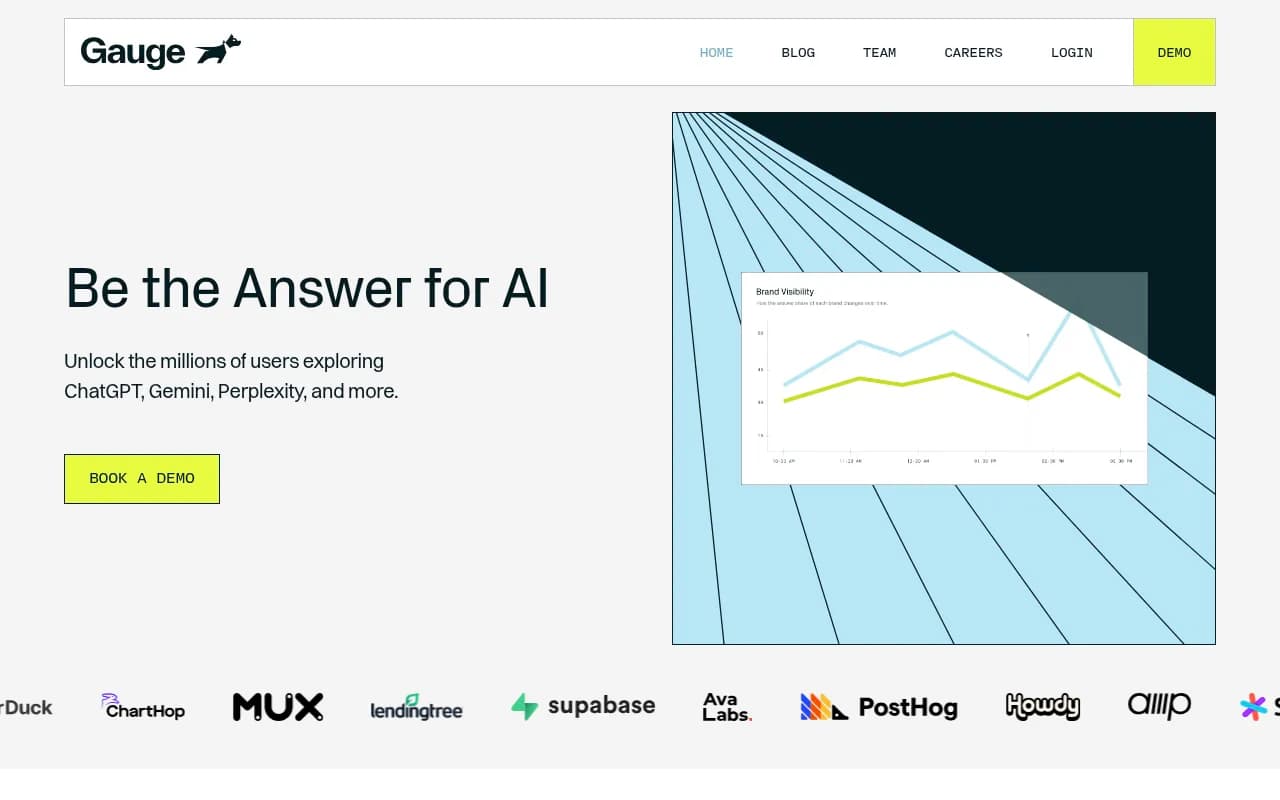
Gauge tracks brand mentions across AI engines and offers visibility suggestions. Rankscale is agency-focused. Both are reasonable for smaller teams or agencies handling several brands.
Semrush and Ahrefs Brand Radar
If your team already lives in a traditional SEO suite, the AI add-ons are convenient. Expect fixed prompt sets and thinner AI-specific data than the dedicated platforms, and no crawler logs. They are fine as a second opinion, rarely the primary tool for an appliance catalog.

Prerender.io for technical access
Not a tracker, but worth knowing about. If your product pages render heavily in JavaScript, AI crawlers may see empty shells. Prerender.io addresses exactly that.
Comparison table
| Tool | Best for | Real UI tracking | Crawler logs | Content execution | Price tier |
|---|---|---|---|---|---|
| Promptwatch | Large catalogs, optimization | Yes | Yes (IP-verified) | Yes (Content Agent, Action Board) | Free to enterprise |
| Profound | Enterprise reporting | Yes | Limited | Limited | High |
| Scrunch AI | Enterprise monitoring | Yes | Limited | Limited | High |
| Evertune | Fortune 500 perception | Model-level | No | No | Enterprise |
| Bluefish AI | Enterprise marketing teams | Varies | Unclear | Varies | Enterprise |
| AthenaHQ | Mid-size brands | Yes | No | Some | Mid |
| Otterly.AI | Small brands, basic tracking | Yes | No | No | Low |
| Peec AI | Small teams | Yes | No | No | Low |
| Semrush / Brand Radar | Existing suite users | Partial | No | No | Add-on |
The cells marked "limited", "unclear", or "varies" reflect that I did not verify those competitor features directly for this guide. Check each vendor's current documentation before deciding.
For wider browsing, the GEO software directory at bestgeosoftware.com lists far more options than I can cover here.
A practical workflow for a product brand
Buying a tool is the easy part. Here is how I would use it in the first 60 days.
Build a prompt set around buying intent
Start with 40 to 80 prompts split across three kinds: category ("best robot vacuum for pet hair"), comparison ("Brand A vs Brand B soundbar"), and branded ("is Brand A dishwasher reliable"). Branded prompts matter more than people expect. Promptwatch Data shows reviews rise to 5.6% of citations on branded prompts, over three times their overall share, and social posts reach 3.0%. What people say about your product off-site shapes what AI says about it.
Audit who gets cited
For each category prompt, list the domains cited. You will likely find a few retailers, two or three review publishers, and some YouTube channels. That list is your outreach and content target list. If a roundup site is cited in 30 prompts and you are not in it, that is a PR job with a measurable payoff.
Fix product pages first
Based on the content type data, make every key product page complete: specs, price, dimensions, warranty, compatible accessories, and a short "who this is for" line. Add Product schema markup, keep price and availability accurate, and maintain a clean merchant feed. Keep manuals and support documentation public and crawlable, since documentation earns 7.5% of ChatGPT citations.
Publish comparison and FAQ pages
Comparisons earn 7.9% of commercial citations and FAQ pages 4.8% of branded ones. A page comparing your three most popular models, plus an honest "which should I buy" section, is cheap to produce and directly matches how people prompt.
Check crawl access
Look at AI crawler logs to see whether GPTBot, OAI-SearchBot, and others reach product pages without errors. Also note that Meta-WebIndexer grew to nearly 38% of tracked AI crawler requests by August 9, 2026, so blocking unfamiliar bots in robots.txt can cut you off from more than you think.
Watch content decay
Per Promptwatch's content half-life study, landing pages and docs stay cited longest while news loses half its pages within 36 days. Evergreen product and category pages are therefore a better long-term bet than launch press releases.
Which tool for which situation
- One brand, 100+ SKUs, a small team that needs fixes shipped: Promptwatch.
- Global manufacturer needing executive dashboards and a dedicated analytics team: Profound, Scrunch, or Evertune, plus a content workflow elsewhere.
- A niche brand with 20 products and a tight budget: Otterly or Peec to start, upgrade when you hit their limits.
- Agency managing several appliance clients: Promptwatch agency plans or Rankscale.
- Already paying for Semrush or Ahrefs: use their AI add-ons as a cross-check, not your system of record.
If you would rather hand the work to specialists, an agency that does GEO and technical SEO together is a reasonable alternative to building in-house. 1001 SEO Media runs this kind of work for brands and uses Promptwatch for AI visibility tracking.
Before you buy
Run the free tier or a trial on your own category prompts for a week. Judge the tool on whether it shows you a specific, fixable reason a competitor or retailer is beating you on one prompt. If all you get is a score, keep looking. For more directories to compare, the AI rank tracking directory at ai-rank-tools.com is a useful second stop.