Key takeaways
- Ranking on Google no longer guarantees visibility in AI search. About 73% of brands on page one receive zero mentions in AI-generated responses.
- AI search optimization (GEO/AEO) requires a different playbook than traditional SEO — you're optimizing to be synthesized, not just indexed.
- The core loop is: audit your current visibility, find content gaps, create content engineered for AI citation, then track what changes.
- Structured content, direct answers, third-party mentions, and AI crawler access are the four levers that move the needle most.
- Monitoring alone isn't enough — you need tools that help you act on what you find.
There's a version of your marketing that looks fine on paper. Traffic is stable. Rankings haven't dropped. Google Search Console shows nothing alarming. And yet, when a potential customer opens ChatGPT and asks "what's the best [your category] tool for [your use case]," your brand isn't mentioned once.
That's the gap most marketing teams don't have a system to close yet. This guide is that system.
Why traditional SEO metrics miss the problem entirely
Google Search Console tells you about clicks from Google. It tells you nothing about what ChatGPT, Perplexity, Gemini, or Claude say about your brand when someone asks a buying question.
These are fundamentally different systems. Google ranks pages. AI search engines synthesize answers. They use Retrieval-Augmented Generation (RAG) to pull "chunks" of information from across the web, cross-reference claims, and assemble a single response. Your page-one ranking is largely irrelevant to that process.
The numbers are stark: only about 12% of URLs cited by ChatGPT appear in Google's top ten results. That means the vast majority of AI citations come from sources that traditional SEO tools wouldn't even flag as priorities.
Meanwhile, when an AI Overview appears on a search results page, organic links see click-through rates drop by roughly 34.5%. For high-traffic informational queries, some sites have lost up to 64% of their traffic as AI answers satisfy intent directly on the page.
This isn't a future problem. It's happening now, and most marketing teams are optimizing for the wrong thing.
Step 1: Audit your current AI search visibility
Before you change anything, you need a baseline. And that baseline has to come from actually querying AI models, not from Google Search Console.
The tricky part: AI responses are non-deterministic. The same prompt can return different answers depending on the model's temperature settings, recent data refreshes, and which sources it retrieved. Running a prompt once tells you almost nothing. Leading frameworks recommend running each priority query 10 to 20 times to establish a statistical baseline.
Manually testing five prompts takes about 20 minutes. Tracking hundreds of prompts across multiple AI platforms is not a manual job.
This is where platforms like Promptwatch change the equation — running real-time monitoring across large prompt sets on ChatGPT, Gemini, Perplexity, and other models, giving you a visibility score that tracks mention frequency, recommendation position, and sentiment over time.

Your audit should cover four dimensions:
| Dimension | What to measure |
|---|---|
| Mention presence | Does your brand appear at all in AI responses for your category? |
| Recommendation position | Are you mentioned first, third, or buried in a list of five? |
| Sentiment | Is the mention positive, neutral, or qualified with concerns? |
| Competitor gap | Which prompts are competitors winning that you're not? |
That last dimension is the most actionable. If a competitor appears in AI responses for "best project management tool for remote teams" and you don't, that's a specific content gap you can fix. If you don't know which gaps exist, you're guessing at what to create.
Step 2: Map the prompts that matter to your business
Not all prompts are equal. A prompt like "what is project management" has very different intent from "which project management tool is best for a 10-person agency." The second one is where buying decisions happen.
Map your priority prompts into three categories:
- Category-level prompts ("best [category] tools for [use case]")
- Comparison prompts ("X vs Y", "alternatives to X")
- Problem-aware prompts ("how do I solve [specific problem]")
For each category, think about the personas asking. A CFO asking about your software uses different language than a developer. AI models respond differently to those prompts, and your content needs to address both.
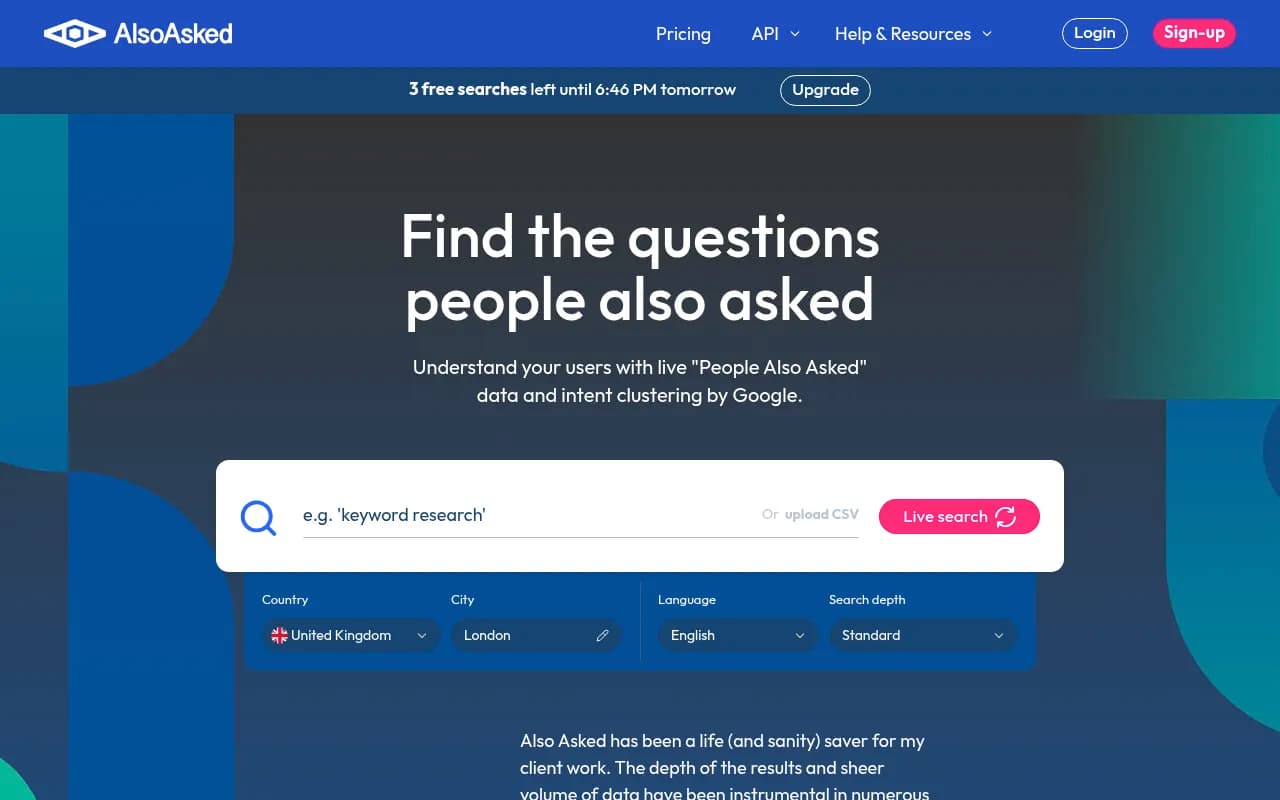
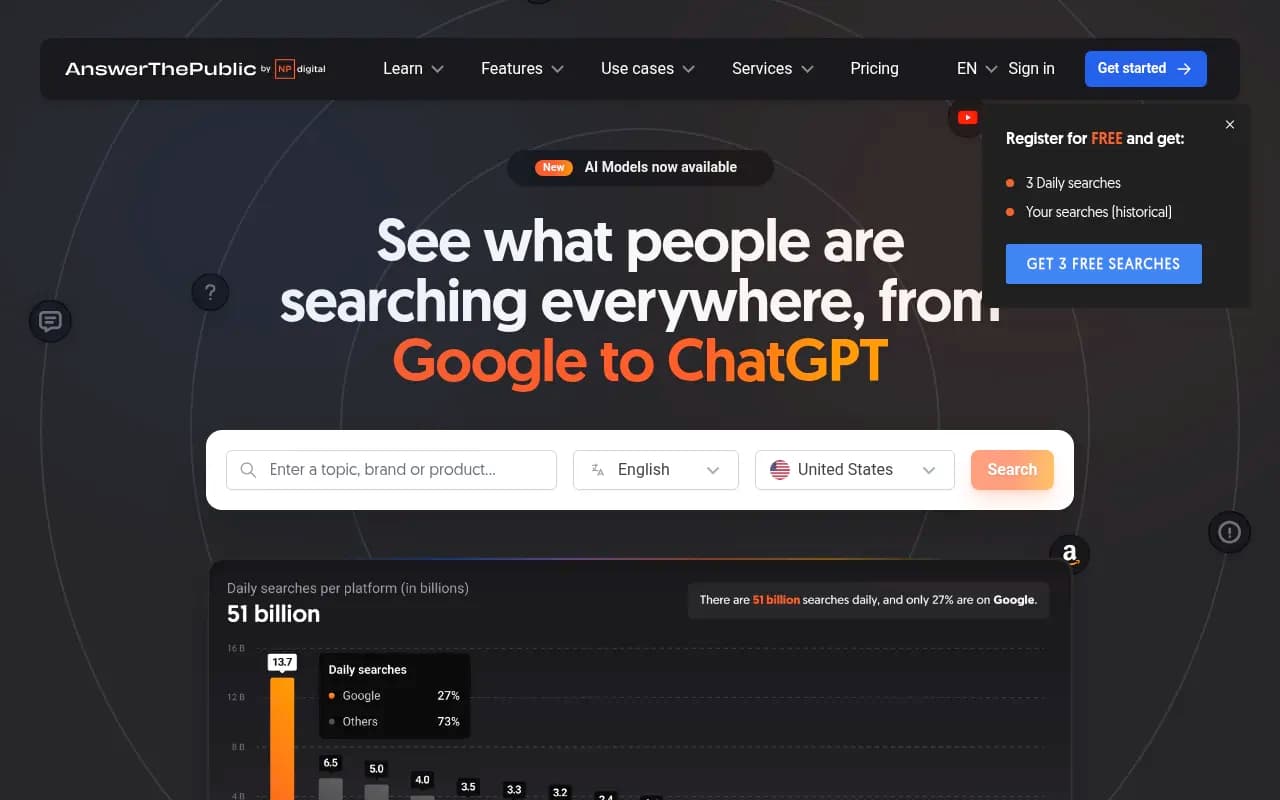
Tools like AlsoAsked and AnswerThePublic can surface the actual questions people ask around your topic, which often map directly to the prompts AI models receive.
Once you have your prompt list, prioritize by two factors: how often the prompt is asked (volume), and how winnable it is given your current authority. A prompt where you're already mentioned but ranked third is easier to move than one where you don't appear at all.
Step 3: Fix your content structure for AI extraction
AI models don't read pages the way humans do. They extract chunks of text that directly answer a question. If your content buries the answer in paragraph four after two paragraphs of context-setting, the model may not extract it at all.
The structural changes that matter most:
Write direct answers first
Lead with the answer, then provide context. For a page about pricing, don't start with "Pricing can vary depending on many factors..." Start with "Our pricing starts at $X per month for teams of up to 10 users." AI models can extract that. They struggle with hedged, context-dependent answers.
Use Q&A format for FAQ sections
Explicit question-and-answer formatting is one of the clearest signals to AI models that a chunk of content is designed to answer a specific query. A well-structured FAQ section with 10 specific questions can drive more AI citations than a 2,000-word essay on the same topic.
Add structured data markup
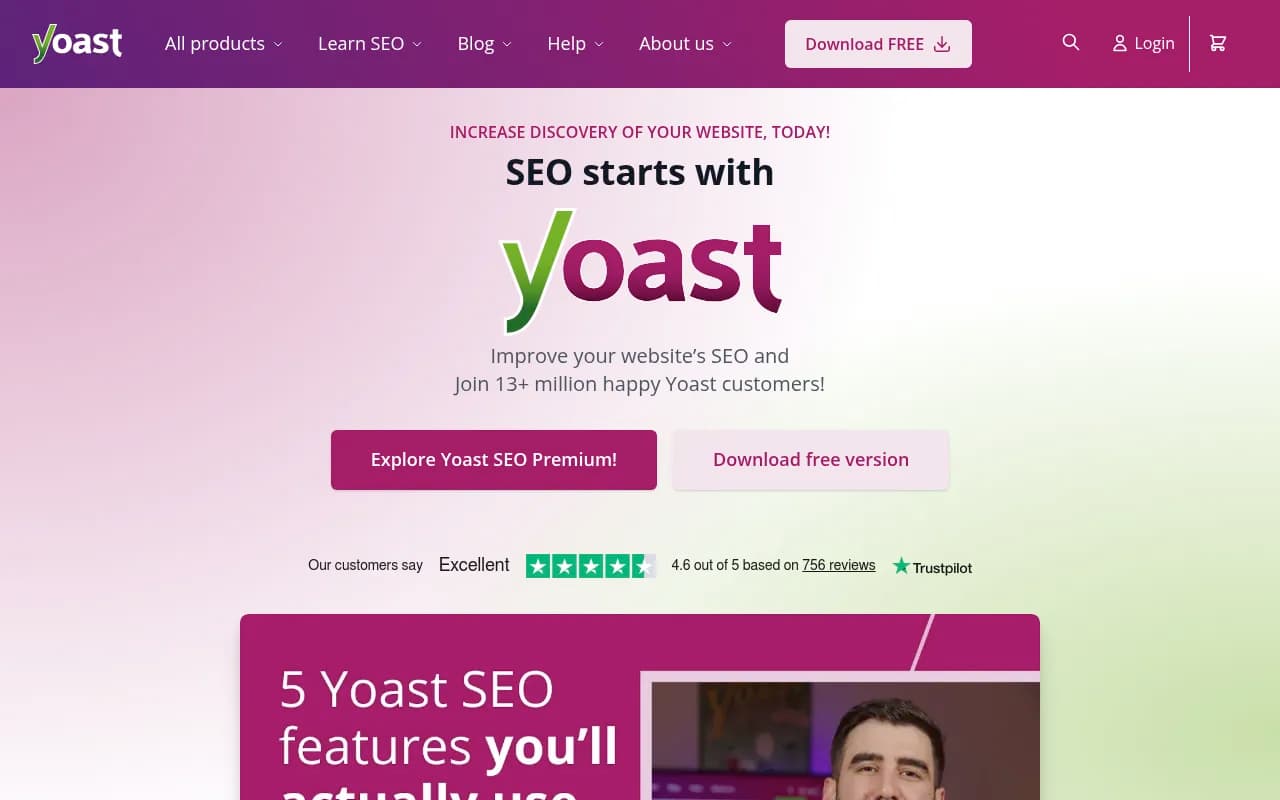
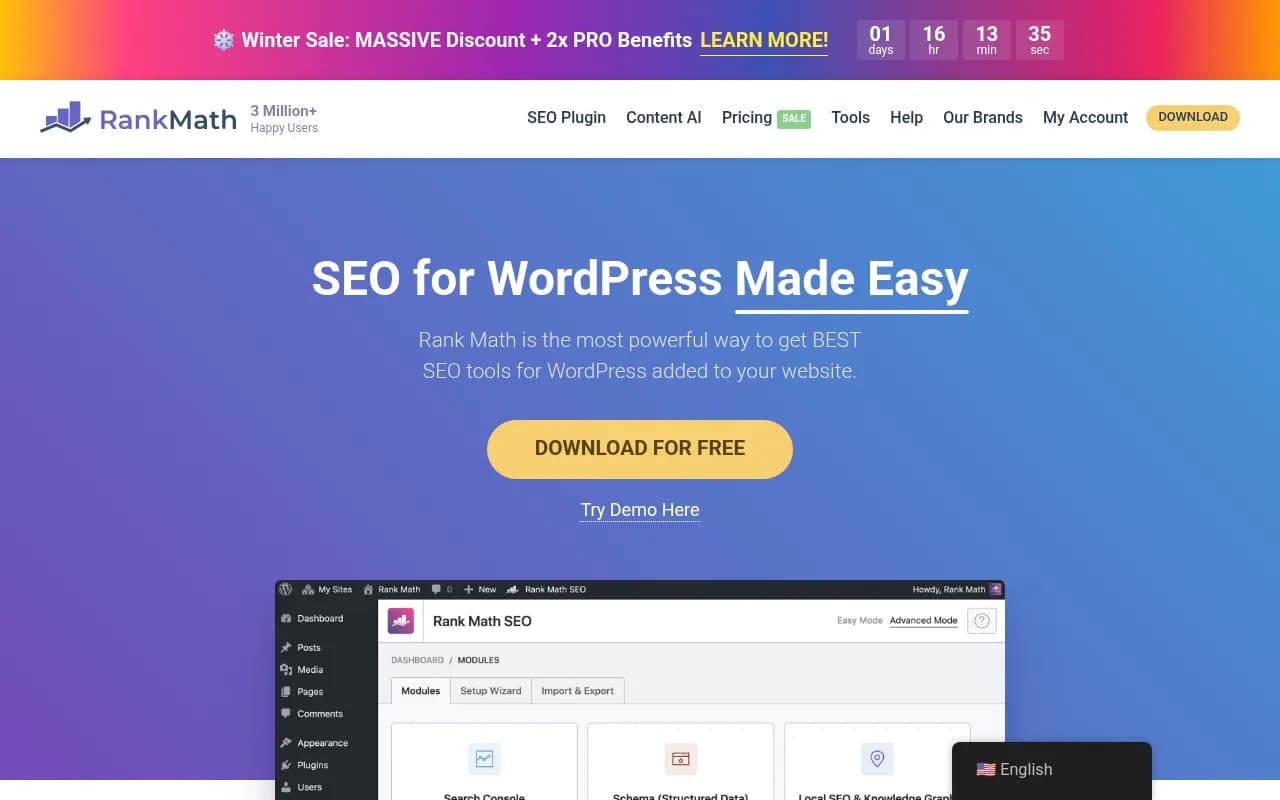
Schema markup (FAQ schema, HowTo schema, Product schema) helps AI crawlers understand what your content is about and how to categorize it. It's not a magic bullet, but it removes ambiguity. If you're on WordPress, plugins like Yoast SEO or Rank Math make this straightforward.
Keep sentences and paragraphs short
Long, complex sentences are harder for RAG systems to chunk cleanly. Short, declarative sentences extract better. This isn't about dumbing down your content — it's about making it machine-readable without sacrificing human readability.
Step 4: Make sure AI crawlers can actually access your site
This one surprises a lot of teams. You can have the best-structured content in your category and still get zero AI citations if AI crawlers are blocked from accessing your site.
Check your robots.txt file. The major AI crawlers have their own user agents:
- ChatGPT uses
GPTBot - Perplexity uses
PerplexityBot - Claude uses
ClaudeBot - Google's AI systems use
Google-Extended
If any of these are blocked in your robots.txt, those models can't read your content. This is a common mistake, especially for sites that copied a robots.txt from a template that blocked all non-Google bots.
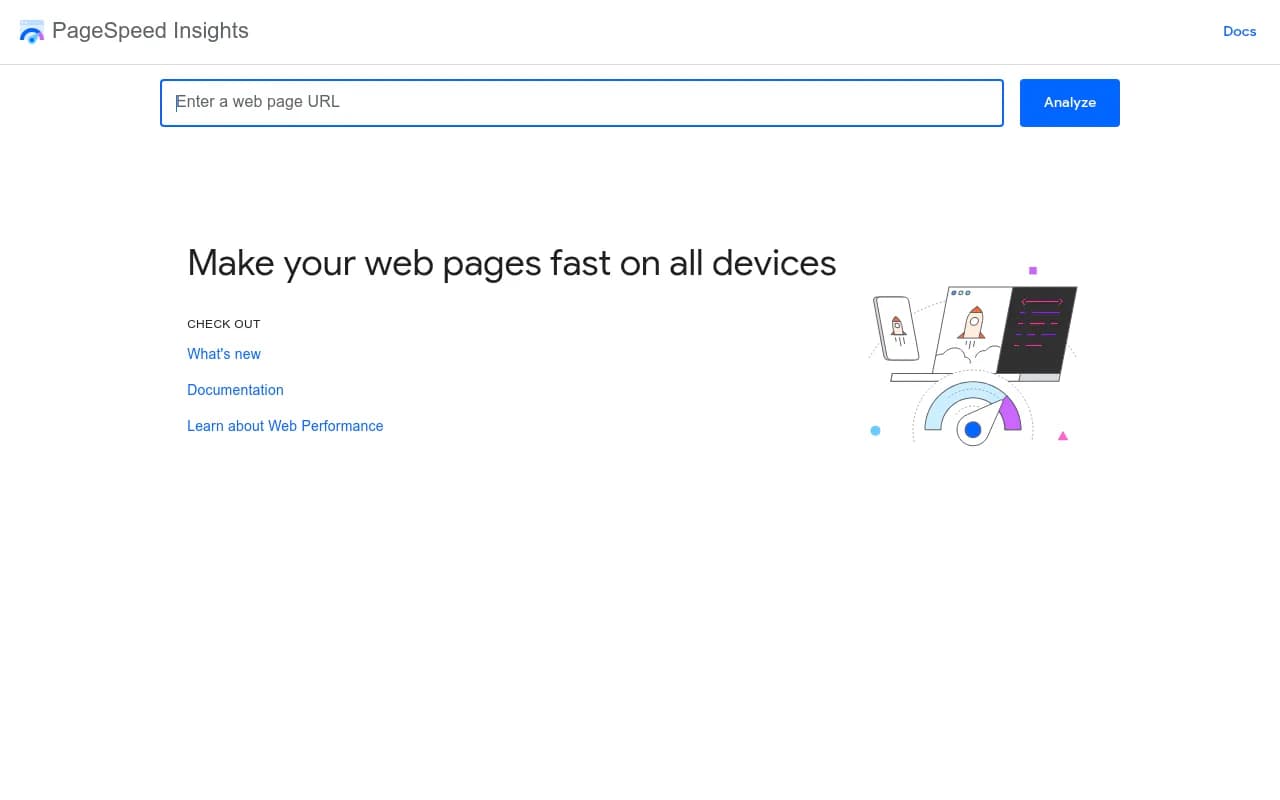
Beyond access, page speed matters. AI crawlers have the same patience as any other bot — slow pages get crawled less frequently. Run your core pages through Google PageSpeed Insights and fix the obvious issues.
Some platforms also offer AI crawler log monitoring, which shows you exactly which pages AI bots are visiting, how often, and whether they're hitting errors. This is genuinely useful data for understanding how AI models discover your content.
Step 5: Build third-party authority signals
Here's the part most content-focused strategies miss: AI models don't just cite your own website. They cite the broader web's consensus about your brand. Reviews, comparisons, Reddit discussions, YouTube videos, and industry publications all feed into what AI models "know" about you.
Exposure Ninja's research found that only 12% of ChatGPT citations come from the brand's own website. The other 88% comes from third-party sources. That means your off-site presence matters as much as your on-site content, maybe more.
Practical actions here:
- Get reviewed on G2, Capterra, Trustpilot, and category-specific review sites. AI models actively pull from these.
- Pursue digital PR placements in publications your category's AI models cite frequently. You can find these by running your priority prompts and noting which sources appear in citations.
- Encourage customers to discuss your product in relevant Reddit communities. Reddit discussions show up in AI citations more than most brands realize.
- Create YouTube content that answers the questions your customers ask. YouTube is a significant citation source for several AI models.
The goal is co-citation: your brand appearing alongside trusted sources and established players in your category, consistently, across multiple platforms. AI models treat consistent multi-source mentions as a signal of authority.
Step 6: Create content that fills your specific gaps
Once you know which prompts you're losing (from your audit in Step 1), you can create content specifically designed to win them.
The content types that perform best in AI search:
- Comparison pages ("X vs Y" and "alternatives to X") — these match high-intent buying prompts almost perfectly
- Best-of listicles that include your product alongside established competitors — being mentioned in a credible comparison signals category membership
- Direct answer articles that address a specific problem your target customer has
- FAQ pages with genuine, specific questions (not the generic "what is [your product]?" variety)
The key is grounding this content in what AI models actually want to cite, not what you think sounds good. That means looking at what's currently being cited for your target prompts and understanding what those sources have in common.
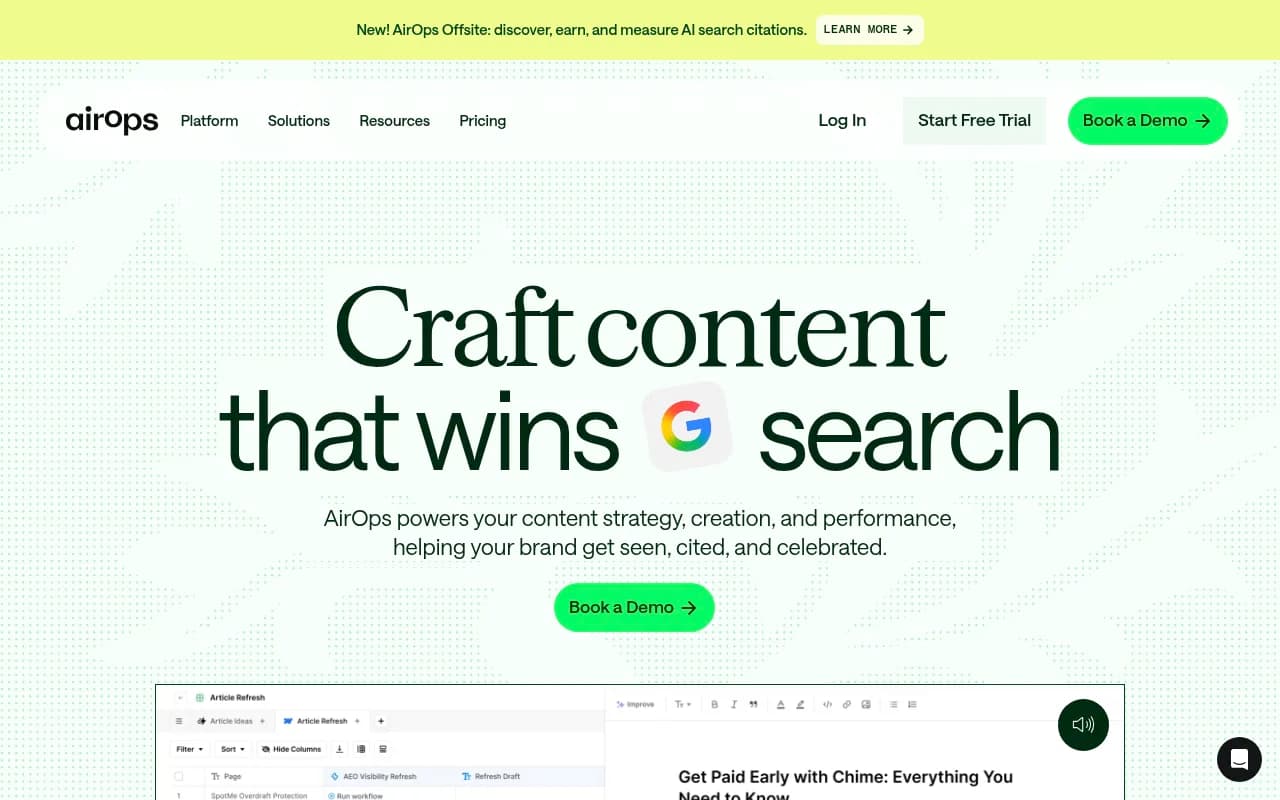
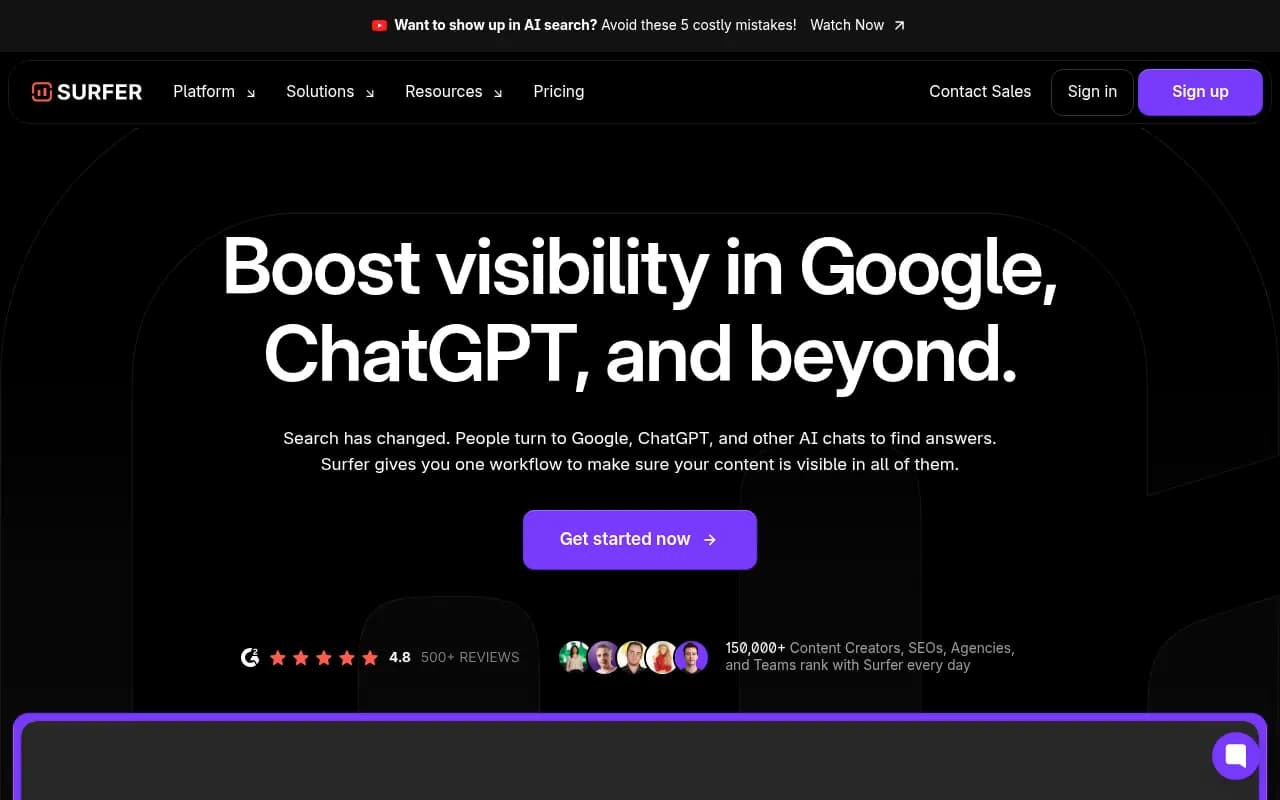
Tools like AirOps and Surfer SEO can help with content optimization and research.
If you're using a platform like Promptwatch, the Answer Gap Analysis feature does this automatically — it shows you which specific prompts competitors are visible for that you're not, and what content your site is missing to compete for them. The built-in AI writing agent then generates content grounded in actual citation data, not generic SEO templates.
Step 7: Set a refresh cadence and track results
AI search visibility isn't a set-and-forget project. AI models update their training data and retrieval indexes regularly. Content that gets you cited today might get displaced next quarter if a competitor publishes something more comprehensive.
Set a quarterly review cadence for your core pages. Update with new data, new examples, and new answers to questions that have emerged in your category. Freshness signals matter to AI crawlers the same way they matter to Google.
More importantly, track your visibility scores over time. You need to know whether the content you created in Step 6 actually moved the needle. Page-level tracking shows you exactly which pages are being cited, how often, and by which AI models.
Here's a simple tracking framework:
| Metric | What it tells you | Review frequency |
|---|---|---|
| Brand mention rate | How often your brand appears across tracked prompts | Weekly |
| Recommendation position | Where in the response your brand appears | Weekly |
| Prompt win rate | % of tracked prompts where you appear | Monthly |
| Competitor gap | Prompts competitors win that you don't | Monthly |
| Citation sources | Which pages are being cited | Monthly |
| Traffic from AI | Sessions attributed to AI search referrals | Monthly |
Several tools in the market track subsets of this. For the full picture including traffic attribution, you need something that connects AI visibility data to actual site analytics.
Otterly.AI

Profound

The tools landscape in 2026
The GEO/AEO tool market has grown fast. Here's how the main categories break down:
| Tool type | What it does | What it misses |
|---|---|---|
| Monitoring-only (Otterly.AI, Peec.ai) | Tracks brand mentions across AI models | No content gap analysis, no content generation |
| Enterprise trackers (Profound, AthenaHQ) | Deeper tracking with sentiment analysis | Higher price points, limited content optimization |
| Full-loop platforms (Promptwatch) | Audit + gap analysis + content generation + tracking | Nothing significant — this is the complete cycle |
| Traditional SEO with AI add-ons (Semrush, Ahrefs) | Familiar interface, some AI tracking | Fixed prompts, no AI traffic attribution |


The distinction that matters most is whether a tool helps you act on what it finds. Knowing you're invisible for 40 prompts is useful. Knowing exactly what content to create to fix that, and then being able to create it, is what actually moves the metric.
What actually moves the needle
Based on what's working across brands in 2026, the highest-impact actions in rough priority order:
- Fix AI crawler access in robots.txt (immediate, zero-cost, often overlooked)
- Restructure existing high-traffic pages with direct answers and Q&A formatting
- Build or expand comparison and alternative pages for your category
- Get reviewed on the major review platforms AI models cite
- Create content that directly addresses the prompt gaps your competitors are winning
- Pursue digital PR placements in publications that appear in your category's AI citations
- Track visibility scores and close the loop with traffic attribution
None of this requires a complete content overhaul. Most brands can make meaningful progress by restructuring existing pages and filling two or three specific content gaps. The audit tells you which gaps matter most.
The brands winning in AI search right now aren't necessarily the ones with the most content. They're the ones whose content is structured to be extracted, cited by credible third parties, and consistently updated. That's a solvable problem — you just need a system to work through it.
Start with the audit. Everything else follows from knowing where you actually stand.