Summary
- AI search visibility is the new SEO: Traditional rankings matter less when ChatGPT, Perplexity, and Google AI Overviews answer questions directly. You need to understand how to get cited in AI responses, not just rank on page one.
- Technical skills still matter, but differently: Site performance, indexing, and structured data are table stakes. The new frontier is AI crawler logs, citation analysis, and understanding how LLMs discover and consume your content.
- Content creation is evolving: Writing for humans is still critical, but you also need to write for AI models. That means understanding search intent at a deeper level, creating content that answers specific questions, and optimizing for citations instead of clicks.
- Data analysis beats guesswork: SEO professionals who can interpret AI visibility data, track citation patterns, and connect AI traffic to revenue will outlast those who rely on intuition.
- Adaptability is non-negotiable: The AI search landscape changes every few months. The skill that matters most is learning fast and adjusting your strategy before your competitors do.
The shift from traditional SEO to AI search optimization
SEO in 2026 looks nothing like it did three years ago. Google still exists, but a growing percentage of searches never touch a search engine. People ask ChatGPT for restaurant recommendations, use Perplexity to research software tools, and trust Claude to summarize complex topics. When someone searches "best project management tools for small teams," they might get an AI-generated answer with three recommendations -- and your brand either makes that list or it doesn't.
This isn't a future scenario. It's happening now. According to research from Search Engine Land, AI search visibility is already shaping how brands think about discoverability. The SEO professionals who survive the next four years are the ones who understand this shift and act on it.
Traditional SEO focused on ranking signals: backlinks, keyword density, page speed, domain authority. AI search optimization (often called Generative Engine Optimization or GEO) focuses on citation signals: which sources AI models trust, how often your content gets referenced, and whether your brand appears in AI-generated answers. The metrics are different. The strategies are different. The tools are different.
Core technical skills that still matter
Some fundamentals never go away. AI search engines still crawl websites. They still care about site performance. They still need clean, indexable content. If your site is slow, broken, or impossible to crawl, no amount of AI optimization will save you.
Site performance and Core Web Vitals
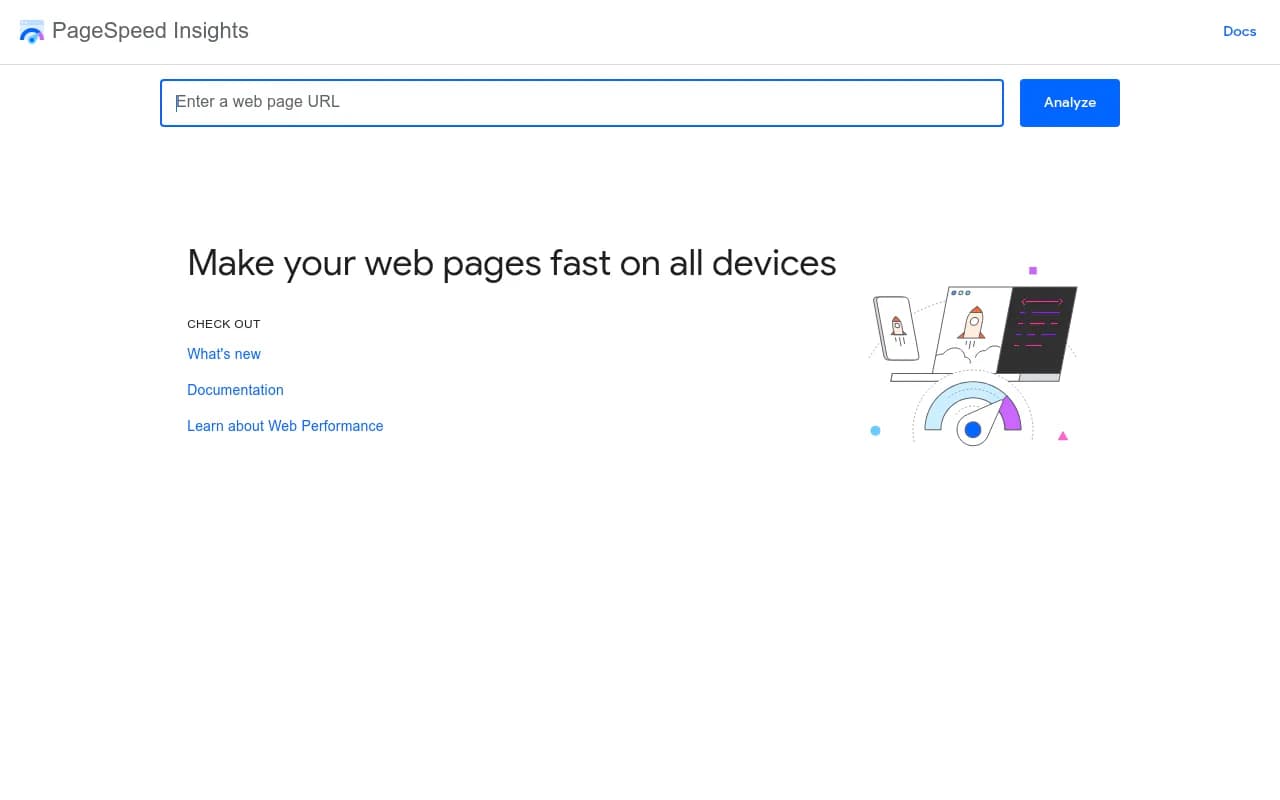
AI models don't wait for slow pages to load. If your site takes five seconds to render, the crawler moves on. Core Web Vitals -- Largest Contentful Paint, First Input Delay, Cumulative Layout Shift -- matter as much in 2026 as they did in 2021. Tools like GTmetrix and Google PageSpeed Insights are still essential.

Structured data and schema markup
AI models love structured data. Schema markup tells them exactly what your content is about: product details, reviews, FAQs, events, recipes. If you're not using schema in 2026, you're invisible to AI search. This isn't optional anymore.
Indexing and crawlability
AI crawlers behave differently than Googlebot. They read JavaScript differently. They prioritize different content types. Understanding how ChatGPT's crawler (GPTBot), Perplexity's crawler, and Claude's crawler interact with your site is a new technical skill. Tools that monitor AI crawler logs -- like Promptwatch -- show you exactly which pages AI models are reading, how often they return, and what errors they encounter.

The new skill: AI visibility tracking and citation analysis
You can't optimize what you don't measure. Traditional SEO had Google Search Console and rank trackers. AI search optimization has visibility tracking platforms that show you where your brand appears in AI-generated responses.
This is the skill gap separating SEO professionals who adapt from those who don't. You need to know:
- Which prompts trigger mentions of your brand
- Which competitors get cited instead of you
- Which pages on your site AI models reference most often
- Which sources (Reddit threads, YouTube videos, competitor blogs) influence AI recommendations
- How your visibility changes over time across different AI models
Platforms like Promptwatch track all of this. They show you the exact prompts where you're invisible, the content gaps you need to fill, and the citation patterns that determine whether ChatGPT recommends you or your competitor.

Otterly.AI


Most AI visibility trackers just show you data. They tell you where you're not showing up but leave you stuck figuring out what to do about it. The platforms that help you take action -- identifying content gaps, generating optimized content, and tracking the results -- are the ones that matter.
Content creation for AI search: writing for citations, not clicks
Writing for AI search is different. You're not optimizing for a keyword. You're optimizing for a question. AI models cite sources that directly answer specific queries with clear, factual information. Vague marketing copy doesn't get cited. Thin content doesn't get cited. Content that dances around the answer doesn't get cited.
Here's what works:
Answer questions directly and completely
AI models scan for answers. If someone asks "What's the best CRM for small businesses?", your content needs to answer that question in the first paragraph. Not after 500 words of fluff. Not buried in the middle of a 3,000-word guide. Right at the top.
Use clear structure with headings and lists
AI models parse content better when it's well-structured. Use H2 and H3 headings that match common questions. Use bulleted lists for features, pros, and cons. Use tables for comparisons. Make it easy for an AI to extract the information it needs.
Cite your sources
AI models trust content that cites credible sources. Link to research, case studies, official documentation, and authoritative websites. This signals that your content is factual and trustworthy.
Create content for specific prompts
Traditional SEO targeted keywords. AI search optimization targets prompts. Instead of optimizing for "project management software," you optimize for "What's the best project management tool for remote teams under 10 people?" Tools like Promptwatch show you the exact prompts your competitors rank for -- and the ones you're missing.

Understanding AI crawler behavior and logs
AI crawlers don't behave like Googlebot. They read your site differently. They prioritize different content. They return at different intervals. Understanding this behavior is a technical skill that separates junior SEOs from senior ones.
AI crawler logs show you:
- Which pages AI models crawl most frequently
- Which pages they ignore entirely
- Errors they encounter (404s, timeouts, JavaScript rendering issues)
- How often they return to check for updates
- Which content types they prioritize (blog posts, product pages, FAQs)
This data tells you what's working and what's broken. If ChatGPT crawls your competitor's blog every day but only hits your homepage once a week, that's a signal. If Perplexity can't render your JavaScript-heavy product pages, that's a problem you can fix.
Promptwatch includes real-time AI crawler logs that show exactly how ChatGPT, Claude, Perplexity, and other AI models interact with your website. Most competitors don't offer this feature at all.

Data analysis: connecting AI visibility to revenue
Tracking AI visibility is pointless if you can't connect it to business outcomes. The SEO professionals who thrive in 2026-2030 are the ones who can say: "We increased our ChatGPT citation rate by 40%, which drove 12,000 new visitors and $180K in revenue."
This requires:
- Traffic attribution: knowing which visitors came from AI search engines
- Conversion tracking: measuring how AI-driven traffic converts compared to Google traffic
- Citation-to-revenue mapping: understanding which prompts drive the most valuable traffic
Some platforms integrate with Google Search Console or use server log analysis to track AI-driven traffic. Others provide a code snippet you add to your site. Either way, you need this data to prove ROI and justify your AI search optimization budget.
Prompt intelligence: understanding search intent at scale
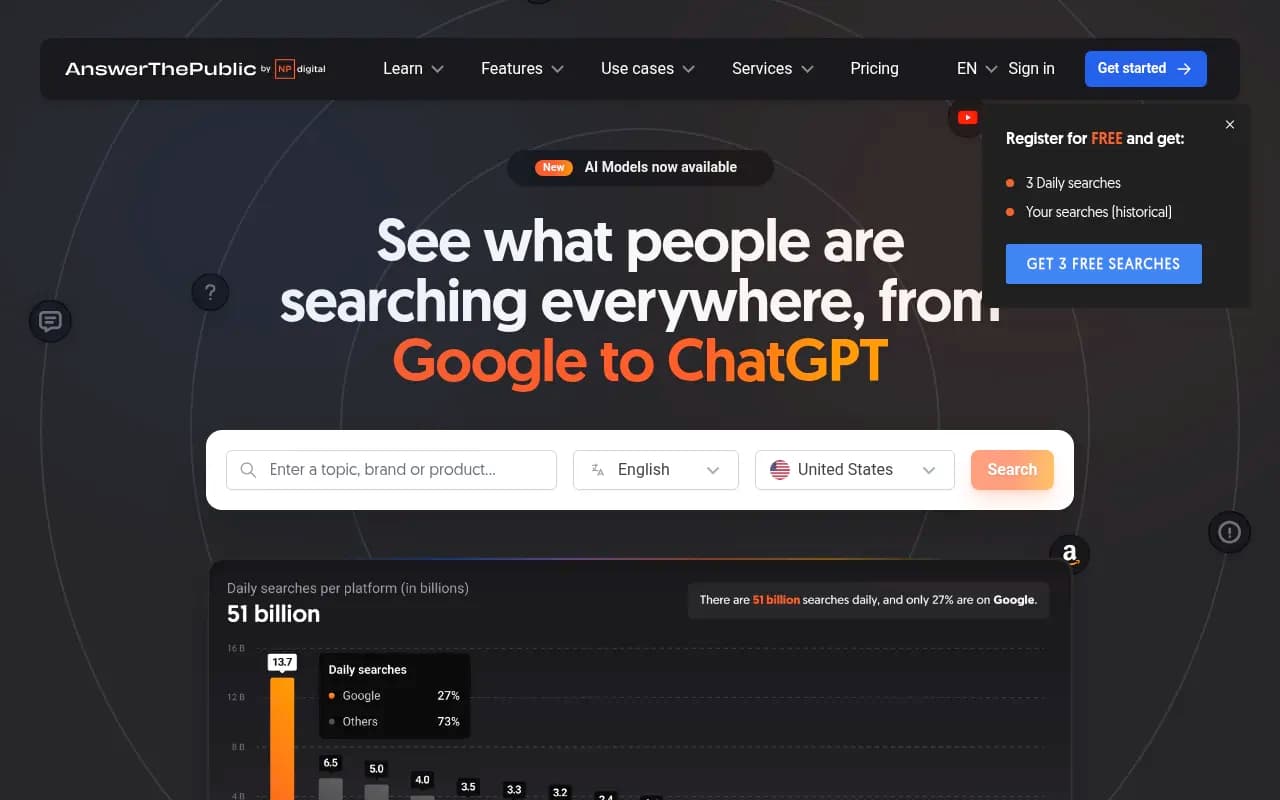
Keyword research is dead. Prompt research is the new frontier. Instead of targeting "best CRM," you need to understand the 50 different ways people ask that question:
- "What CRM should I use for a 5-person sales team?"
- "Best CRM for real estate agents in 2026"
- "CRM with the easiest onboarding for non-technical users"
- "Affordable CRM alternatives to Salesforce"
Each prompt has different intent. Each prompt triggers different AI responses. Each prompt represents a different opportunity.
Prompt intelligence tools show you:
- Volume estimates for each prompt (how many people are asking this question)
- Difficulty scores (how hard it is to get cited for this prompt)
- Query fan-outs (how one prompt branches into related sub-queries)
- Competitor analysis (who's getting cited for each prompt and why)
This data tells you which prompts to prioritize. High-volume, low-difficulty prompts are your quick wins. High-value, high-difficulty prompts are your long-term investments.
Competitor citation analysis: learning from what works
Your competitors are already getting cited by AI models. The question is: why? What content do they have that you don't? What sources do they cite? What questions do they answer that you ignore?
Citation analysis tools show you:
- Which domains AI models cite most often for specific topics
- Which pages on competitor sites get referenced
- Which Reddit threads, YouTube videos, and third-party sources influence AI recommendations
- Gaps in your content compared to competitors
This isn't about copying competitors. It's about understanding the content landscape and identifying opportunities. If your competitor gets cited for "best email marketing tools for e-commerce" and you don't, that's a content gap you can fill.
Multi-model optimization: one strategy doesn't fit all
ChatGPT, Perplexity, Claude, Gemini, and Google AI Overviews all behave differently. They cite different sources. They prioritize different content types. They update at different frequencies. Optimizing for one doesn't automatically optimize for all.
SEO professionals in 2026 need to understand:
- Which AI models their target audience uses most
- How each model's citation behavior differs
- Which models prioritize Reddit discussions vs. official documentation vs. blog posts
- How to track visibility across all models simultaneously
Platforms like Promptwatch monitor 10+ AI models at once, showing you where you're visible and where you're not. This cross-model visibility is critical because your customers don't just use one AI assistant.
| AI Model | Citation Behavior | Content Preferences | Update Frequency |
|---|---|---|---|
| ChatGPT | Prefers authoritative sources, official docs | Long-form guides, technical documentation | Weekly |
| Perplexity | Real-time web search, cites recent content | News articles, blog posts, Reddit threads | Real-time |
| Claude | Favors detailed, well-structured content | In-depth articles, research papers | Bi-weekly |
| Google AI Overviews | Prioritizes Google-indexed content | High-authority domains, featured snippets | Daily |
| Gemini | Integrates with Google services | YouTube videos, Google Docs, official sites | Daily |
Profound

Reddit and YouTube optimization: the hidden citation sources
AI models don't just cite your website. They cite Reddit threads. They cite YouTube videos. They cite Quora answers. If you're not optimizing for these platforms, you're missing a huge piece of the AI search puzzle.
Reddit discussions often rank higher in AI responses than official brand websites. Why? Because AI models trust authentic user conversations. A Reddit thread titled "What's the best budgeting app that actually works?" with 200 upvotes and detailed user experiences carries more weight than a generic landing page.
YouTube videos work the same way. AI models cite video transcripts. If your competitor has a YouTube tutorial explaining how to use their product, and you don't, they get cited and you don't.
The skill here is understanding which Reddit communities and YouTube channels influence AI recommendations in your niche -- and either participating in those conversations or creating content that gets referenced.
Learning to use AI content generation tools (without losing quality)
AI writing tools are everywhere. ChatGPT, Jasper, Copy.ai, Writesonic -- they all promise to generate SEO-optimized content in seconds. The problem: most AI-generated content is generic, shallow, and doesn't get cited by AI search engines.
The skill isn't using AI to write content. The skill is using AI to research, outline, and draft content that you then refine into something genuinely useful. AI tools can:
- Analyze competitor content and identify gaps
- Generate outlines based on top-ranking pages
- Draft initial versions of articles that you edit and improve
- Optimize existing content for specific prompts
But they can't replace human judgment, expertise, and editing. SEO professionals who treat AI writing tools as assistants (not replacements) will produce better content faster. Those who publish raw AI output will get ignored.


Adaptability: the meta-skill that matters most
Every skill listed above will evolve between now and 2030. New AI models will launch. Citation algorithms will change. New platforms will emerge. The SEO professionals who survive aren't the ones who master a fixed set of skills -- they're the ones who learn fast and adapt.
This means:
- Following AI search industry news and updates
- Testing new strategies and measuring results
- Joining communities where SEO professionals share what's working
- Experimenting with new tools and platforms before they become mainstream
- Being willing to abandon tactics that stop working
The LinkedIn article on AI skills for 2026 emphasizes this point: "AI skills in 2026 are no longer about knowing concepts on paper. What really matters today is the ability to use AI to solve real problems at work." The same applies to SEO. Knowing theory doesn't matter if you can't apply it.

Building a personal brand in the AI search era
SEO professionals with strong personal brands will have more opportunities in 2026-2030. Why? Because companies hiring for AI search optimization roles need proof you understand this space. A resume listing "SEO experience" means nothing when the job requires GEO expertise.
Building a personal brand means:
- Publishing case studies showing how you improved AI visibility for clients
- Sharing insights on LinkedIn, Twitter, or your own blog
- Speaking at conferences or hosting webinars on AI search optimization
- Contributing to open-source tools or writing guides that help others learn
This isn't optional. When every SEO professional claims they "understand AI search," the ones who can prove it with public work will win.
Practical steps to start future-proofing your SEO career today
You don't need to master every skill overnight. Start with these concrete actions:
-
Set up AI visibility tracking: Use a platform like Promptwatch to see where your brand (or your client's brand) currently appears in AI search results. Identify the biggest gaps.
-
Audit your content for AI citations: Look at your top-performing blog posts and ask: "Would an AI model cite this?" If the answer is no, rewrite it to answer specific questions more directly.
-
Monitor AI crawler logs: Check which pages AI models are crawling and which they're ignoring. Fix technical issues that block AI crawlers.
-
Research competitor citations: Use citation analysis tools to see which competitors get mentioned by AI models and why. Identify content gaps you can fill.
-
Create prompt-optimized content: Pick 5-10 high-value prompts where you're currently invisible. Write content specifically designed to answer those prompts.
-
Track AI-driven traffic: Set up attribution to measure how much traffic comes from AI search engines and how it converts.
-
Join AI search communities: Follow industry leaders, join Slack groups or Discord servers, and stay updated on what's changing.
-
Experiment with AI writing tools: Use AI to speed up research and drafting, but always edit and refine the output.
-
Optimize for Reddit and YouTube: Identify which Reddit threads and YouTube videos AI models cite in your niche. Participate in those conversations or create competing content.
-
Document your results: Track what works, measure ROI, and build case studies you can share publicly.
The bottom line
SEO isn't dying. It's evolving. The professionals who future-proof their careers are the ones who understand that AI search is the new frontier -- and who build the skills to dominate it. Traditional SEO knowledge still matters, but it's no longer enough. You need to understand AI visibility, citation patterns, prompt intelligence, and how to create content that AI models trust and reference.
The next four years will separate SEO professionals who adapt from those who don't. The skills that matter in 2026-2030 are the ones that help brands get discovered in AI search engines, not just Google. Start building them now.