Key takeaways
- ChatGPT and other AI search engines pull from authority signals, entity mentions, and well-structured content -- not just backlinks and keyword density
- Most of the tactics that move the needle in AI search are free or very cheap: structured content, FAQ pages, Reddit presence, directory listings, and schema markup
- You don't need to guess which prompts to target -- free tools exist to surface what people are actually asking AI engines
- Tracking your AI visibility doesn't require an enterprise contract; several tools offer free tiers or affordable entry plans
- The brands winning in AI search right now are the ones creating clear, factual, citable content -- not the ones with the biggest budgets
Gartner predicted that traditional search volume would drop 25% by 2026. That number is looking accurate. More people are opening ChatGPT, Perplexity, or Google's AI Mode before they ever touch a search results page. And when they ask "what's the best [your category] tool for [use case]," you either show up or you don't.
The frustrating part? Most advice about ranking in AI search assumes you have money to spend. Enterprise platforms, agency retainers, content teams. If your budget just got cut -- or never existed in the first place -- that advice doesn't help.
Here's what actually does.
The good news is that AI search visibility is more about clarity and credibility than it is about budget. A small brand with well-structured, authoritative content can outrank a large competitor in ChatGPT. That's not a motivational claim -- it's how the underlying system works.
Let's get into the tactics.
Tactic 1: Write content that directly answers specific questions
ChatGPT doesn't rank pages the way Google does. It retrieves information from content it finds credible, then synthesizes an answer. The content most likely to get cited is content that clearly, directly answers a specific question.
That means writing articles structured around a single question. Not "The Complete Guide to Email Marketing" but "What's the best email marketing tool for a Shopify store with under 1,000 subscribers?" The more specific the question, the less competition -- and the more useful the answer is to the AI model trying to synthesize a response.
Practically, this looks like:
- One article per question (not one article covering 20 loosely related topics)
- The answer in the first paragraph, not buried after 400 words of preamble
- Clear subheadings that mirror how someone would phrase a follow-up question
- Concrete facts, numbers, and comparisons -- not vague claims
This costs nothing but time.
Tactic 2: Build out a proper FAQ section
FAQ pages are underrated for AI visibility. When ChatGPT processes a query, it's essentially looking for content that matches the structure of a question-and-answer exchange. A well-built FAQ page is exactly that.
The key is making the questions realistic. Pull them from:
- Google's "People Also Ask" results for your topic
- Reddit threads in your niche
- Questions your customers actually ask in sales calls or support tickets
- Tools like AnswerThePublic (free tier available) or AlsoAsked
Each FAQ entry should have a complete, standalone answer -- not "see above" or a one-liner. AI models pull these as discrete chunks of information.
Tactic 3: Get listed in the directories AI models already cite
This is one of the highest-leverage free tactics available right now. AI models like ChatGPT are trained on data from specific sources they've learned to trust: G2, Capterra, Trustpilot, Crunchbase, LinkedIn, and various industry-specific directories.
If your brand isn't listed in these places -- or if your listings are thin and incomplete -- you're missing a major citation signal.
Free or low-cost directories worth prioritizing:
- G2 (free basic listing)
- Capterra (free listing)
- Crunchbase (free basic profile)
- Trustpilot (free plan available)
- LinkedIn Company Page
- Product Hunt
- Industry-specific directories in your niche
Fill out every field. Write a complete description that uses natural language to describe what you do, who you serve, and what problems you solve. These descriptions get pulled directly into AI training data and retrieval systems.
Tactic 4: Earn mentions on Reddit (without being spammy)
Reddit is one of the most cited sources across ChatGPT, Perplexity, and other AI models. When someone asks ChatGPT for a recommendation, there's a good chance the answer is partly synthesized from Reddit discussions.
You don't need to pay for Reddit ads. What you need is genuine participation in relevant subreddits. That means:
- Answering questions in your area of expertise (without pitching your product every time)
- Sharing useful resources, including your own content when it's genuinely relevant
- Building a history of helpful contributions so your brand name appears naturally in threads
When your brand gets mentioned positively in Reddit discussions -- especially in threads that rank well -- those mentions feed into what AI models learn about you.
This takes time, not money. And it compounds.
Tactic 5: Add structured data (schema markup) to your site
Schema markup is free to implement and directly helps AI crawlers understand what your content is about. The most relevant schema types for AI visibility are:
FAQPageschema (wraps your FAQ content)Articleschema (signals that a page is an authoritative piece of content)Organizationschema (establishes your brand's identity, location, and contact info)HowToschema (for step-by-step content)Productschema (for product pages)
If you're on WordPress, plugins like Yoast SEO or Rank Math handle most of this without writing a line of code.
For non-WordPress sites, Google's Structured Data Markup Helper is free and generates the JSON-LD code you need to paste into your pages.
Tactic 6: Publish comparison and "best of" content
AI models are frequently asked questions like "what's the best tool for X" or "how does A compare to B." The content that gets cited in these responses is almost always comparison articles and listicles.
This type of content is free to create and tends to attract citations because it's exactly what the AI is trying to synthesize. A few formats that work well:
- "[Your product] vs [Competitor]: Which is better for [specific use case]?"
- "Best [category] tools for [specific audience] in 2026"
- "[Category] alternatives to [well-known tool]"
Be honest in these comparisons. AI models are getting better at detecting promotional fluff, and readers can tell immediately when a comparison article is just a sales pitch. Include real trade-offs, real pricing, and real limitations.
Tactic 7: Optimize for entity recognition
AI models don't just process keywords -- they recognize entities. An entity is a named thing: a brand, a person, a product, a location. The more consistently your brand is mentioned across the web in context, the more likely AI models are to recognize it as a credible entity and include it in relevant responses.
Practical ways to build entity recognition for free:
- Consistent NAP (name, address, phone) across all listings
- Author bylines on every article you publish (with a linked author bio)
- Mention your brand name naturally in your own content (not keyword stuffing -- just using your name the way a real company would)
- Get quoted in industry publications, even small ones
- Contribute guest posts that include a byline linking back to your site
The goal is for your brand name to appear repeatedly, across diverse sources, in relevant contexts. That's what builds entity trust.
Tactic 8: Use free tools to find the prompts worth targeting
One of the biggest mistakes people make with AI search optimization is targeting the wrong prompts. They optimize for broad, competitive queries when there are specific, lower-competition prompts where they could actually win.
A few free or low-cost ways to find better targets:
- Type your topic into ChatGPT and look at the follow-up questions it suggests
- Use Google Keyword Planner to find question-format queries with moderate volume
- Browse QuestionDB or AnswerThePublic for real questions people ask
- Search Reddit for threads in your niche and note the specific questions people ask repeatedly
Once you have a list of specific prompts, you can prioritize by asking: "If someone asked this exact question to ChatGPT, do we have a page that answers it clearly?" If not, that's a content gap worth filling.
For teams that want to go deeper on this, Promptwatch has an Answer Gap Analysis feature that shows exactly which prompts competitors are visible for but you're not -- useful when you're ready to move beyond manual research.

Tactic 9: Track what's working (without paying enterprise prices)
You can't improve what you don't measure. But you also don't need to spend $500/month to know whether your AI visibility is improving.
A few low-cost options worth knowing about:
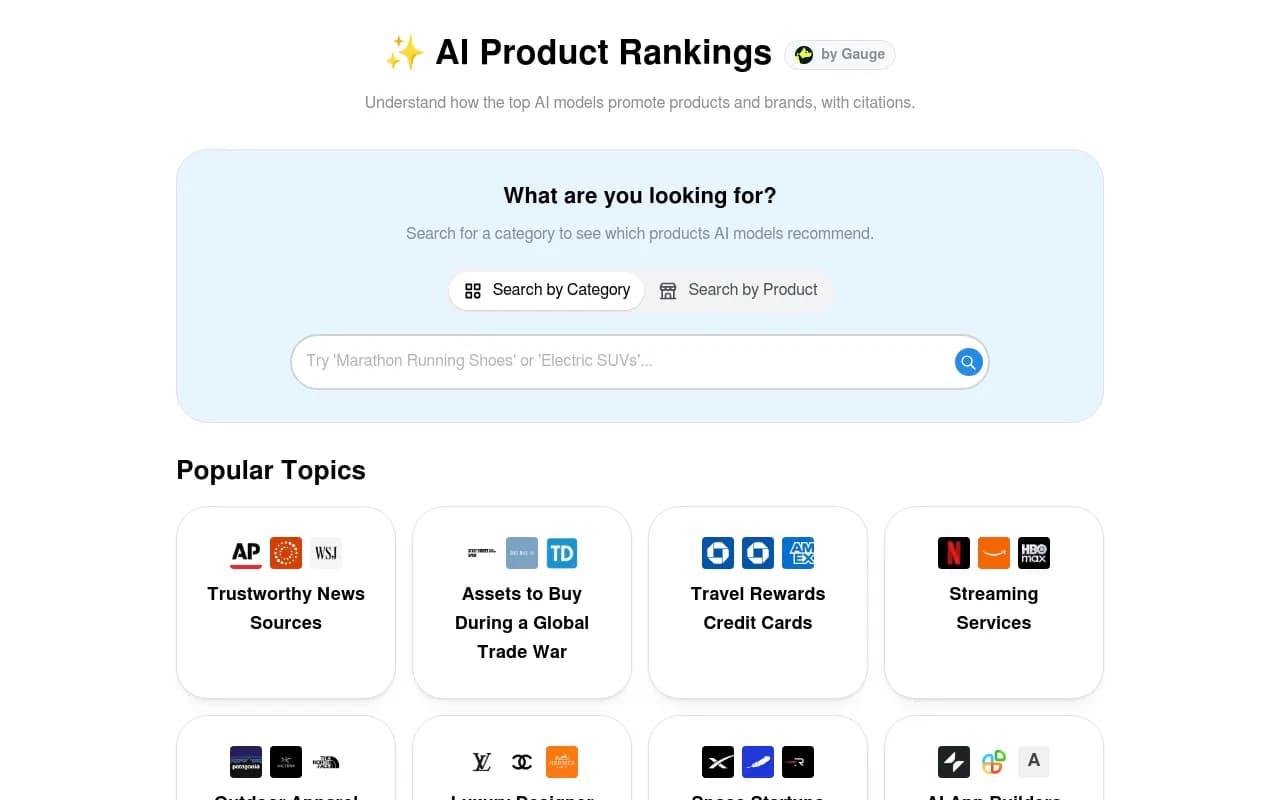
ProductRank has a free tier for basic AI search monitoring.
Peec AI offers entry-level AI visibility tracking across ChatGPT, Perplexity, and Claude.

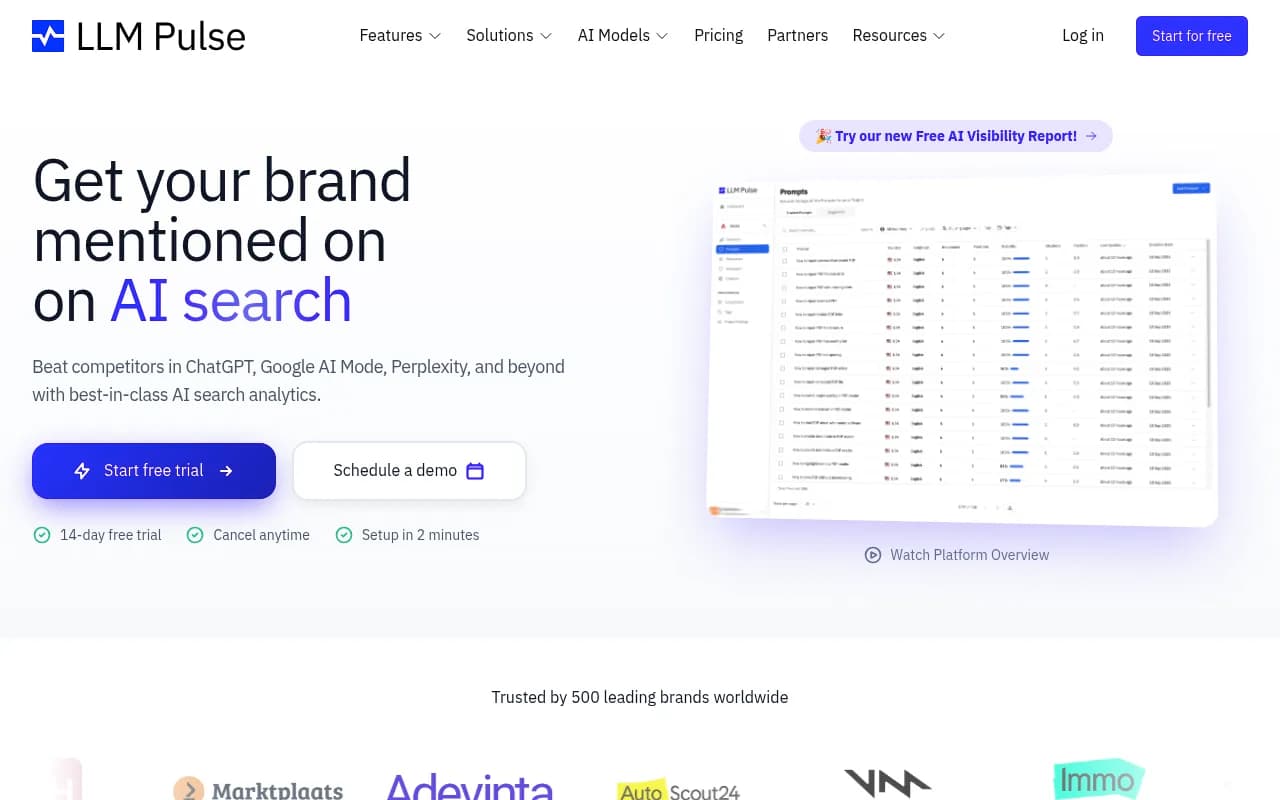
LLM Pulse tracks brand mentions across AI search engines with affordable pricing.
At minimum, do this manually once a week: open ChatGPT, Perplexity, and Google AI Mode, and ask the 5-10 prompts most relevant to your business. Screenshot the results. Note whether you appear, where you appear, and who else appears. This takes 20 minutes and costs nothing.
As your budget grows, a platform like Promptwatch can automate this across 10+ AI models, track changes over time, and show you which pages are actually being cited. But manual monitoring is a legitimate starting point.
How these tactics compare
| Tactic | Cost | Time to implement | Impact timeline |
|---|---|---|---|
| Question-focused content | Free | 2-4 hours per article | 4-8 weeks |
| FAQ pages with schema | Free | 1-2 hours | 2-4 weeks |
| Directory listings | Free | 2-3 hours total | 4-12 weeks |
| Reddit participation | Free | Ongoing (30 min/week) | 8-16 weeks |
| Schema markup | Free | 1-2 hours | 2-4 weeks |
| Comparison/best-of content | Free | 3-5 hours per article | 4-8 weeks |
| Entity building | Free | Ongoing | 8-24 weeks |
| Prompt research | Free-$30/mo | 1-2 hours/month | Immediate insight |
| AI visibility tracking | Free-$99/mo | 1 hour setup | Immediate insight |
What to prioritize if you have very limited time
If you can only do two things, do these:
First, audit your existing content and identify which pages directly answer specific questions. Rewrite the ones that bury the answer or use vague language. Add FAQ schema to any page that has a question-and-answer structure. This is the fastest path to improving citeability with zero new content.
Second, claim and complete your listings on G2, Capterra, and Crunchbase. These three sources carry significant weight in AI training data and retrieval. A complete, well-written listing on each of these costs nothing and can meaningfully improve how AI models describe your brand.
Everything else on this list is worth doing, but those two will move the needle fastest.
A note on patience
AI search visibility doesn't update in real time. ChatGPT's training data has a cutoff, and even its retrieval-augmented responses take time to incorporate new content. Most of the tactics above will take 4-12 weeks to show measurable results.
That's not a reason to wait -- it's a reason to start now. The brands that are visible in AI search today started working on this 6-12 months ago. The brands that will be visible in late 2026 are the ones building their content and entity signals right now.
Budget constraints are real, but they're not the bottleneck here. Clarity, consistency, and citable content are what AI models reward -- and none of those require a big budget to produce.