Key takeaways
- Surfer SEO is the most complete workflow tool: content editor, SERP analysis, keyword research, and AI writing in one place, making it the best fit for SEO-led teams who want a single workspace.
- Clearscope is the precision instrument for editorial teams that care about content quality and NLP accuracy, but it costs significantly more and does less outside of the content editor.
- Frase wins on research speed: its ability to pull competitor content and generate briefs quickly makes it the go-to for teams producing high volumes of content fast.
- None of these three tools track AI search visibility. They optimize for Google rankings, not for whether your brand shows up in ChatGPT, Perplexity, or Gemini answers.
- If AI search visibility matters to your business (and in 2026, it should), you need a separate layer on top of any of these tools.
There's a version of this comparison that just lists features in a table and calls it a day. This isn't that. Surfer SEO, Clearscope, and Frase are genuinely different tools with different philosophies, and picking the wrong one costs you real money and real time.
What makes this comparison interesting in 2026 is the context these tools are operating in. Google still matters. But a growing chunk of search behavior has shifted to ChatGPT, Perplexity, Gemini, and Google's own AI Mode. These tools were all built to help you rank on Google. That's still valuable. But it's worth being honest about what they can and can't do before you commit.
Let's get into it.
What each tool actually does
Before comparing them head-to-head, it helps to understand what each tool is actually trying to solve. They're often lumped together as "content optimization tools," but they approach the problem differently.
Surfer SEO: the workflow platform
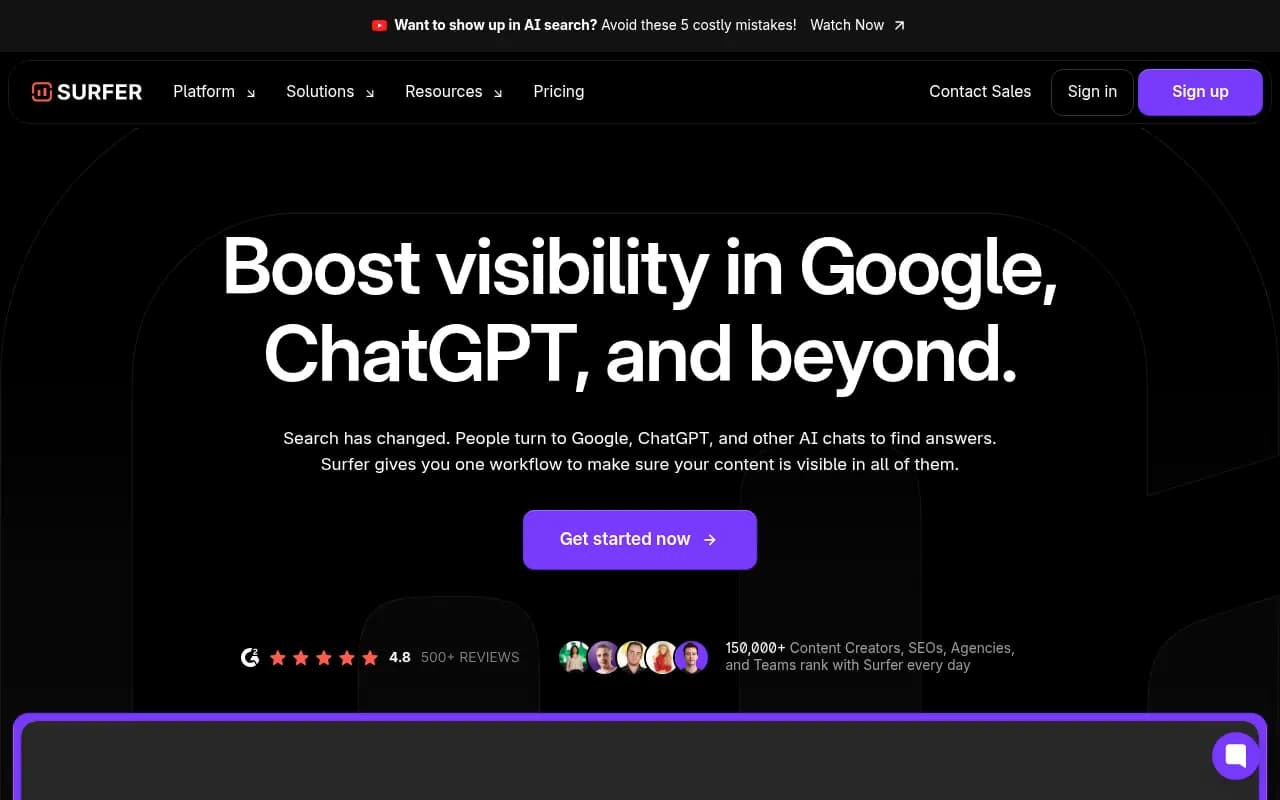
Surfer SEO is built around a content editor that scores your draft in real time against the top-ranking pages for your target keyword. It pulls NLP terms, checks word count, heading structure, image density, and semantic coverage, then gives you a Content Score. The higher the score, the more closely your content mirrors what's already ranking.
What makes Surfer different from the others is scope. It's not just a content editor. It includes keyword research, a SERP analyzer, a site audit tool, and its own AI writing assistant. If you want to go from keyword idea to published article without leaving the platform, Surfer is the closest thing to that.
The tradeoff is complexity. There's a lot going on, and the interface can feel overwhelming if you're only using it for one or two tasks.
Clearscope: the editorial precision tool
Clearscope takes a narrower approach. Its content editor analyzes competitor pages and surfaces the terms and topics you need to cover, graded by relevance. The interface is clean, the data is reliable, and editorial teams tend to love it because it doesn't get in the way.
Clearscope has historically been positioned as the enterprise option, and the pricing reflects that. It's the most expensive of the three for comparable usage, and it doesn't offer keyword research, site audits, or AI writing. You're paying for the quality of the content grading, not a full SEO suite.
That said, Clearscope's content grades are genuinely respected. Writers who've used all three tools often say Clearscope's term suggestions feel more accurate and less spammy than Surfer's.

Frase: the research and brief tool
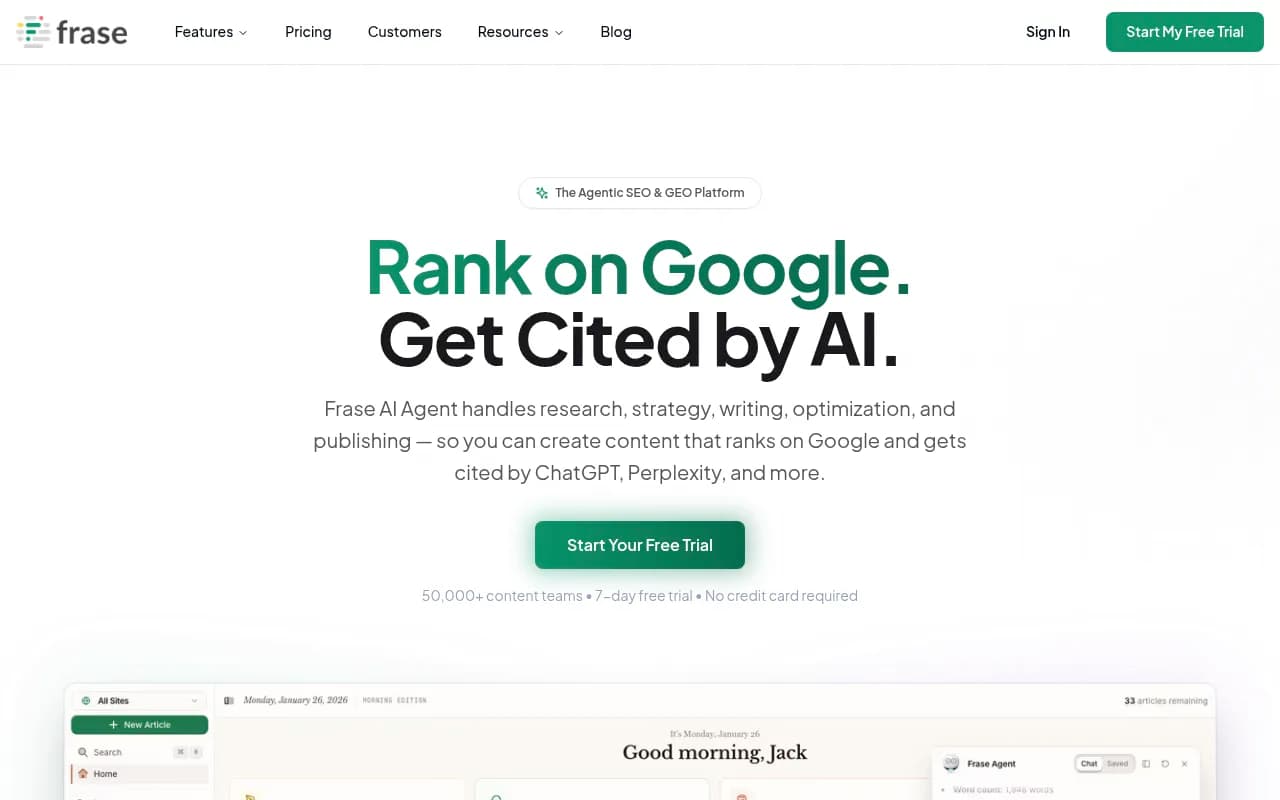
Frase's core strength is research automation. When you enter a keyword, it pulls the top-ranking pages, extracts their headings, questions, and key topics, and assembles a brief in minutes. For content teams that produce a lot of articles, this is a significant time saver.
Frase also has an AI writer, but the real differentiator is the research layer. Where Surfer focuses on scoring your draft, Frase focuses on helping you understand what to write before you start. It's particularly good for teams that work with freelancers or agencies, because the briefs it generates are detailed enough to hand off without a lot of additional work.
Head-to-head comparison
| Feature | Surfer SEO | Clearscope | Frase |
|---|---|---|---|
| Content editor with real-time scoring | Yes | Yes | Yes |
| NLP term suggestions | Yes | Yes | Yes |
| AI writing assistant | Yes (Surfer AI) | No | Yes |
| Keyword research | Yes | No | Limited |
| SERP analysis | Yes | No | Yes |
| Site audit | Yes | No | No |
| Content brief generation | Yes | No | Yes (core feature) |
| Competitor content research | Yes | Yes | Yes |
| Google Docs integration | Yes | Yes | Yes |
| WordPress integration | Yes | No | Yes |
| AI search visibility tracking | No | No | No |
| Starting price (approx.) | ~$89/mo | ~$170/mo | ~$45/mo |
| Best for | SEO-led teams wanting one workspace | Editorial teams prioritizing content quality | Research-heavy teams, brief generation |
A few things stand out here. Frase is the cheapest entry point by a significant margin, which matters for smaller teams or solo operators. Clearscope is the most expensive and the most limited in scope, which sounds like a bad deal until you understand that editorial teams often prefer a focused tool over a sprawling one. Surfer sits in the middle on price but offers the most features.
Where each tool actually shines
Surfer SEO: best for SEO teams running the full workflow
If your team does keyword research, content planning, writing, and optimization all in one place, Surfer is the most logical choice. The Content Editor is polished and the real-time feedback loop works well. Surfer's own data shows its Content Score had a 26% correlation with rankings, which is meaningful but also worth keeping in perspective: correlation isn't causation, and a high Content Score doesn't guarantee a first-page ranking.
The Jasper integration is worth mentioning. If you're already using Jasper for AI writing, Surfer's deep integration with it makes the combined workflow genuinely smooth. You can generate a draft in Jasper and optimize it in Surfer without copying and pasting between tabs.
Surfer is also the best choice if you're managing multiple writers or freelancers who need clear, structured briefs. The briefs Surfer generates are detailed and easy to follow.
Clearscope: best for content quality and editorial standards
Clearscope's value proposition is simple: it makes content better. The term grading is accurate, the interface doesn't distract writers, and the content grades are reliable enough that editorial teams use them as a quality gate before publishing.
Where Clearscope falls short is everything outside the editor. If you need keyword research, you'll need another tool. If you want site audits or SERP analysis, same thing. For teams that already have those tools and just need a content optimization layer, Clearscope makes sense. For teams that want one tool to do everything, it doesn't.
The pricing is also a real consideration. Clearscope charges per document in some tiers, which can add up quickly for high-volume content operations.
Frase: best for speed and research volume
Frase is the fastest path from keyword to brief. If you're producing 20+ articles a month and your bottleneck is research time, Frase addresses that directly. The competitor content aggregation is good, the question research pulls from real search data, and the briefs it generates are detailed enough to be genuinely useful.
The AI writer in Frase is decent but not exceptional. Most teams use Frase for the brief and then write (or generate) the actual content elsewhere. That's a reasonable workflow.
Frase is also the most accessible price point, which makes it a sensible starting point for teams that are new to content optimization tools and don't want to commit to a higher-cost platform before they've validated the workflow.
The honest limitations of all three
Here's something none of the comparison articles about these tools tend to say clearly: Surfer, Clearscope, and Frase were all built for Google. They analyze Google SERPs, score content against Google rankings, and optimize for Google's ranking signals.
That was the right approach in 2022. In 2026, it's still relevant, but it's incomplete.
A growing share of search behavior now happens inside AI engines. When someone asks ChatGPT "what's the best project management tool for remote teams?" or asks Perplexity "how do I fix a crawl budget issue?", the answer they get doesn't come from a Google ranking. It comes from what the AI model has learned, what sources it cites, and how well your content is structured for AI consumption.
Surfer's Content Score tells you nothing about whether ChatGPT will cite your page. Clearscope's term grading doesn't tell you whether Perplexity is pulling from your competitors instead of you. Frase's brief generator doesn't show you which prompts your brand is invisible for.
This isn't a criticism of these tools specifically. They do what they say they do. But if you're making content investment decisions in 2026 without any visibility into AI search, you're optimizing for half the picture.
For teams that want to close that gap, tools like Promptwatch track how your brand appears across ChatGPT, Perplexity, Gemini, and other AI engines, and help you identify which content gaps are causing you to be invisible in AI answers.

Which tool should you actually choose?
The honest answer is that these tools aren't really competing for the same buyer. The overlap is real but the sweet spots are different.
Choose Surfer SEO if you want one platform that handles keyword research, content planning, writing, and optimization. It's the best fit for SEO teams that want a complete workflow without stitching together multiple tools.
Choose Clearscope if your team has strong editorial standards and you want a content grading tool that writers will actually use without complaining. It's also the right choice if you already have keyword research and audit tools and just need the optimization layer.
Choose Frase if research speed is your bottleneck. If you're producing a lot of content and the brief-writing process is eating hours, Frase addresses that problem directly and at a price that doesn't require a budget conversation.
And if you're using any of these tools, consider what you're doing about AI search visibility separately. The content you optimize with Surfer or Clearscope still needs to be structured, cited, and discoverable by AI engines, which is a different problem from Google ranking.
A note on complementary workflows
One thing that comes up in real-world usage: these tools are often used together rather than as exclusive choices. A common workflow is Frase for the initial research and brief, Surfer for the content editor and scoring during writing, and Clearscope for a final quality check before publishing. That's more tool spend than most teams want, but it reflects the fact that each tool genuinely does one thing better than the others.
If budget is a constraint, Frase plus Surfer is probably the most complete combination at a reasonable price. If editorial quality is the priority and you have the budget, Clearscope plus Surfer covers the most ground.
For teams that are also thinking about AI search visibility, adding a GEO tracking layer on top of any of these combinations is worth the investment. The content you create with these tools needs to actually get cited by AI engines, and that requires understanding which prompts you're visible for and which ones you're not.
Other content optimization tools worth knowing
The market has more options than just these three. A few worth considering depending on your needs:
MarketMuse takes a topic modeling approach that's particularly good for planning content at the site level, not just the article level. It's more expensive than all three of the tools above, but the topic authority scoring is useful for teams doing long-term content strategy.
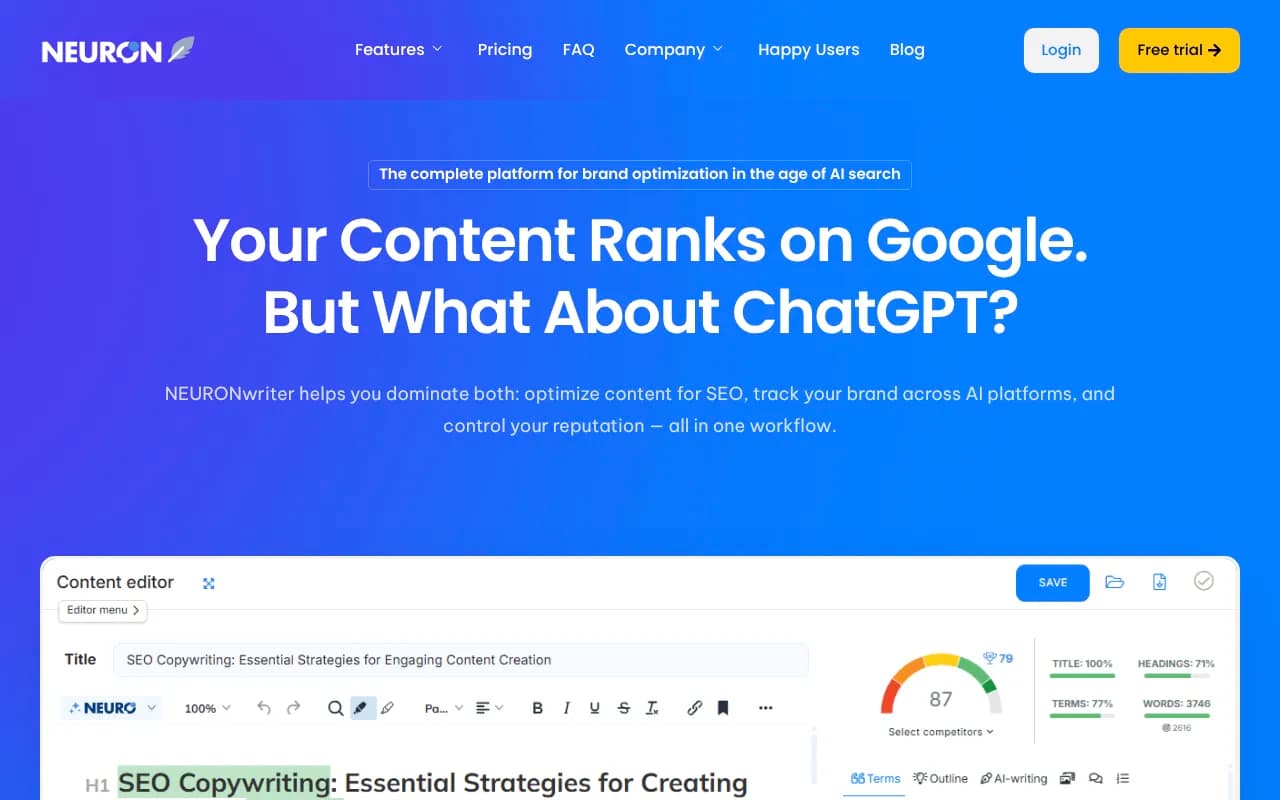
NeuronWriter is a solid budget alternative to Surfer, with similar NLP-based content scoring at a lower price point. It's worth a look if Surfer's pricing is a barrier.
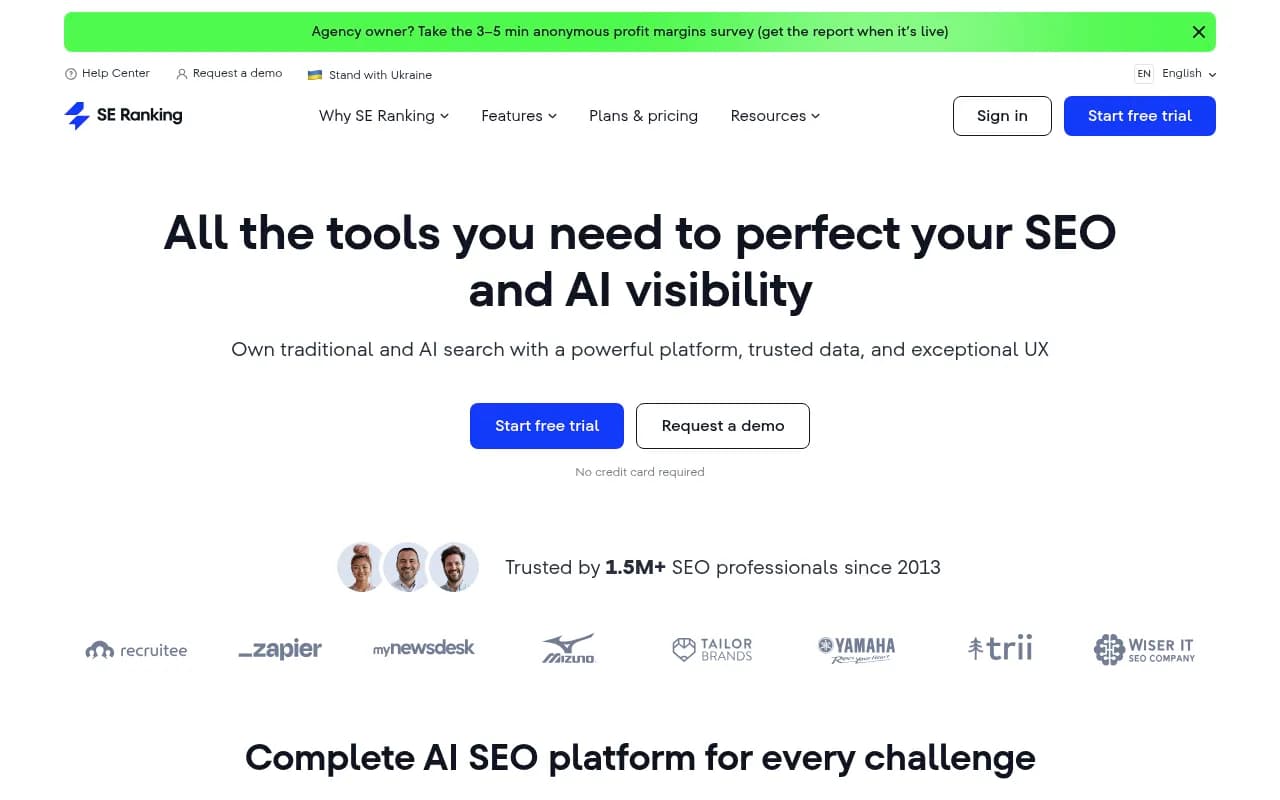
SE Ranking is an all-in-one SEO platform that includes content optimization alongside rank tracking, site audits, and keyword research. It's not as specialized as Surfer or Clearscope, but for teams that want everything in one place at a lower cost, it's a reasonable option.

Scalenut combines content planning, brief generation, and writing in a single platform with a focus on semantic SEO. It's positioned as a Surfer alternative with a stronger emphasis on the writing workflow.
The bottom line
Surfer SEO, Clearscope, and Frase are all legitimate tools that do real things. None of them is obviously the best choice for every team. The right pick depends on what your bottleneck actually is: workflow integration (Surfer), editorial quality (Clearscope), or research speed (Frase).
What all three share is a Google-first orientation. That's still valuable in 2026, but it's worth knowing that optimizing for Google rankings and optimizing for AI search visibility are increasingly separate problems that require separate tools.