Key takeaways
- Traditional SEO audits cover technical health, backlinks, and on-page signals — but they miss AI search visibility entirely
- Google AI Overviews appeared in roughly 25% of queries at peak in 2025, making AI visibility a real traffic concern, not a future one
- The best audit stack in 2026 combines a technical crawler, a rank tracker, a content optimizer, and an AI visibility monitor
- Most AI visibility tools only show you where you're invisible — the better ones help you fix it
- Free tools (Google Search Console, PageSpeed Insights, Screaming Frog's free tier) still cover a lot of ground for technical audits
There's a question doing the rounds in marketing circles right now: does SEO still matter now that AI is answering searches directly?
The answer is yes — but the definition of "ranking" has quietly expanded. You now need to rank in Google's traditional blue links, Google AI Overviews, ChatGPT, Perplexity, Gemini, and a handful of other AI engines that your customers are actually using. An SEO audit that only checks title tags and broken links is leaving half the picture blank.
This guide walks through the tools worth using in 2026, organized by what they're actually good at. Some are free. Some are expensive. All of them solve a specific part of the problem.
Why your audit needs to cover two different search worlds
When someone asks ChatGPT "what's the best project management software for remote teams," it doesn't check your meta description. It looks at what's been written about you across the web — blog posts, review sites, Reddit threads, YouTube videos, and your own pages. The signals that get you cited in AI answers overlap with traditional SEO signals (authority, relevance, structured content) but they're not identical.
A site can rank #3 on Google for a competitive keyword and still be completely invisible in ChatGPT's answer to the same question. The reverse is also true. That's why a complete audit in 2026 needs to check both.
The practical implication: your audit tool stack probably needs to expand. Not replace what you have — expand.
Technical SEO audit tools
These are the workhorses. They crawl your site, find broken links, flag slow pages, identify crawl errors, and surface the structural issues that hurt both Google rankings and AI crawler access.
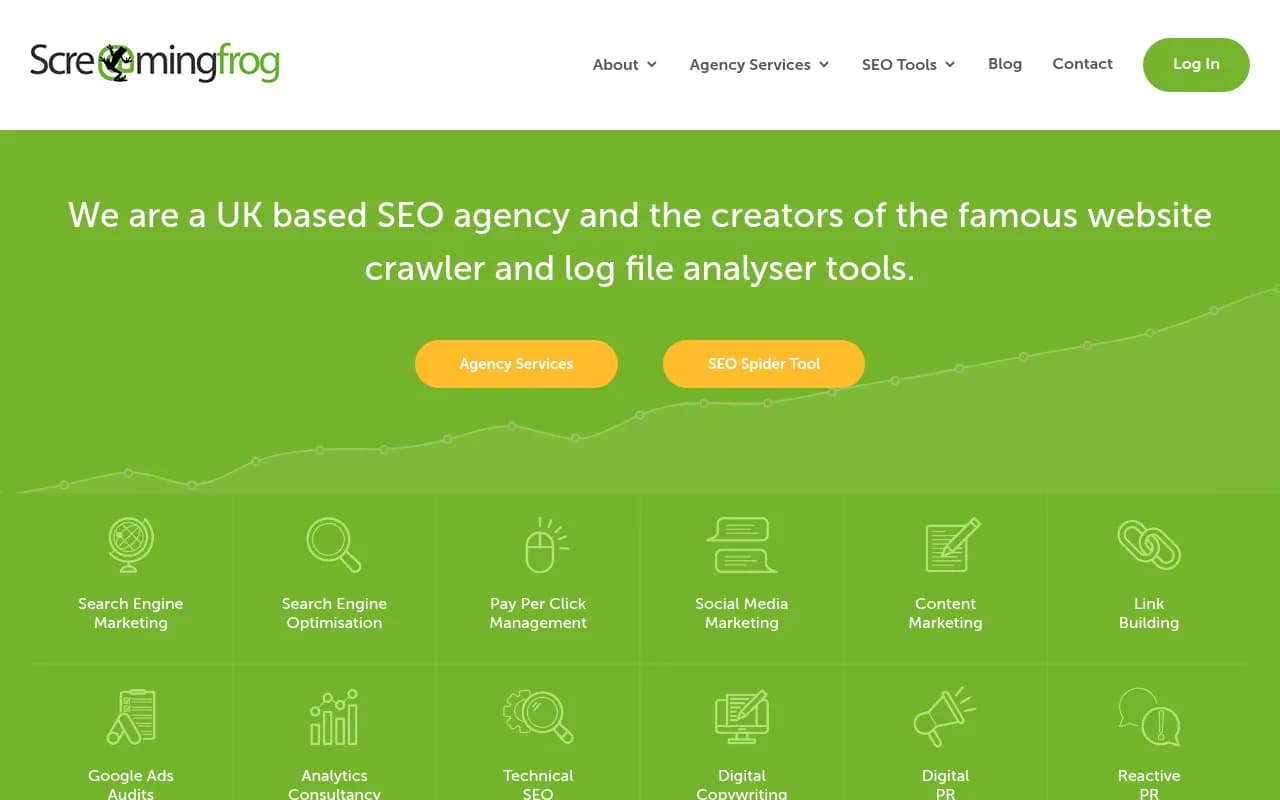
Screaming Frog SEO Spider
Still the gold standard for technical crawls. The free version handles up to 500 URLs, which covers most small sites. Paid is £259/year and removes the limit. It finds broken links, redirect chains, duplicate content, missing meta tags, and thin pages faster than almost anything else.
Sitebulb
A strong alternative to Screaming Frog, especially if you want more visual reporting. Sitebulb turns crawl data into prioritized recommendations with clear explanations of why each issue matters. Useful for agencies presenting audit findings to clients who aren't technical.

Google Search Console
Free, and still irreplaceable. Search Console shows you which queries drive impressions and clicks, which pages Google has indexed, Core Web Vitals scores, and manual actions. If you're not checking it weekly, you're flying blind on your Google performance.
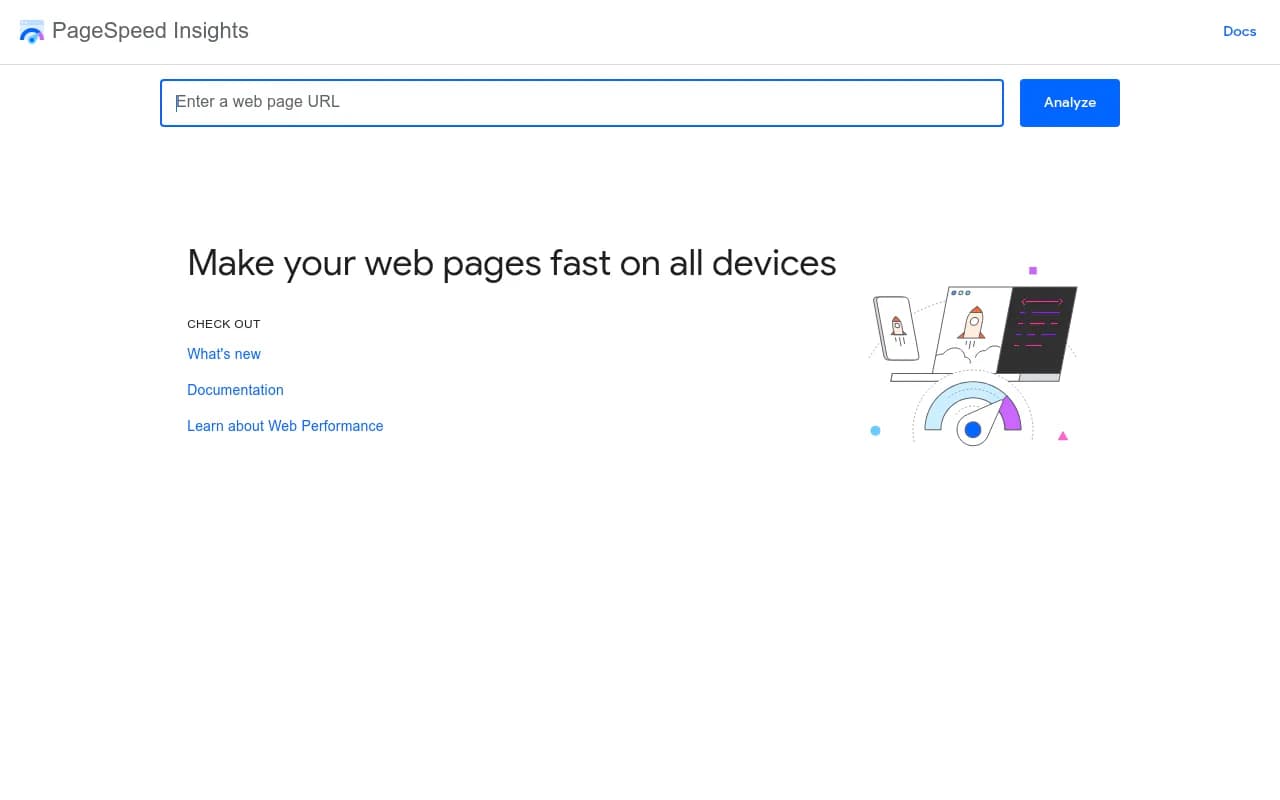
Google PageSpeed Insights
Core Web Vitals matter for rankings, and PageSpeed Insights gives you a free, page-level breakdown of what's slowing you down. It's not a full audit tool, but it's the right starting point for performance issues.
ContentKing
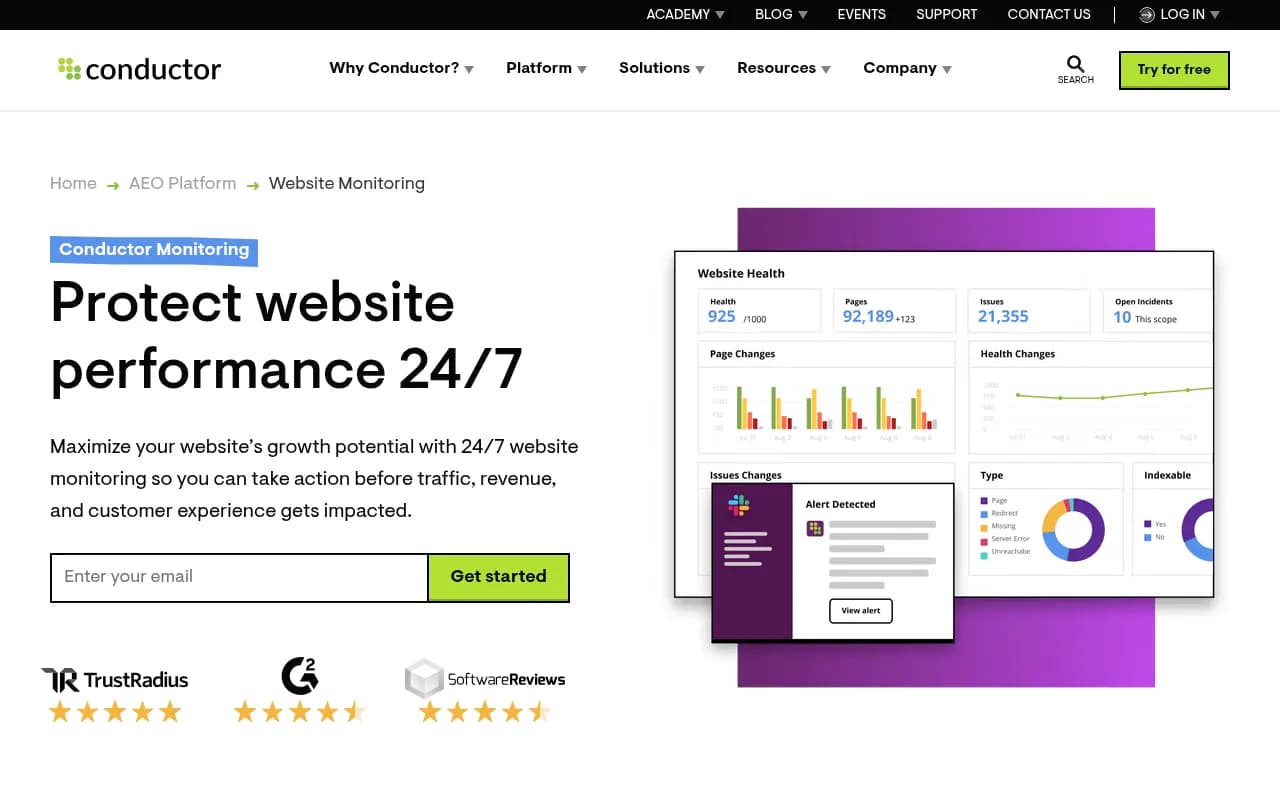
Where Screaming Frog is a point-in-time crawl, ContentKing monitors your site continuously. It alerts you when pages change, when new issues appear, or when something that was working breaks. Good for large sites where things change frequently.
All-in-one SEO platforms
These platforms combine technical auditing with keyword research, backlink analysis, and rank tracking. They're the backbone of most SEO workflows.
Semrush
The most comprehensive option for most teams. Semrush's Site Audit tool checks over 140 technical issues, and the platform layers in keyword research, competitor analysis, backlink data, and content tools. In 2026, Semrush has also added an AI Visibility Toolkit that tracks how brands appear in AI-generated answers — though it uses fixed prompts rather than custom tracking, which limits how granular you can get.
Ahrefs
Ahrefs is particularly strong on backlink analysis and content gap research. Its Site Audit is solid, and the Brand Radar feature tracks some AI visibility. Like Semrush, it's primarily a traditional SEO platform that has added AI tracking as a layer — useful if you're already in the ecosystem, but not a dedicated AI visibility solution.
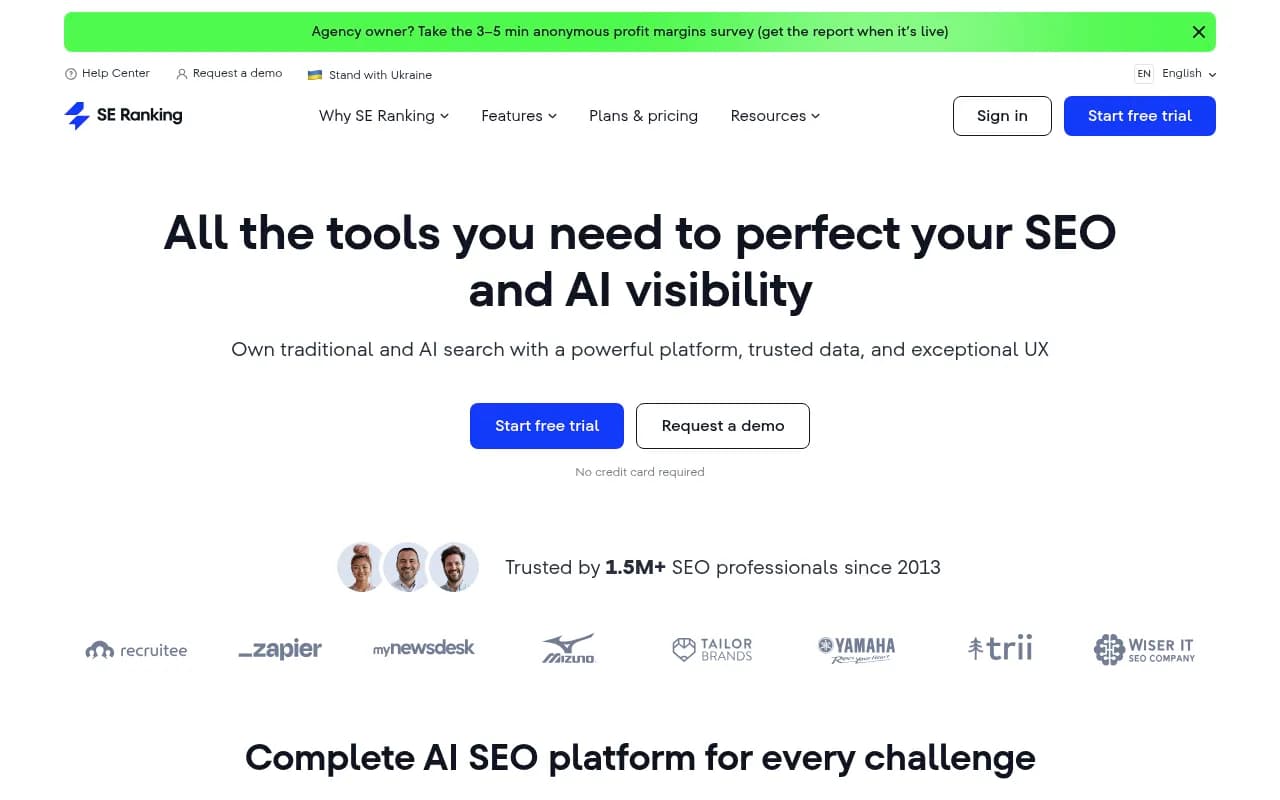
SE Ranking
A more affordable all-in-one option that covers rank tracking, site audits, keyword research, and content optimization. SE Ranking has added an AI Overview Tracker that monitors when your pages appear in Google's AI Overviews. Good value for smaller teams and agencies.
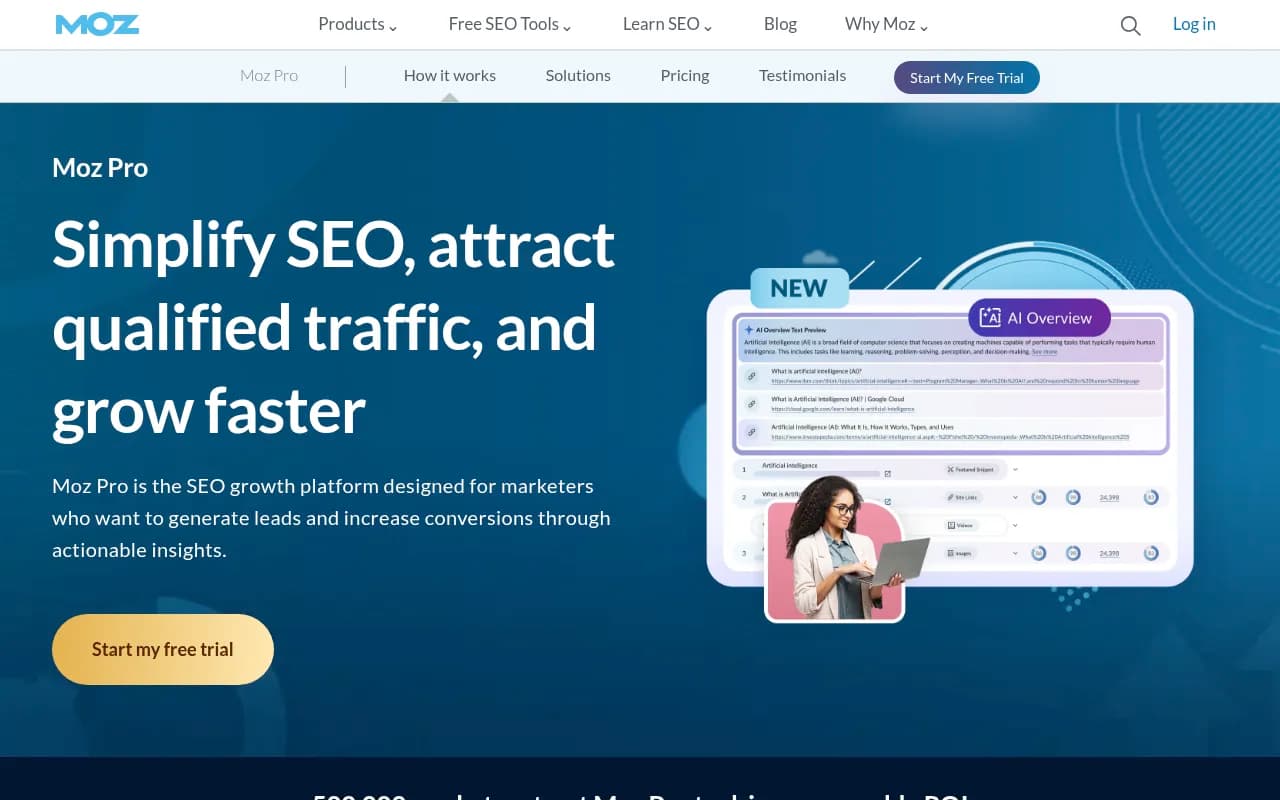
Moz Pro
Moz built its reputation on domain authority and link analysis. The Pro platform includes site auditing, rank tracking, and on-page optimization recommendations. It's not the most cutting-edge option in 2026, but it's reliable and the interface is approachable for teams newer to SEO.
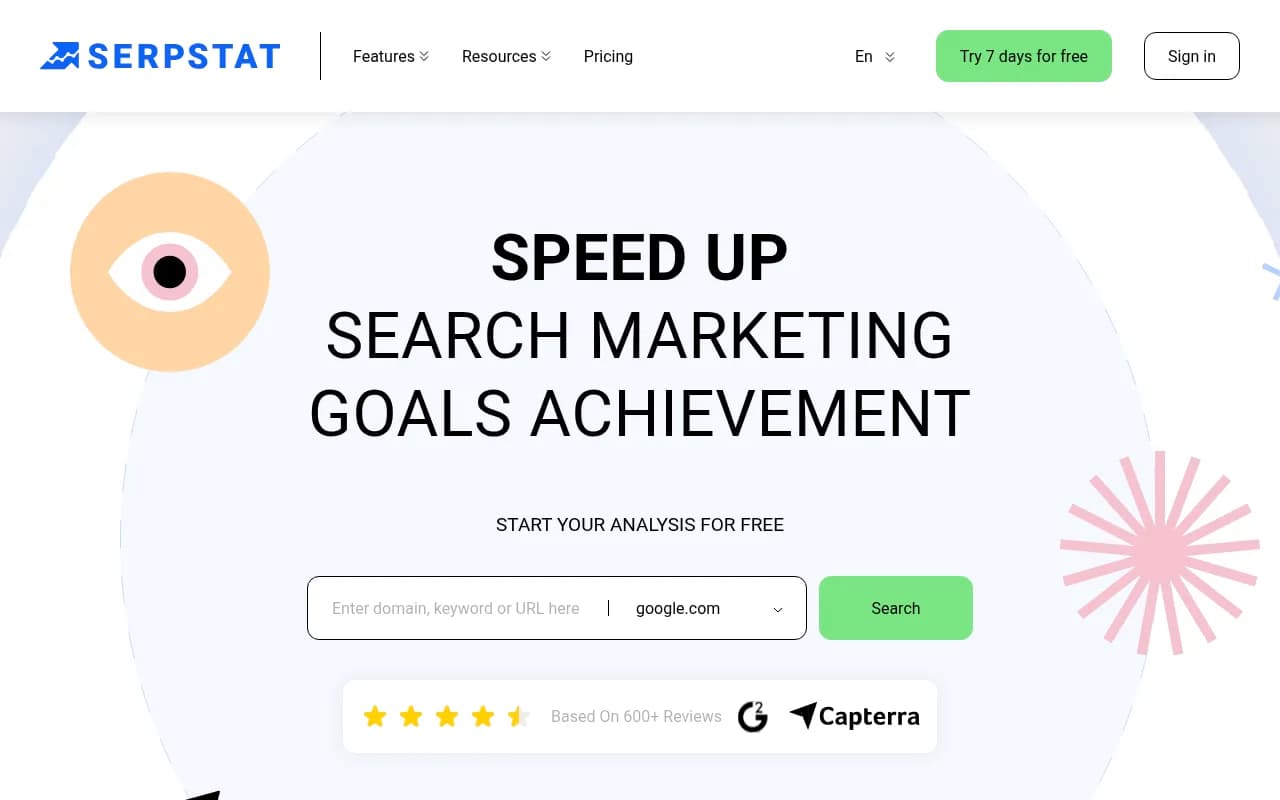
Serpstat
A budget-friendly all-in-one that covers the core audit, keyword, and rank tracking bases. Worth considering if Semrush or Ahrefs pricing is a barrier.
Content optimization tools
Technical health gets you crawled. Content quality gets you ranked — in both Google and AI search. These tools help you write content that actually answers what people (and AI models) are looking for.
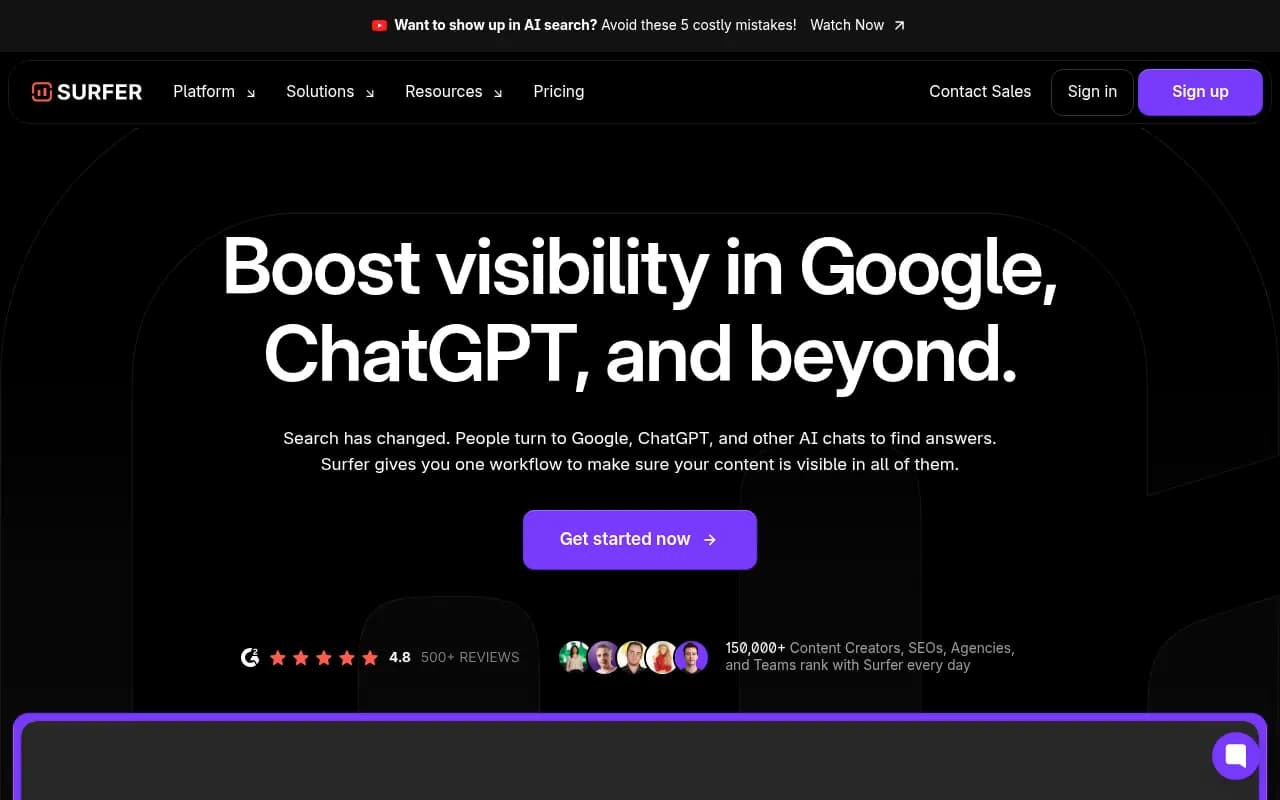
Surfer SEO
Surfer analyzes top-ranking pages for a keyword and tells you what your content needs to include — word count, headings, entities, related terms. It's one of the more data-driven content optimization tools, and it's added some AI visibility reporting in recent versions.
Clearscope
Similar to Surfer but with a cleaner interface and a focus on content grading. Clearscope integrates with Google Docs and WordPress, which makes it easy to optimize content without switching tools. Popular with content teams that produce at volume.

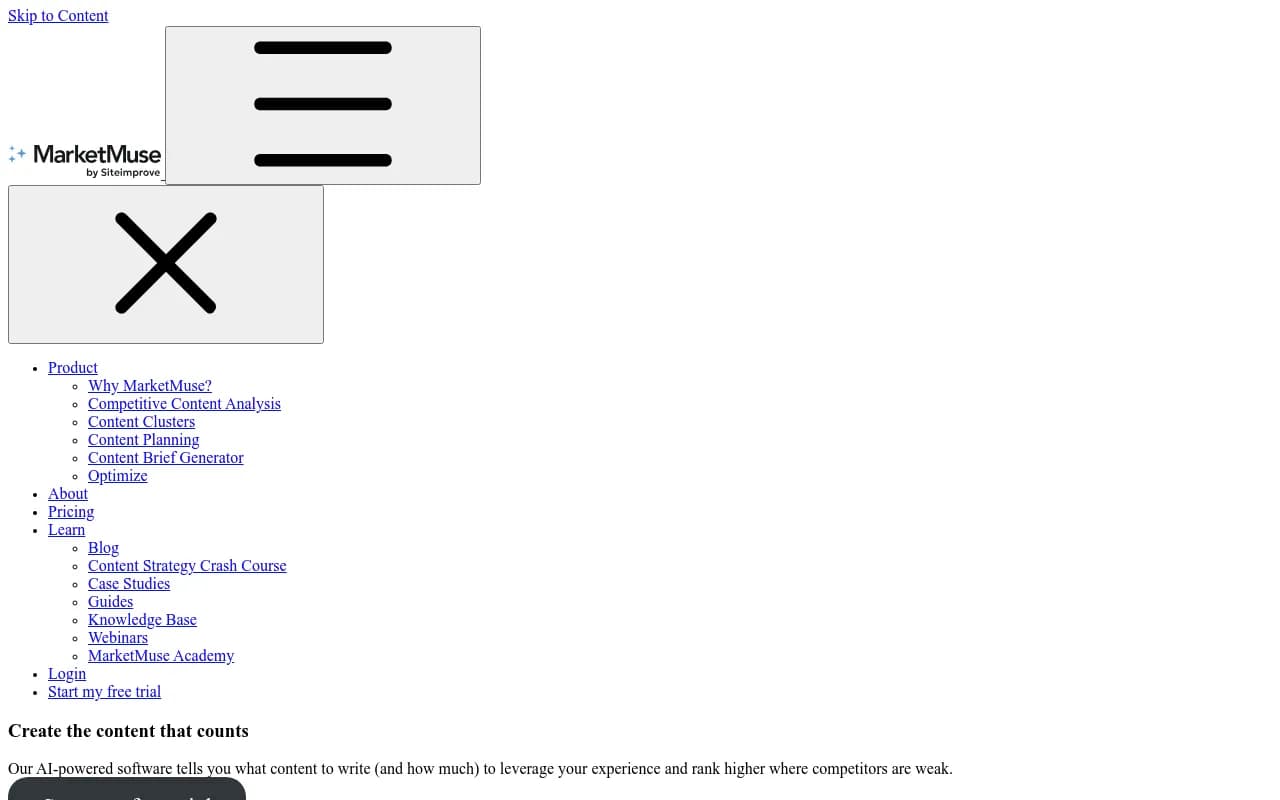
MarketMuse
MarketMuse goes deeper on content strategy — it maps your existing content against topic clusters, identifies gaps, and prioritizes what to write next based on competitive difficulty. More expensive than Surfer or Clearscope, but more strategic.
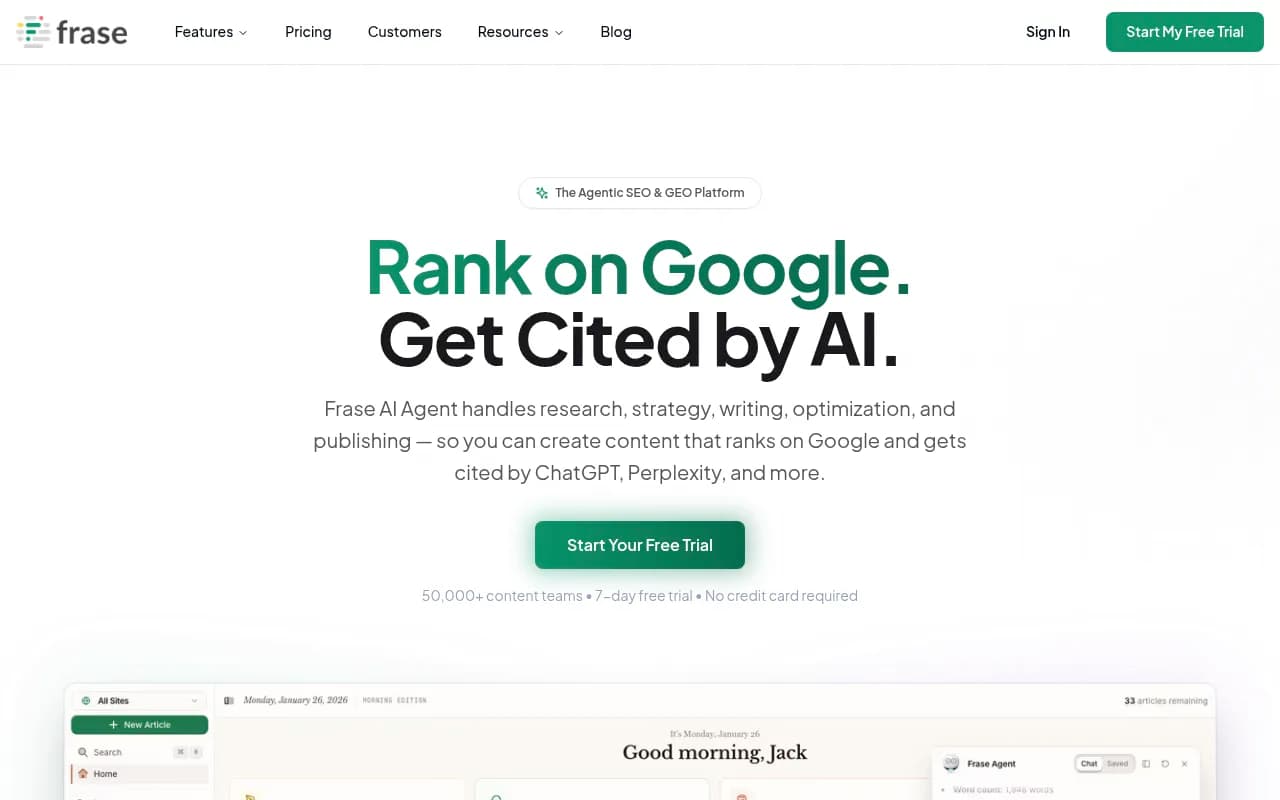
Frase
Frase combines content research and AI writing. It pulls together the top results for a query, summarizes what they cover, and helps you write content that addresses the same questions. Good for teams that want research and writing in one workflow.
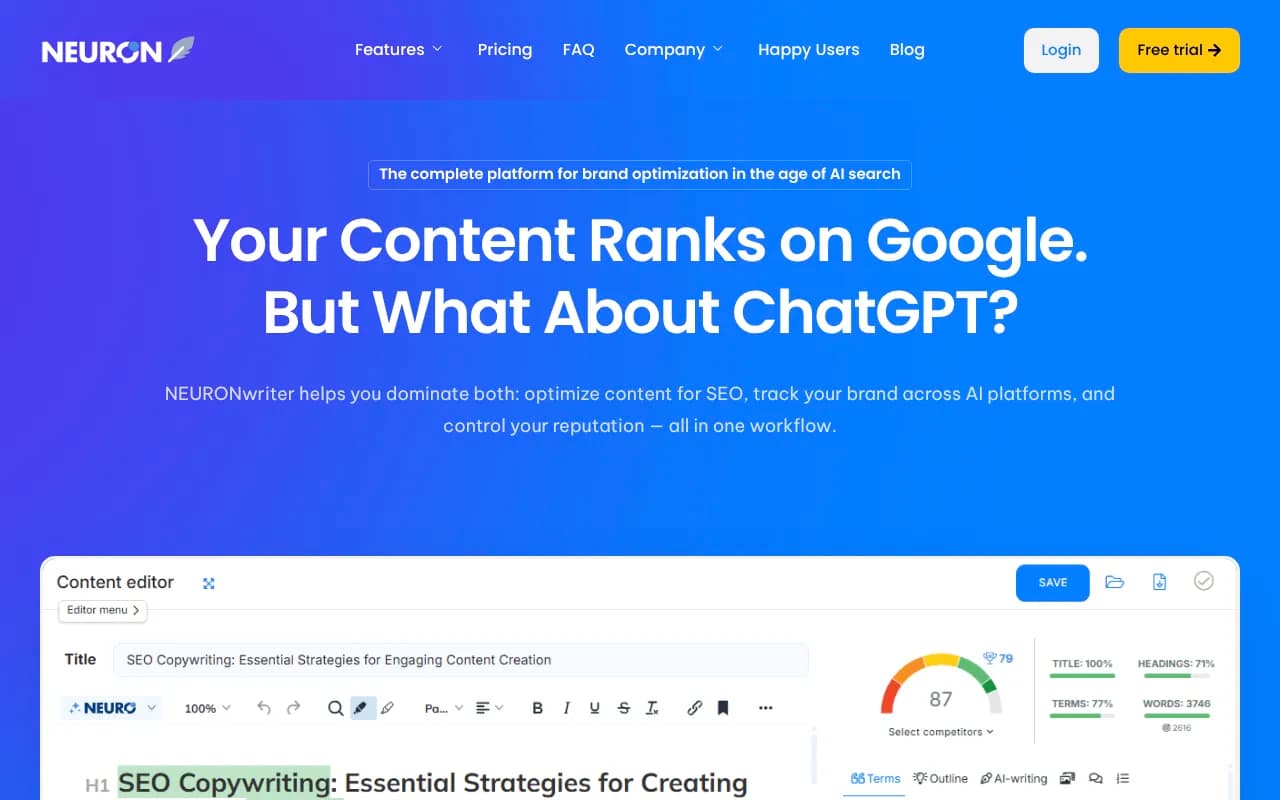
NeuronWriter
A solid mid-market content optimizer that uses NLP analysis to recommend semantic terms and entities. It's particularly useful for optimizing existing content that's ranking but not converting.
AI search visibility tools
This is the category that barely existed two years ago. These tools track how your brand appears in AI-generated answers across ChatGPT, Perplexity, Gemini, Google AI Overviews, and other models.
The honest caveat: most of these tools are monitoring dashboards. They show you where you're visible and where you're not. That's useful, but it's only half the job. The harder half is actually fixing the gaps — creating content that gets you cited, understanding why competitors are being recommended instead of you, and tracking whether your changes are working.
Promptwatch
Promptwatch is one of the few platforms that goes beyond monitoring into optimization. It tracks your brand visibility across 10 AI models (ChatGPT, Perplexity, Gemini, Claude, Google AI Overviews, Grok, DeepSeek, Copilot, Meta AI, Mistral), but the more interesting part is what it does with that data. Answer Gap Analysis shows which prompts competitors are visible for that you're not. Content Agents generate articles and briefs grounded in real prompt data to fill those gaps. AI Crawler Logs show you which pages AI crawlers are actually reading, how often they return, and when a page moves from crawled to cited.

Otterly.AI
Otterly tracks brand mentions across ChatGPT, Perplexity, and Google AI Overviews. It's a monitoring tool — clean interface, useful for getting a baseline picture of your AI visibility. Doesn't include content generation or crawler logs.
Otterly.AI

Profound
Profound is an enterprise-focused AI visibility platform with strong tracking across multiple AI engines. It's well-regarded for depth of data but sits at a higher price point, and like most competitors, it's primarily a monitoring solution rather than an optimization one.
Profound

AthenaHQ
AthenaHQ tracks brand visibility in AI search and provides some competitive benchmarking. Monitoring-focused, without the content optimization layer.

Peec AI
A clean, straightforward AI visibility tracker. Good for teams that want a simple view of how they're appearing in AI answers without a lot of complexity.

Comparison: which tool does what
| Tool | Technical audit | Traditional rank tracking | Content optimization | AI visibility monitoring | Content generation for AI | Crawler logs |
|---|---|---|---|---|---|---|
| Screaming Frog | Excellent | No | No | No | No | No |
| Semrush | Good | Excellent | Good | Basic (fixed prompts) | No | No |
| Ahrefs | Good | Excellent | Good | Basic | No | No |
| SE Ranking | Good | Good | Good | Google AI Overviews only | No | No |
| Surfer SEO | No | No | Excellent | No | No | No |
| Clearscope | No | No | Excellent | No | No | No |
| Promptwatch | No | No | No | Excellent (10 models) | Yes | Yes |
| Otterly.AI | No | No | No | Good | No | No |
| Profound | No | No | No | Good | No | No |
| ContentKing | Good | No | No | No | No | No |
| Google Search Console | Basic | Good | No | No | No | No |
How to build your audit stack
The right stack depends on your situation, but here's a practical starting point for three common scenarios.
Small business or solo marketer
Start free: Google Search Console for performance data, PageSpeed Insights for Core Web Vitals, and Screaming Frog's free tier for a technical crawl. Add SE Ranking if you want keyword tracking and a more structured audit workflow. For AI visibility, Otterly.AI has an accessible entry point.
Growing marketing team
Semrush or Ahrefs as your all-in-one foundation. Surfer SEO or Clearscope for content optimization. Promptwatch for AI visibility monitoring and content gap analysis — particularly useful once you're producing enough content that you need to prioritize what to create next based on actual prompt data.
Agency managing multiple clients
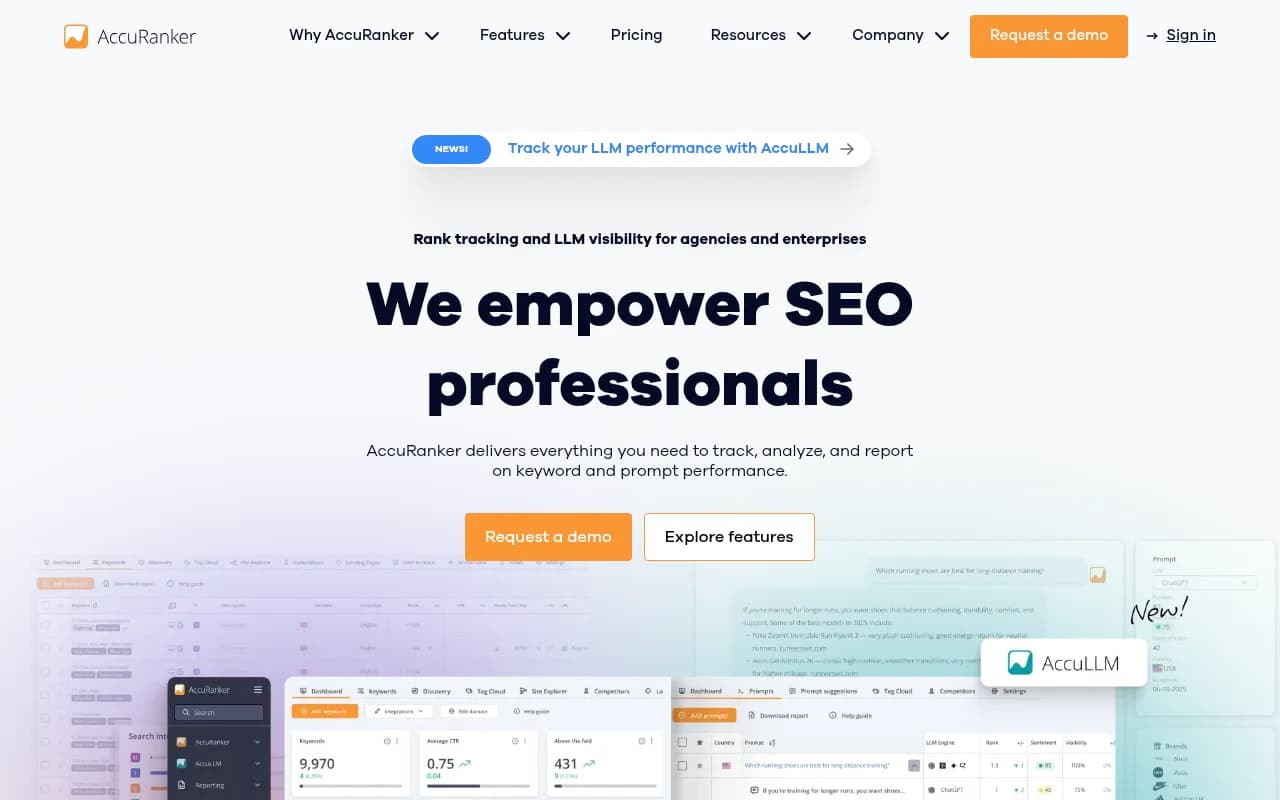
Screaming Frog or Sitebulb for technical crawls. Semrush or Ahrefs for keyword and backlink data. ContentKing for ongoing monitoring. Promptwatch for AI visibility across client sites — the multi-site plans and agency pricing make this workable at scale. AccuRanker for rank tracking if you need granular, on-demand updates.
What to actually look for in an AI audit
Running a traditional SEO audit is well-documented. Running an AI visibility audit is newer territory. Here's what matters:
Citation coverage: Which of your pages are being cited in AI answers? Not just whether you're mentioned, but which specific URLs are getting picked up and for which queries.
Answer gaps: What questions are AI models answering in your category where you're not being cited? These are your content opportunities.
Competitor visibility: Who is being cited instead of you, and for which prompts? Understanding why a competitor gets recommended helps you reverse-engineer what you need to create.
Crawler access: Are AI crawlers (GPTBot, ClaudeBot, PerplexityBot) actually reaching your pages? Crawler logs tell you whether your robots.txt is blocking them, whether they're hitting errors, and how often they return.
Entity recognition: Does your site clearly establish what your brand is, what it does, and who it serves? AI models build entity graphs, and vague or inconsistent brand signals make it harder for them to recommend you confidently.
Tools like Promptwatch surface all of this in one place. Most traditional SEO platforms cover none of it.
A note on free AI audit options
Several tools offer free AI visibility checks. Semrush has a free AI Visibility Checker. Some newer platforms offer free trials or limited free tiers. These are worth running as a starting point — they give you a rough sense of where you stand without any commitment.
The limitation is that free tools typically run a small, fixed set of prompts. Your actual customers might be asking very different questions. A proper AI audit needs to track the prompts that matter to your specific business, not a generic set of industry queries.
The bottom line
SEO auditing in 2026 means checking two things: whether Google can find and rank your pages, and whether AI search engines are citing you when users ask relevant questions. The tools for the first job are mature and well-understood. The tools for the second job are newer and still evolving fast.
The practical advice: don't wait until AI visibility becomes a crisis. Run a baseline audit now, understand where you're visible and where you're not, and start filling the gaps systematically. The sites that are doing this work now will be significantly harder to displace in 12 months.