Key takeaways
- Prompt tracking answers "was I mentioned?" Getting recommended needs four more jobs: diagnosing why you're missing, fixing the content, getting third-party mentions, and measuring the traffic.
- Promptwatch Data (Sep 28 to Oct 4, 2026) shows product pages and landing pages take about 39% of ChatGPT citations, so the pages describing what you sell matter more than blog volume.
- Platform behavior changes overnight. ChatGPT started using site: queries at scale on August 8, 2026, and Reddit's share of ChatGPT citations collapsed on August 14. Old playbooks are stale.
- Most tools on the market still stop at monitoring. Pick one that closes the loop from insight to published content to measured result.
- Pair an AI visibility platform with your normal SEO stack (Search Console, a crawler, a content editor). Don't replace it.
Why prompt tracking alone doesn't get you recommended
I've watched a lot of teams buy a prompt tracker, stare at a dashboard showing 12% share of voice, and then do nothing, because the dashboard never said what to do next. That's the gap this guide is about.
A tracker runs prompts and logs whether your brand appeared. Useful, but it's a thermometer, not medicine. Getting recommended in AI answers depends on things a thermometer can't see:
- Whether AI crawlers can actually read your pages
- Which pages get cited, and which content types win for your prompts
- Whether third-party sites (listicles, review sites, forums) name you
- Whether any of it turns into traffic and revenue
So I've organized the tools by job, not by a flat ranked list. Most teams need one platform for monitoring plus action, plus a few specialists.
What the citation data says you should be fixing
Before picking tools, know what AI engines reward. Here's what Promptwatch Data shows for recent periods.
Product and landing pages are the main surface
In Promptwatch's ChatGPT content type report (Sep 28 to Oct 4, 2026), product pages earned 22.4% of classified citations and landing pages 16.8%. Listicles got 13.6%, how-tos 8.7%, documentation 7.5%. For commercial prompts like "best CRM for small businesses", product pages, landing pages, listicles and comparisons made up almost 70% of citations. For branded prompts, reviews rose to 5.6%, over three times their overall share.
Translation: your thin product page is probably costing you more than your missing blog post.
Your own domain is now a retrieval surface
On August 8, 2026, ChatGPT began using the site: operator at scale. Per Promptwatch's fan-out report, site:-scoped fan-outs jumped from 0.37% to 16.8% of all fan-out queries in a day, and average fan-out queries per response rose from about 1.08 to 1.83. A site: query can only surface pages search engines have indexed, so unindexed or thin pages now cost you answers.
Social sources differ wildly by engine
From Sep 28 to Oct 4, 2026, social platforms made up 0.46% of ChatGPT citations but 12.2% of Google AI Overviews citations. On ChatGPT, Reddit fell to 0.09% after the August collapse. Old advice to "seed Reddit for ChatGPT" is out of date. YouTube, Facebook and Instagram matter more for Google-oriented buyers, and LinkedIn and Reddit still show up on Perplexity.
Content decays at different speeds
Promptwatch's content half-life report found landing pages and docs stay cited longest, while news lost half its pages within 36 days. Evergreen commercial pages are the better investment.
How to evaluate a tool beyond monitoring
Ask these five questions of any vendor:
- Does it track real user interfaces, or only API outputs? User-facing answers can differ from API answers.
- Can it show AI crawler activity on your site (which bots, which pages, which errors)?
- Does it tie AI visits to traffic and conversions?
- Does it tell you what content to create or fix, and can it help produce it?
- Does it track where third parties mention you: listicles, Reddit, YouTube, reviews?
A tool that answers "no" to 2 through 5 is a tracker. That's fine if you only need a scoreboard.
The full-stack option: monitoring plus action
Promptwatch is the one I'd start with if you want a single platform covering the whole loop. It monitors the real interfaces of ChatGPT, Google AI Overviews, AI Mode, Gemini, Perplexity, Copilot and others, then goes past tracking: IP-verified AI crawler logs, citation analytics, visitor analytics for AI traffic, content gap analysis, and a Content Agent that plans, writes and publishes to Webflow, Framer or WordPress. An Action Board turns the data into a prioritized to-do list, and published pages get tracked for crawls, citations and clicks.

It also covers Reddit, YouTube and LinkedIn citation reports, ChatGPT shopping and ads radar, and prompt volumes with difficulty scores. Pricing starts free (10 prompts, ChatGPT only), with paid plans from $95/month. Check promptwatch.com/pricing for current numbers. The Content Agent and agentic optimization sit on the Business tier.
The honest caveat: it's a lot of platform. If you only need a weekly mention count, it's more than you need.
Monitoring-focused platforms (good scoreboards)
These track brand appearances across AI engines. Several have added recommendations, but their center of gravity is measurement. Check each one's current feature set before buying, as this category moves quickly.
Profound

Profound targets enterprises with broad engine coverage and a strong reporting layer.
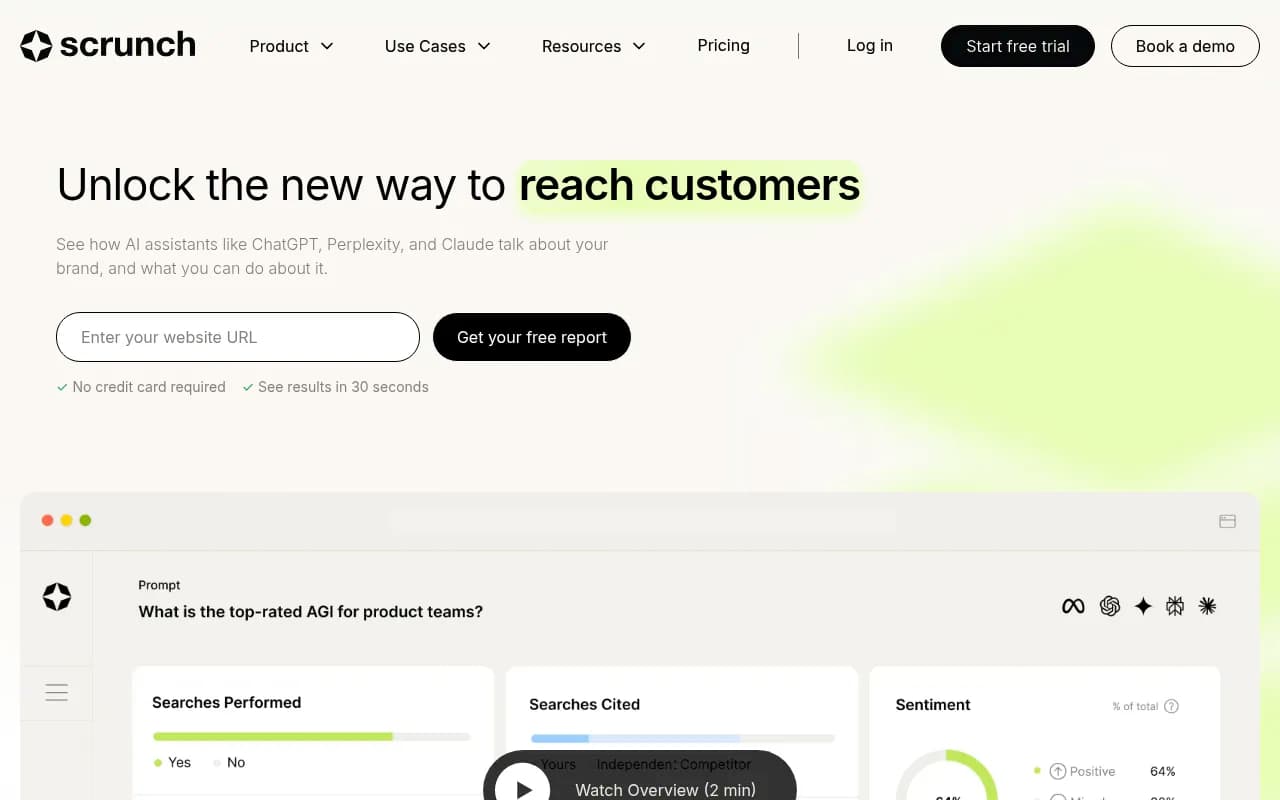
Scrunch tracks brand mentions across LLMs and is another enterprise-leaning option.

Peec AI is a straightforward tracker for marketing teams wanting visibility, citations and competitor comparisons.
Otterly.AI

Otterly.AI is an accessible monitoring tool for ChatGPT, Perplexity and AI Overviews, suited to smaller teams starting out.

AthenaHQ tracks and positions itself around optimization recommendations across AI search.

Rankshift monitors how brands appear across ChatGPT, Gemini and AI Overviews, and is popular with SaaS teams.
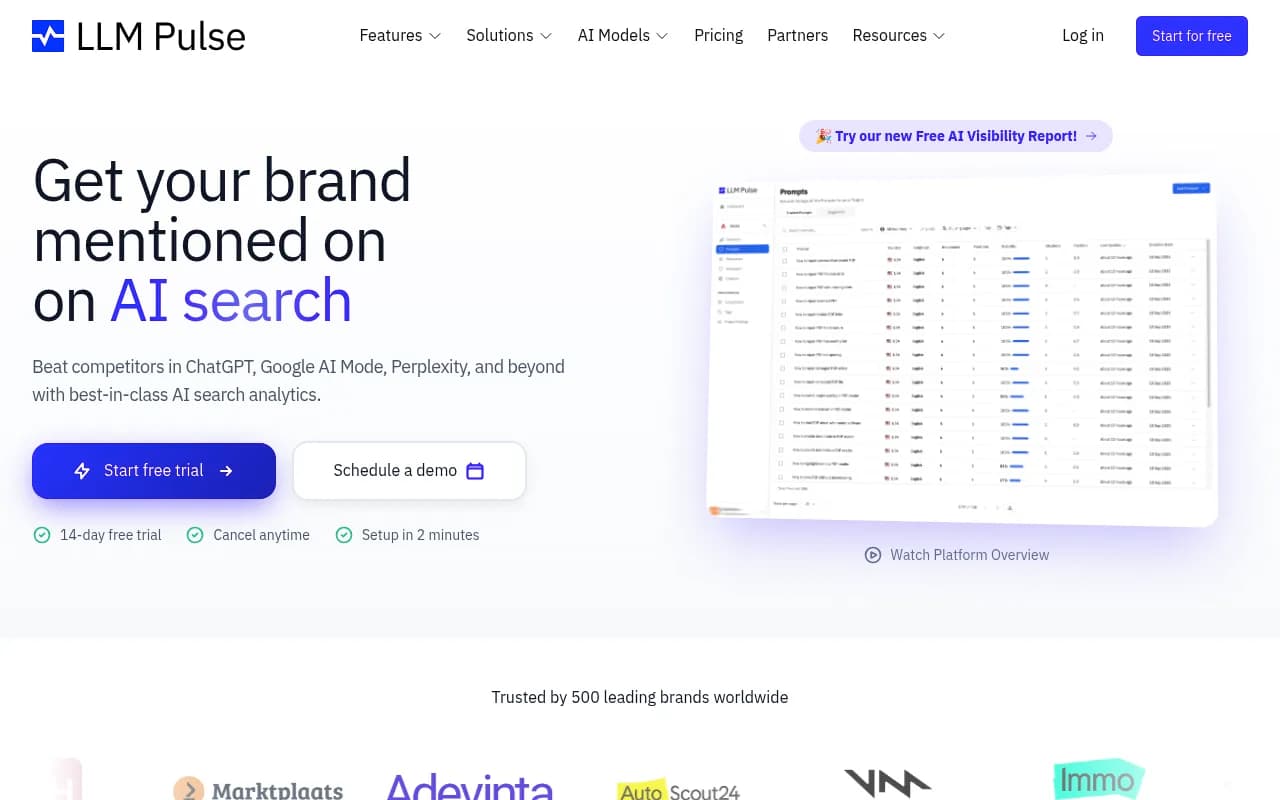
LLM Pulse covers visibility across ChatGPT, Perplexity and more at a modest price point.
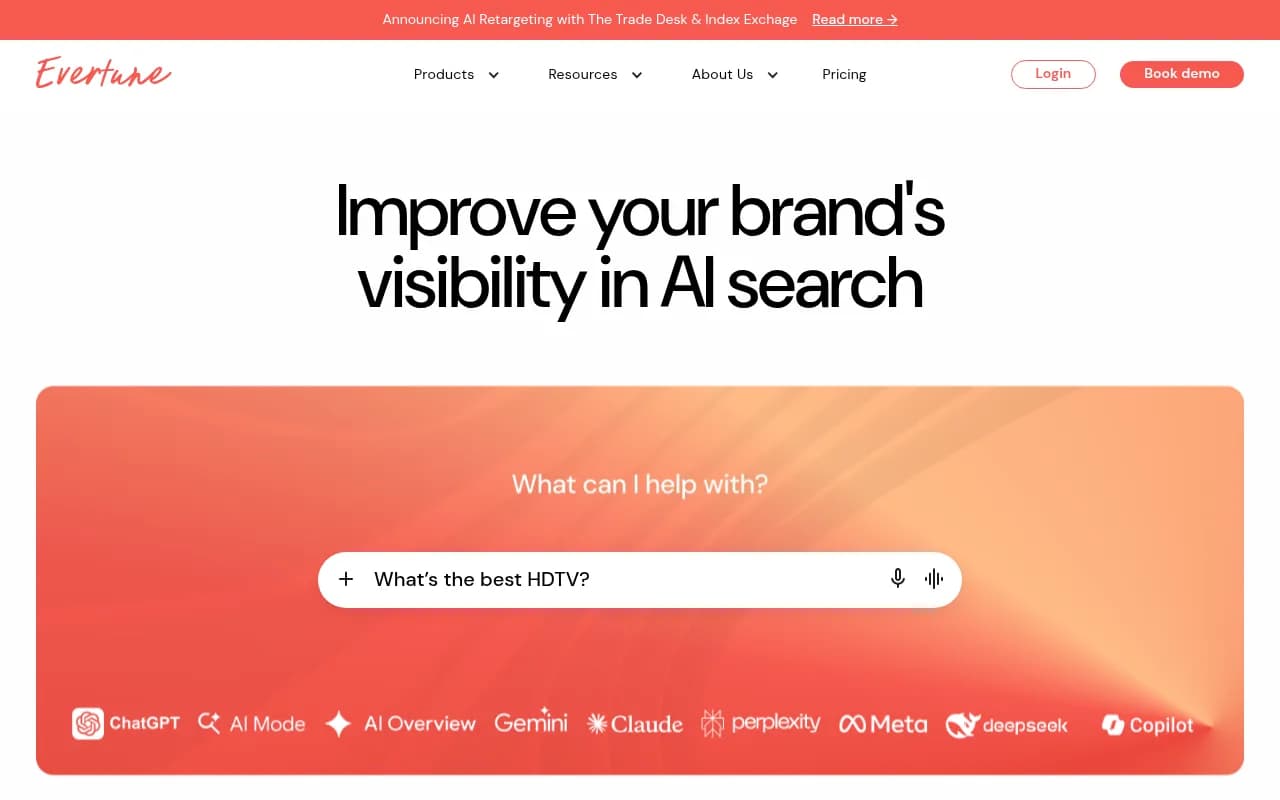
Evertune is vendor-positioned at Fortune 500 brands. Note its own "best tools" roundup is vendor-authored, so read it with that in mind.
If you want to browse more options in this category, the AI rank tracking directory lists dozens of them.
Traditional SEO suites with AI add-ons
If you already pay for one of these, the AI features may cover basic monitoring without another contract.
Semrush has an AI toolkit for tracking brand presence in AI answers. One research source reports Adobe completed its acquisition of Semrush in April 2026. I couldn't verify that independently, so confirm current ownership and pricing before committing.
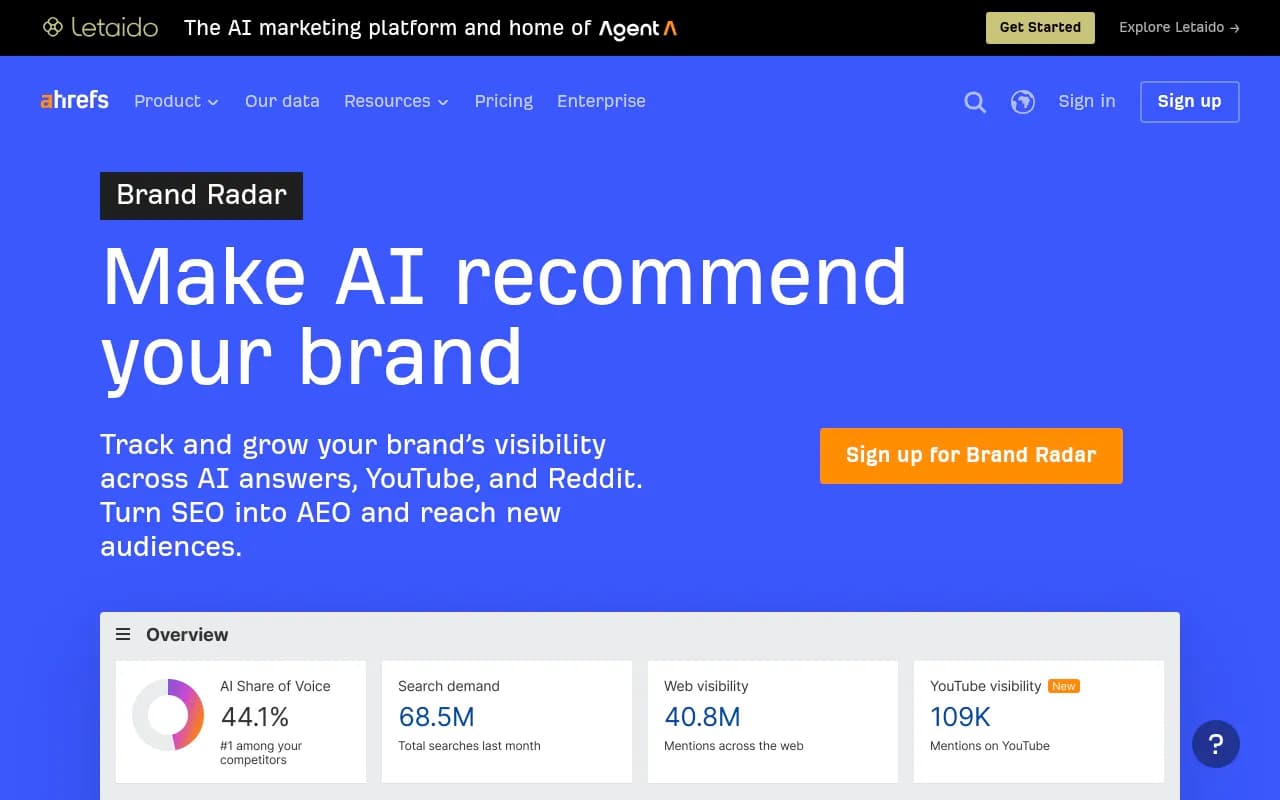
Ahrefs Brand Radar tracks brand visibility in AI search inside the Ahrefs ecosystem.
The tradeoff is usually fixed prompt sets and shallower AI-specific data, with no crawler-level view of which bots hit which pages.
Content engines that act on the findings
Visibility data is only useful if someone writes or fixes the page. These tools help produce content, but most lack the citation and crawler data to know what to write.
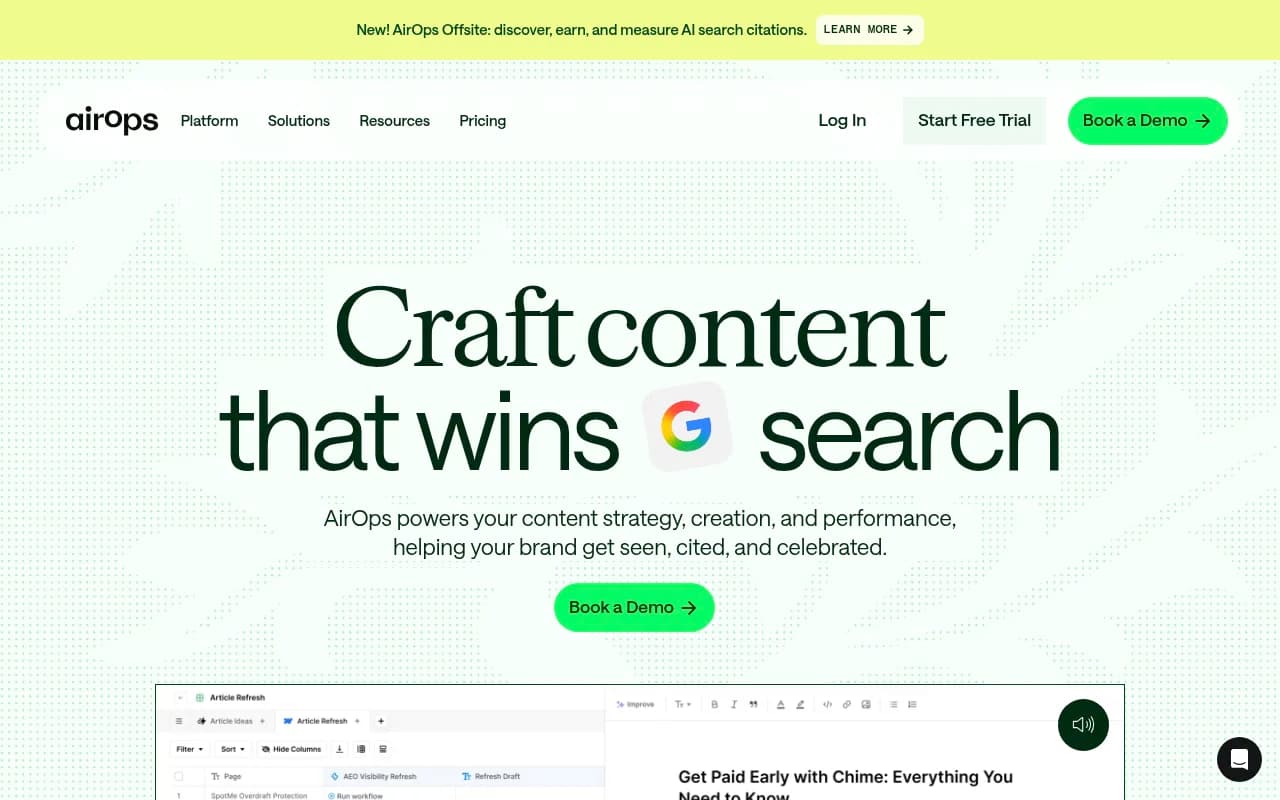
AirOps builds content workflows ("playbooks") aimed at AI search visibility, and it came out on top in one reviewer's comparison.

WriteSonic pairs content generation with some AI visibility tracking.
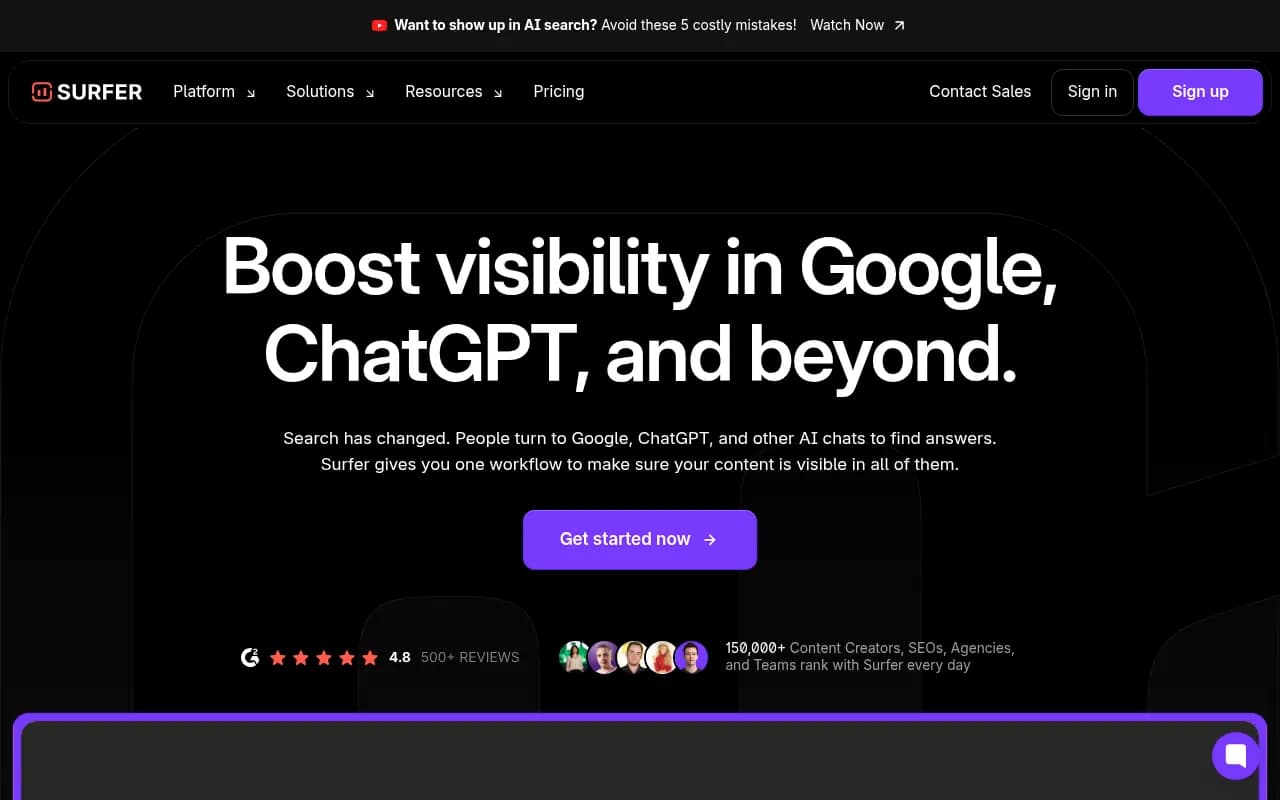
Surfer SEO optimizes content against Google results, which still feeds AI answers since engines retrieve from search indexes.
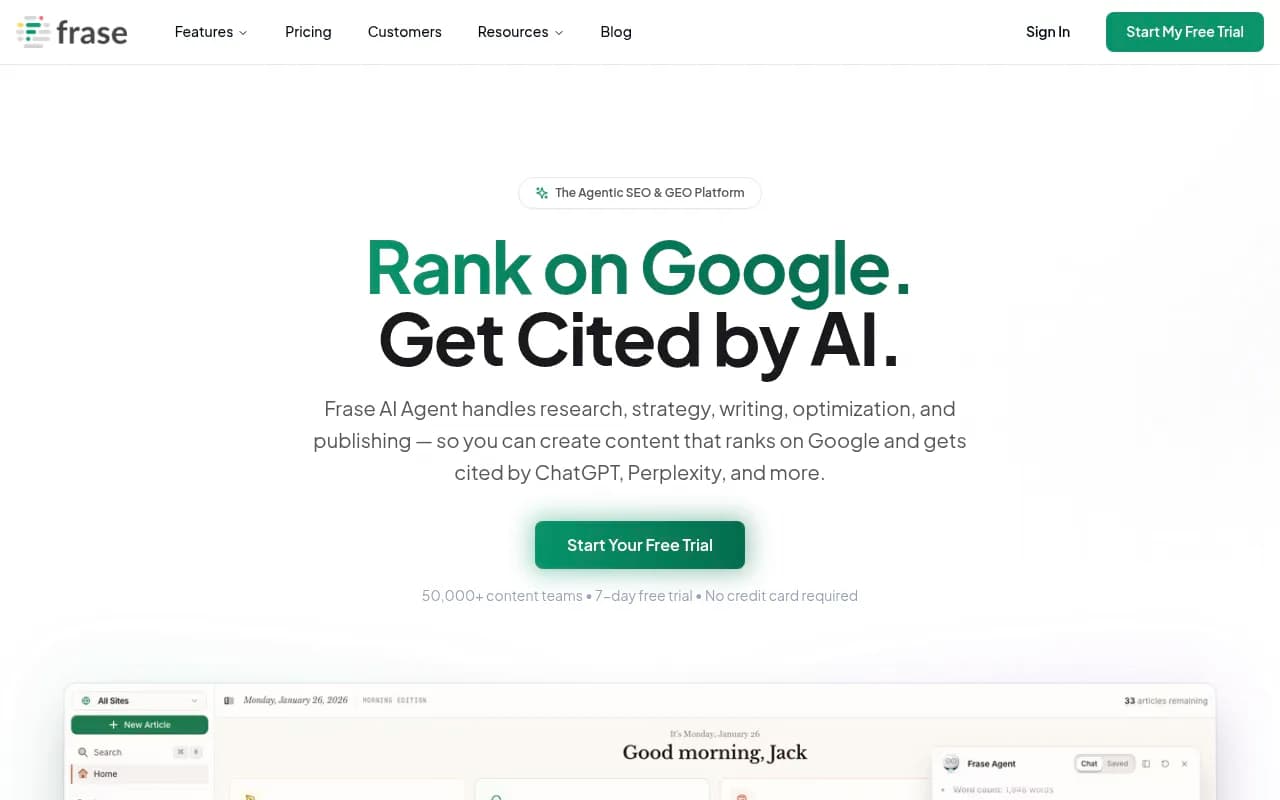
Frase handles research and briefs for answer-style content.
The pattern I'd recommend: let your visibility platform tell you which prompts and pages matter, then use a content tool to execute. Or use a platform where those are one system.
Technical and crawler tools
If AI crawlers can't read your site, nothing else matters.
Screaming Frog crawls your site to find indexability issues, thin pages, orphaned content and broken links. With ChatGPT's site: queries now widespread, indexability matters more.
Google Search Console shows which pages are indexed and which queries they rank for. Pages that rank but never get cited are your fastest fix list.
Bing Webmaster Tools matters because Bing's index feeds several AI products.
Prerender.io helps JavaScript-heavy sites show real content to bots that don't render scripts.
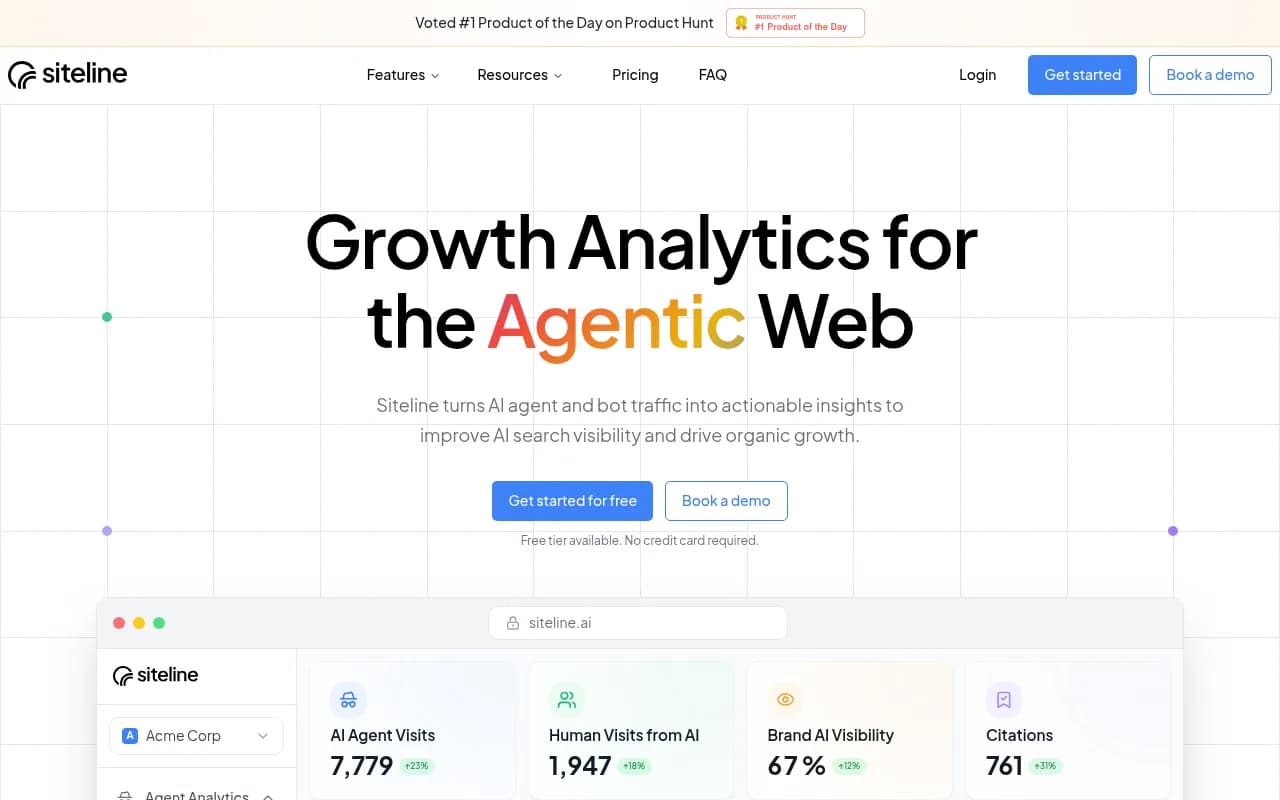
Siteline AI focuses on AI agent traffic analytics, one of the few other tools looking at bot behavior directly.
Third-party presence and reputation
Branded prompts lean on reviews, and commercial prompts lean on listicles. Those are pages you don't own.
Trustpilot is a review source AI engines can cite for branded queries. Collect reviews on the trusted sites in your category.
Awario finds web mentions of your brand, useful for spotting where you're named without a link.
Brand24 monitors social and web mentions for tracking sentiment shifts.
For the listicle side, search your category prompts in ChatGPT, note which "best of" roundups get cited, and pitch those authors. That is manual work, and no tool fully replaces it.
Comparison table
| Job | Tool types | Examples | What to look for |
|---|---|---|---|
| Track mentions | Prompt trackers | Peec AI, Otterly.AI, Rankshift, LLM Pulse | Real UI data, multi-country |
| Diagnose and act | Full platforms | Promptwatch | Crawler logs, content gaps, publishing, AI traffic |
| Enterprise monitoring | Enterprise trackers | Profound, Scrunch, Evertune | Reporting, coverage depth |
| Bolt-on tracking | SEO suites | Semrush, Ahrefs Brand Radar | Convenience if already a customer |
| Produce content | Content engines | AirOps, Writesonic, Surfer | Grounding in citation data |
| Fix access | Technical SEO | Screaming Frog, Search Console, Prerender.io | Indexability, rendering |
| Earn third-party mentions | Reviews, mentions | Trustpilot, Awario, Brand24 | Category-specific roundups |
A practical workflow that gets you recommended
Step 1: Build the prompt set
Pick 30 to 50 prompts across commercial ("best X for Y"), informational and branded intent. Tag them by intent so you can map content to each.
Step 2: Baseline across engines
Record visibility, position and citations per engine. Don't average them. Social sources alone differ by a factor of roughly 26 between ChatGPT and AI Overviews.
Step 3: Audit the pages that should be cited
Check product and landing pages for complete specs, pricing and positioning. Confirm they're indexed. Run a crawler and look at AI bot logs if you have them.
Step 4: Close the gaps
- Publish your own comparison pages
- Add an FAQ page about your brand
- Keep documentation public and crawlable
- Get into the roundups ChatGPT already cites
- Refresh landing pages and docs rather than chasing news, which decays in about five weeks
Step 5: Measure traffic, not just mentions
Tie AI referrals to conversions in analytics. A mention that drives nothing is vanity. Re-run prompts weekly, since behavior shifts overnight and fan-out mappings built before August 8 are stale.
Further reading on picking a tracker
SitePoint's comparison is a decent neutral starting point for the monitoring tier.
For a wider look at GEO platforms specifically, the GEO software directory is a good next stop.
Do you need an agency?
Sometimes. If you lack the content or technical capacity to act on findings, a specialist can run the program. 1001 SEO Media works across technical SEO, content and AI search for exactly this, and uses Promptwatch for its own GEO work. If you have an in-house team, a platform plus a clear weekly workflow is usually enough.
Bottom line
If you only need to know whether you're mentioned, a cheap tracker works. If you want to be recommended, pick a platform that shows why you're missing, helps fix it and measures the result, then back it with a crawler and Search Console. Start with your product and landing pages, because that's where ChatGPT's citations concentrate.