Key Takeaways
- Prioritize foundation over features: Start with a CRM and analytics platform before adding specialized AI tools—measurement and attribution matter more than flashy features
- AI tools work best in systems: The most effective marketing stacks connect content creation, optimization, and analytics into a unified workflow, not isolated point solutions
- Track AI visibility alongside traditional SEO: With ChatGPT, Perplexity, and Google AI Overviews changing how buyers discover brands, monitoring AI search visibility is now essential—platforms like Promptwatch help you track citations and optimize content for AI engines
- Focus on action, not just monitoring: The best tools don't just show you data—they help you fix problems, generate optimized content, and close the loop between visibility and revenue
- Build incrementally: You don't need every tool on day one. Start with 3-5 core platforms that solve your biggest bottlenecks, then expand as you prove ROI
What Makes an AI Marketing Stack Different in 2026
Marketing technology has always been about efficiency and scale. But 2026 marks a fundamental shift: AI isn't just automating tasks—it's changing how buyers discover brands, how content gets created, and how performance gets measured.
The traditional marketing stack was built around Google search, paid ads, and email. The 2026 stack adds a new layer: AI search visibility. When potential customers ask ChatGPT, Claude, Perplexity, or Google AI Overviews for recommendations, your brand needs to be cited in those responses. That requires new tools, new workflows, and a new way of thinking about content optimization.
A winning AI marketing stack in 2026 isn't about buying every new tool. It's about building a clean system that:
- Creates demand (content, SEO, AI visibility)
- Captures demand (ads, landing pages, conversion optimization)
- Proves impact (analytics, attribution, reporting)
Let's break down each layer with specific tools and how they fit together.
Layer 1: Foundation — CRM and Marketing Automation
Before you add AI tools, you need a system of record. This is where customer data lives, where lifecycle stages get tracked, and where pipeline gets measured.
HubSpot Marketing Hub
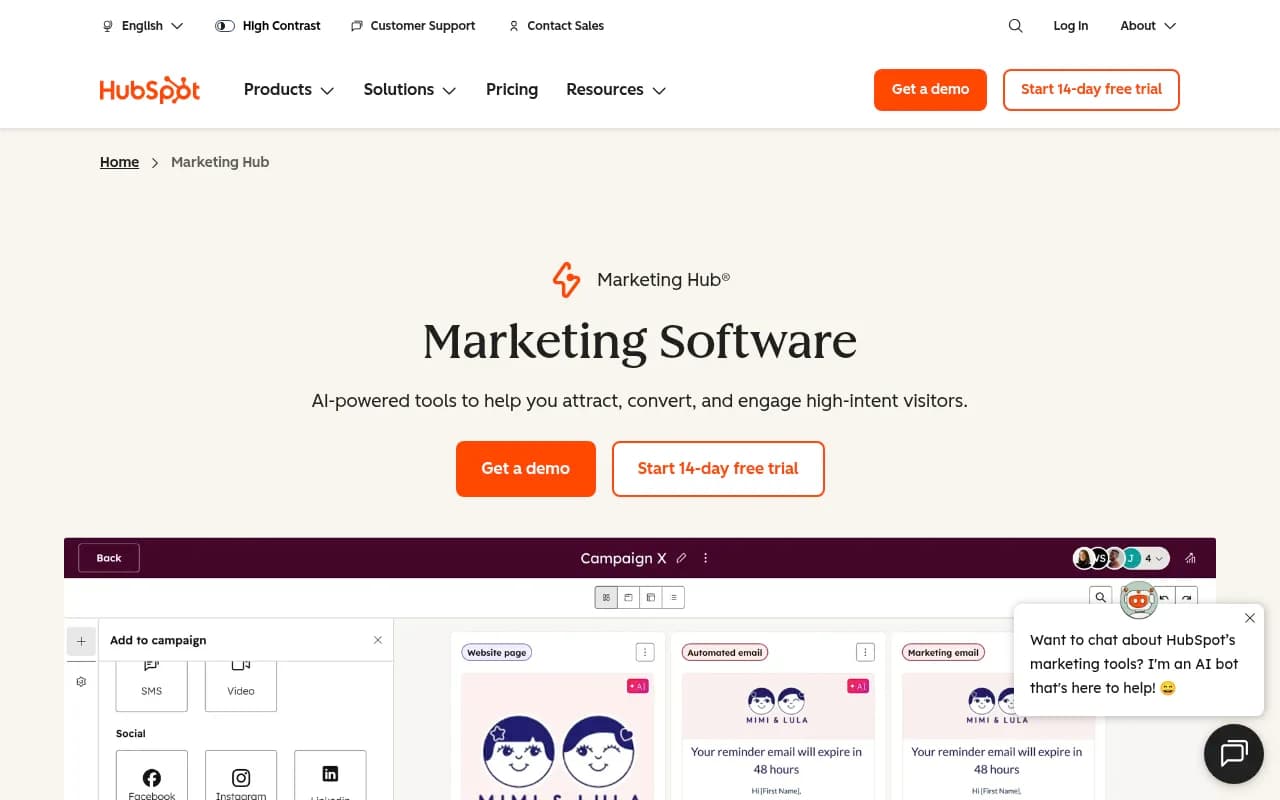
HubSpot remains the go-to for mid-market B2B teams. The 2026 version includes AI content generation, predictive lead scoring, and workflow automation that actually works. It's expensive, but the integration between marketing, sales, and service makes it worth it for companies serious about attribution.
Best for: B2B companies with $5M+ revenue who need marketing and sales alignment.
Mailchimp
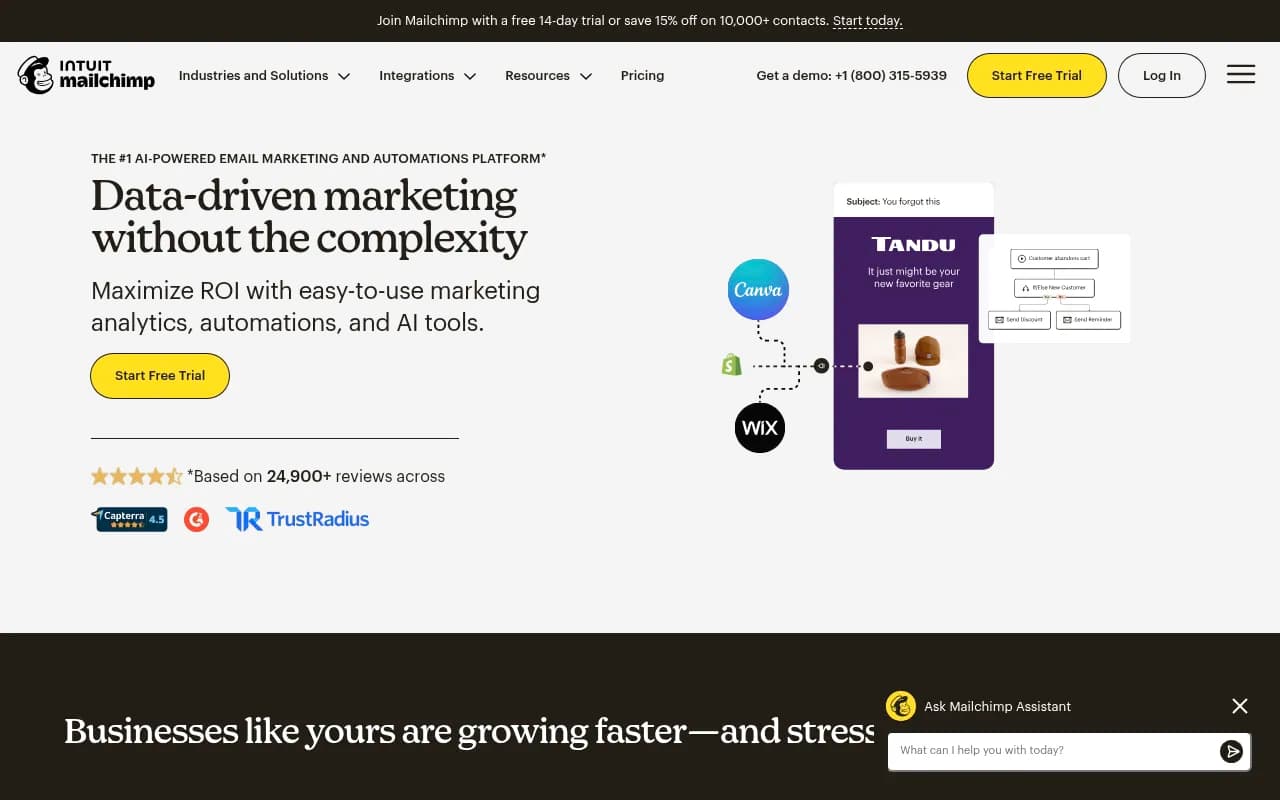
For smaller teams or B2C brands, Mailchimp offers email automation, audience segmentation, and AI-powered send time optimization at a fraction of HubSpot's cost. The 2026 updates include better landing page builders and basic CRM functionality.
Best for: Ecommerce brands, content creators, and small businesses under $2M revenue.
ActiveCampaign
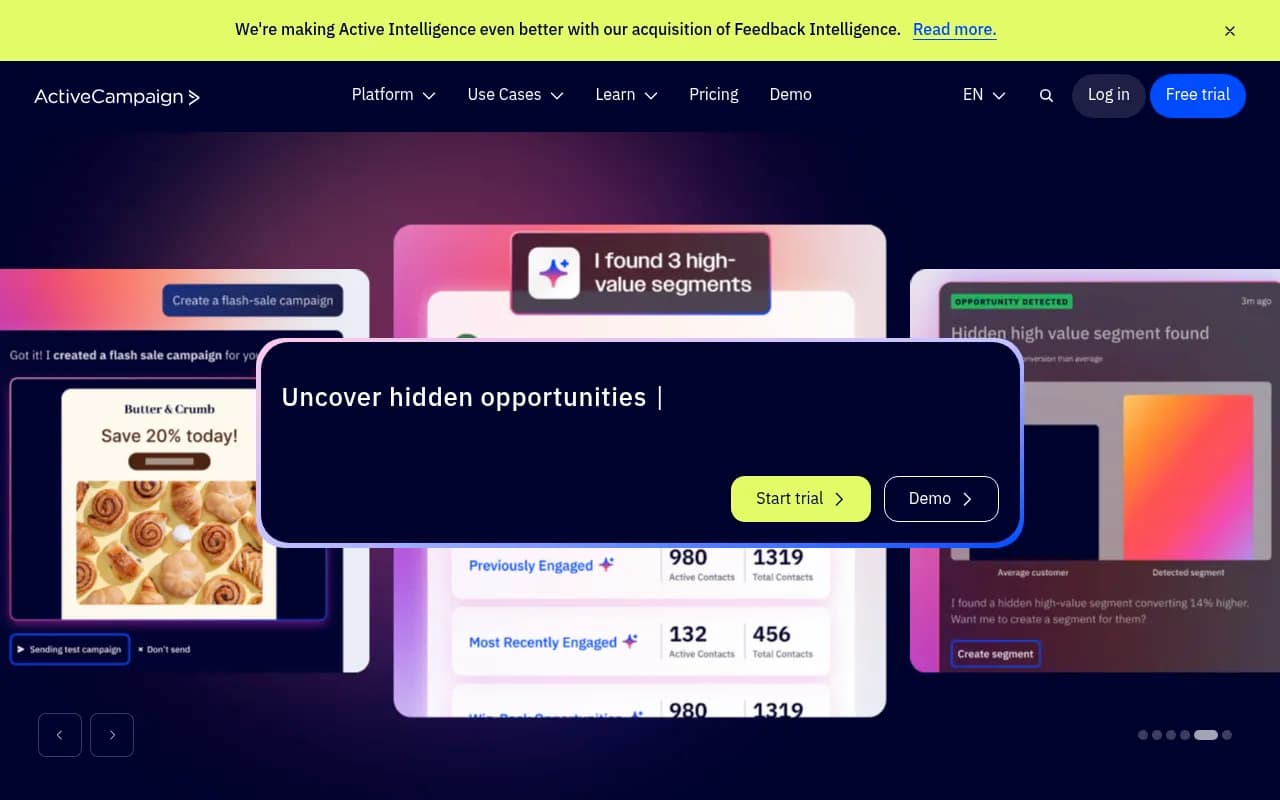
The middle ground between Mailchimp and HubSpot. ActiveCampaign excels at email automation and customer journey mapping. The AI features focus on predictive sending and content recommendations based on engagement patterns.
Best for: Growing B2B and B2C companies that need advanced automation without enterprise pricing.
Layer 2: Content Creation and Optimization
This is where AI has made the biggest impact. Content creation tools have evolved from basic text generators to full content pipelines that research, write, optimize, and publish.
Jasper
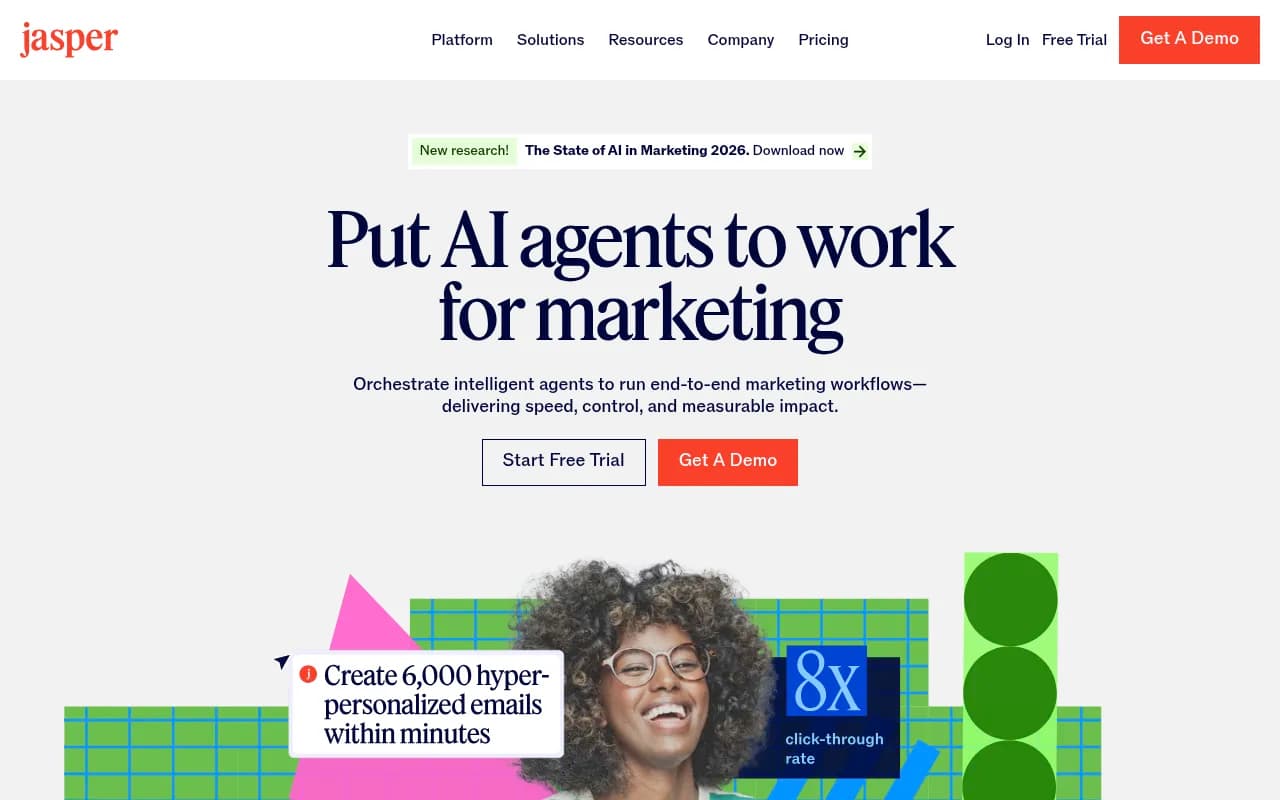
Jasper transformed from a simple AI writer into a full marketing platform. The 2026 version includes AI agents that can manage entire content workflows—from brief creation to SEO optimization to publishing. It integrates with Surfer SEO for on-page optimization and supports brand voice customization.
Best for: Marketing teams producing 20+ pieces of content per month who need consistent brand voice.
Surfer SEO
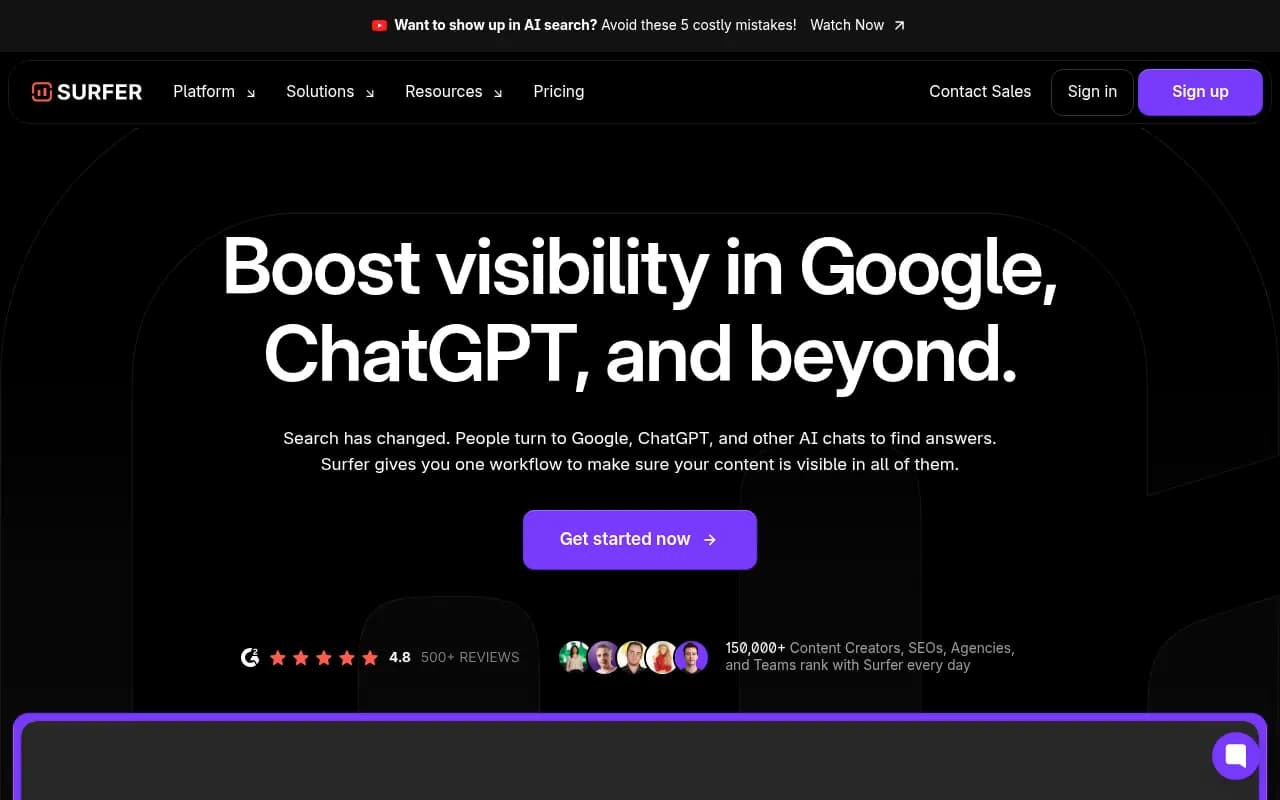
Surfer remains the gold standard for on-page SEO optimization. It analyzes top-ranking pages, identifies content gaps, and provides real-time optimization suggestions as you write. The 2026 AI writing assistant generates outlines and drafts based on SERP analysis.
Best for: SEO teams and content marketers focused on ranking in Google search.
Frase
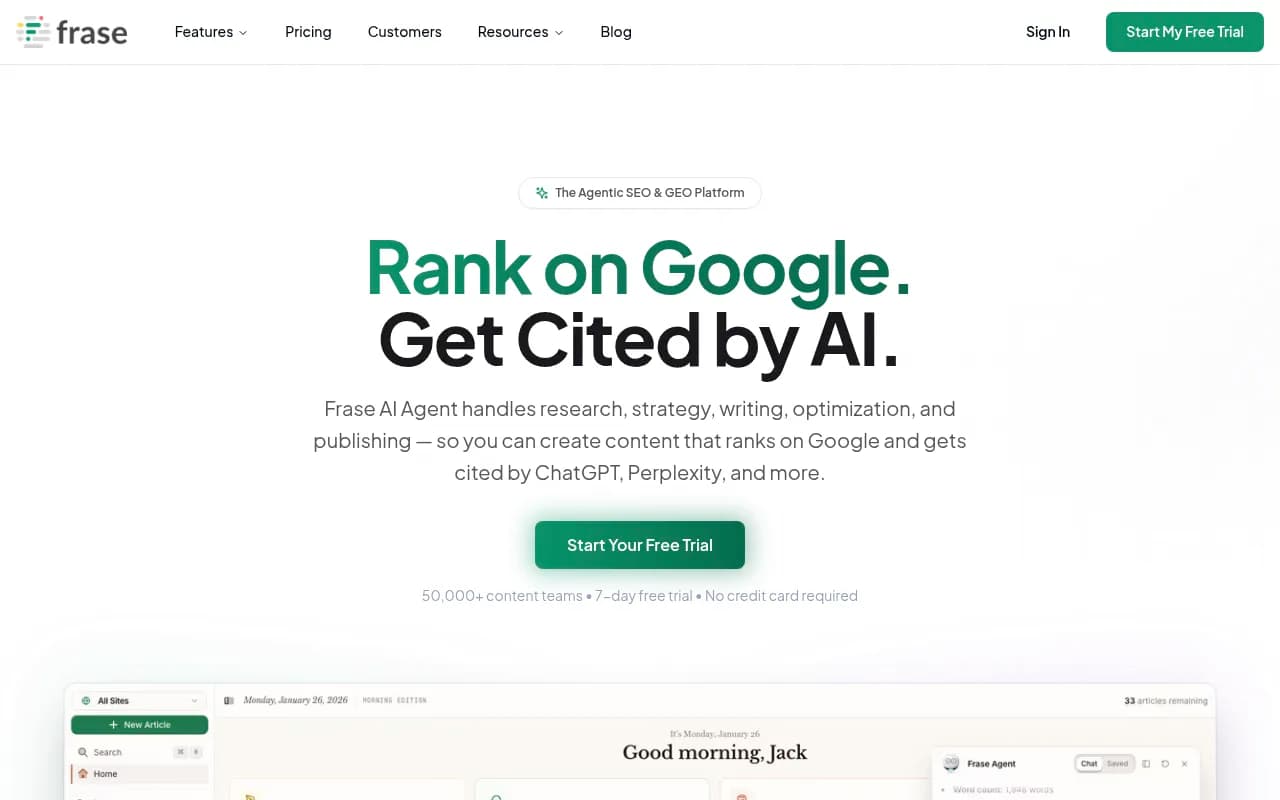
Frase combines content research, AI writing, and optimization in one platform. It's particularly strong at answering specific questions and creating FAQ sections—critical for appearing in AI search results. The research panel surfaces related topics and questions that AI models care about.
Best for: Content teams creating educational content, guides, and how-to articles.
Copy.ai

Copy.ai focuses on speed and versatility. It's not as deep as Jasper or Surfer, but it generates social posts, ad copy, email sequences, and landing page content faster than anything else. The 2026 workflows feature lets you chain prompts together for complex content projects.
Best for: Social media managers, ad teams, and anyone who needs high-volume short-form content.
Layer 3: AI Search Visibility and Optimization
This is the new category that didn't exist two years ago. As ChatGPT, Perplexity, Claude, and Google AI Overviews become primary research tools, brands need to track and optimize how they appear in AI-generated responses.
Promptwatch

Promptwatch is the only platform that goes beyond monitoring to actually help you fix AI visibility gaps. It tracks your brand mentions across 10 AI models (ChatGPT, Perplexity, Claude, Gemini, Google AI Overviews, and more), but the real value is in the action loop:
- Answer Gap Analysis shows exactly which prompts competitors rank for but you don't—the specific topics and questions AI models want answers to but can't find on your site
- AI Content Generation creates articles, listicles, and comparisons grounded in 880M+ citations analyzed, prompt volumes, and competitor data—content engineered to get cited by AI models
- Page-level tracking shows which pages are being cited, how often, and by which models, with traffic attribution to connect visibility to revenue
Additional capabilities include AI crawler logs (see which pages ChatGPT and Perplexity are reading), prompt intelligence (volume estimates and difficulty scores), Reddit and YouTube insights (surface discussions that influence AI recommendations), and ChatGPT Shopping tracking.
Best for: Marketing teams, SEO teams, and agencies that want to be visible in AI search results and need tools to actually improve their rankings, not just monitor them.
Pricing: Essential $99/mo, Professional $249/mo, Business $579/mo. Free trial available.
Ahrefs
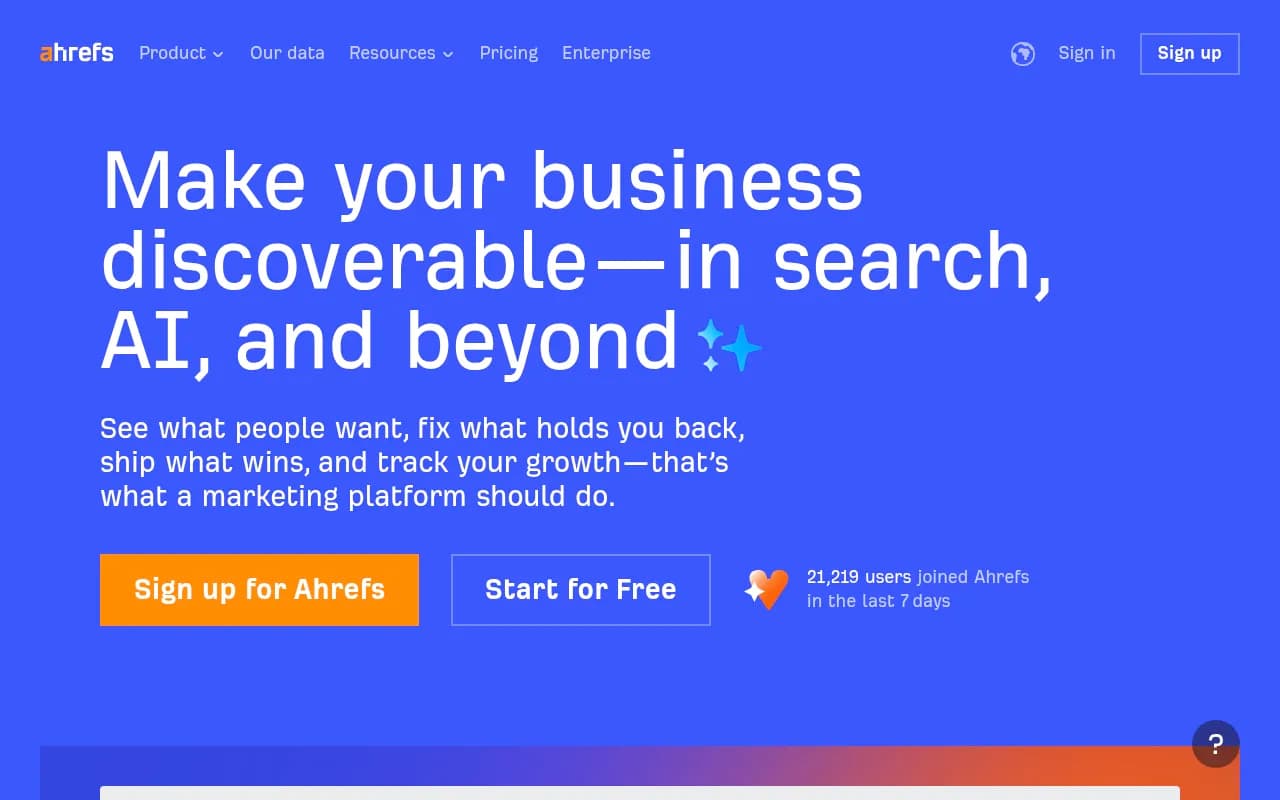
Ahrefs added AI search tracking in 2025 with Brand Radar. It monitors mentions across ChatGPT and Perplexity, but the feature set is limited compared to dedicated AI visibility platforms. Where Ahrefs shines is traditional SEO—backlink analysis, keyword research, and competitor tracking remain best-in-class.
Best for: SEO teams who need comprehensive backlink data and want basic AI visibility monitoring in the same platform.
Semrush
Semrush's AI search monitoring uses fixed prompts, which limits its usefulness for tracking how your brand appears across different queries. However, the platform's strength is breadth—keyword research, rank tracking, site audits, and competitive analysis all in one place.
Best for: Enterprise marketing teams who need an all-in-one SEO platform and want basic AI visibility as a bonus feature.
Layer 4: Paid Advertising and Campaign Optimization
AI has transformed ad creation and optimization. Tools now generate ad creative, predict performance, and automate bidding strategies across platforms.
AdCreative.ai
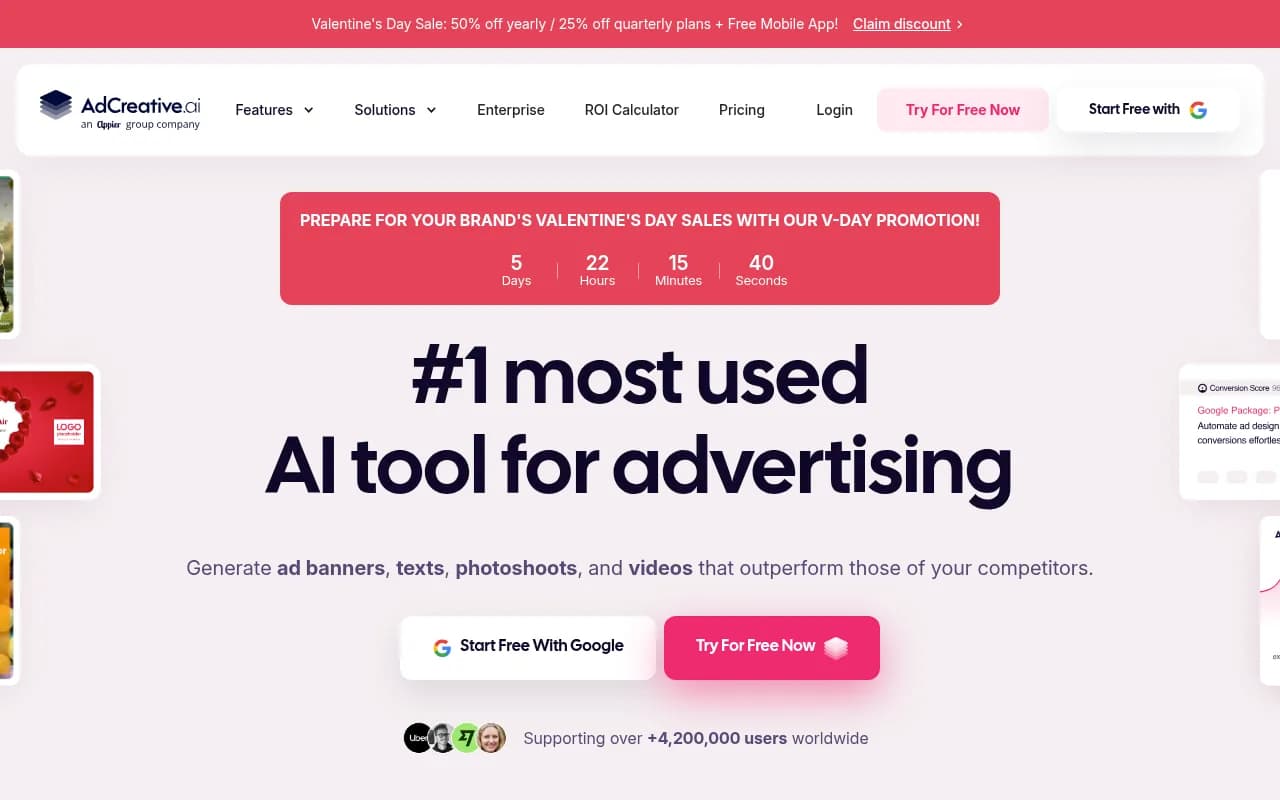
AdCreative.ai generates ad creatives optimized for conversion. Upload your brand assets, describe your offer, and it produces dozens of variations with predicted performance scores. The 2026 version includes video ad generation and integration with Meta, Google, and LinkedIn ad platforms.
Best for: Performance marketers running paid campaigns on Meta and Google who need high-volume creative testing.
Canva AI
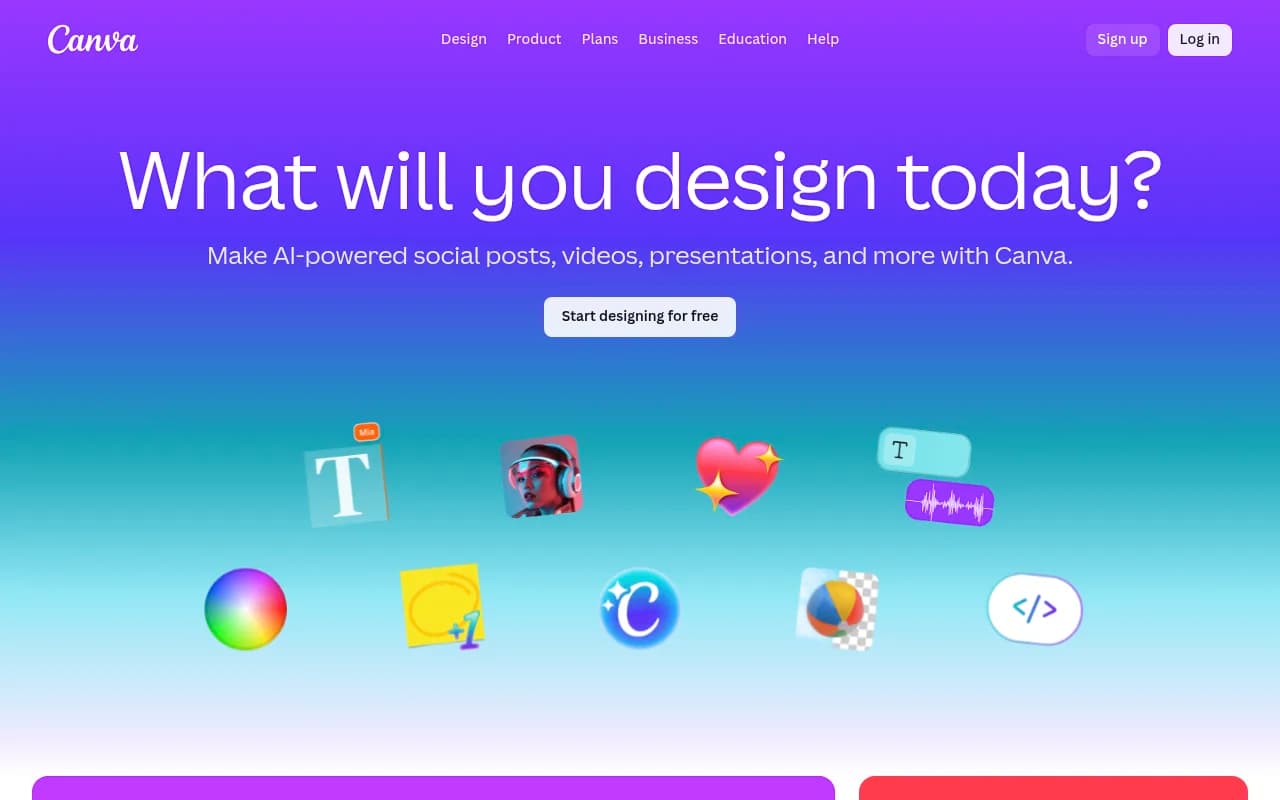
Canva's AI features have expanded beyond design templates. Magic Write generates ad copy, Magic Design creates full campaigns from a brief, and Brand Kit ensures consistency across all assets. It's not as specialized as AdCreative.ai, but the ease of use and template library make it accessible for non-designers.
Best for: Small marketing teams without dedicated designers who need to produce visual content quickly.
Improvado
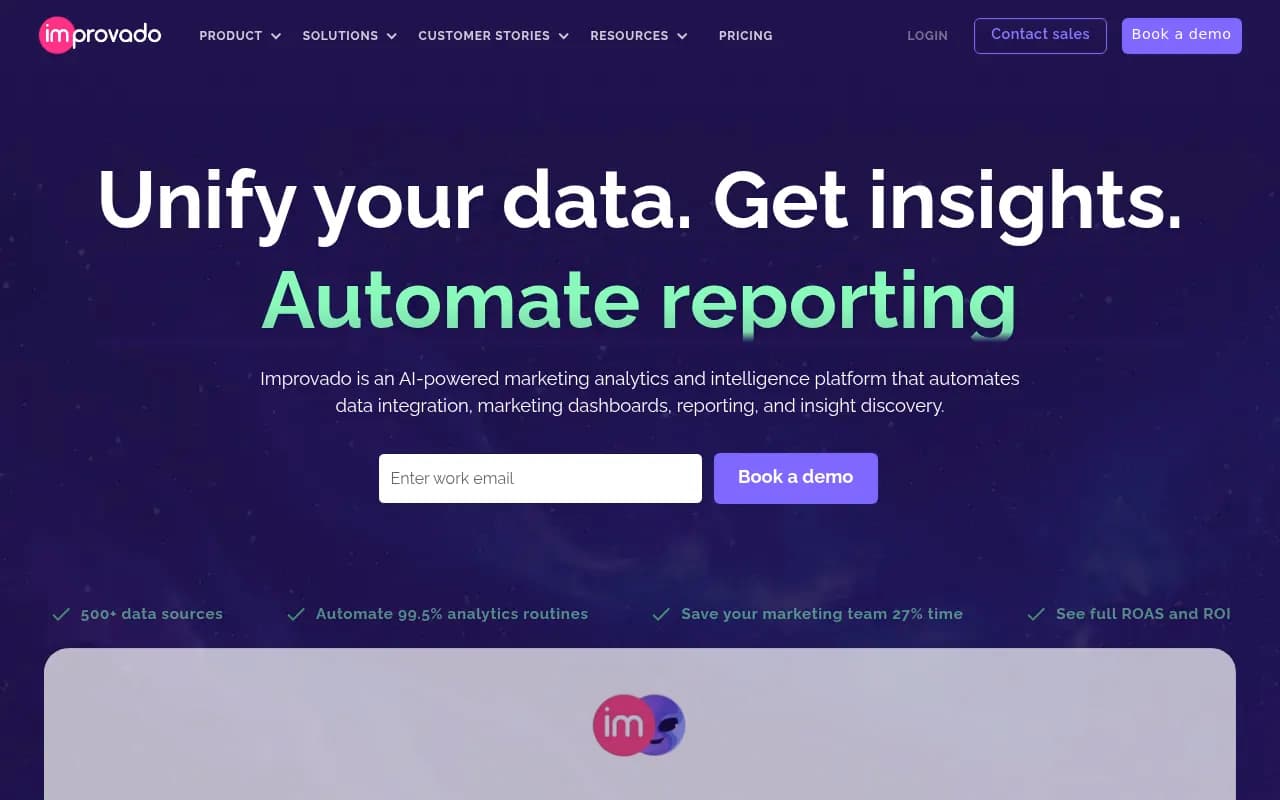
Improvado is a marketing analytics platform that connects data from 500+ sources—ad platforms, CRM, analytics tools—into unified dashboards. The AI features focus on anomaly detection and automated insights. It's expensive, but essential for teams running multi-channel campaigns who need accurate attribution.
Best for: Enterprise marketing teams spending $500K+ annually on paid media who need cross-channel reporting.
Layer 5: Analytics and Attribution
Measurement is where most marketing stacks fall apart. You need to connect visibility (SEO, AI search) to traffic, traffic to leads, and leads to revenue.
Google Analytics
GA4 remains the foundation. It's free, it tracks website behavior, and it integrates with Google Ads. The 2026 version includes better event tracking and predictive analytics powered by Google's AI models. However, GA4's learning curve is steep, and attribution is still limited to last-click by default.
Best for: Every marketing team. It's free and foundational.
HockeyStack
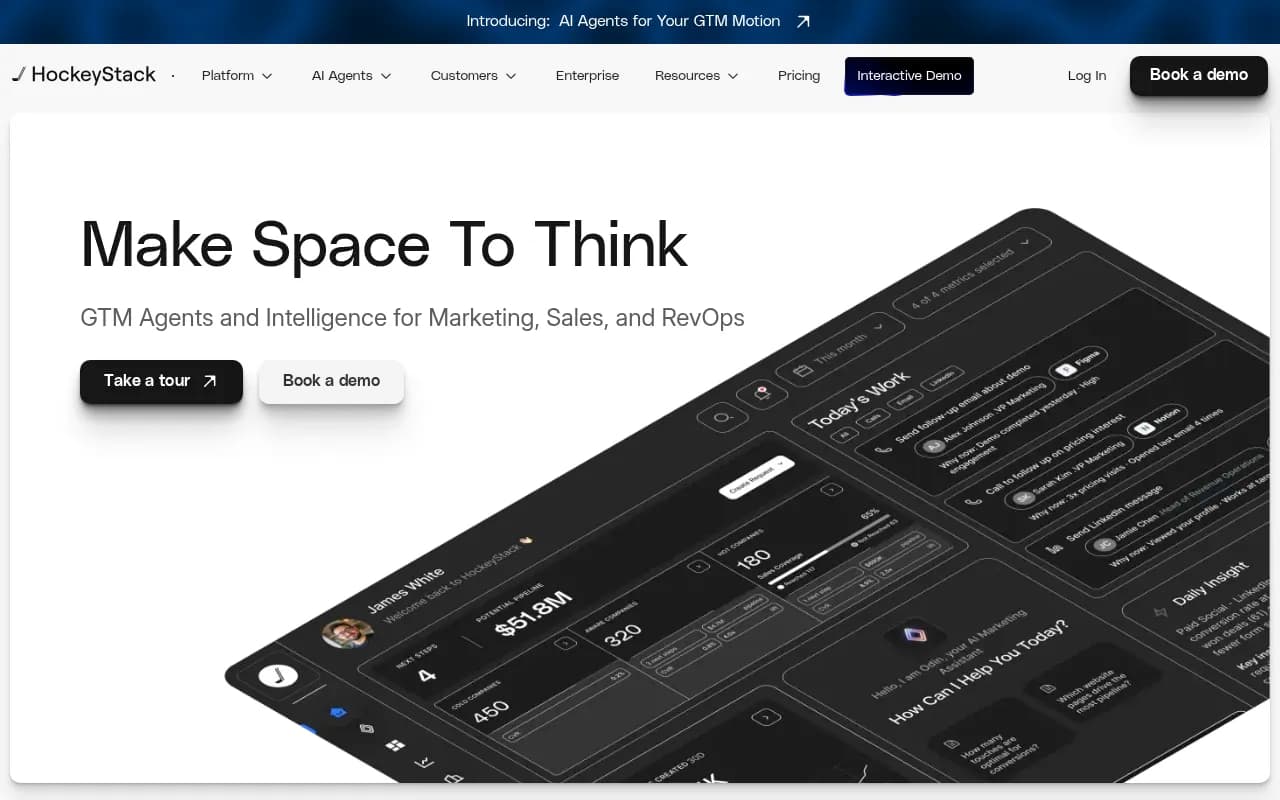
HockeyStack is a marketing intelligence platform built for B2B. It tracks the full customer journey—from first touch to closed deal—and attributes revenue to specific campaigns, content, and channels. The AI features surface insights like "this blog post influenced 12 deals worth $340K" without manual analysis.
Best for: B2B SaaS and service companies with sales cycles longer than 30 days who need multi-touch attribution.
Dreamdata
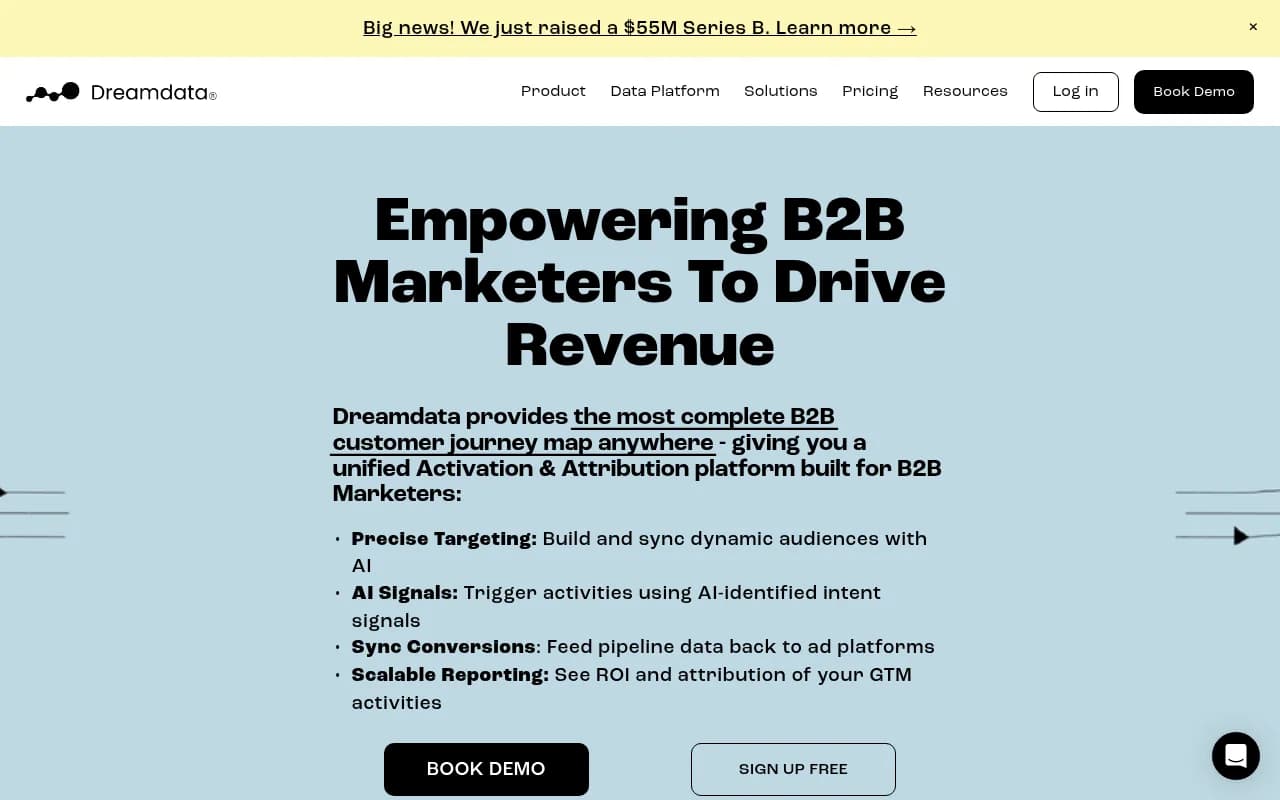
Dreamdata is similar to HockeyStack but focuses more on account-based marketing. It maps the full buying committee journey and shows which touchpoints influenced each stakeholder. The 2026 version includes AI-powered revenue predictions based on engagement patterns.
Best for: Enterprise B2B companies running account-based marketing programs.
Layer 6: Social Media Management
Social media tools have added AI scheduling, content generation, and performance prediction. The best platforms now handle everything from ideation to publishing to analytics.
Hootsuite
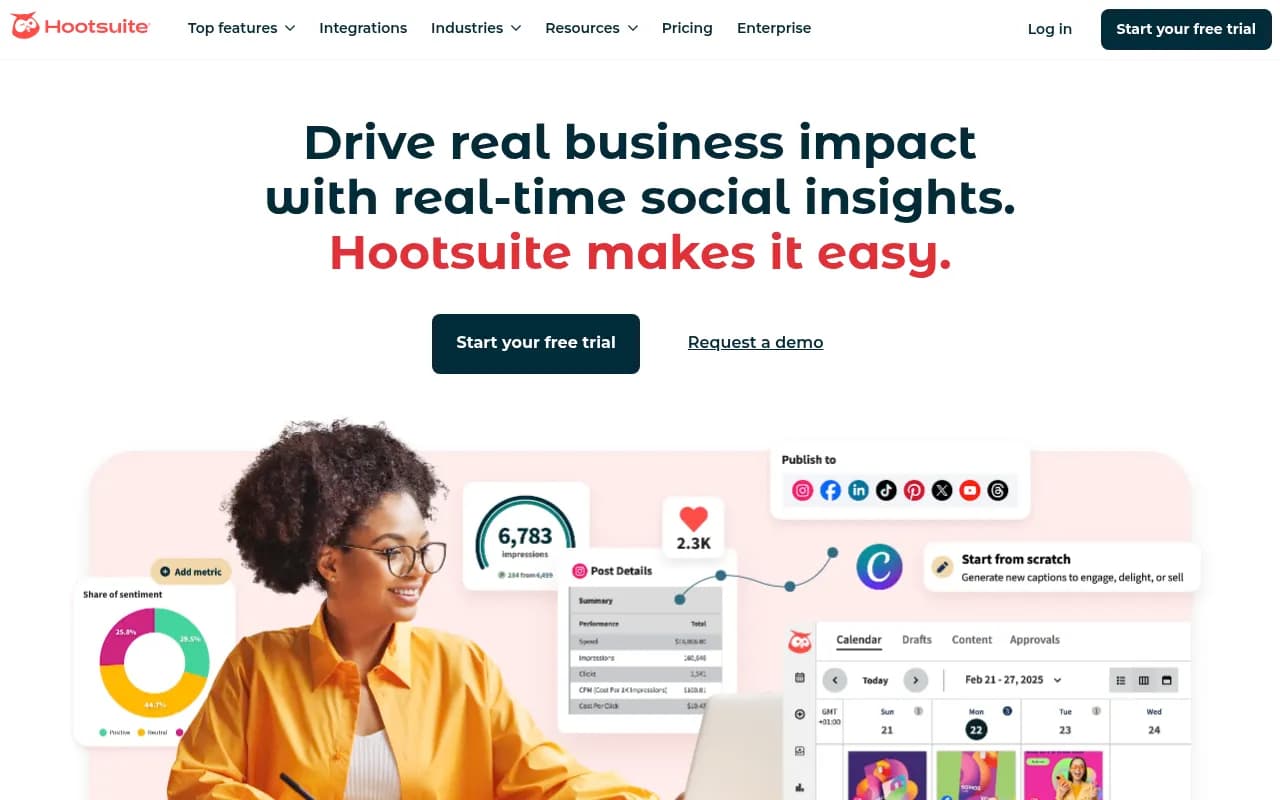
Hootsuite's 2026 AI features include content suggestions based on trending topics, optimal posting times, and automated response suggestions for comments and DMs. It supports all major platforms and includes team collaboration features.
Best for: Marketing teams managing 5+ social accounts who need centralized scheduling and reporting.
Buffer
Buffer is simpler and more affordable than Hootsuite. The AI assistant generates post ideas, rewrites content for different platforms, and suggests hashtags. The analytics are basic but sufficient for small teams.
Best for: Small businesses and solopreneurs managing 1-3 social accounts.
Sprout Social
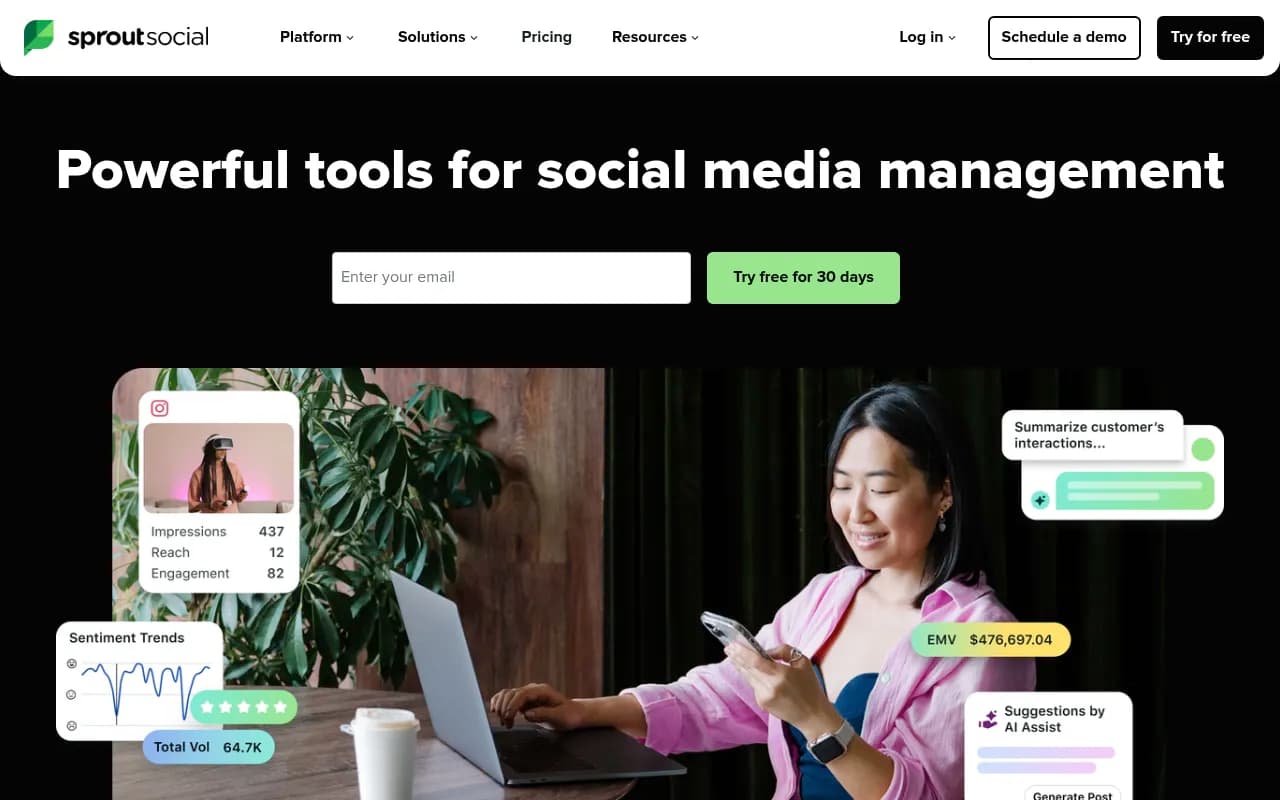
Sprout Social is the enterprise option. It includes advanced listening, sentiment analysis, and competitive benchmarking. The AI features focus on surfacing actionable insights from social conversations and predicting which content will perform best.
Best for: Enterprise brands with dedicated social media teams who need advanced analytics and listening.
Layer 7: Video Creation and Editing
Video is no longer optional. AI video tools have made production accessible to teams without video editors or expensive equipment.
Descript
Descript (often confused with Loom, but they're different tools) is a video editor that works like a text document. Edit video by editing the transcript, remove filler words automatically, and add AI-generated voiceovers. The 2026 version includes AI scene detection and automatic chapter creation.
Best for: Content teams creating educational videos, webinars, and podcasts.
Synthesia
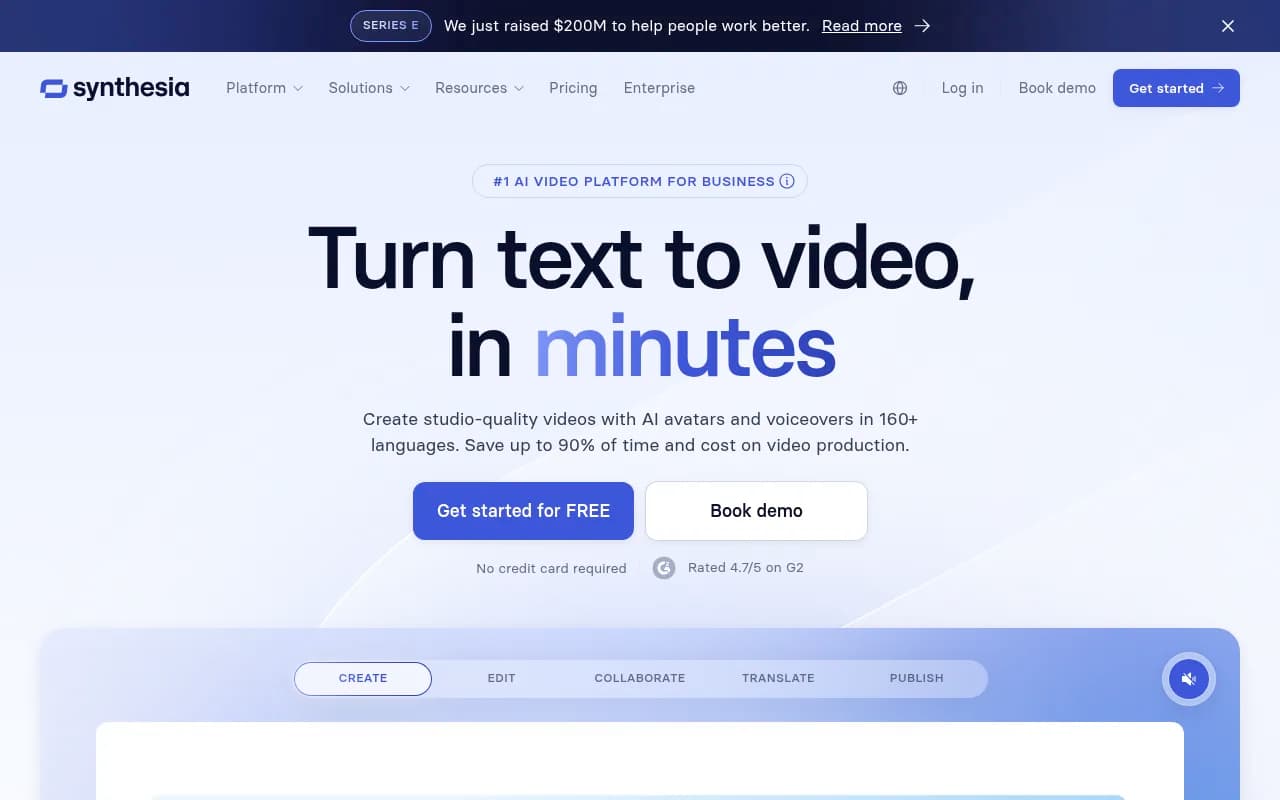
Synthesia generates videos from text using AI avatars. You write a script, choose an avatar, and it produces a professional-looking video in minutes. It's not suitable for every use case, but for training videos, product demos, and explainer content, it's incredibly efficient.
Best for: L&D teams, product marketers, and anyone creating high-volume instructional content.
Pictory
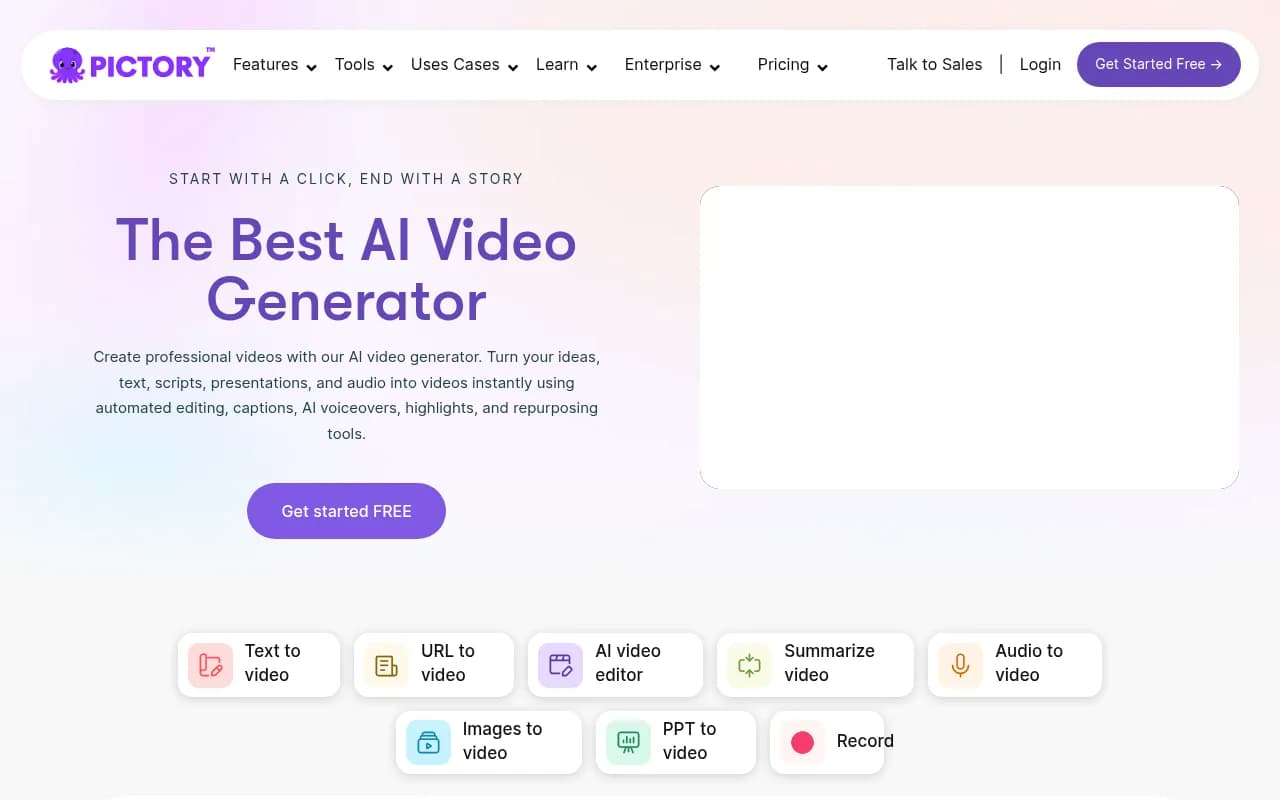
Pictory turns long-form content (blog posts, webinars) into short social videos automatically. It identifies key points, generates captions, and adds stock footage. The 2026 version includes better scene selection and voice cloning.
Best for: Content repurposing—turning existing content into social media videos.
How to Build Your Stack: A Practical Framework
Don't try to implement everything at once. Here's a prioritized approach:
Phase 1: Foundation (Months 1-3)
- CRM/Marketing Automation: HubSpot, Mailchimp, or ActiveCampaign
- Analytics: Google Analytics + Google Search Console
- Basic SEO: Ahrefs or Semrush for keyword research and rank tracking
Goal: Establish a system of record and baseline measurement.
Phase 2: Content and Visibility (Months 4-6)
- Content Creation: Jasper or Frase for AI writing
- SEO Optimization: Surfer SEO for on-page optimization
- AI Visibility: Promptwatch to track and optimize AI search presence
Goal: Scale content production and start appearing in AI search results.
Phase 3: Paid and Social (Months 7-9)
- Ad Creative: AdCreative.ai or Canva AI
- Social Management: Buffer or Hootsuite
- Video: Descript or Pictory for content repurposing
Goal: Amplify reach through paid channels and social distribution.
Phase 4: Advanced Attribution (Months 10-12)
- Multi-touch Attribution: HockeyStack or Dreamdata
- Advanced Analytics: Improvado for cross-channel reporting
Goal: Prove ROI and optimize spend allocation across channels.
Common Mistakes to Avoid
Mistake 1: Tool Sprawl Without Integration
Buying 15 different AI tools that don't talk to each other creates more work, not less. Prioritize platforms with strong API integrations or native connections to your CRM.
Mistake 2: Ignoring AI Search Visibility
If you're only tracking Google rankings, you're missing how buyers actually research. ChatGPT, Perplexity, and AI Overviews are now primary discovery channels. Tools like Promptwatch help you monitor and optimize for these new search behaviors.
Mistake 3: Monitoring Without Action
Dashboards that show problems without helping you fix them are useless. Choose tools that close the loop—identify gaps, generate solutions, measure results.
Mistake 4: Skipping Attribution
Without proper attribution, you can't prove which channels drive revenue. Invest in attribution early, even if it's just basic UTM tracking in Google Analytics.
Mistake 5: Chasing Features Over Outcomes
The newest AI tool isn't always the best. Focus on solving specific problems: "We need to rank in AI search" or "We need to prove content ROI." Then find the tool that solves that problem.
Real-World Stack Examples
Startup Stack ($500/month)
- CRM: Mailchimp ($50/mo)
- Content: Frase ($45/mo)
- SEO: Ahrefs Lite ($99/mo)
- AI Visibility: Promptwatch Essential ($99/mo)
- Social: Buffer ($12/mo)
- Analytics: Google Analytics (free)
- Video: Pictory ($23/mo)
Total: ~$330/month
Growth Company Stack ($2,000/month)
- CRM: HubSpot Marketing Hub ($800/mo)
- Content: Jasper ($49/mo) + Surfer SEO ($89/mo)
- SEO: Ahrefs ($199/mo)
- AI Visibility: Promptwatch Professional ($249/mo)
- Ads: AdCreative.ai ($29/mo)
- Social: Hootsuite ($99/mo)
- Analytics: Google Analytics (free) + HockeyStack ($500/mo)
- Video: Descript ($24/mo)
Total: ~$2,038/month
Enterprise Stack ($10,000+/month)
- CRM: HubSpot Enterprise ($3,600/mo)
- Content: Jasper Business ($125/mo) + Surfer SEO Business ($219/mo)
- SEO: Ahrefs ($999/mo) + Semrush ($500/mo)
- AI Visibility: Promptwatch Business ($579/mo)
- Ads: AdCreative.ai ($99/mo) + Improvado (custom pricing, ~$2,000/mo)
- Social: Sprout Social ($299/mo)
- Attribution: Dreamdata ($1,000/mo)
- Video: Synthesia ($89/mo) + Descript ($24/mo)
Total: ~$9,533/month (plus custom pricing for Improvado)
The Future of AI Marketing Stacks
The 2026 stack is just the beginning. Here's what's coming:
AI Agents, Not Just Tools
Today's AI tools require human oversight. By 2027, expect autonomous agents that can research topics, write content, optimize for SEO and AI search, publish, and report results—all without human intervention. Platforms like Jasper and Promptwatch are already moving in this direction.
Unified Platforms Over Point Solutions
The trend is toward consolidation. Instead of 10 separate tools, expect 2-3 platforms that handle content creation, optimization, distribution, and measurement. HubSpot, Semrush, and Promptwatch are all expanding in this direction.
Real-Time Optimization
Static content is dead. Future tools will continuously optimize content based on performance—rewriting headlines, adjusting CTAs, and updating facts as AI models change their recommendations.
AI Search as Primary Channel
By 2027, AI search (ChatGPT, Perplexity, Claude, Google AI) will drive more traffic than traditional Google search for many industries. Brands that optimize for AI visibility now will have a massive advantage.
Final Thoughts: Start Small, Scale Smart
The best AI marketing stack isn't the one with the most tools—it's the one that solves your specific problems and connects into a coherent system.
Start with these three priorities:
- Measurement first: Set up proper analytics and attribution so you can prove what works
- Content and visibility: Invest in tools that help you create and optimize content for both Google and AI search
- Connect the dots: Choose tools that integrate with each other and your CRM
If you're serious about AI search visibility—and you should be—start with Promptwatch. It's the only platform that shows you where you're invisible in AI search results and helps you fix it with content gap analysis, AI-powered content generation, and page-level tracking. Most competitors just show you data. Promptwatch helps you take action.
The marketing landscape is changing faster than ever. The brands that win in 2026 and beyond won't be the ones with the biggest budgets—they'll be the ones with the smartest systems.