Key takeaways
- AI search engines (ChatGPT, Perplexity, Gemini, Claude) now intercept a meaningful share of search traffic before users ever click a result -- your SEO stack needs to account for this.
- Traditional tools like Ahrefs and Semrush still handle keyword research and site audits well, but most weren't built to track AI citations or help you fix visibility gaps in LLMs.
- A complete 2026 stack has three layers: classic SEO infrastructure, AI visibility tracking, and content optimization for AI-generated answers.
- Monitoring alone isn't enough -- the tools that actually move the needle help you identify what content to create and then create it.
- Budget matters: you don't need every category covered from day one. Start with your biggest gap.
Something shifted in late 2024 and most SEO teams didn't notice until their traffic reports looked wrong. Not wrong in a "algorithm update" way. Wrong in a "people are getting answers somewhere else" way.
AI Overviews started absorbing informational queries. ChatGPT started sending referral traffic. Perplexity started citing sources -- sometimes yours, often not. By mid-2026, the pattern is clear: Google is still the biggest channel, but it's no longer the only one that matters. And the tools built for the old world don't fully cover the new one.
This guide is about building a stack that works for both. Not abandoning what works, but adding what's missing.
Why your current stack probably has a blind spot
Most SEO tools were built around one core assumption: search happens on Google, results are links, and your job is to rank higher than the next person. That's still true for a lot of queries. But a growing slice of search now ends with an AI-generated answer -- no click required, or a citation to a source that wasn't you.
According to a TECHSY analysis of 12 SEO tools tested in 2026, most still ignore AI Overviews entirely. Only four of the twelve tracked AI search in any meaningful way. That's not a knock on those tools -- they're doing what they were designed to do. The problem is that the design brief is now incomplete.
The specific blind spots tend to cluster around three things:
- You can't see whether AI models are citing your content (or your competitors')
- You don't know which prompts are driving AI-generated answers in your category
- You have no way to identify what content you'd need to create to start appearing in those answers
That last one is the most expensive gap. Knowing you're invisible is frustrating. Not knowing what to do about it is where the real money gets left on the table.
Layer 1: Classic SEO infrastructure (still essential)
Before adding anything new, make sure the foundation is solid. Technical SEO, keyword research, and backlink analysis still matter -- AI models pull from indexed, crawlable, authoritative content. If your site has crawl errors, thin pages, or weak domain authority, fixing those is still the highest-leverage work you can do.
Keyword research and competitive analysis
Ahrefs and Semrush remain the two workhorses here. Both have added AI search features in 2026 -- Ahrefs has Brand Radar, Semrush has its AI Visibility Toolkit -- but their core value is still keyword research, backlink analysis, and competitive gap analysis. If you're running a full search program and want one tool that covers traditional SEO plus some AI visibility, Semrush is the more complete package.
For teams that want a lighter, more affordable option, SE Ranking covers the basics well -- rank tracking, site audits, content tools -- at a price point that makes sense for smaller teams.
Content optimization
Once you know what to write, you need to optimize it. Surfer SEO is the standard here for on-page NLP scoring -- it analyzes top-ranking pages and tells you what topics, entities, and terms your content needs to cover. Clearscope does similar work with a cleaner interface that content teams tend to prefer.

Frase sits between research and writing -- it builds content briefs automatically and helps writers understand what questions a piece needs to answer. Useful if your team produces a lot of content and briefs are a bottleneck.
Technical SEO
Screaming Frog SEO Spider is still the go-to for crawling. It's desktop software, not SaaS, which some teams find annoying, but nothing else matches it for raw crawl depth and flexibility. For continuous monitoring (catching changes as they happen rather than on a schedule), ContentKing is worth a look.
Layer 2: AI visibility tracking
This is where most stacks have the biggest gap. You need to know whether AI models are mentioning your brand, citing your pages, and recommending you when users ask relevant questions. Without this, you're flying blind on a channel that's growing fast.
What good AI visibility tracking looks like
At minimum, you want a tool that:
- Monitors multiple AI engines (not just one)
- Shows you which prompts trigger mentions of your brand vs. competitors
- Tracks citation sources (which pages are being cited, not just whether you're mentioned)
- Updates frequently enough to be actionable
The market here is crowded with monitoring-only dashboards. Most will show you a score and a list of mentions. That's useful context, but it doesn't tell you what to do next.
Promptwatch is the tool that goes furthest past monitoring. It tracks 10 AI models (ChatGPT, Perplexity, Google AI Overviews, Claude, Gemini, Grok, DeepSeek, Copilot, Meta AI, Mistral), shows you which prompts your competitors appear for that you don't, and then helps you create content to close those gaps. The crawler logs feature is particularly useful -- you can see which AI crawlers are hitting your site, which pages they're reading, and when a page moves from "crawled" to "cited." That's a level of transparency most tools don't offer.

For teams that want a simpler monitoring-only view, Otterly.AI and Profound are both solid options. Profound has strong enterprise features and covers 9+ AI engines. Otterly is more accessible for smaller teams.
Otterly.AI

Profound

AthenaHQ is worth mentioning for teams focused on brand tracking across AI responses -- it has a clean interface and good prompt coverage, though it's more monitoring than optimization.

Layer 3: Content for AI search
This is the part most teams haven't figured out yet. Creating content that ranks in traditional search is a known process. Creating content that gets cited by AI models is different -- and the differences matter.
AI models tend to cite content that:
- Directly answers specific questions (not just covers a topic broadly)
- Has clear structure (headers, lists, definitions)
- Comes from domains with established authority
- Covers topics that match the actual prompts users are asking
The challenge is knowing which prompts to target. This is where prompt intelligence tools earn their keep.
Identifying the right prompts
MarketMuse has long been the tool for content strategy at scale -- it maps your existing content against topic coverage and identifies gaps. In 2026, it's added AI search context to that analysis, making it more useful for this layer.
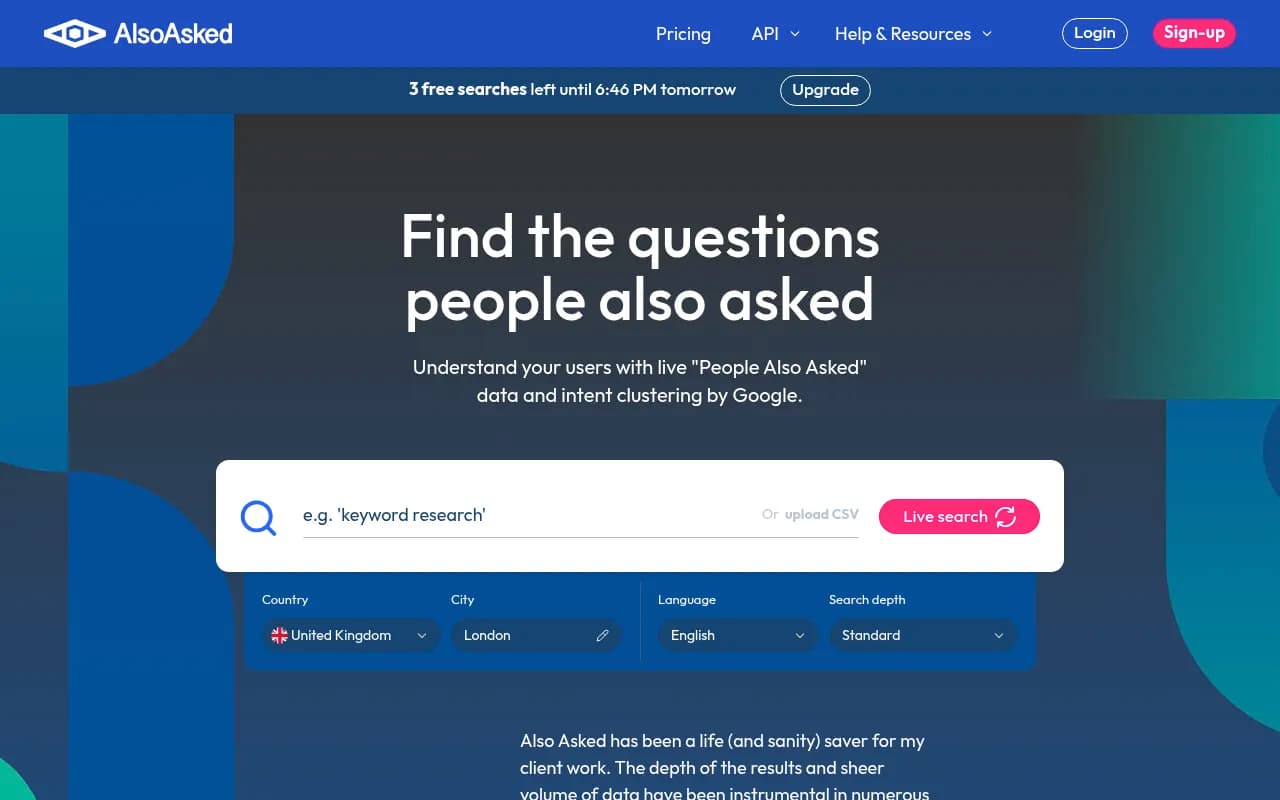
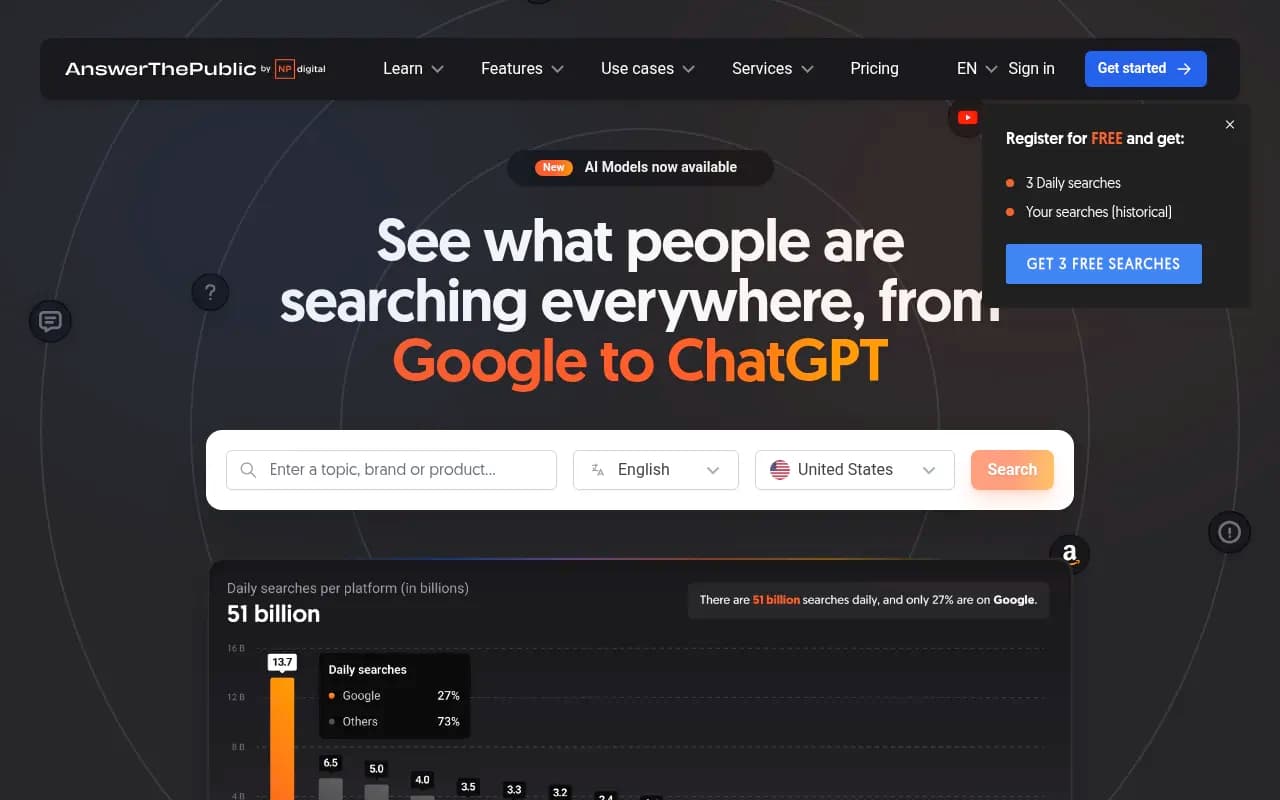
AlsoAsked and AnswerThePublic are still useful for finding the specific questions people ask -- and those questions are often the exact prompts that trigger AI-generated answers.
Writing content that AI models cite
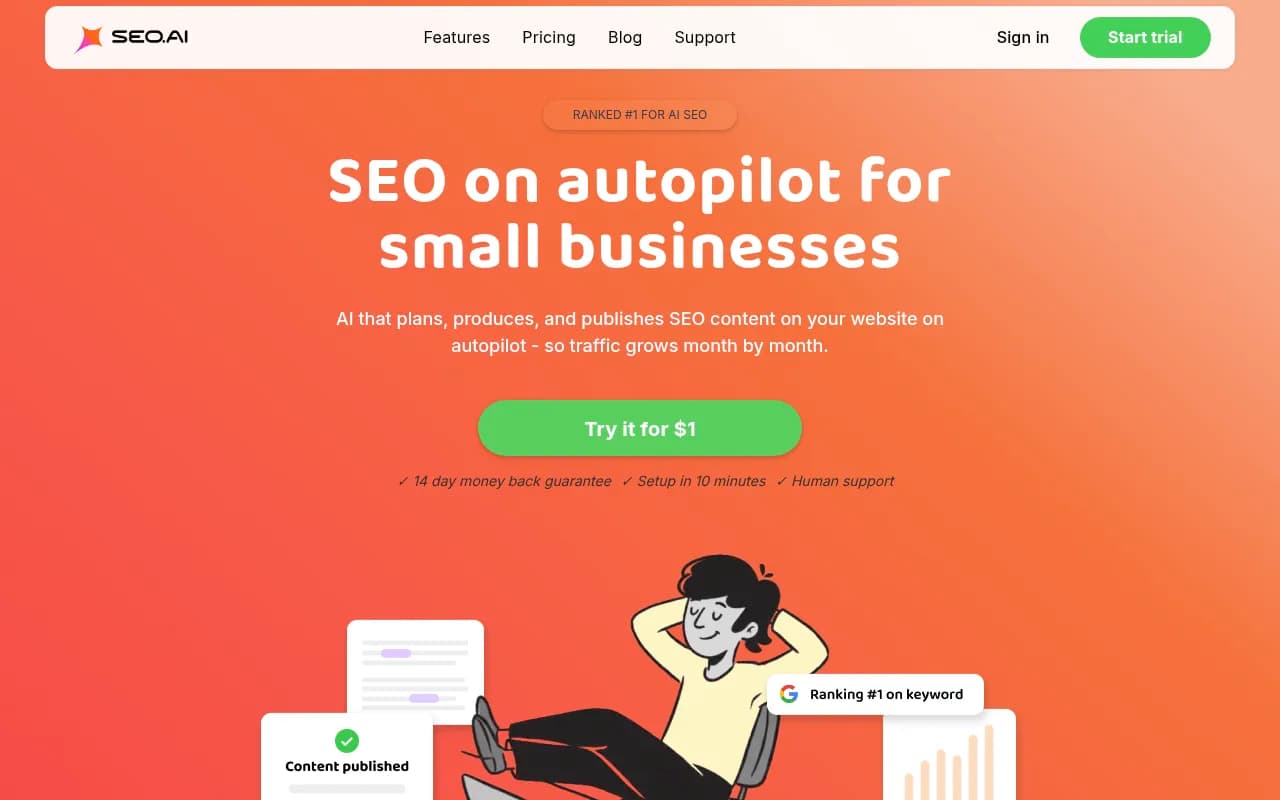
SEO.ai is an AI content platform that's specifically designed to produce content optimized for AI search, not just traditional rankings. It's worth testing if you're producing content at volume and want something more purpose-built than a general AI writer.
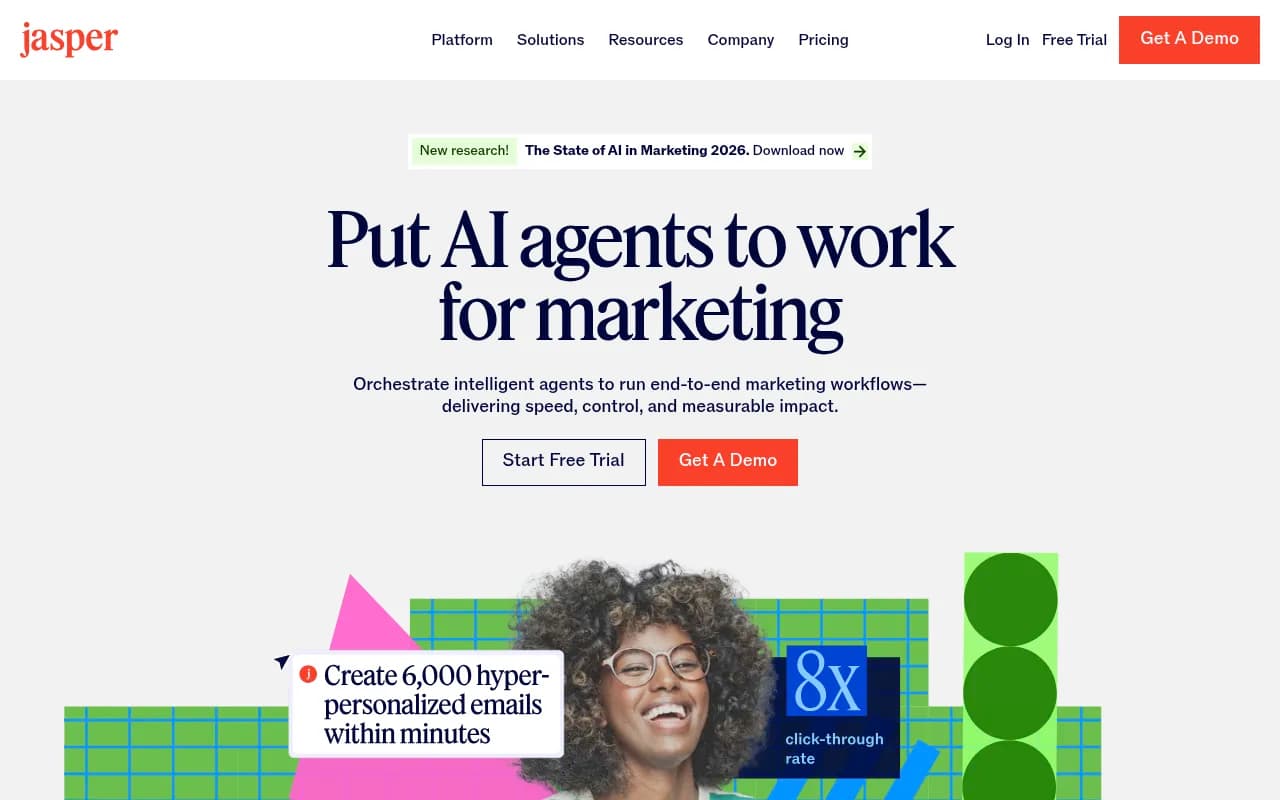
Jasper remains a strong choice for teams that need brand voice consistency across large content programs. It's more of a marketing platform than a pure SEO tool, but the content pipelines and agent features make it useful for teams running structured content operations.
How the layers fit together: a practical stack
Here's how a realistic stack might look depending on team size and budget:
| Team type | Core SEO | AI visibility | Content for AI | Estimated monthly cost |
|---|---|---|---|---|
| Solo / small blog | SE Ranking | Promptwatch Essential | Frase | ~$350/mo |
| Mid-size marketing team | Semrush Pro | Promptwatch Professional | Surfer SEO + SEO.ai | ~$800/mo |
| Agency (multiple clients) | Ahrefs + Screaming Frog | Promptwatch Business | MarketMuse + Jasper | ~$1,500/mo |
| Enterprise | Semrush + ContentKing | Promptwatch Enterprise | MarketMuse + custom | Custom |
These aren't the only combinations that work. The point is that all three layers need to be covered. Teams that have strong traditional SEO but no AI visibility tracking are missing a growing channel. Teams that track AI visibility but don't create content to improve it are paying for a dashboard that tells them they have a problem without helping them fix it.
The tools most teams are actually using in 2026
Based on community discussions across Reddit's r/seogrowth and Indie Hackers, the most common 2026 stack looks something like this:
- ChatGPT or Claude for content drafting and research
- Surfer SEO or Clearscope for on-page optimization
- Ahrefs or Semrush for keyword research and backlinks
- Google Search Console for baseline performance data
- One AI visibility tool (this is where stacks vary most)
The AI visibility layer is where the most experimentation is happening. Teams are testing tools, finding that most only monitor without helping them act, and either sticking with a basic tracker or upgrading to something that closes the loop.
What to prioritize if you're starting from scratch
If you're building a stack from zero in mid-2026, here's a practical order of operations:
-
Get your technical foundation right first. Crawl your site, fix errors, make sure you're indexed properly. No amount of AI optimization helps if your site has fundamental crawl issues.
-
Set up keyword tracking and competitive analysis. You need to know where you stand in traditional search before you can meaningfully compare it to AI search performance.
-
Add AI visibility monitoring. Even a basic tool that shows you whether you're appearing in AI-generated answers is better than flying blind. This is where you'll start to see the gap between your traditional rankings and your AI presence.
-
Start creating content that targets AI prompts. Use the data from your visibility tool to identify which prompts your competitors appear for that you don't. Create content that directly answers those questions.
-
Track the results. Watch whether your new content gets crawled by AI agents, and whether citations follow. Adjust based on what you see.
The teams winning in AI search right now aren't doing anything exotic. They're doing the same disciplined content work that worked in traditional SEO, but aimed at a different target: the specific questions AI models are already answering, just without citing them yet.
A note on tools that overpromise
The AI SEO tool market in 2026 has a lot of noise. Tools that "guarantee AI visibility," dashboards that show impressive-looking scores without explaining what drives them, and platforms that bolt a chatbot onto a 2022 rank tracker and call it innovation.
The test I'd apply to any tool in this space: does it help you take action, or does it just show you data? Monitoring your AI visibility is useful. Knowing which specific content gaps are causing you to miss citations, and having a way to close those gaps, is what actually moves the needle.
Most tools stop at the monitoring step. The ones worth paying for don't.