Key takeaways
- "Agent tracking" covers three different jobs: seeing which AI crawlers hit your site, measuring whether coding agents recommend and install your product, and tracing the agents you build yourself. No single tool does all three well.
- Gauge (withgauge.com) focuses on developer-tool companies. It tests whether Claude Code and Codex discover, recommend, install and successfully implement a product.
- For crawler logs and AI visibility in one place, Promptwatch is the closest all-in-one alternative. For incoming agent traffic only, Siteline AI and Bear AI are narrower options.
- If you are building agents rather than marketing to them, you want observability: Langfuse, LangSmith, Braintrust, Arize and similar.
- Pick by the question you need answered, not by the label on the tool.
What Gauge actually does
Before shopping for alternatives, it helps to be precise about what you are replacing. Gauge calls its discipline Agent-Led Growth, or AgentRel. It splits the problem in two: discoverability (whether an agent finds and recommends you) and usability (whether the agent can actually get your SDK working). Its Agent Experience product runs coding agents in real repositories with a chosen set of agents, models, skills, MCP servers and credentials. Every success criterion must pass for a run to pass. An Agents CLI keeps those evaluations in your repo and runs them on pull requests, on demand or on a daily, weekly or monthly schedule.
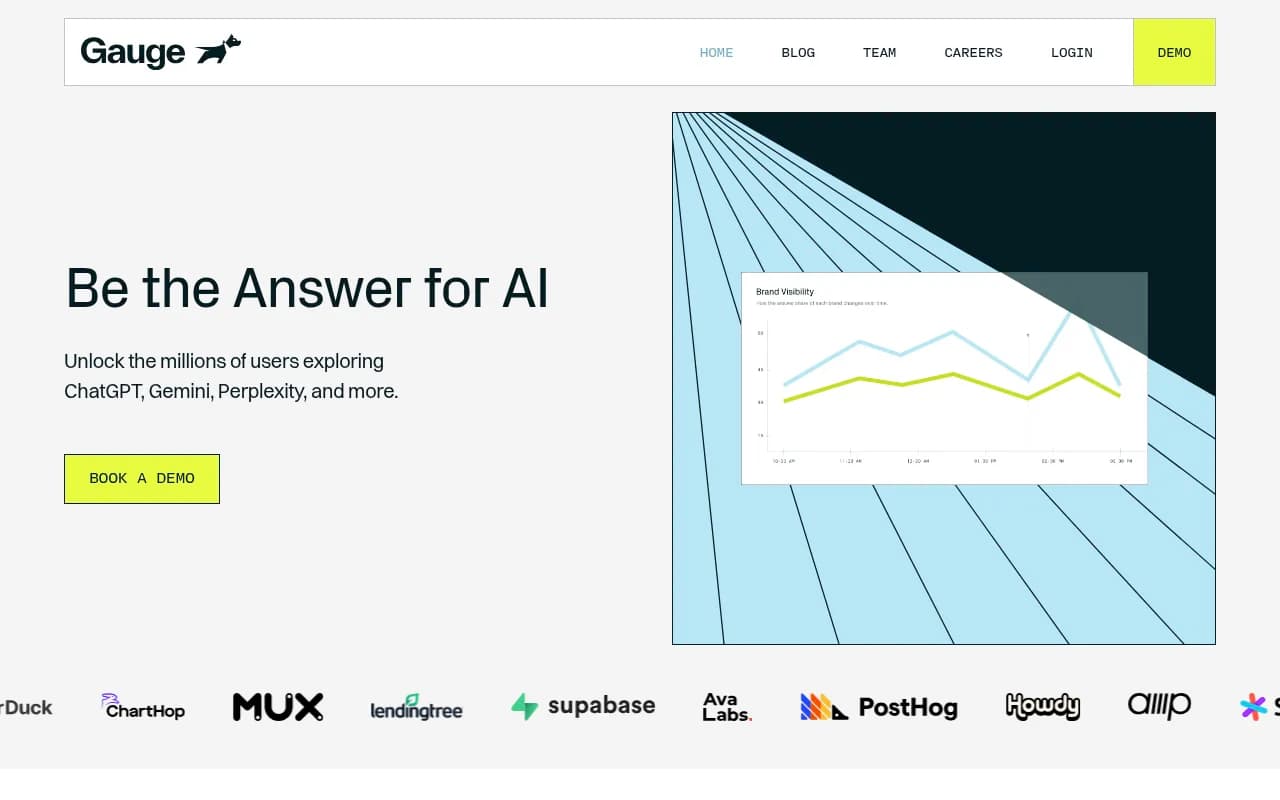
That is a specific, fairly unusual product. It is built for companies that sell to developers, where the buyer is increasingly an agent typing npm install. If that is you, Gauge is a reasonable fit. If you landed here because you want to know which bots crawl your site, or why your own agent keeps failing in production, you need something else.
One caveat on sources. Gauge publishes its own comparison page, "Best Coding Agent Visibility Tools" (October 2026), which names Promptwatch, Lightsage, Amplifying and Known Agents. It says it is based on public documentation, not hands-on testing, and it is written by a competitor. I treat its descriptions as a starting list, not a verdict. I also found no public pricing for most of these tools, so confirm that directly with each vendor.
The three jobs hiding under "agent tracking"
| Job | Question it answers | Typical tools |
|---|---|---|
| AI crawler and agent traffic | Which bots read my site, and do they cite what they read? | Promptwatch, Siteline AI, Bear AI, Known Agents |
| Coding-agent visibility | Do Claude Code and Codex recommend and successfully install my product? | Gauge, Promptwatch, Lightsage, Amplifying |
| Agent observability | Why did the agent I built fail on that run? | Langfuse, LangSmith, Braintrust, Arize, Helicone |
Most confusion in this category comes from mixing the rows. A trace viewer will never tell you that Meta started hammering your server. A crawler log will never tell you why your support agent fabricated a refund policy.
Job 1: tracking AI crawlers and agent traffic
This is the most common reason people search for agent tracking, and the data moves fast enough that a one-time check is useless.
Promptwatch Data tracked IP-verified AI crawler requests from June 8 to September 6, 2026. OpenAI made up 79.8% of verified requests in the week of August 31 to September 6, down from 94.8% in the week of June 8 to 14 (AI crawler traffic report). The mix is shifting. Meta-WebIndexer went from about 2.2% of tracked crawler requests in mid-July to 37.8% on August 9, which made it the heaviest AI crawler in the logs (Meta-WebIndexer report). Reports that Meta is building its own search index are unconfirmed, but one independent site owner, @levelsio, reported load-average alerts from Meta scraping on August 6.
Claude is smaller but growing quickly. Claude-User went from about 30 visits a day in mid-December 2025 to several thousand a day by mid-April 2026, more than 100x, though it was still around 1% of tracked citation crawler traffic (Claude crawler report). Claude Code also triggers visits from that crawler, which is where crawler tracking and coding-agent tracking overlap.
The practical lesson from those reports: compare your own logs against the overall mix. A provider that is large in the mix but near zero in your logs suggests you are blocked or unreachable.
Promptwatch
Promptwatch is the option I would look at first if you want crawler tracking plus the rest of the picture. Its AI crawler logs record IP-verified visits from GPTBot, OAI-SearchBot, ChatGPT-User, ClaudeBot, Claude-User, PerplexityBot, Meta-WebIndexer, Google-Agent and others. Visits are checked against each operator's published IP ranges, so spoofed user agents are filtered out. It also shows which pages bots read, the errors they hit, and a crawl-to-citation path per page, so you can tell an access problem from a content problem. Setup runs through Cloudflare, Vercel, Fastly, AWS CloudFront, Netlify, Akamai, a custom endpoint or the WordPress plugin.

For coding assistants, Promptwatch tracks how Codex, Claude Code and OpenCode recommend tools, SDKs and docs. That is monitoring of recommendations (mentions, visibility scores, sentiment, competitor comparisons). It does not run an agent through your install flow the way Gauge does, so the two are complementary rather than identical. Where Promptwatch goes further than a monitor is the loop afterwards: the Action Board prioritizes fixes, the Content Agent can write and publish pages, and visitor analytics show whether AI search sends traffic. Plans start at $95/month (Essential), with a 7-day free trial on monthly billing; check promptwatch.com/pricing for current numbers. The free AI visibility report and the Agentic Readiness Check are no-cost ways to see where you stand first.
Siteline AI and Bear AI
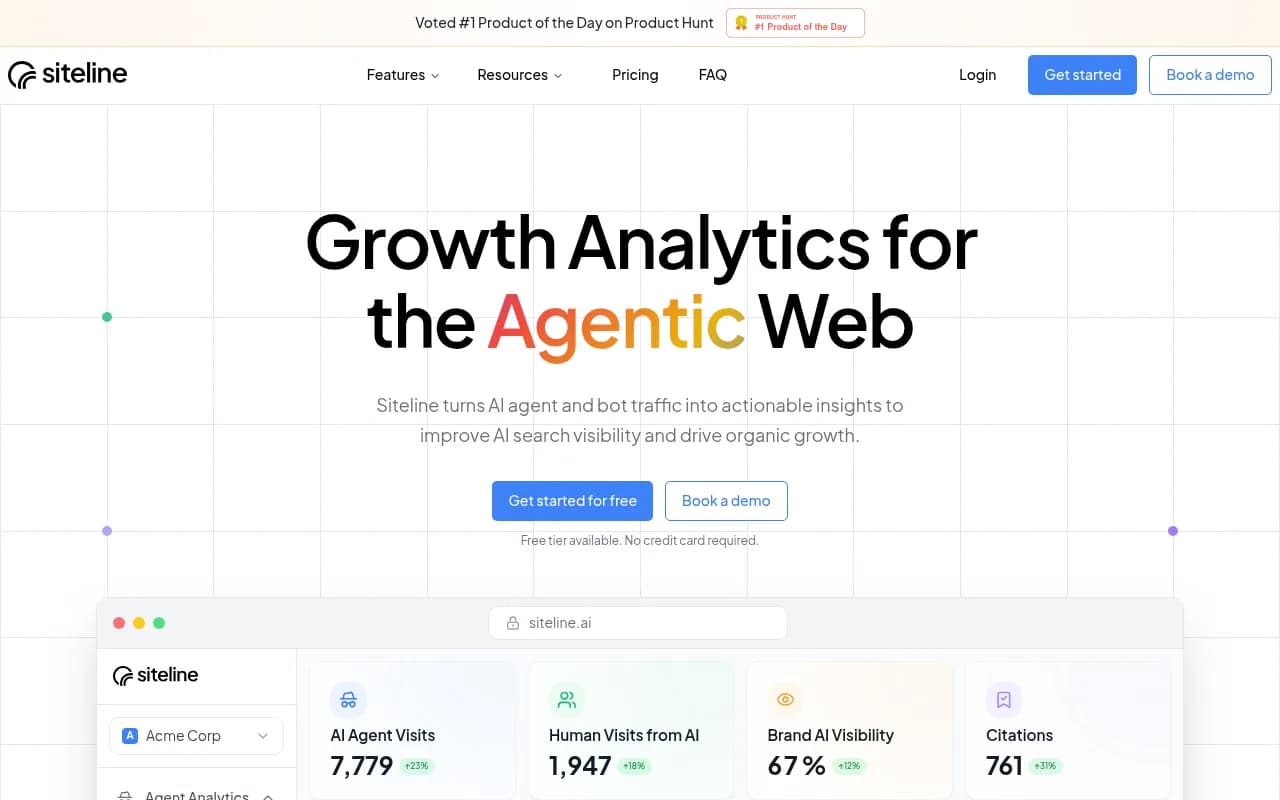
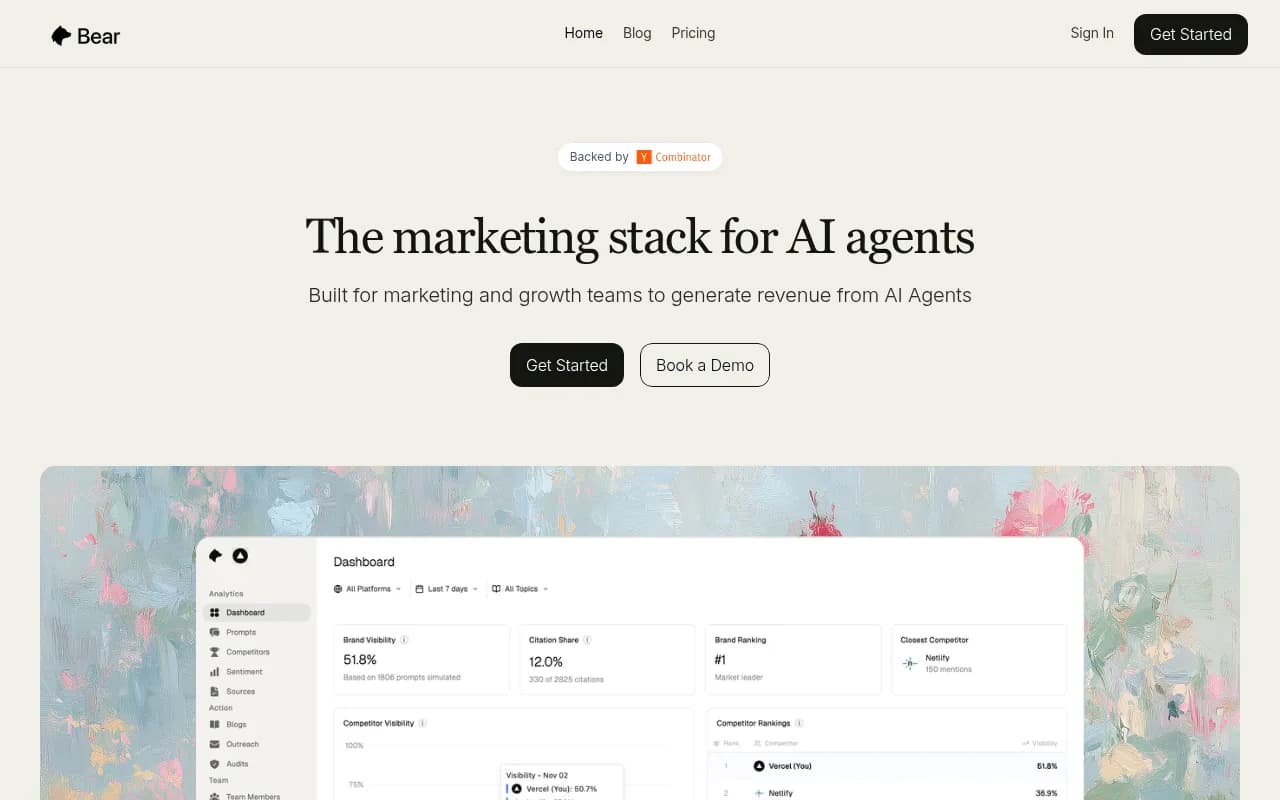
Siteline AI describes itself as AI agent traffic analytics, and Bear AI pitches turning AI agent traffic into revenue with visibility tracking and conversion tools. Both are narrower than a full visibility platform. They fit teams that only care about inbound agent sessions and conversions.
Smaller crawler-focused options
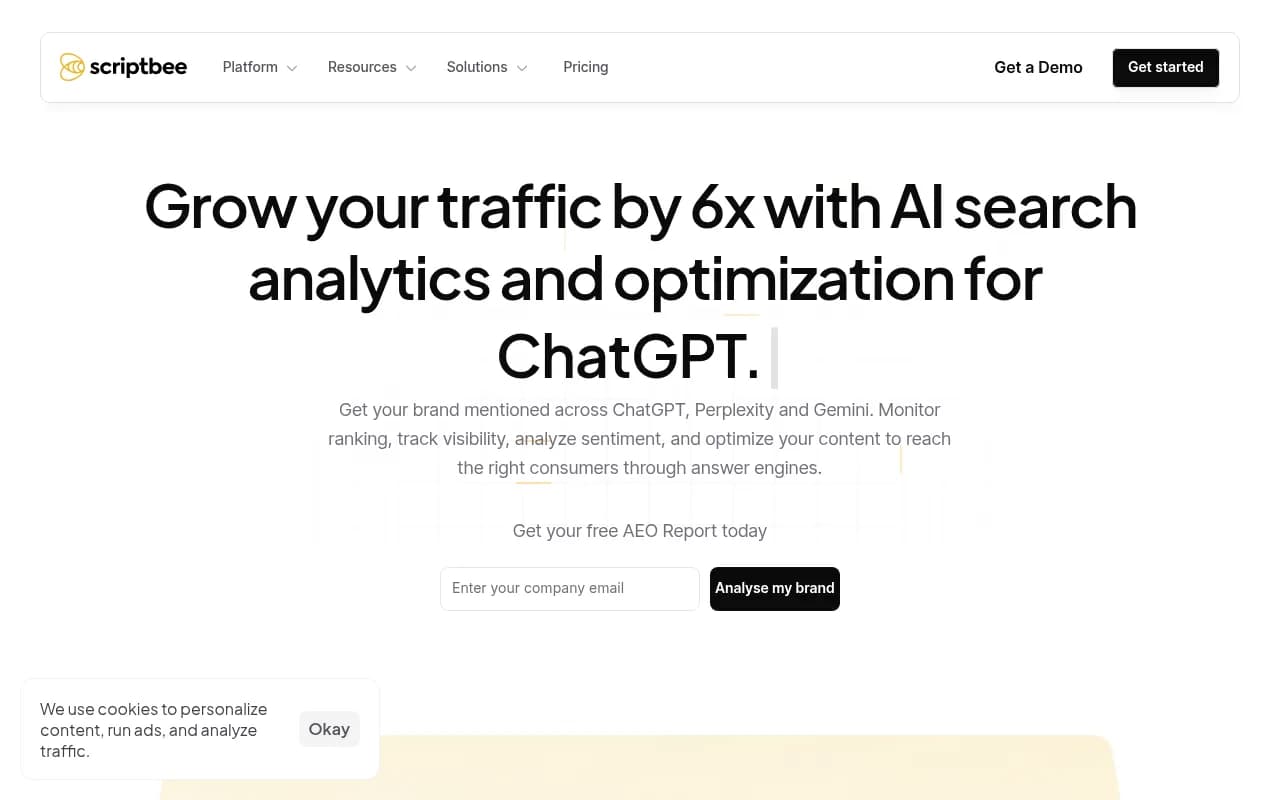
Scriptbee advertises AI crawler monitoring across unlimited domains, and xSeek pairs ChatGPT rank tracking with GPTBot monitoring. I have not tested either, so treat them as shortlist entries, not recommendations.
If you need a rank tracker rather than a crawler tool, the directory at ai-rank-tools.com lists more of them.
Job 2: coding-agent visibility
This is Gauge's home turf, and the field is thin. From Gauge's own comparison, with the vendor-bias warning attached:
| Tool | What it says it does | Evidence type |
|---|---|---|
| Gauge | Agent Preference plus Agent Experience, with AEO and AI traffic analytics | Session traces, final code diffs, criterion-level pass/fail |
| Promptwatch | Monitors coding-agent responses: mentions, visibility, sentiment, competitors | Collected agent responses |
| Lightsage | Recommendation share, recorded integration runs, website requests | Recorded runs |
| Amplifying | Competitive product-selection research | Research studies |
| Known Agents | Incoming agent requests to sites and APIs, agent identification, referral traffic | Request data |
Gauge also names Morphiq and 2027.dev as competitors for benchmarking coding-agent selection and setup. I could not verify any independent, non-vendor comparison of these tools, so there is no honest winner to name here.
What I would take from Gauge regardless of whether you buy it is its measurement framework. Record discovery, recommendation, adoption and successful integration as separate outcomes. Keep the task, repository, agent, model and session evidence behind each result. And don't count an install as final adoption if the agent later replaces the package. That last point is easy to miss: a recommendation metric alone can look great while agents quietly abandon your SDK halfway through.
How to choose between them
- You need proof that an agent can implement your product end to end: Gauge or Lightsage, because both record actual runs.
- You need to know how often agents recommend you versus competitors, plus what AI search is saying about your brand overall: Promptwatch.
- You need to know which agents hit your docs and API: Known Agents or crawler logs from Promptwatch.
Promptwatch Data also shows what content gets cited. For software prompts, GitHub, Microsoft's docs and G2 led ChatGPT citations, and documentation and help centers earned the largest share between September 28 and October 4, 2026 (software citation report). If you sell a developer tool, your docs are doing more of the work than your marketing site.
Job 3: observability for agents you build
If your agent is the product, not the target, skip everything above. You want tracing, evals and cost tracking.
The core problem is that agent failures hide behind success codes. A Splunk guide dated September 16, 2026 cites a preprint (arXiv 2607.19449) on silent tool failures: across 396 valid agent responses, fabricating results was the most common behavior at 56.6%. Traditional APM sees a 200 and moves on.

Splunk's guidance is that evaluation cost decides how much traffic you can score, and that fit depends on stack and hosting rules. It says LangSmith suits LangGraph teams, Braintrust suits CI-driven teams, and Langfuse and Phoenix suit teams that must self-host. Augment Code's list for coding teams names Braintrust, LangSmith, Arize Phoenix/AX, Helicone, Galileo, Maxim and Datadog LLM Observability.
| Tool | Best fit |
|---|---|
| Langfuse | Open source, self-hosting |
| LangSmith | Teams committed to LangGraph |
| Braintrust | Evaluation-first, CI-driven teams |
| Arize | Agent evaluation at scale |
| Helicone | Gateway-style routing and debugging |
| Weights & Biases Weave | Teams already on W&B |
| Comet Opik | Open-source evals |
| LangWatch | Simulated-user testing |

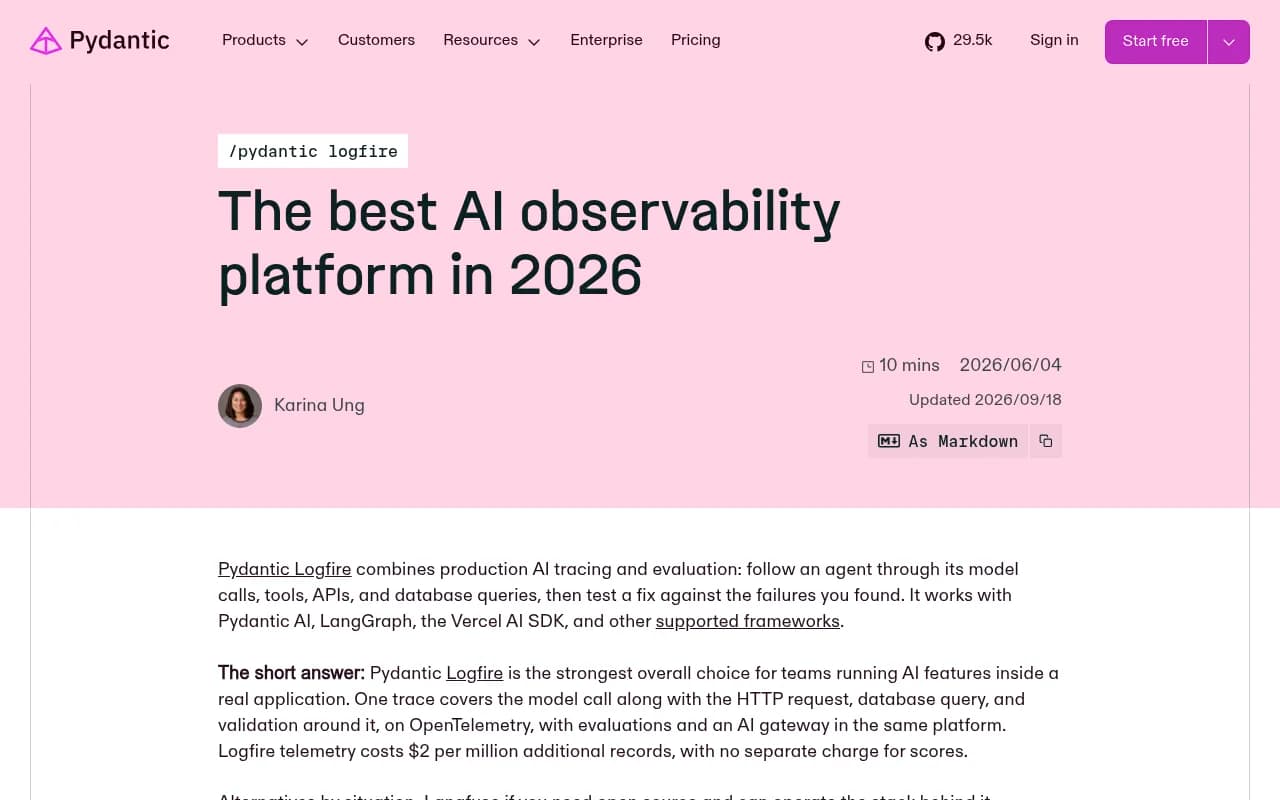
Pydantic's Logfire guide gives a similar split: Langfuse if you need open source and can operate the stack behind it, LangSmith if you are committed to LangGraph, Braintrust if evaluation is the reason you are adopting observability, and Datadog if you are standardized on it. Pydantic also sells Logfire, so that ranking is vendor-written too.
I did not check pricing pages for any of these, so compare cost on your own trace volume. Self-hosting trades license fees for operating work.
Which tool for which team
| If you are... | Start with |
|---|---|
| A dev-tool company wanting proof agents can install your SDK | Gauge, then add crawler logs |
| A marketing or SEO team tracking bots and AI citations | Promptwatch |
| An agency reporting AI visibility for clients | Promptwatch agency plans (Kick-off from $199/month) |
| A platform team shipping a production agent | Langfuse, LangSmith or Braintrust |
| Only worried about bot load on your servers | Crawler logs from your CDN, plus Promptwatch or Siteline AI |
For wider browsing, the GEO software directory at bestgeosoftware.com covers the visibility side of the market.
A short setup checklist
- Check robots.txt, CDN and WAF rules for each provider. Don't assume that allowing one OpenAI bot allows the others.
- Verify that Claude-User and ClaudeBot are not blocked if you care about Claude or Claude Code.
- Baseline your crawler logs monthly. Mixes like Meta's shift in weeks, not quarters.
- Budget for sustained crawler load if your infrastructure bills by request.
- For coding-agent products, keep a small suite of install-and-run tests in your repo, whichever vendor runs them.
- For agents you build, trace every tool call and score a sample of runs. Don't trust status codes.
Bottom line
Gauge is not really competing with the observability tools, and it only partly overlaps with visibility platforms. Decide which of the three jobs hurts most right now. If it is crawlers and AI visibility, start with Promptwatch's free report. If it is coding-agent success, shortlist Gauge and Lightsage and ask both for a trial on a real repo. If it is your own agent failing silently, pick the observability tool that matches your framework and hosting rules.
This guide is published by 1001 SEO Media, which uses Promptwatch for its own AI visibility work.