Key takeaways
- Buy in this order: crawlability and measurement first, a tracking and action platform second, content production and attribution third.
- Do not pay for a prompt tracker until you know AI crawlers can read your site. A dashboard full of red cells is useless if the cause is a blocked bot.
- Pick tools by what happens after the dashboard shows a gap. Monitoring-only products leave the fixing to you.
- The channel mix is uneven. ChatGPT got 0.46% of its citations from social platforms in late September 2026, while Google AI Overviews got 12.2%. Budget content formats accordingly.
- Most teams need one core platform, not five. Add specialist tools only when a specific gap shows up in your data.
Why the order matters
Most teams buy AI visibility software backwards. They sign up for a prompt tracker, watch a score appear, and then realize they have no way to change it. Three months later the subscription is a line item nobody defends.
The better sequence follows how AI answers actually get built. A model has to be able to reach your pages. It has to find them relevant to a prompt. Then someone has to see the result in revenue terms. Each of those is a layer, and each layer has a tool category. Neil Patel's write-up of a seven-layer AI visibility stack, based on a survey of 500 marketing teams, makes the same structural point: technical SEO sits at the bottom and measurement at the top. I did not read the whole framework, but that ordering matches what I see in practice.
So here is the version I would actually give a marketing lead with a finite budget.
The stack at a glance
| Priority | Layer | What you are buying | Typical cost | Skip if |
|---|---|---|---|---|
| First | Access and measurement | Crawler visibility, site audit, Search Console, analytics | Free to low | Never skip |
| Second | Tracking plus action | An AI visibility platform with prompts, citations, and an action list | $29 to $600 a month for most teams | You have under 20 priority prompts |
| Third | Production and attribution | Content workflow, CMS publishing, revenue attribution | Varies | You cannot yet publish weekly |
| Later | Specialists | Local, shopping, enterprise governance | Varies | No clear gap in your data |
What to buy first: access and measurement
This layer is mostly free, and that is why people skip it.
Check that AI crawlers can read you
Promptwatch's AI crawler data covers weekly IP-verified requests from June 8 to September 6, 2026. OpenAI accounted for 79.8% of verified AI crawler requests in the week of August 31 to September 6, down from 94.8% in early June. The mix is shifting, and Meta-WebIndexer alone climbed from about 2% to nearly 38% of tracked crawler requests between mid-July and August 9. You can read both in Promptwatch Data's AI crawler traffic report and the Meta-WebIndexer report.
The practical advice from that dataset is simple. Check robots.txt, CDN, and WAF rules for every provider, then compare your own server logs to the overall mix. If a provider is big in the market but near zero in your logs, you are probably blocking it. Training crawlers and answer-time fetchers are different bots, so look at them separately.
Set up the boring measurement
Before any AI-specific tool, make sure these are working:
- Google Search Console and Bing Webmaster Tools, because AI answers lean on those indexes
- Analytics with an AI referral segment (ChatGPT, Perplexity, Gemini, Copilot, Claude referrers)
- A technical crawl for broken links, orphan pages, and missing sitemap entries
For technical crawling, Screaming Frog is the standard desktop option, and Sitebulb is friendlier if your team is less technical.

One caveat on JavaScript-heavy sites: if your content only appears after client-side rendering, some AI fetchers will see an empty shell. Prerendering services such as Prerender.io exist for exactly this, but test with a crawler inspector before buying anything.
What to buy second: one tracking and action platform
This is where most of your AI-specific budget should go. It is also where the market is noisiest.
The split that matters: monitor or do the work
Every vendor in this category tracks mentions. The useful question, which Data Ally's comparison also lands on, is what happens after the dashboard shows a gap. Some tools stop at the chart. Others tell you which pages to write or fix, and a few draft the content.
A few things to demand in a trial:
- Tracking on the real user interfaces, not only API calls, since user-facing answers and citations can differ from API output
- Citation data showing which of your pages get cited and which competitor pages win instead
- A prioritized to-do list, not just a score
- Crawler or traffic data that ties visibility to sessions
- Country and language coverage that matches your actual markets
How the main options compare
Pricing and engine counts below come from vendor pages and third-party roundups, and two sources disagree on AthenaHQ's engine count (8 versus 11), so confirm on each pricing page before you commit.
| Tool | Starting point | Strength | Limit |
|---|---|---|---|
| Promptwatch | Free tier, paid from $95/mo | Tracking, crawler logs, traffic attribution, and content actions in one product | More than a small team may need if they only want a score |
| Otterly.AI | From about $29/mo | Cheap, broad engine coverage | Monitoring-focused |
| AthenaHQ | About $295/mo Starter | Many engines on one plan | Higher entry price |
| Profound | Enterprise pricing | Prompt demand research, enterprise features | Cost |
| Semrush AI toolkit | Add-on to Semrush | Convenient if you already live in Semrush | Shallower AI-specific data |
| Ahrefs Brand Radar | Add-on to Ahrefs | Fits SEO teams already in Ahrefs | Same trade-off |
Where I would put my money
If the goal is revenue and not a screenshot for the quarterly deck, I would start with Promptwatch. It combines prompt tracking on real interfaces with IP-verified crawler logs, visitor analytics for AI-referred traffic, and an Action Board that turns gaps into prioritized tasks. That last part is what separates it from the trackers that stop at "you were mentioned in 14% of answers." Its content gap analysis maps your pages against the prompts AI answers, and the Content Agent can draft and publish to Webflow, Framer, or WordPress once you are ready for the third layer.

The paid plans start at $95 a month for Essential, with a free Explore tier that tracks ChatGPT only. Check promptwatch.com/pricing for current numbers.
If you are on the tightest possible budget, Otterly.AI is the common pick, and it is a perfectly reasonable way to learn what you are dealing with.
Otterly.AI

Teams that already pay for Semrush or Ahrefs can try their AI add-ons first, with the understanding that these are SEO suites adding AI tracking, so prompt sets and attribution tend to be thinner.
For enterprises with procurement requirements, Profound is the usual name in the shortlist.
Profound

More options are listed in the GEO software directory at bestgeosoftware.com.
Pick your prompts like a buyer, not a keyword tool
Start with 30 to 50 prompts, not 500. Split them into three groups: category prompts ("best X for Y"), comparison prompts ("A vs B"), and branded prompts. Weight them toward commercial intent. Promptwatch's ChatGPT content type report shows why: for commercial prompts, product pages (26.0%), landing pages (20.6%), listicles (15.0%), and comparisons (7.9%) make up almost 70% of citations in the week of September 28 to October 4, 2026.
In plain terms, the pages you already own for selling are the ones most likely to be cited, which leads to the next layer.
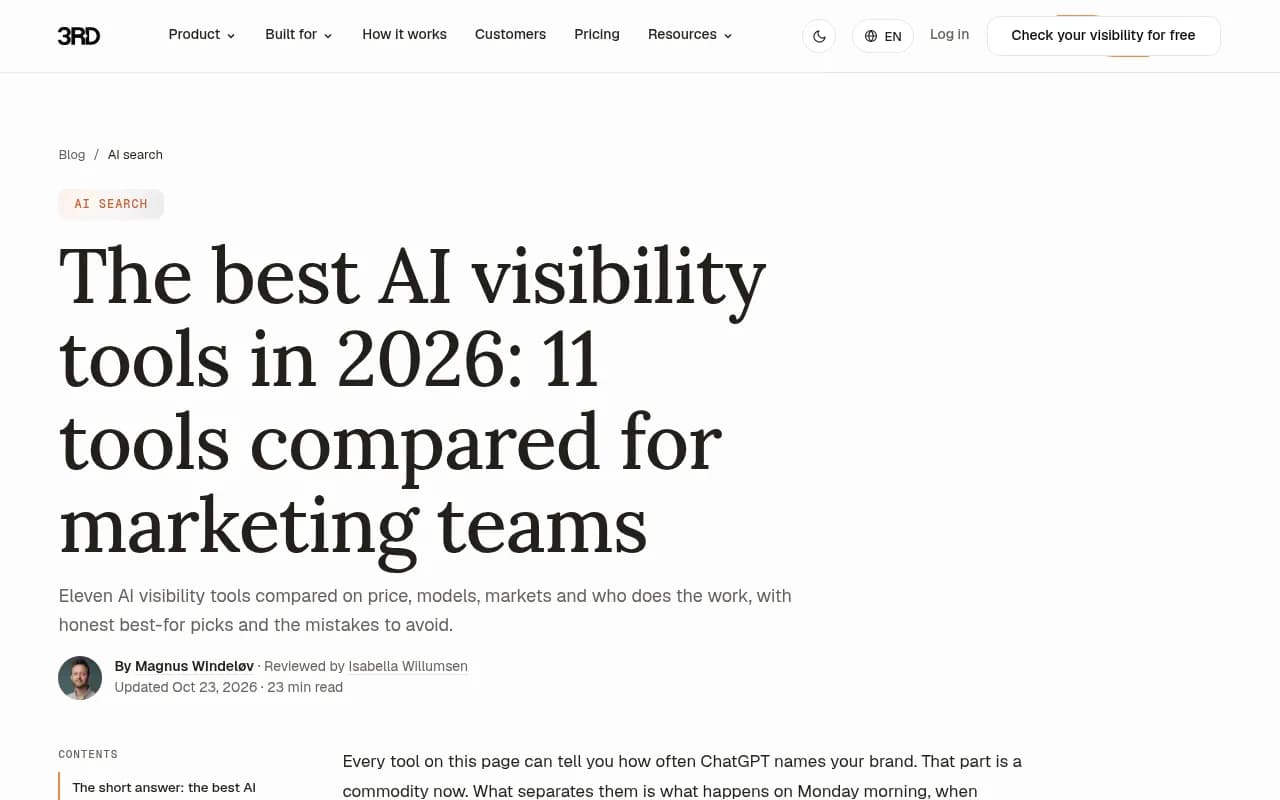
The comparison above is from a vendor (3RD), so read its picks with that bias in mind, but the table format of price, models, markets, and who does the work is a good template for your own shortlist.
What to buy third: production and attribution
Only move here once layer two has told you what to make. Otherwise you are buying a content engine with no steering wheel.
Content production grounded in gaps
The order of operations is gap first, brief second, draft third. Generic AI writers can produce volume, but without citation data they are guessing at what AI engines want. Tools in this space fall into two groups: writers that are not tied to visibility data, and platforms that are.
| Approach | Examples | Works when |
|---|---|---|
| Visibility-grounded content agent | Promptwatch Content Agent, AirOps | You have a tracked gap list and a CMS to publish into |
| General AI writers | Jasper, Writesonic, Copy.ai | You already have briefs and a strong editor |
| SEO content optimizers | Surfer SEO, Clearscope, MarketMuse | Your main target is still Google rankings |

A few format notes from the data. Landing pages and docs stay cited longest, while news pages lose half their citations in about five weeks, per the half-life report. That means evergreen product, solution, and documentation pages deserve your writing hours before newsy content does. And markdown files are only 0.05% of AI search citations, so do not spend a quarter publishing markdown mirrors of your site hoping for citations. See the markdown in AI search report.
Channel mix: where to publish off-site
Social citations vary enormously by engine. In Promptwatch's October 2026 social citations data (September 28 to October 4):
| Engine | Share of citations from social | Largest platforms |
|---|---|---|
| ChatGPT | 0.46% | LinkedIn at 0.3% |
| Google AI Overviews | 12.2% | YouTube 4.28%, Facebook 2.38%, Reddit 2.15% |
| Perplexity | 2.7% | LinkedIn and Reddit at 0.86% each |
Reddit in ChatGPT fell from roughly 4% to 0.5% on August 14, as shown in the Reddit citations report. So if your 2025 plan involved seeding Reddit threads to win ChatGPT answers, it is time to rethink. YouTube is the better bet for Google audiences, LinkedIn for Perplexity, and X is mostly not worth the effort.
Social teams who need to schedule and report on that publishing can use tools like Sprout Social or Hootsuite, but treat these as workflow tools, not visibility tools.
Attribution: prove the money
Visibility scores do not close budget conversations. Traffic and pipeline do. At minimum, segment AI referrers in your analytics. If you run B2B, connect that to your CRM and attribution stack so you can see opportunities that started with an AI referral.
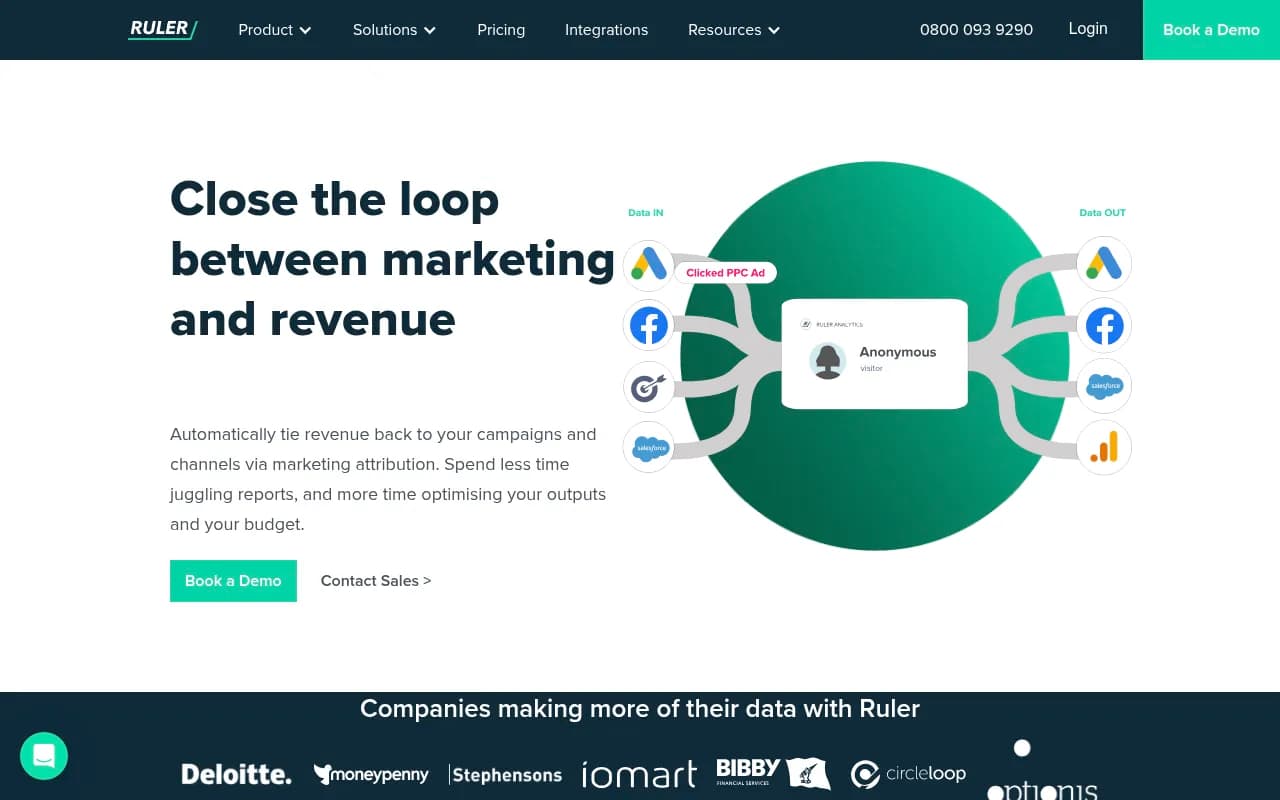
A caution on expectations. Adobe Analytics, as reported by Digital Commerce 360, found AI-referred traffic to US retail sites grew 138% year over year in May 2026. Growth rates like that come off a small base, so do not promise your CFO the moon. Measure your own numbers for a quarter first.
Specialists: buy only on evidence
Some gaps are real but narrow. Wait for your data to point at one.
- Multi-location or local businesses: tools built for listings and local presence, such as Yext, Uberall, or BrightLocal, plus local targeting inside your AI tracker.
- E-commerce: product-level tracking for shopping carousels and a clean product feed. SearchEye's retail guide makes the useful point that conflicting product facts across your site and feeds should be fixed before you chase anything else.
- Enterprise SEO suites: BrightEdge, Conductor, and seoClarity add AI tracking to existing enterprise workflows.
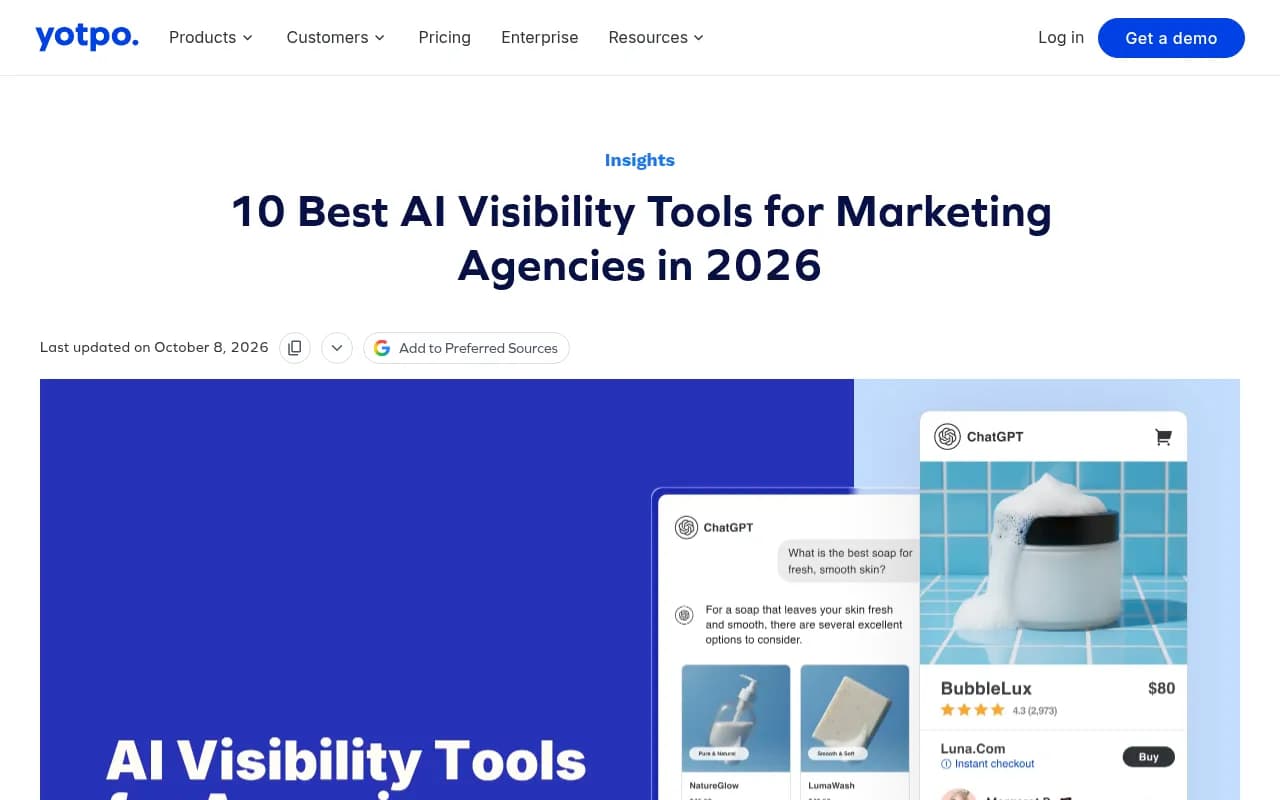
Yotpo's agency-focused list is useful mostly for its evaluation criteria, though note that it ranks its own product first.
Common mistakes
Semrush's video on AI visibility mistakes makes a point I agree with: reviews in the wrong places are a common reason brands are ignored. Specific, detailed review text on platforms AI actually reads beats generic five-star praise. Other errors I see repeatedly:
- Buying three trackers and comparing their scores. Numbers differ by prompt set and method. Pick one source of truth.
- Tracking only ChatGPT. It reaches the biggest B2B audience (CompetLab cites a 2026 survey putting preference at 47%), but Google AI Overviews and Perplexity behave differently.
- Treating a mention as a win. Mentions without citations to your own pages usually mean a content or crawlability problem.
- Skipping the audit and going straight to content. Fix the plumbing first.
- Scaling content before you have a feedback loop that tells you if a published page was crawled, cited, and clicked.
A 90-day buying plan
| Weeks | Action | Spend |
|---|---|---|
| 1 to 2 | Audit robots.txt, CDN rules, sitemap, and AI referral segments | Free |
| 3 to 4 | Trial one tracking platform with 30 to 50 prompts | Free trial or low tier |
| 5 to 8 | Fix the top technical and content gaps from the action list | Staff time |
| 9 to 12 | Add content automation or attribution only if gaps need it | Per plan |
If you would rather hand the whole plan to specialists, 1001 SEO Media runs technical SEO and generative engine optimization programs for teams that do not want to staff it in-house.
For a wider shortlist of options, browse the rank tracking directory at ai-rank-tools.com.
The short version
Fix access, then buy one platform that tells you what to do and checks that it worked, then add production and attribution once you know what to make. Most teams that follow this order spend less in the first year than teams that start with five dashboards, and they can show what the money did.
Re-check pricing on each vendor's own page before you sign. Vendor-published comparisons, including the ones cited here, are written by companies with a product to sell.