Key takeaways
- No single tool covers everything. Most teams need a web analytics base, one attribution layer tied to revenue, and a separate way to measure AI search traffic.
- Pick attribution software by business model: B2B pipeline, ecommerce ad spend, and lead-gen calls each have different best fits.
- AI search traffic is the new blind spot. Referrals from ChatGPT and others get lumped into direct or referral buckets unless you set up tracking on purpose.
- AI crawler behaviour shifts fast, so any AI attribution setup needs a regular re-check, not a one-time install.
- Start with clean data and consistent metric definitions before paying for fancier models.
What marketing analytics and attribution actually cover
People use these terms loosely, so here is how I split them.
Marketing analytics is the broad job: pulling data from ad platforms, your CRM, and your website into something you can reason about. Attribution is the narrower, harder question of which touchpoints deserve credit for a sale. A third job has appeared in the last two years: working out how much of your traffic and pipeline comes from AI answers, and whether AI systems can even read your site.
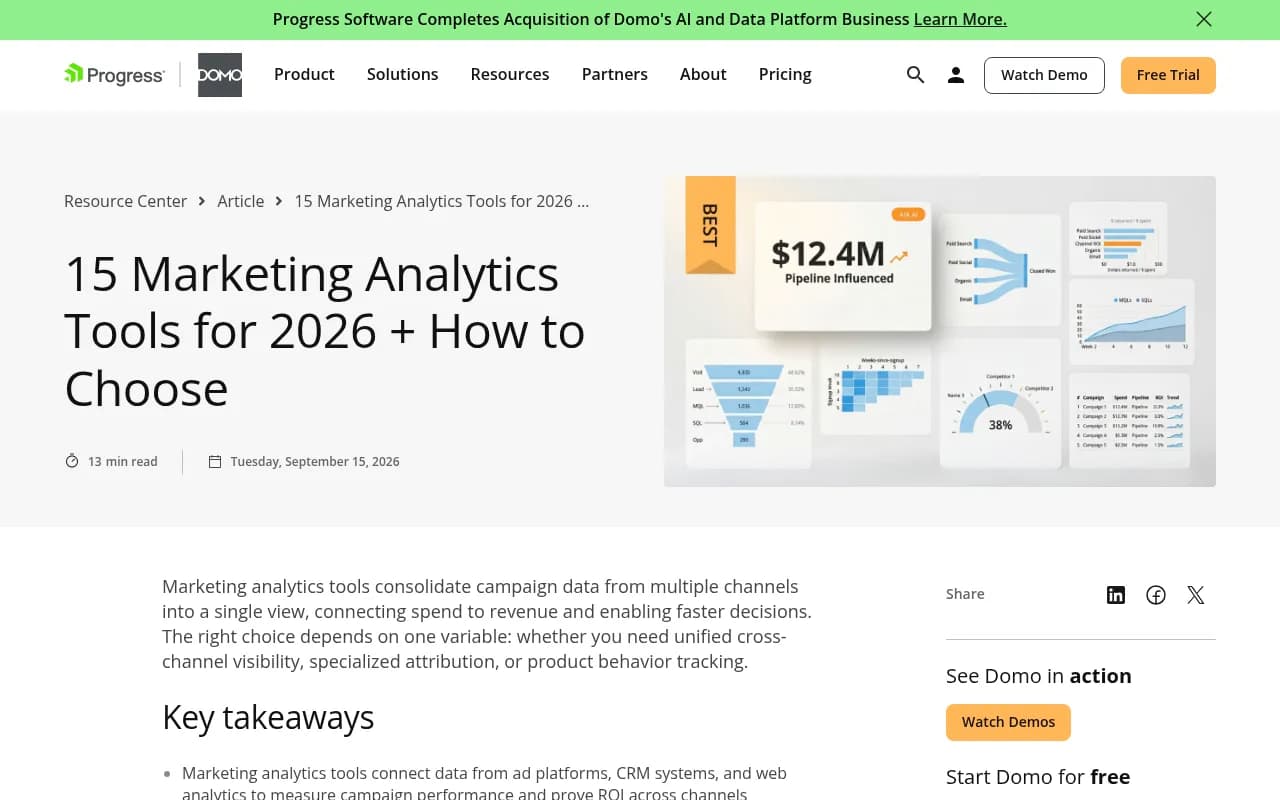
The Domo guide on marketing analytics tools frames the choice well. The right pick depends on whether you need unified cross-channel visibility, specialized attribution, or product behavior tracking. I'd add a fourth variable, which is AI search measurement, because none of the traditional categories handle it well.
Quick comparison by job to be done
| Job | Good fits | Notes |
|---|---|---|
| Website traffic and behaviour | Google Analytics, Matomo, Adobe Analytics | GA4 is the default; Matomo if data ownership matters |
| Cross-channel data pipelines | Improvado, Segment, Google BigQuery | Feed a BI tool or warehouse |
| B2B multi-touch attribution | Dreamdata, Adobe Marketo Measure, CaliberMind, HockeyStack | Built around CRM and long sales cycles |
| Lead and call attribution | Ruler Analytics, WhatConverts | Connects offline conversions to source |
| Ecommerce and paid ads | Triple Whale, Cometly, Hyros | Click-to-revenue tracking for ad spend |
| BI and reporting | Tableau, Microsoft Power BI, Metabase, Whatagraph | Dashboards across all the above |
| Product analytics | Mixpanel, Amplitude, PostHog | In-product behaviour and retention |
| AI search visibility and traffic | Promptwatch, Siteline AI, Bear AI, Analyze AI | Covered in its own section below |
The foundation: web analytics
Google Analytics
Start here unless you have a reason not to. Google Analytics is free, widely understood, and the starting point most attribution tools plug into. It is good at traffic analysis, behaviour tracking, and ecommerce monitoring. It is weak at tying a session to a CRM deal, and its built-in attribution is not something I'd trust for budget decisions on long B2B sales cycles.
Pair it with Google Search Console so you can see organic query data next to session data.
Adobe Analytics and Matomo
Adobe Analytics suits large enterprises already inside the Adobe Experience Cloud. The Prescient AI roundup lists it for exactly that case: advanced analytics and attribution within the Adobe ecosystem. If you are not already there, the cost and implementation effort are hard to justify.
Matomo is the privacy-first option with full data ownership. Worth a look if you operate under strict GDPR constraints or simply dislike sending everything to Google.
Data pipelines and BI
Attribution is only as good as the data you feed it. If your ad platform exports, CRM records, and web data live in separate silos, you will spend more time reconciling numbers than acting on them.
Improvado is the one I'd look at first for marketing teams. Improvado's own trends report puts AI-assisted decisioning and attribution at about 28% of AI marketing budgets, with a typical ROI timeline of 3 to 6 months. That is a vendor-published figure, so treat it as directional, but the point stands: consolidation comes before intelligence.
Segment handles the customer data side, collecting events once and routing them everywhere.
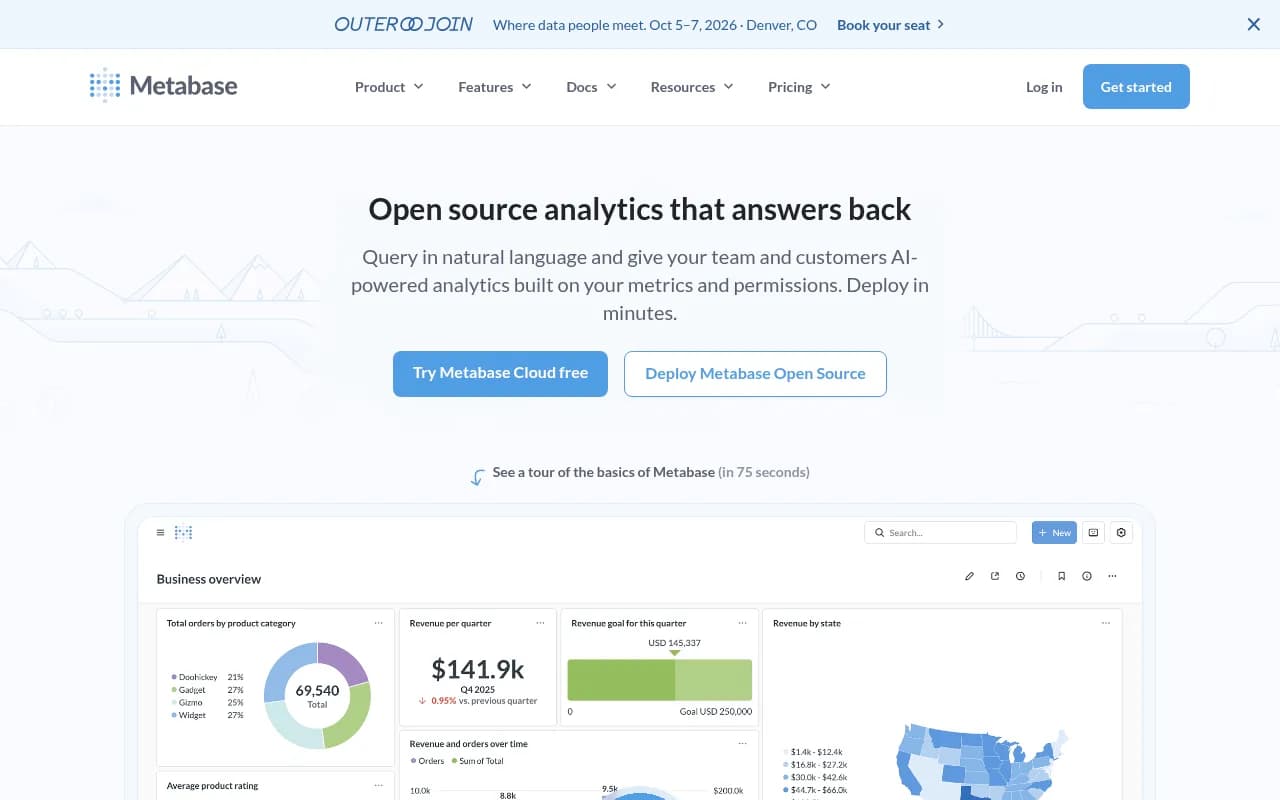
For warehouse-first teams, BigQuery plus a BI layer is the standard route. Tableau is strongest on visualisation depth, Power BI fits Microsoft shops, and Metabase is the pragmatic pick for non-technical teams who want self-serve dashboards.
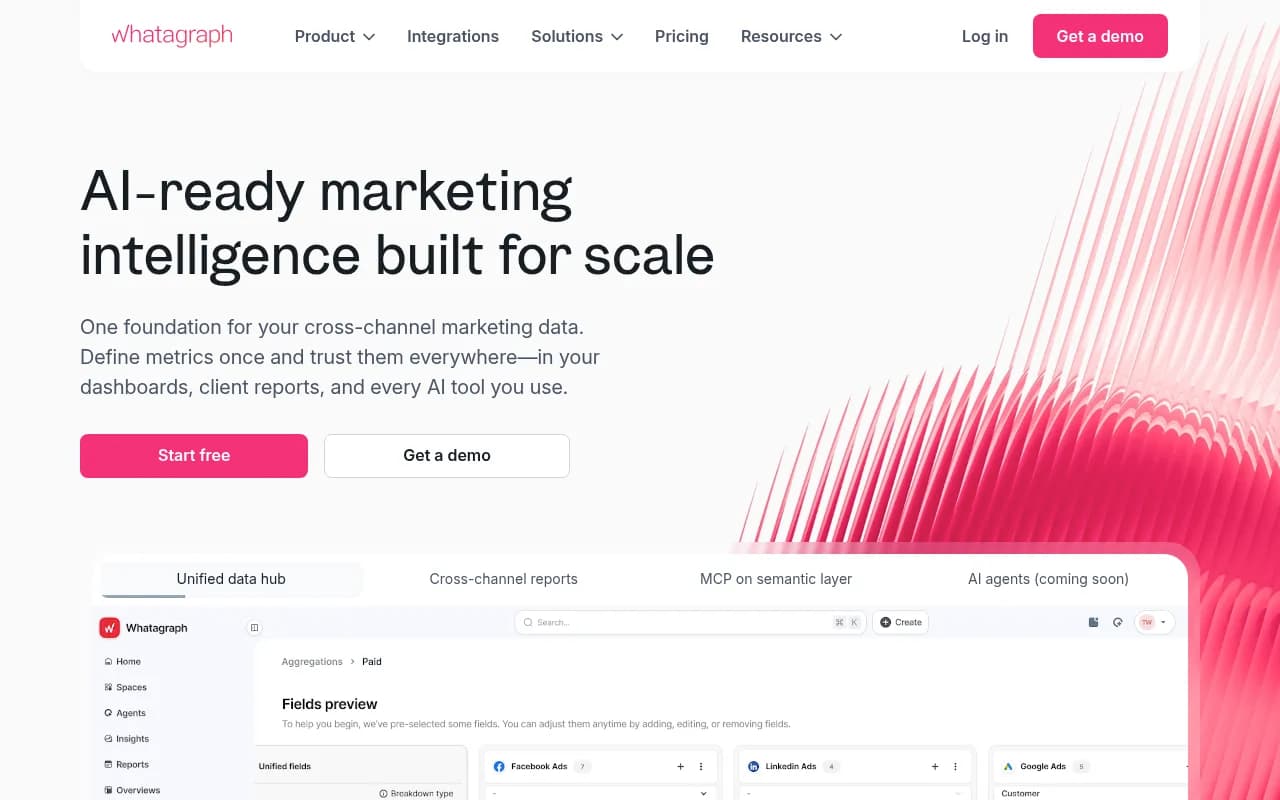
If your work is mostly client reporting for agencies, Whatagraph is built for that.
Multi-touch attribution for B2B
B2B journeys run for months across many contacts at the same account. Last-click tells you almost nothing here. These platforms stitch ad touches, web visits, and CRM stages together.
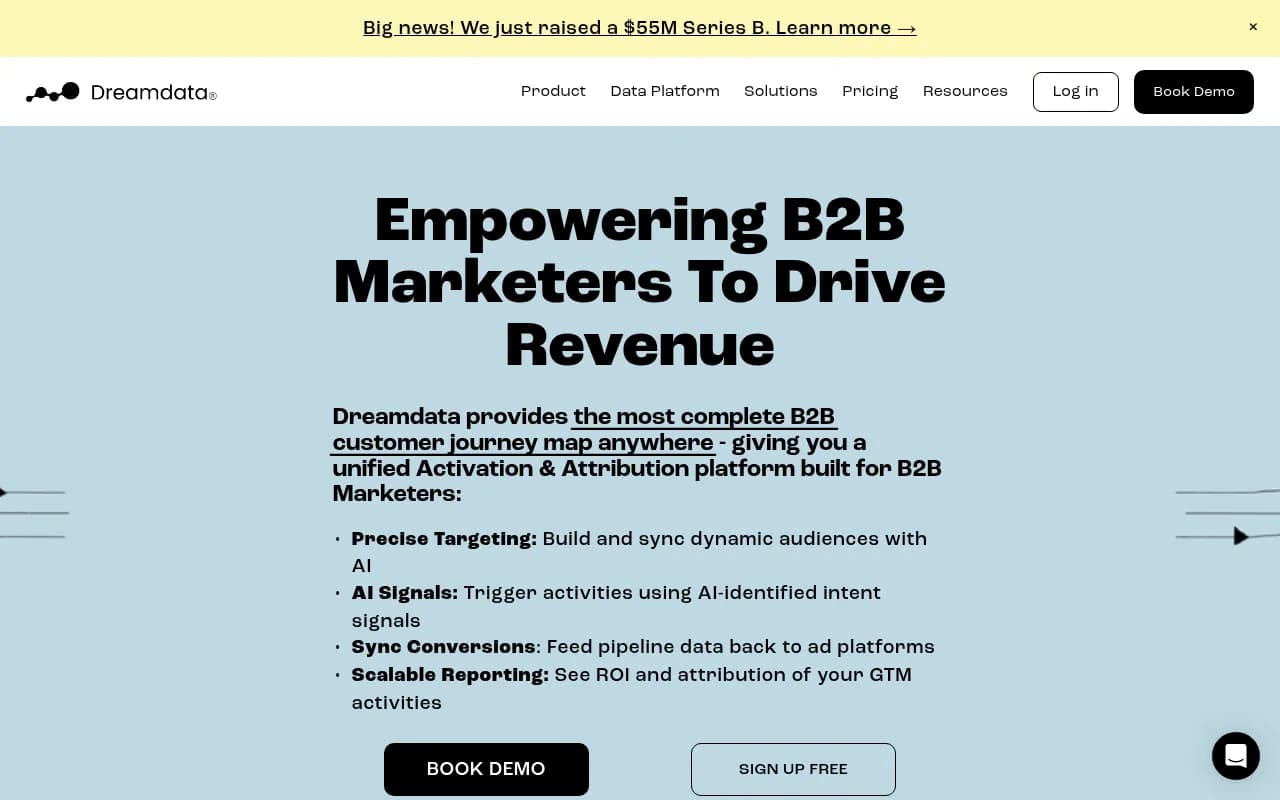
Dreamdata maps the full customer journey and is built for B2B revenue teams.
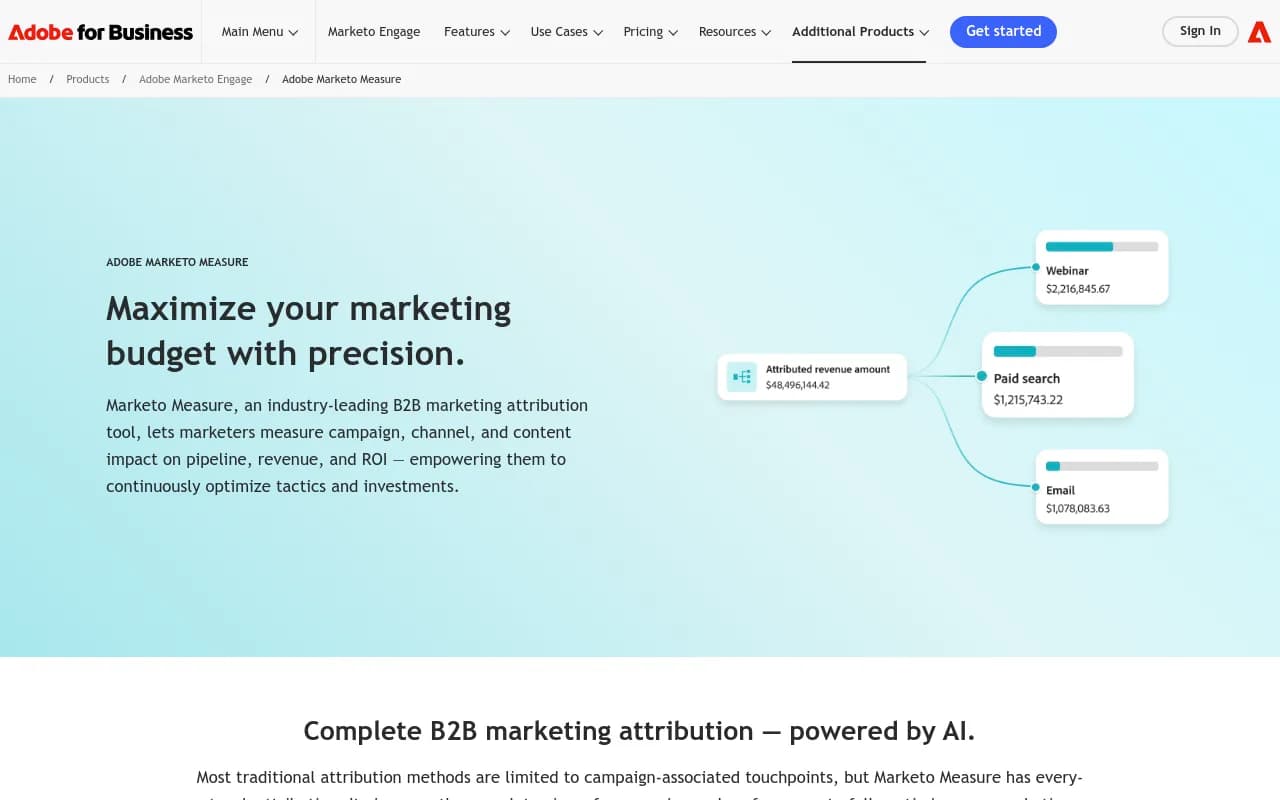
Adobe Marketo Measure (formerly Bizible) is the natural choice if you run Marketo or Salesforce at scale.
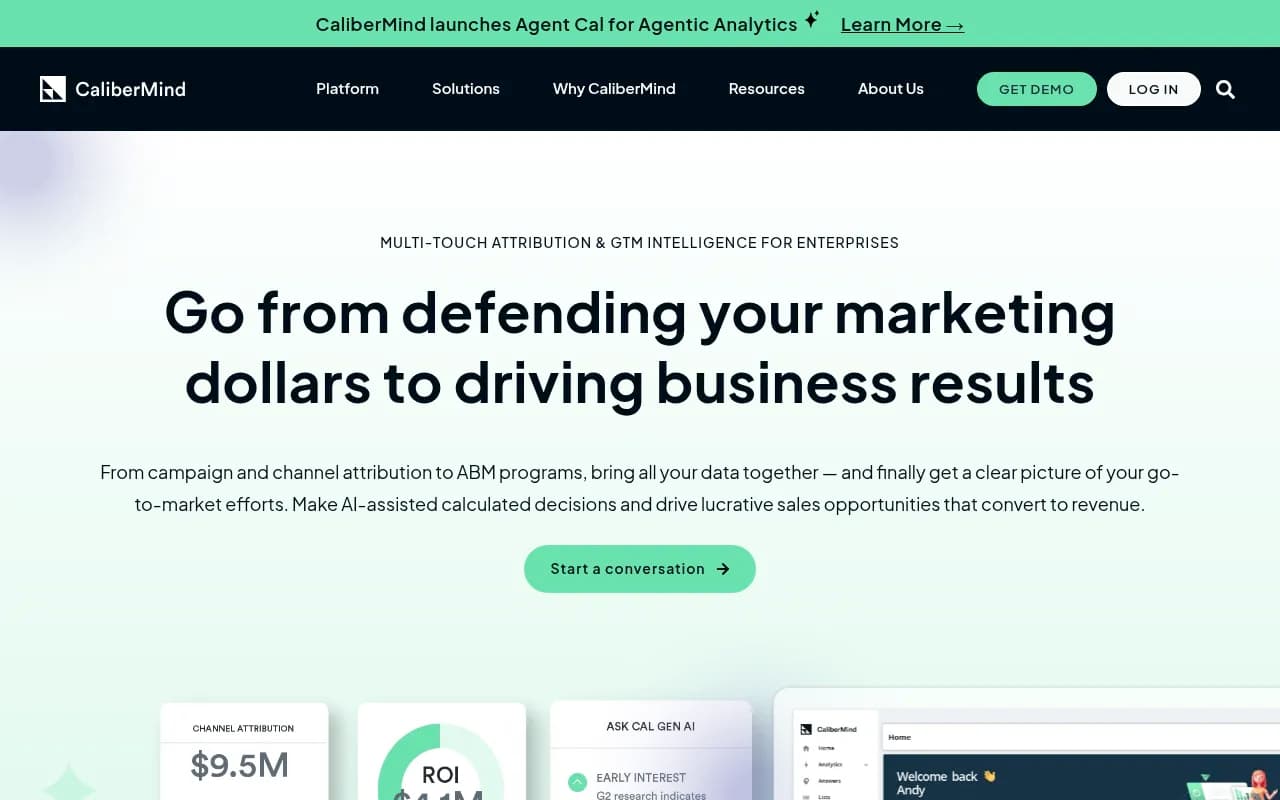
CaliberMind focuses on unified data and multi-touch attribution to prove marketing ROI.
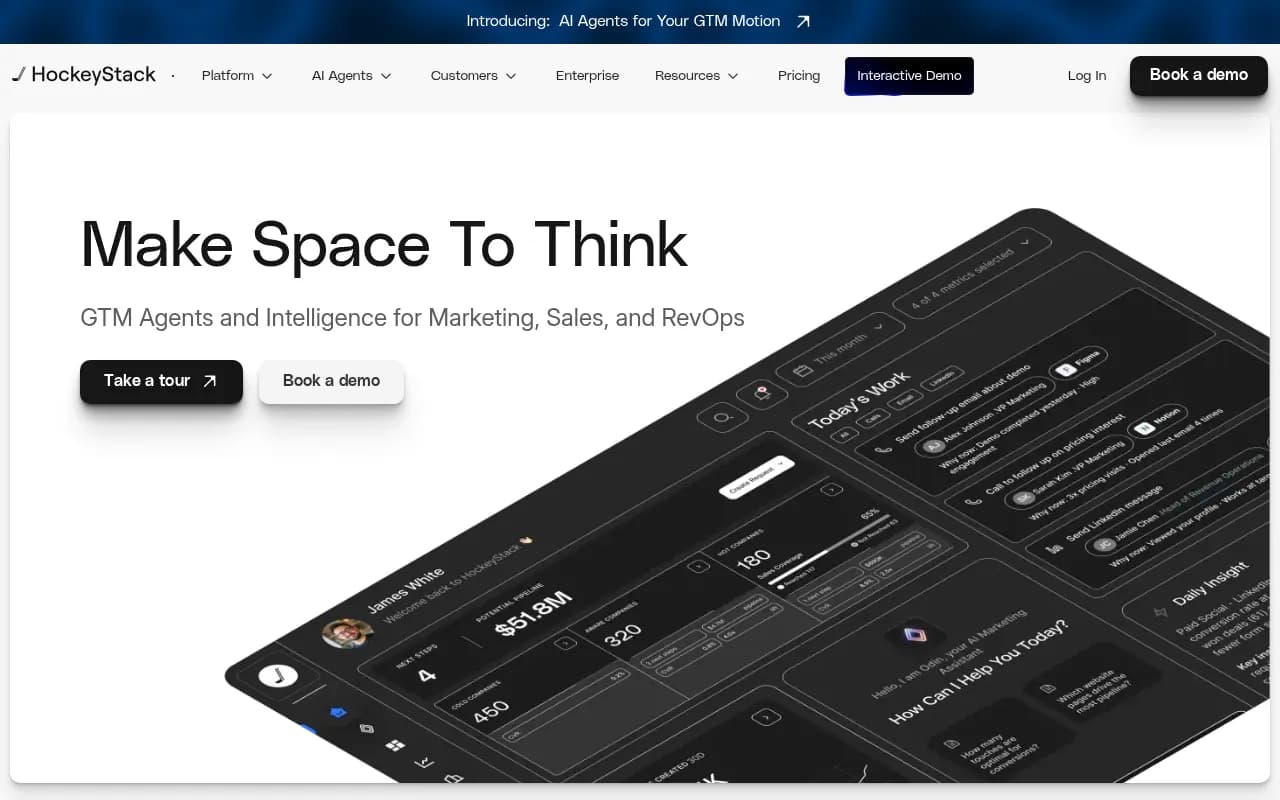
HockeyStack is a lighter-weight marketing intelligence platform, popular with SaaS teams that want faster setup.
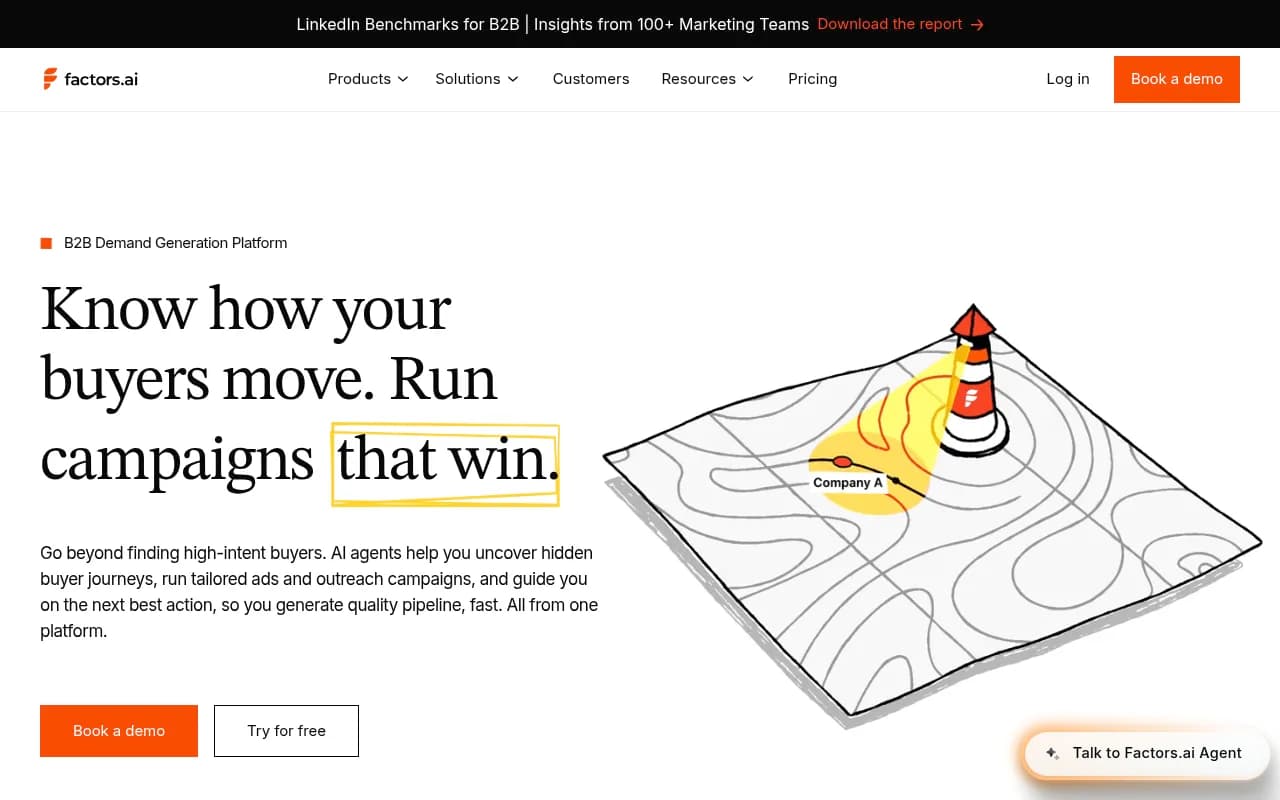
Factors.ai leans into intent signals and account-level activity, which overlaps with ABM tooling like 6sense and Demandbase if you need predictive scoring too.
Picking a model
Don't over-index on model names. A rough rule:
- Under 20 conversions a month, no model will be statistically meaningful. Use first-touch and last-touch side by side and look at the gap.
- Mid-volume B2B: position-based or W-shaped models are good enough, as long as your CRM stages are clean.
- High volume with solid identity resolution: data-driven models start to pay off.
The unglamorous truth is that identity resolution and CRM hygiene matter more than which model you choose.
Lead, call, and ad attribution
If your conversions happen on the phone or in a form that later turns into offline revenue, you need closed-loop tracking.
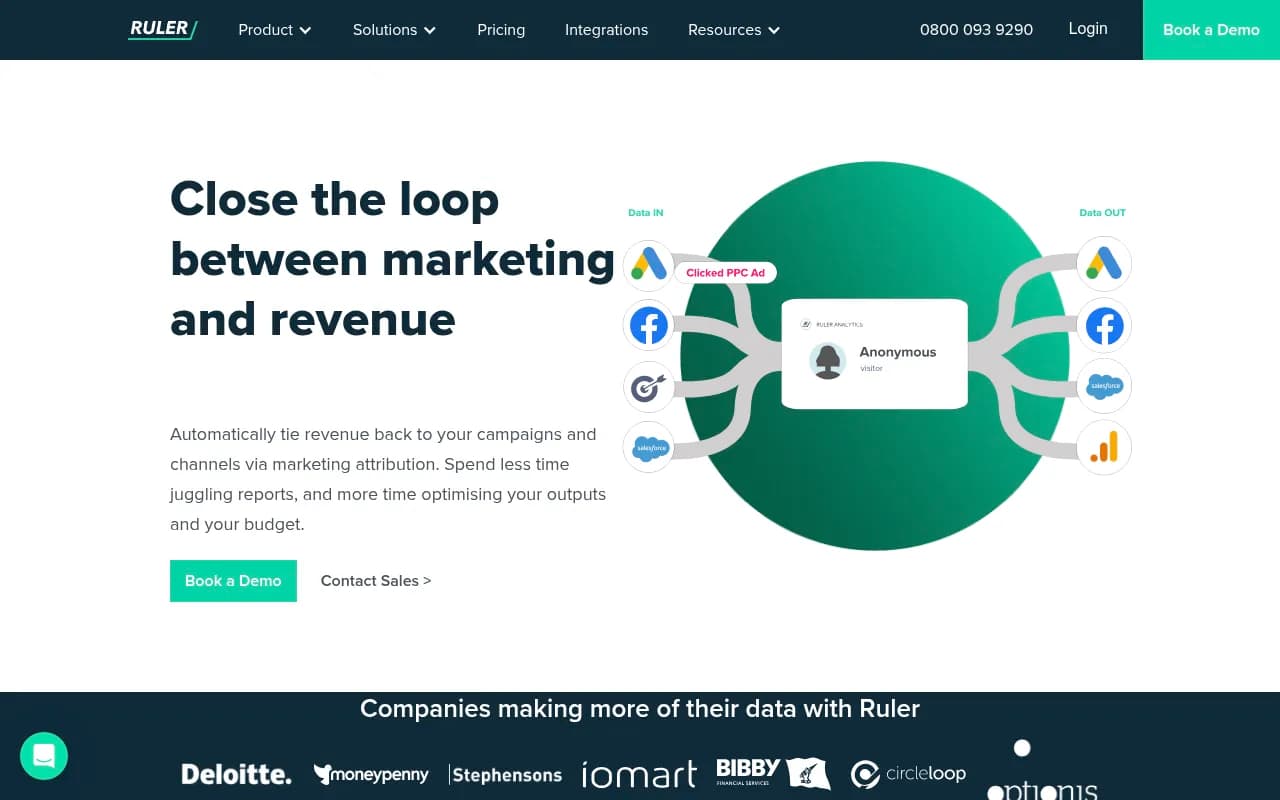
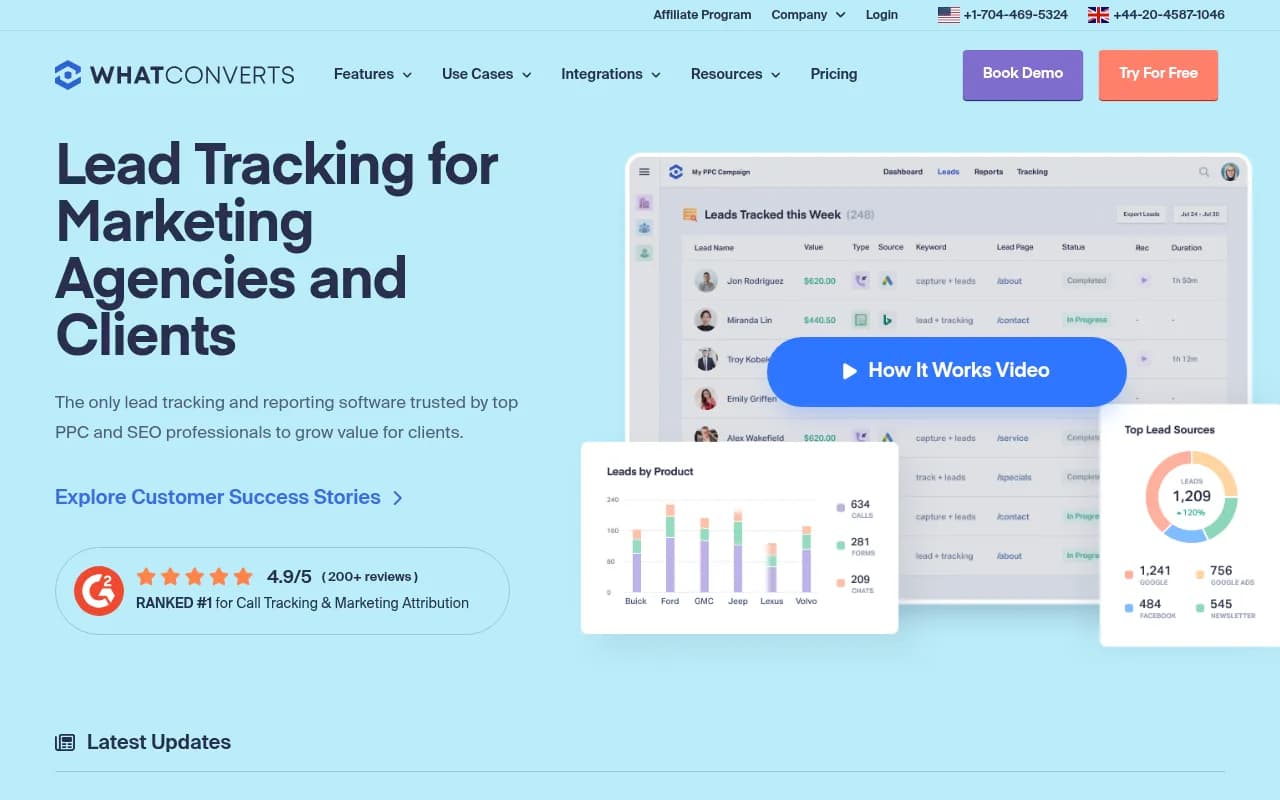
Ruler Analytics connects marketing spend to actual revenue. WhatConverts tracks every lead, including calls, back to its source.
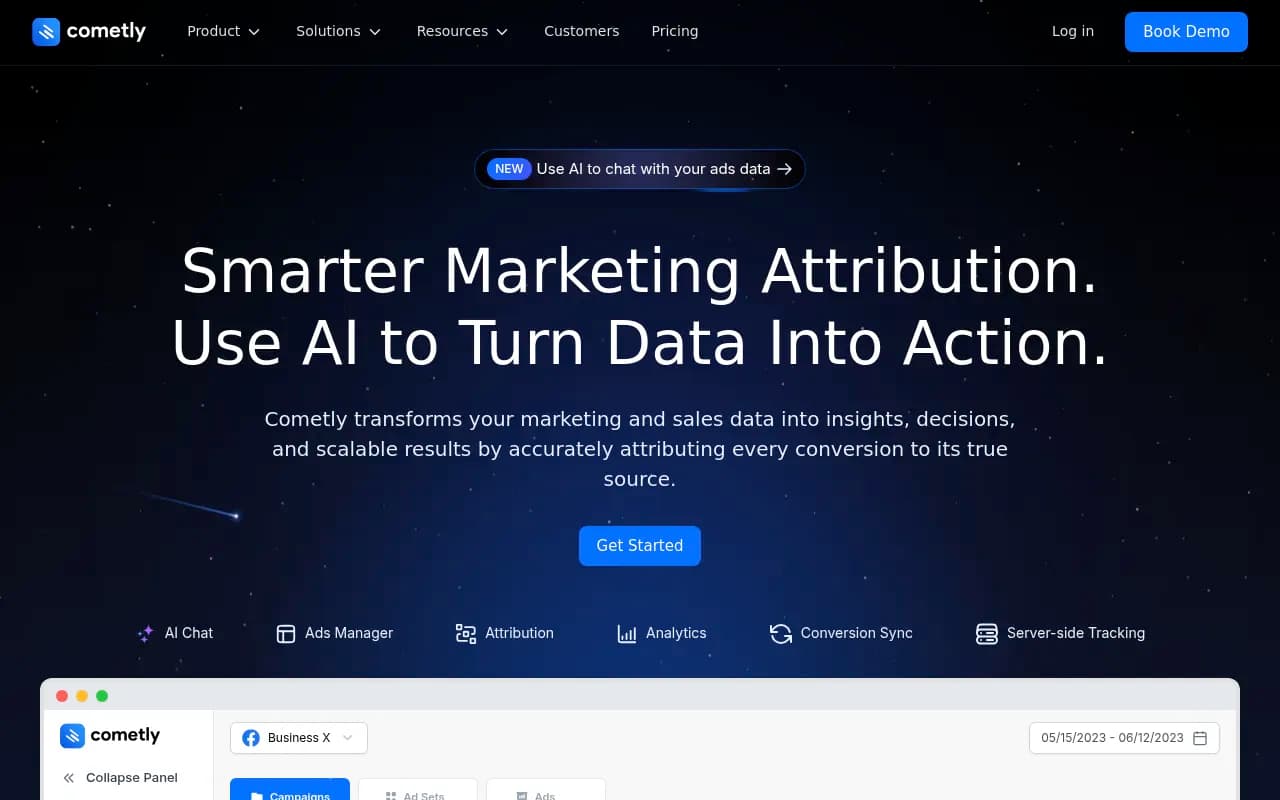
For ecommerce and paid social, Triple Whale, Cometly, and Hyros track the click through to revenue and feed that signal back to ad platforms.
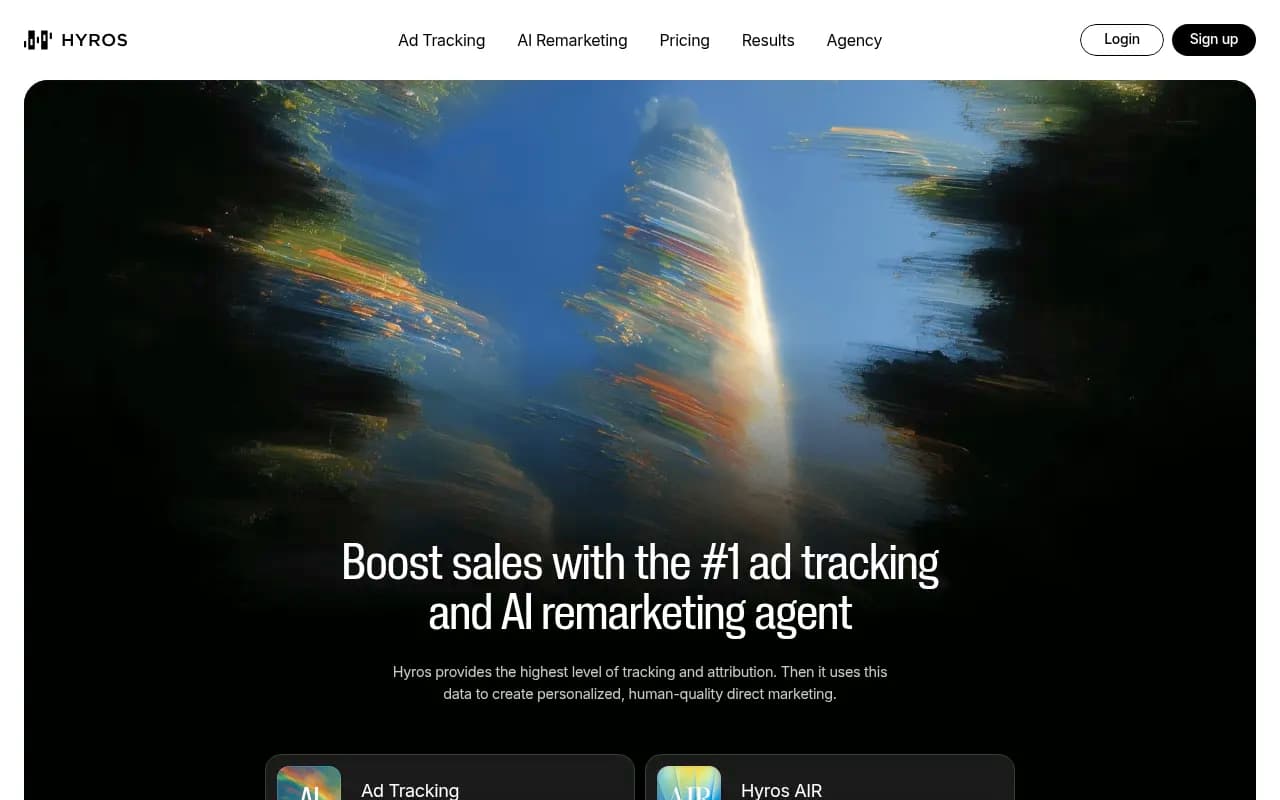
Hyros markets itself on AI-driven ROAS accuracy. As with all ad-tracking vendors, test their numbers against a holdout or your finance data before trusting them with budget.
The blind spot: AI search traffic
Here is the problem. A buyer asks ChatGPT for a recommendation, clicks a citation, and lands on your site. In many setups that visit shows up as direct, or as a referral you never look at. You also have no idea whether the AI crawlers can read your pages in the first place.
Three separate questions need answers:
- Are AI crawlers reaching my pages, and what are they hitting?
- Which of my pages get cited, for which prompts?
- How much real traffic and revenue does that produce?
Start with what GA4 can do
In Google Analytics you can build a custom channel group that matches referral sources such as chatgpt.com, perplexity.ai, gemini.google.com, claude.ai, and copilot.microsoft.com. It takes about 20 minutes and gives you a baseline. Limits: referrer data is not always passed, some apps strip it, and it tells you nothing about citations that did not produce a click.
Check your crawler access
Promptwatch Data tracked IP-verified AI crawler requests from June 8 to September 6, 2026. In the AI crawler traffic report, OpenAI accounted for 79.8% of verified requests in the week of Aug 31 to Sep 6, down from 94.8% in the week of Jun 8 to 14. Each weekly bar totals 100%, so a falling share does not mean falling absolute volume. Still, the mix moves quickly.
The report's practical advice is worth copying: compare your own logs against that mix. If a provider is a big share in the report but near zero in your logs, you are probably blocked by robots.txt, a CDN, or a WAF rule for that provider.
That is a measurement task, not a one-off audit. I'd put it on a monthly calendar.
Know where citations come from
What gets cited also changes by engine, which affects where you should expect AI-driven visits to originate. In Promptwatch's social media citations by AI model report (Sep 28 to Oct 4, 2026), social platforms made up just 0.46% of ChatGPT citations but 12.2% of Google AI Overviews citations. The related Reddit citation drop data shows reddit.com's share of ChatGPT citations falling from about 4% to 0.5% on August 14, 2026.
For attribution, the lesson is that your AI traffic mix will shift when the engines change behaviour, with no change on your side. A flat dashboard line can hide that. Break AI traffic out by source, not as one lump.
Tools for AI search measurement
Promptwatch is the one I'd start with when the goal is connecting AI visibility to traffic. It combines IP-verified crawler logs, visitor analytics for AI-referred traffic and conversions, citation tracking, and Search Console and Bing data per page, so you can see which pages rank in Google but never get cited. It also goes past reporting, with a content agent and action board for fixing the gaps it finds. One customer example: Crisp reported 2x higher conversion rates from AI traffic compared with traditional channels.

Other options in the catalog cover narrower slices:
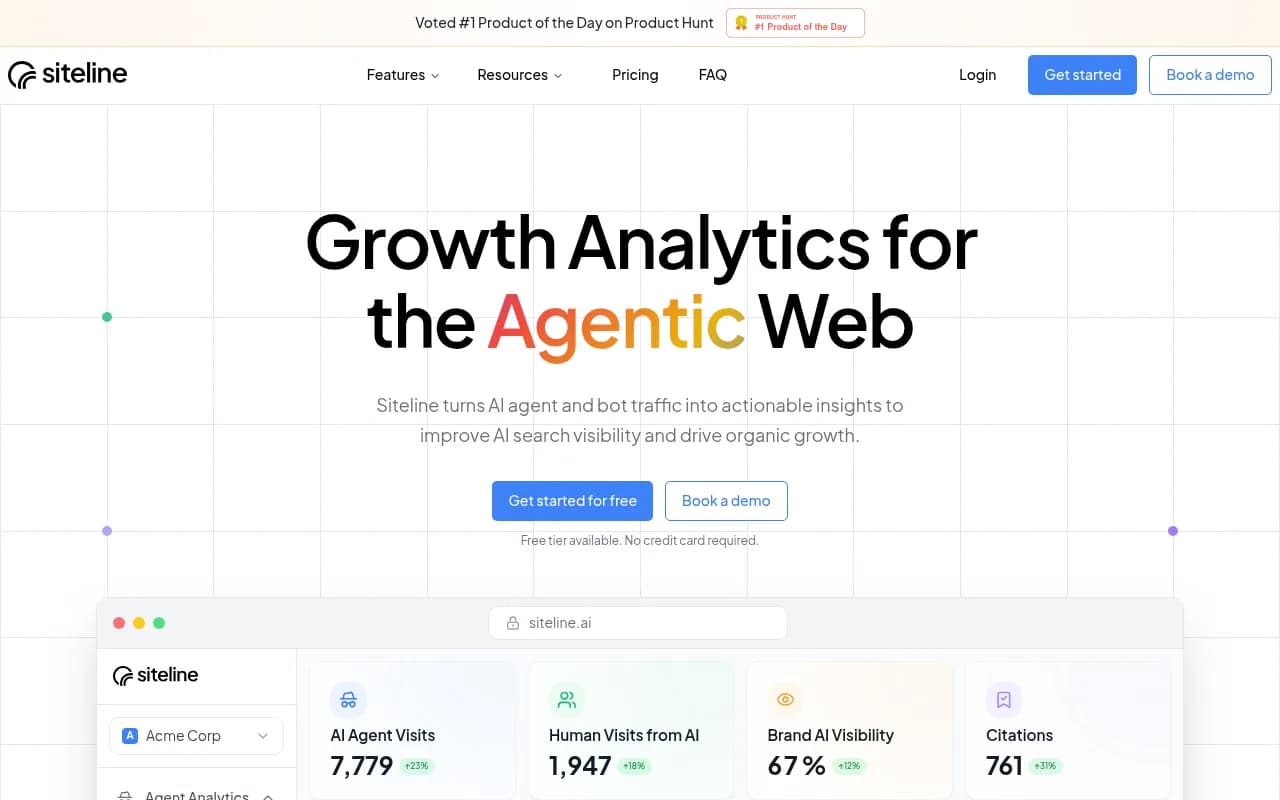
Siteline AI focuses on AI agent traffic analytics.
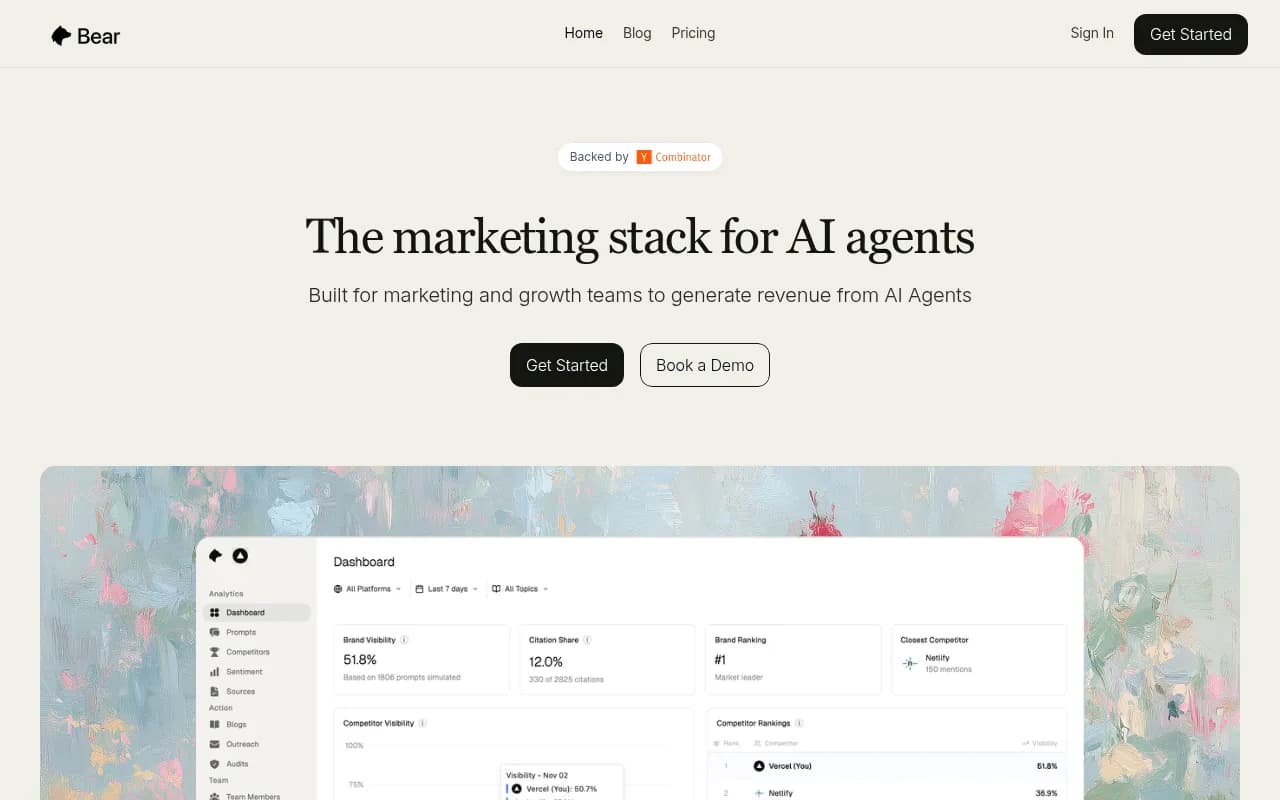
Bear AI aims to turn AI agent traffic into revenue with visibility tracking and conversion tools.
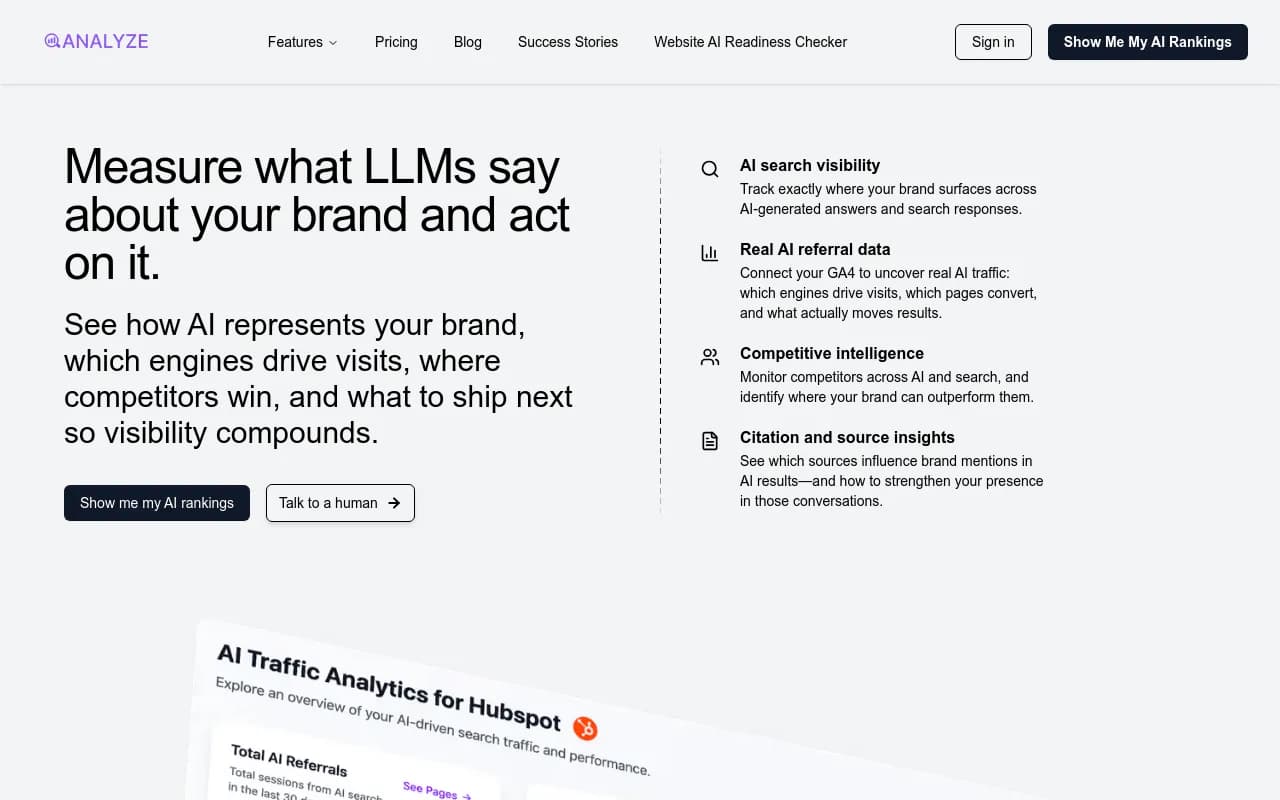
Analyze AI tracks AI search visibility and ties it to traffic.
Profound

Profound is an enterprise-focused visibility platform with strong monitoring.
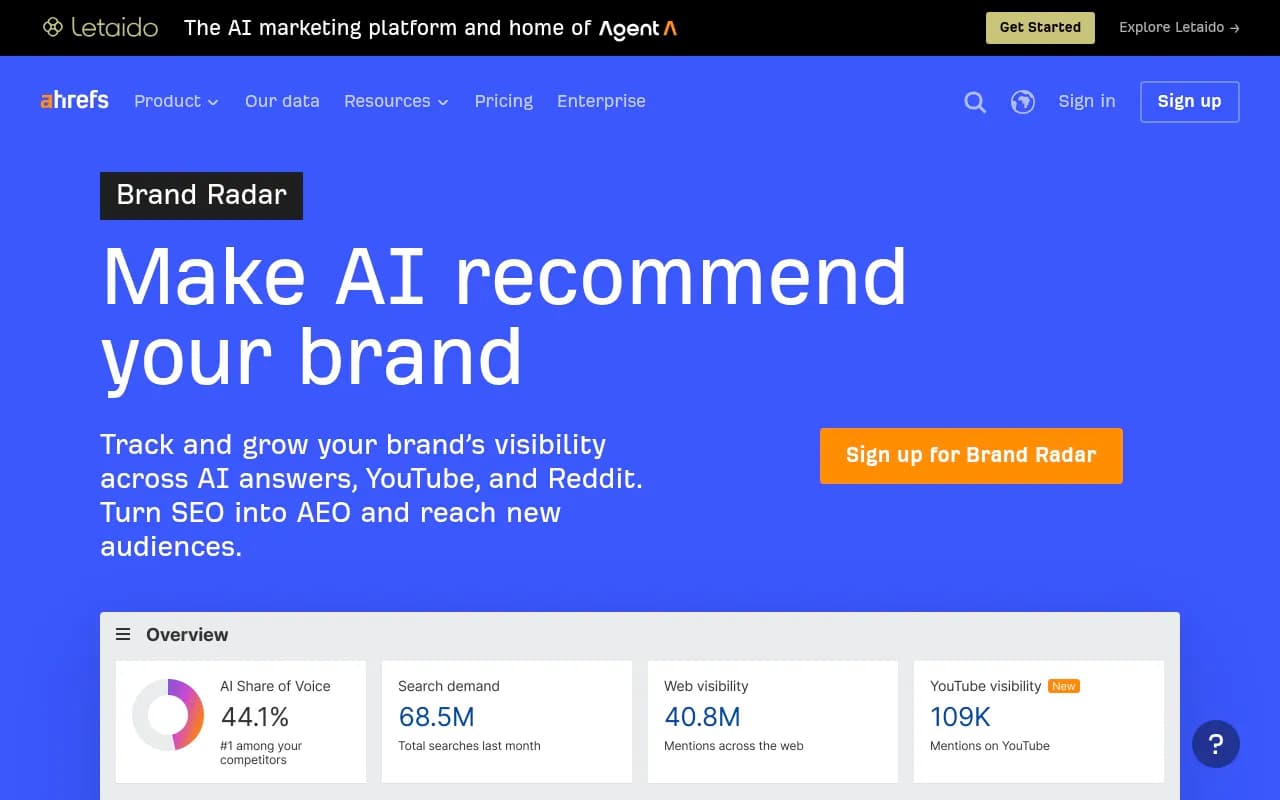
Semrush and Ahrefs Brand Radar bolt AI tracking onto traditional SEO suites, which is convenient if you already pay for them, though prompt sets tend to be more fixed.
For a wider shortlist, the GEO software directory at bestgeosoftware.com lists more options by category.
Comparing the AI search options
| Tool | Visibility tracking | Crawler analytics | AI traffic attribution | Content fixes |
|---|---|---|---|---|
| Promptwatch | Yes, real UI data across many models | Yes, IP-verified logs | Yes, visitor analytics | Yes, content agent |
| Siteline AI | Limited | Yes, agent traffic focus | Yes | No |
| Bear AI | Yes | Partial | Yes, conversion focus | Some |
| Analyze AI | Yes | Not a focus | Yes, ties to traffic | No |
| Profound | Yes | Varies by plan | Limited | Limited |
| Semrush | Add-on | No | No | Via SEO tools |
Check each vendor's pricing and current feature list directly before committing, since these categories change monthly.
A practical stack by team size
Small team or startup
- Google Analytics plus Search Console
- A custom GA4 channel group for AI referrals
- Microsoft Clarity for free session recordings and heatmaps
- One AI visibility tool on a low tier
Mid-size B2B
- GA4 feeding BigQuery or Improvado
- Dreamdata or HockeyStack for multi-touch attribution against your CRM
- A BI layer such as Metabase or Looker-style dashboards
- An AI visibility and traffic platform with crawler logs
Ecommerce
- GA4 plus Triple Whale or Cometly
- Klaviyo for email and SMS revenue attribution
- AI shopping visibility tracking if you sell products ChatGPT might recommend
Agency
- Whatagraph or a Looker-style reporting layer for client dashboards
- White-label AI visibility reporting
- Clear contracts on data ownership, since attribution setups are hard to move
If you would rather hand the AI search side to specialists, an agency like 1001 SEO Media covers technical SEO, content, and generative engine optimization as one service, and uses Promptwatch for its own AI visibility work.
Mistakes I see repeatedly
- Buying attribution software before fixing UTM discipline. Garbage tags in, garbage credit out.
- Trusting a single model. Run at least two and look at where they disagree.
- Counting mentions as traffic. Visibility in an AI answer is not the same as a click, so measure both.
- Treating the AI crawler picture as static. The numbers above moved dramatically in a single quarter.
- Ignoring governance. If marketing and finance define revenue differently, no dashboard will settle the argument.
How to decide
Write down the three decisions your team makes every month that depend on this data. Budget allocation, content priorities, and channel mix are typical. Then pick the lightest tool that makes those decisions better.
Only add an AI search measurement layer when you can name the question it answers: are AI crawlers reaching us, which pages get cited, and does that traffic convert. If you can't, GA4 plus a custom channel group is enough for now. If you can, set aside a monthly slot to recheck crawler access and AI referral sources, because the mix will keep moving.